Why Did Ancient Chinese Thinkers Also Practice Medicine?
A Tomb Full of Secrets
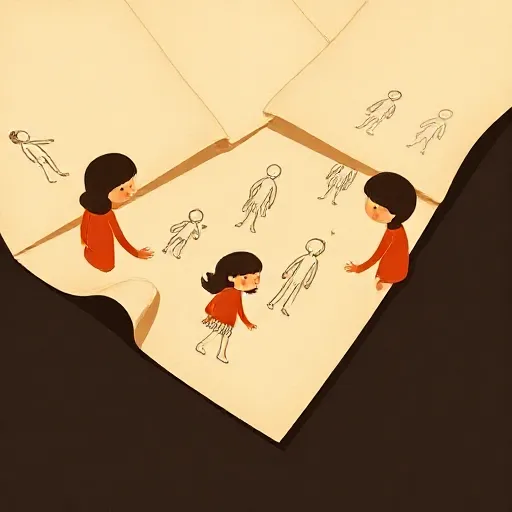
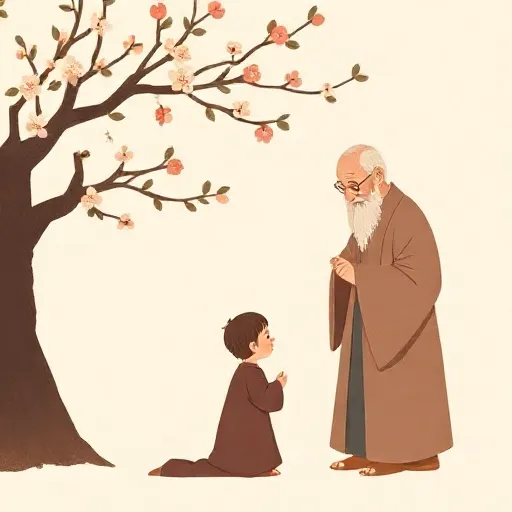
Workers digging near Changsha, China, uncovered a tomb sealed over two thousand years ago. Inside, alongside two copies of the famous Daodejing, were things nobody expected: drawings of people twisting into animal shapes, recipes for long life, and careful instructions on how to breathe. The person buried there in 169 BCE wanted more than wisdom for the next world. They wanted to know how to stay alive and healthy in this one.
That same mix — philosophy and medicine side by side — appears all through ancient Chinese writing. But why? In many cultures, doctors fix the body and philosophers work on the mind. But for early Chinese thinkers, that line didn’t exist. They used the same deep ideas to explain the cosmos and to care for a sick person. Understanding their world means understanding how they tried to live well, in every sense.
The Cosmic Recipe: Qi, Yin-Yang, and the Five Agents
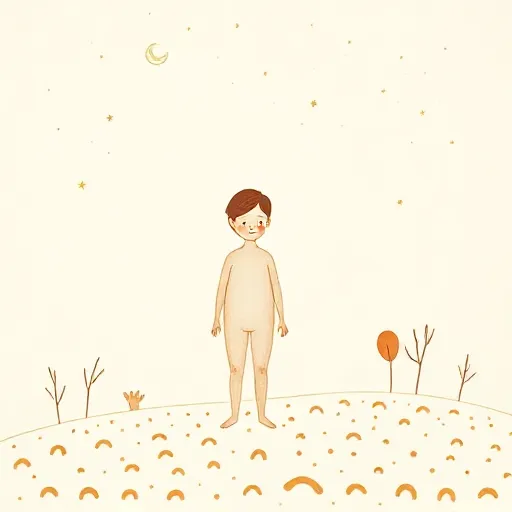
Long before modern science, Chinese thinkers built a picture of the world from a few powerful building blocks. The first was qi (pronounced “chee”), the energetic stuff that makes up everything and keeps it moving and changing. Solid things, living things, even your anger or a summer breeze — all were patterns of qi.
To describe how qi constantly transformed, they used two more ideas: yin and yang. These are not good and evil, but paired opposites that shape each other. Day (yang) becomes night (yin), then back again. Activity needs rest, and heat needs cold.
A third system, the five agents — wood, fire, earth, metal, and water — offered a way to describe phases and interactions. Wood fuels fire, fire leaves ashes (earth), earth bears metal, metal can condense water, and water nourishes wood. These cycles were thought to explain everything from a ruler’s success to a stomach ache.
The very first medical classic, the Yellow Emperor’s Classic of Internal Medicine (compiled around the first century BCE), turned the human body into a tiny model of the universe. Your head is round like the heavens, your feet flat like the square earth. You have two eyes like the sun and moon, four limbs like the four seasons, and 360 joints to match the days of the year. Illness came when the qi inside you didn’t flow in harmony with yin and yang.
Nurturing Life: The Art of Yang Sheng
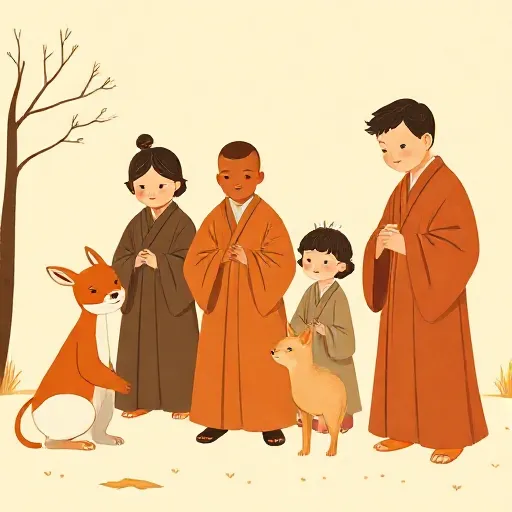
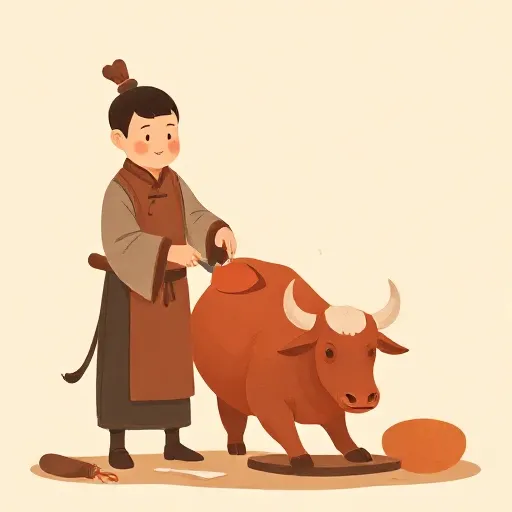
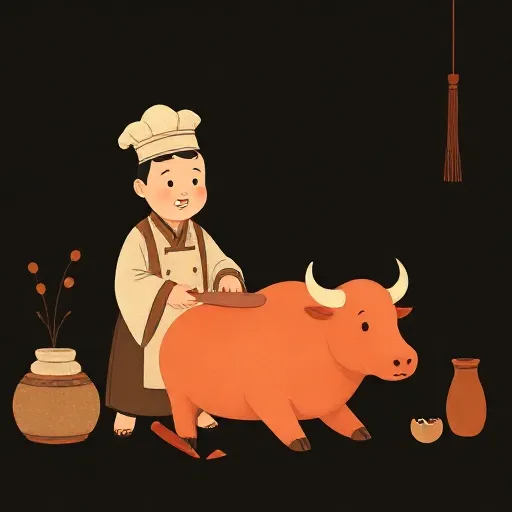
The philosopher Zhuangzi (around the 4th century BCE) loved stories of skillful workers. His most famous describes a butcher named Pao Ding, who carved an ox so smoothly that his knife never dulled. He didn’t just chop; he sensed the natural spaces between the joints and let the blade follow them. When he finished, Duke Hui, who was watching, said, “Pao Ding has taught me how to nurture life”
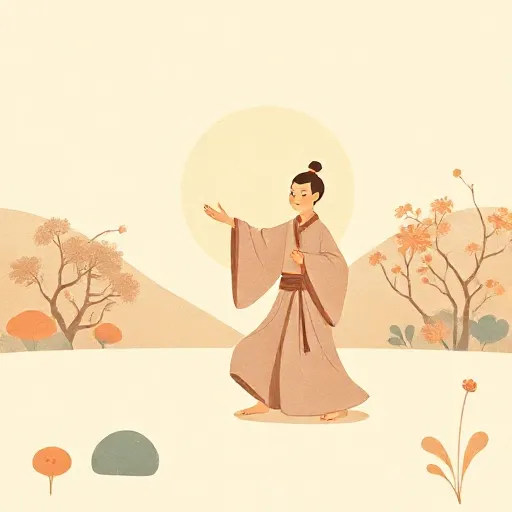
The Chinese term for this is yang sheng — “nurturing life.” It appears throughout early philosophy. For Zhuangzi, true sages didn’t need special tricks. But he also described people who “blow out the old and breathe in the new,” moving like bears and stretching their necks like birds, all to chase after long life. He was a bit skeptical of turning health into an obsession, yet he couldn’t ignore how much people craved it.
The tomb at Changsha showed just how much. One buried text, the “Ten Questions,” records a conversation:
Yao asked Shun: “Under heaven, what is most valuable?”
Shun replied: “Life is most valuable.”
Yao said: “How can life be cultivated?”
Shun said: “Investigate yin and yang.”
These weren’t casual tips. The nobility practiced sexual techniques, special diets, and breath exercises to refine their qi. They vaporized the boundaries between moral self-improvement and physical health. To transform your qi was to change who you were, inside and out.
Doctors Who Were Also Philosophers
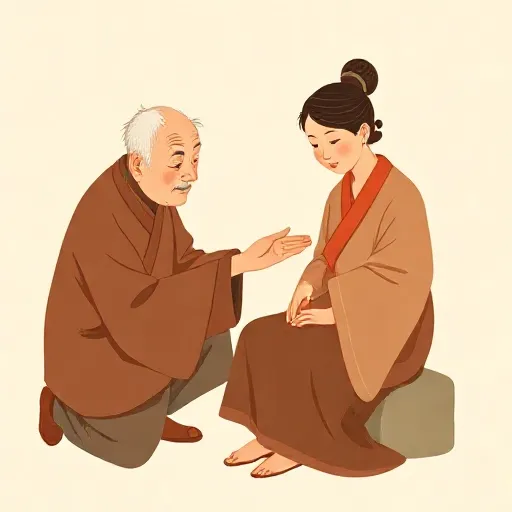
A few centuries later, three remarkable people showed just how blurred the line between medicine and philosophy could become.
Ge Hong (283–343 CE) began his life studying Confucian classics, then threw himself into alchemy and immortality. He believed that moral virtues — loyalty, trustworthiness, kindness — were a prerequisite for pursuing long life. You couldn’t just mix minerals; you had to become a good person first. He systematically wrote down the “nurturing life” techniques he inherited: meditation, energy circulation, swallowing elixirs, and preserving the body’s essence.
Tao Hongjing (456–536) was a founder of a Daoist school but also obsessed with pharmacology. After serving at court, he retired to a mountain to edit sacred texts and compile a major work on medicinal herbs. He doubled the number of known drugs by re-editing an ancient materia medica. For him, understanding the divine revelations and understanding which plants cured a fever were parts of the same life’s work.
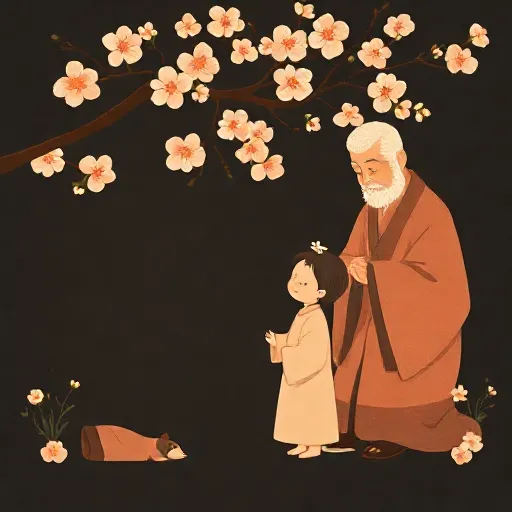
Sun Simiao (581–682) became the “Medicine Buddha,” worshiped as the King of Medicine. He refused official posts in the capital and stayed in the countryside to treat ordinary people. His massive medical book Prescriptions Worth a Thousand Gold didn’t just list recipes. The first chapter explained that a great physician must treat all patients equally, whether they are rich or poor, beautiful or ugly, friend or enemy, young or old — exactly as if they were your own family. He then went on to detail diet, pulse diagnosis, acupuncture, and exercise. Sun’s life united a Daoist’s search for immortality with a doctor’s duty to relieve suffering.
None of these three would have called themselves a physician who merely dabbled in philosophy. They were explorers of qi, trying to understand the deepest workings of the world by keeping a body alive.
The Doctor Who Said Philosophy Comes First
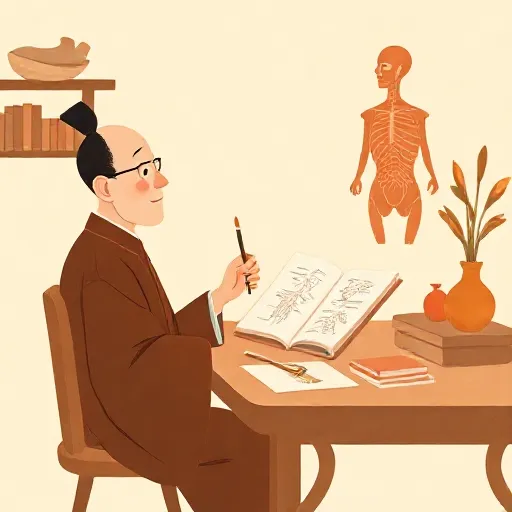
By the early twentieth century, Western medicine had arrived in China with vaccines, surgery, and a very different language to describe the body. Many modern thinkers argued that traditional Chinese philosophy was holding medicine back. A physician named Zhang Xichun (1860–1933) pushed back.
Zhang, trained in both old classics and new science, wrote an essay bluntly titled “Concerning the Relation of Philosophy and Medicine.” He quoted an ancient poem: a wise person “protects his own person” — and that doesn’t just mean dodging thieves, but guarding against disease. Zhang argued that the yang sheng practices of ancient hermits were philosophy. The earliest doctors, he said, were philosophers who wanted to help others do what a sage could do naturally: keep their qi in order. When people failed to nurture their life properly, medicine had to step in. But philosophy was the source; medicine was the branch that grew from it.
He pointed to Ge Hong, Tao Hongjing, and Sun Simiao. Their philosophical works weren’t hobbies. They were the foundations that made their medicine possible. For Zhang, understanding the transformation of qi in your own body was the first step to helping someone else.
This wasn’t a dusty argument. Zhang belonged to a school trying to “converge and connect” Chinese and Western medicine. He knew the two traditions explained things differently, but still insisted that the classical Chinese worldview had been dismissed too quickly.
The Body You Think With
So why does all this matter now? You already know it, a little bit. When you get nervous, your stomach might churn. When you haven’t slept, your thoughts get foggy. The ancient Chinese weren’t being mystical when they said your emotions and organs were connected; they were naming something real, even if they described it with qi and yin-yang rather than hormones and neurons.
Today, millions of people practice taiji (tai chi) and qigong, direct descendants of those daoyin drawings in the tomb. Acupuncturists still map meridians first drawn two thousand years ago. None of this means science is wrong. But it shows that other cultures built powerful toolkits for thinking about health — toolkits that start from a very different question. Instead of asking, “Which bug is breaking this machine?” they asked, “What has fallen out of harmony?”
The philosophers who tried to nurture life believed that being healthy and being wise were the same project. You don’t have to choose between taking care of your body and taking care of your mind. They are, in a way that early China never forgot, the same qi.
Think about it
- If you spent five minutes each morning doing a slow, focused breathing exercise, how do you think it might change the rest of your day?
- Some ancient thinkers thought you couldn’t be a truly good person without also taking care of your body. Do you agree? Can a person neglect their health and still be wise or kind?
- Zhang Xichun felt that philosophy was the root of medicine. What might a doctor know better if they also studied philosophy? What might a philosopher miss if they never studied the body?