Can a Pile of Sticks Help You Face an Uncertain Future?
What if Your Hardest Choice Had a Guidebook?
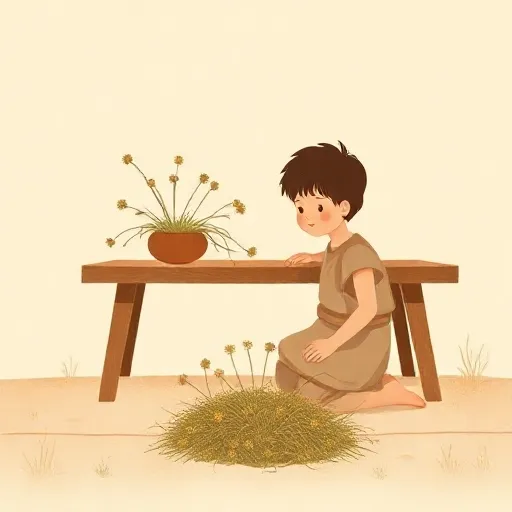
Imagine you’re twelve, and you have to decide between trying out for the school play or joining the soccer team. Both sound exciting. Both have good reasons. You ask your best friend, but they only shrug. You ask an adult, but they say “follow your heart.” You feel stuck in a swirl of uncertainty.
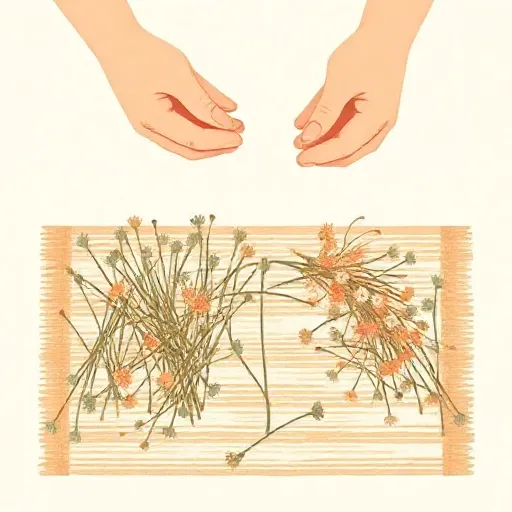
Three thousand years ago in China, people faced that same kind of dizziness — only their decisions were about starting a war, stopping a disaster, or choosing a spouse to continue their family line. They turned to a strange system of sticks and lines known as the Book of Changes (or Yijing). At first, it was a manual for divination: a practice of asking the universe a question by casting yarrow stalks, then interpreting the pattern they made. But over centuries, thinkers realized that beneath the divination was a whole philosophy of how to live with an uncertain world.
The book’s core invention is the hexagram — a stack of six lines, each line either solid (—) or broken (‒ ‒). Those two kinds of lines are called yang (the active force) and yin (the passive force). Mix them in different ways, and you get sixty-four hexagrams. The hexagrams are not answers. They are mirrors. They help you see your situation from angles you hadn’t considered, and they remind you of something startling: you are a tiny part of a universe that never stops moving.
What if the Universe Is a Giant Dance?
According to the philosophy behind the Book of Changes, the cosmos is not a giant machine. It is more like a living, dancing body with no beginning and no end. Everything — from the stars to your lunch — is connected. Natural world and human world, inner feelings and outer events, observer and observed: in this view, they all belong to one continuous flow.
That flow has three features. It is continuous (it constantly renews itself). It is holistic (every part connects to every other part). And it is dynamic (full of motion and change). The Xici, one of the oldest commentaries on the Changes, says the whole thing is “alternating, movement without rest.”
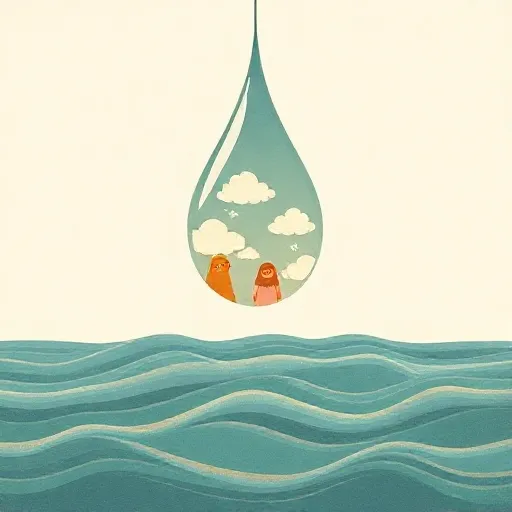
Here’s an image the ancient writers loved: you are a drop of water in an ocean. You are conditioned by the whole ocean — its currents, its depth, its shape. You can push and pull, but you will never fully understand the ocean’s vastness. And yet, here’s the twist: your tiny movement, your one drop, can ripple outward and affect the whole. A small choice can come back as a great change. In philosophy-speak, this is the idea of human finitude — the recognition that we have real limits, but also real power.
How Ancient Rulers Tried to Tame the Chaos
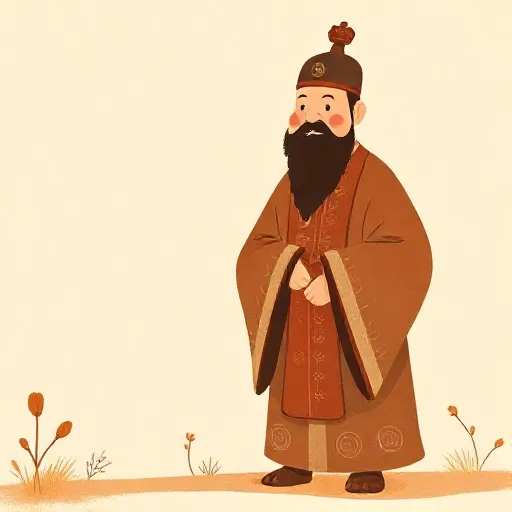
After the Book of Changes became a classic around 135 BCE, the rulers of the Han dynasty (202 BCE–220 CE) wanted to use it for something grand: creating a perfect, everlasting empire. Their approach came to be called the Images and Numbers School, and it rested on a strong belief — that the natural world and the human world mirror each other perfectly.
Han thinkers like Jing Fang (77–37 BCE) and Yu Fan (164–233) rearranged the sixty-four hexagrams into new sequences that matched the rhythm of the seasons, the months, and even the days of the year. They believed that the rising and falling of yin and yang forces in the hexagrams could map exactly onto the rise and fall of dynasties. In this picture, the emperor was the crucial link between heaven, earth, and humankind. A scholar named Dong Zhongshu (ca. 195–105 BCE) even argued that the Chinese character for “king” (王) showed the emperor as the vertical stroke connecting the three powers.
This was a powerful tool for rulers — it made the empire seem orderly, predictable, and justified. But it came with a hidden cost. By turning the Changes into a cosmic manual, the Han scholars suppressed the fear and uncertainty that the book originally highlighted. When you insist that the universe runs on a neat pattern, you ignore the messiness of actual life: the sudden disasters, the wrong decisions, the moments when nothing goes according to plan.
Wang Bi: Tear Up the Map and Look Around
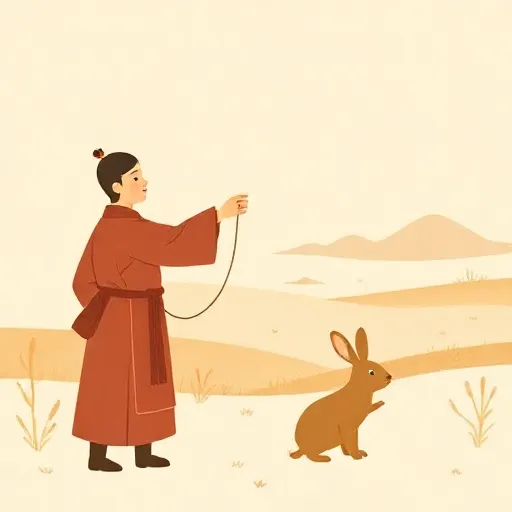
When the Han empire collapsed in 220 CE, that neat cosmic mirror shattered. China split into three warring kingdoms, and a young thinker named Wang Bi (226–249) — who died at just twenty-three — wrote a new commentary that flipped everything upside down.
Wang Bi looked at the Han obsession with matching hexagrams to the calendar and said: stop trying to map the universe. You can’t. The universe is too vast, and human knowledge is too limited. Instead, he said, hexagrams should be seen as pointers — symbols that direct your attention toward what matters in your exact situation. He argued that images (the visual hexagrams) are like rabbit snares or fish traps. You use the trap to catch the rabbit, but once you have the rabbit, you forget the trap.
This became Wang Bi’s famous rule: “Once one gets the images, he forgets the words; once one gets the ideas, he forgets the images.” A hexagram, for him, represents a field of action — a space where different players or forces are interacting. The six lines of the hexagram are the six possible moves you can make within that field. Everything depends on the part-whole relationship. You can never control the whole field, but you can find your room to maneuver.
Wang Bi didn’t find even bad hexagrams terrifying. The hexagram Sun (Diminution, #41) shows a situation where the powerful take advantage of the weak. But Wang Bi argued that “supreme good fortune” could still appear if someone found a way to benefit the public. The hexagram Kun (Impasse, #47) seems hopeless — every line is oppressed in some way. Yet Wang Bi insisted that with the right decision, an oppression could become an opportunity.
In one of his most startling moves, Wang Bi took the divination ritual of casting fifty yarrow stalks and gave it a philosophical twist. The diviner leaves out one stalk and works with forty-nine. Wang Bi said: the forty-nine stalks represent somethingness — the actual steps of casting a hexagram. The one unused stalk represents nothingness. The whole process only works because somethingness and nothingness depend on each other. Like a Beethoven symphony, the music (invisible) needs the orchestra (visible); the orchestra needs the music. You can’t have one without the other.
Zhu Xi: The Wisdom of Not Knowing
Wang Bi’s commentary became the standard for a thousand years. But then another upheaval came, and with it, another rethinking of the Changes. The Neo-Confucian master Zhu Xi (1130–1200) looked at the book and said: both the Han cosmologists and Wang Bi were too confident. They acted as if human reason could fully map either the cosmos or human affairs. The original meaning of the Changes, Zhu Xi insisted, was divination — not as superstition, but as a tool for facing the unknown.
To Zhu Xi, the sixty-four hexagrams are not a moral textbook. They are more like a structured pause. When you cast the yarrow stalks and read the resulting hexagram, you are placed in a dialogue: the image calls your attention to a pattern of forces, and you must respond. The answer is never certain. Zhu Xi highlighted the ambiguity of the hexagram statements. A line might say “without remorse,” but whether remorse truly disappears depends on your own sincerity and actions. The oracle is provisional.
This turned the Changes into a battleground for moral cultivation. In that split second of decision, Zhu Xi believed, you are torn between the “mind of the Dao” (your clearest, most principled self) and the “human mind” (your selfish desires). The hexagrams don’t solve that battle. They make you acutely aware of it. They remind you that every choice takes place in a sea of uncertainty, and that courage means honestly confronting your limits while still choosing to act.
One huge effect of Zhu Xi’s view was that it opened the Book of Changes to everyone — not just rulers and scholars, but ordinary people who struggled daily with tough choices. It became a book of life.
Why an Unfinished Journey Is the Best Ending
Here’s something unforgettable about the Book of Changes: it ends with the hexagram Weiji — Ferrying Incomplete (hexagram 64). The hexagram right before it, Jiji (Ferrying Complete, #63), is perfect in its yin-yang balance. If the book ended there, it would be like saying “eventually, all problems get solved, and we reach paradise.”
But it doesn’t end there. Weiji is a total mess: every line is in the “wrong” position, as if a supply chain during a pandemic has been completely dislocated. Yet, hidden inside that mess is a powerful potential — the lines still correspond with one another in their yin-yang nature. Vital possibilities are waiting to be activated.
That open-endedness is the book’s deepest point. The search for balance never finishes. The universe is an open system, constantly changing. You will always be the product of your environment and an active player reshaping it. You will always have to make difficult decisions with limited knowledge. The Changes doesn’t promise safety. It promises that if you accept your finitude and still act with attention and care, you can find meaning inside the movement.
In the 21st century, that philosophy feels more relevant than ever. We live inside a fluid, interconnected world where a decision in one place can ripple across the globe. The Book of Changes doesn’t tell you what will happen. It sharpens your eye for what is happening right now, and it reminds you that you are a droplet — bounded, free, and always part of the great dance.
Think about it
- If you could use a ritual like casting yarrow stalks to see one possible future, would you want to know it? Or would knowing change what you do and make the future unpredictable all over again?
- Think of a time when a choice you made seemed terrible at first but later turned out well. What does that experience teach you about how much we can ever know before we act?
- Is it more comforting to believe the universe follows a set pattern, or to believe it is full of genuine surprises? How would you live differently depending on which one you accept?