Are You Just an Adult Who Hasn't Finished Loading?
The Surprising History of Being a Kid
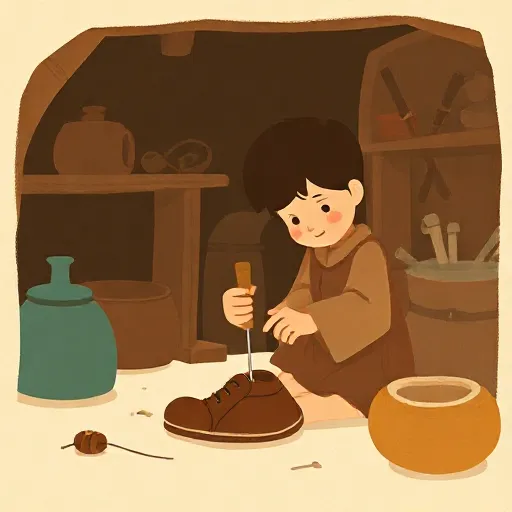
In 1960, a French historian named Philippe Ariès made a startling claim. He said that the very idea of “childhood” we take for granted isn’t natural at all—it has a history. By studying old paintings and documents, Ariès argued that in medieval Europe, people thought of children simply as miniature adults. Boys and girls wore grown-up clothes, did adult work as soon as they could, and were painted in art as tiny, stiff versions of their parents. Not everyone agrees with Ariès today. Other historians have found evidence that medieval thinkers did recognize stages of childhood. But his big idea stuck: what we think a child is can change depending on where and when we live.
That raises a deeper question. If every culture has to decide what a child is, what should the answer be? One of the oldest and most powerful answers comes from the ancient Greek philosopher Aristotle (384–322 BCE). He believed that every living thing has a final cause—the goal or function it is meant to achieve when it is fully grown. For humans, that goal is the mature adult: a person with reason, self-control, and the ability to live a good life. On this view, a child is an immature specimen, like a seed that will someday become an oak tree. The child’s value lies in what she has the potentiality to become. You aren’t the finished product; you’re the project.
Most adults today don’t read Aristotle, but a broadly “Aristotelian conception” still shapes their thinking. It tells them that their main job is to create the right environment for kids to grow into normal, capable grown-ups. You might hear it in phrases like “you’ll understand when you’re older” or “practice now so you can succeed later.” But is that the whole story?
The Deficit Model: Why Adults Think You’re Missing Something
The most influential modern version of the Aristotelian picture came from the Swiss psychologist Jean Piaget (1896–1980). Piaget spent decades watching and talking to children, and he built a stage theory of cognitive development. He argued that children’s thinking moves through a fixed sequence of structural changes, each building on the last. For example, he found that young children often think of “life” in surprising ways. In his study, a child at an early stage might say that a bicycle is alive because it goes, or that the wind is alive because it blows. Only later, in a sequence of four stages, does the child restrict life to plants and animals.
Piaget’s work was brilliant, but many philosophers and psychologists noticed a problem. A stage theory can easily turn into what the philosopher Gareth Matthews called a deficit conception of childhood. If the adult is the top of the staircase, then every step before it is defined by what’s missing. The child becomes a list of deficits—can’t reason logically yet, can’t see another person’s perspective properly, can’t control impulses. Matthews, however, pointed out something awkward for this picture: children are sometimes better than adults at certain things. A child might learn a second language faster, paint a picture with striking emotional power, or ask a philosophical question an adult would never think of. A purely deficit-based view ignores those strengths and makes adult–child relationships narrower and less interesting.
A Different Kind of Mind: What If Kids Aren’t Broken Adults?
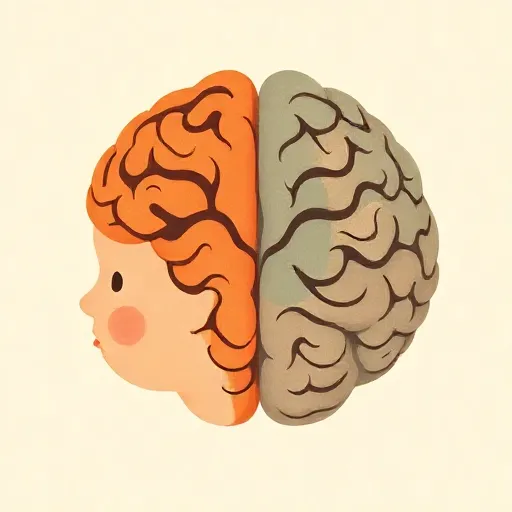
In recent years, a different story has begun to take hold. The psychologist Alison Gopnik, writing in the early 2000s, argued that children are not just defective grown-ups gradually working toward perfection. Instead, children and adults are different forms of homo sapiens—each with their own complex, powerful kind of mind. Part of this shift comes from neuroscience. Brain research shows that babies’ brains are more highly connected than adult brains; more neural pathways are available to an infant than to a thirty-year-old. A baby’s brain isn’t a simpler version of yours; it’s wired for a different job, like exploring wildly instead of efficiently focusing.
This challenges the Aristotelian intuition that maturity is the only real goal. If a child’s way of thinking is not just a worse copy of adult thinking, then childhood might have its own value right now—not just as a preparation for something else. That idea has consequences for almost every area of philosophy that involves children.
Who Decides What’s Right? Growing Up Morally
The same tug-of-war between “not yet ready” and “fully valuable now” shows up in moral thinking. The American psychologist Lawrence Kohlberg (1927–1987) built a famous theory of moral development based partly on Piaget. He described six stages, from a first stage driven by fear of punishment all the way to a sixth stage of principled conscience. On his tests, even many adults never reached the highest stages, and young children were typically placed at a pre-moral level—as if they couldn’t be genuinely moral agents at all.
But the psychologist Carol Gilligan (b. 1936) raised a serious objection. She noticed that Kohlberg’s stages emphasized rules, justice, and abstract principles—a style she associated with a stereotypically male pattern of thinking. Girls and women, she suggested, often approach moral problems with a different voice, one centered on care, relationships, and responsibility to particular people. If true, then a test that only measures justice-oriented reasoning might miss real moral thought.
And even before Gilligan, the psychologist Martin Hoffman had traced how empathy develops in early childhood. Very small children, he showed, can already show genuine moral feelings. A two-year-old who tries to comfort a crying friend is not just obeying a rule or fearing punishment; the child is responding to another person’s distress. That makes it harder to treat young children as pre-moral blanks who must wait years to become moral actors.
Why Your Playtime Matters: Art, Choices, and a Good Childhood
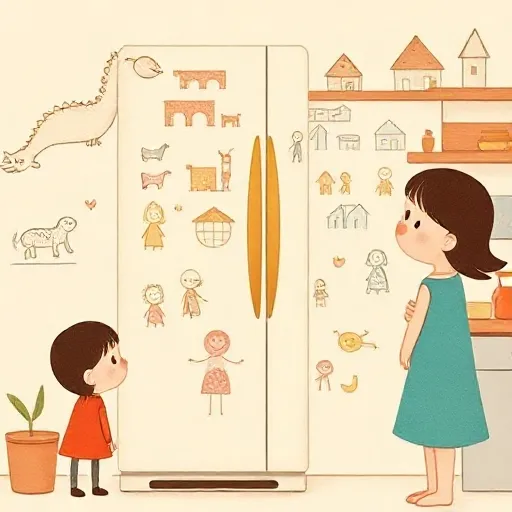
Think about the drawings stuck to your fridge at home. Parents are usually proud of them, but almost nobody believes a child’s painting is “good without qualification.” Yet the art historian Jonathan Fineberg discovered that some of the most celebrated artists of the 1900s collected children’s art and were deeply inspired by it. The very thing we dismiss as mere practice may have real aesthetic value—value that belongs to childhood itself, not to the adult the child will become.
This points to a bigger shift in how philosophers now talk about the goods of childhood. An old, Aristotelian lens sees childhood as an essentially prospective state: its value comes from the adult it produces. More recent philosophers have resisted that. A good childhood, they argue, is not just a well-run training camp. It has intrinsic value—things that are good for a child as a child, not merely as a future-grown-up. Unstructured play, the freedom from heavy responsibilities, long stretches of free time, and a kind of innocence are all candidates for goods that are especially important in childhood. Play, for instance, isn’t just a trick to teach you problem-solving for later; it’s a form of joy and exploration that is worth having all by itself.
Then there is the question of autonomy—acting in ways you yourself find meaningful rather than just following orders. The traditional position is that children are the textbook example of a lack of autonomy. But that has begun to change. In divorce courts, doctors’ offices, and even family law, older children are now often asked for their views, and those views are given real weight. One famous case involved a twelve-year-old named Gregory K., who spoke so clearly and persuasively about why he wanted new adoptive parents that the court listened. And when children face terminal illness, some caregivers have found that even quite young patients are able to understand their situation and make considered choices.
Philosophers still disagree about how much authority a child’s preferences should carry. But on a modest understanding of autonomy—one that doesn’t require total independence or perfect critical thinking—children can act autonomously in areas of their lives where they have good information, feel connected to the outcome, and are supported by adults who explain their reasons. Respecting a young person’s voice is not the same as removing all adult protection. It means seeing the child as a partner in some decisions, not just a project to be managed.
So why does this ancient argument about what a child is matter to you right now? Because the answer shapes everything adults let you do. It decides whether your ideas in a family meeting are brushed off or taken seriously. It determines whether your play is seen as empty time or as a genuinely good part of your life. It shapes whether you are treated as a half-filled adult mold or as a whole human being with a different—but not lesser—way of being in the world. When someone tells you “you’ll understand when you’re older,” they are making a philosophical claim, not just a remark about age. And philosophy, as you now know, gives you good reasons to ask back: maybe I understand something you’ve forgotten.
Think about it
- If a younger child can solve a strange puzzle faster than an adult can, does that make the child “smarter” in that moment—or does smartness require something else?
- Should a ten-year-old’s opinion about which parent to live with after a divorce be the deciding voice, one voice among many, or be ignored completely? Why?
- Think of an activity you love now that might seem silly to a grown-up. Could it be worth doing simply because it makes you happy now, even if nobody thinks it will prepare you for anything later?