If Smoking Doesn't Guarantee Cancer, Why Do We Say It Causes It?
One Uncle Gets Sick, the Other Doesn’t
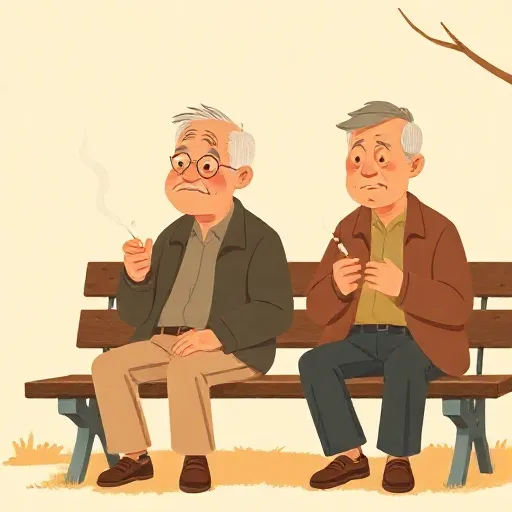
Suppose you have two uncles who both smoke a pack a day for years. One develops lung cancer, the other does not. Everyone still says smoking causes lung cancer. How can that be a cause if it doesn’t always lead to the effect?
This puzzle bothered philosophers for centuries. If causes were strict rules — “whenever the cause happens, the effect must follow” — then imperfect patterns like this would be impossible. But the world is full of imperfect patterns, so we need a better idea. Many philosophers turned to probability, the mathematics of chance. A cause, they said, doesn’t guarantee an effect; it makes the effect more likely.
The Big Problems with Perfect Patterns
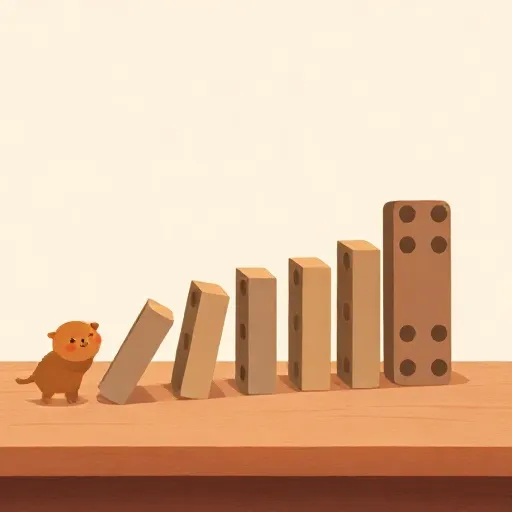
Philosophers like David Hume (1711–1776) said causes are followed by their effects without exception. That view is called a regularity theory of causation. It soon ran into trouble.
First, imperfect regularities: smoking raises your chance of cancer, but some smokers stay healthy. Some non-smokers who breathe asbestos get cancer anyway. Those gaps break the rule.
Second, irrelevance: imagine a sorcerer hexes salt, then puts it in water. The salt always dissolves. Does the hex cause the dissolving? No — salt dissolves regardless. A cause must make a difference, not just march in lockstep.
Third, asymmetry: causes usually run one way. Smoking tends to lead to cancer, but cancer does not cause you to start smoking. A good theory should explain the direction, not just assume it.
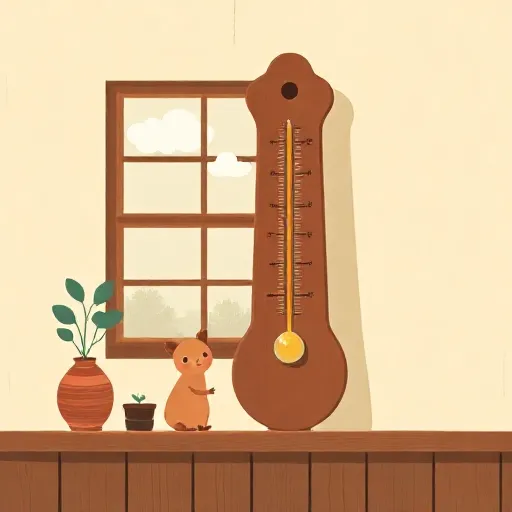
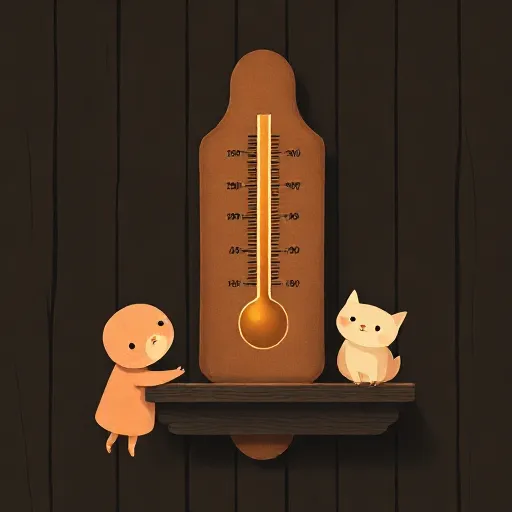
Fourth, spurious correlations: when a barometer’s mercury falls, a storm often follows. Did the barometer’s drop cause the storm? No — a drop in atmospheric pressure causes both. The barometer and the storm are linked, but the link is phony. A regularity theory mistakes that link for a real cause.
Probability to the Rescue: Raising the Odds
The central idea of probabilistic theories is simple: C is a cause of E if C raises the probability of E. In numbers: the probability of E given that C happens is greater than the probability of E given that C does not happen. Writing it, we get:
P(E | C) > P(E | ~C)
For smoking, the probability of lung cancer among smokers is higher than among non-smokers. That fits perfectly with some smokers avoiding cancer and some non-smokers getting it.
This idea also handles irrelevance. Hexing salt doesn’t raise the probability of dissolving — the chance is the same with or without a hex.
Still, a bare probability inequality doesn’t solve asymmetry or spurious correlations. Hans Reichenbach (1891–1953) introduced a key tool: screening off. If we condition on the true common cause — like atmospheric pressure — the spurious link between the barometer and the storm disappears. Mathematically, P(storm | barometer drop & pressure drop) = P(storm | pressure drop). The pressure screens off the barometer from the storm. Real causes, by contrast, aren’t screened off that way by an earlier common event.
When Numbers Flip: Simpson’s Paradox
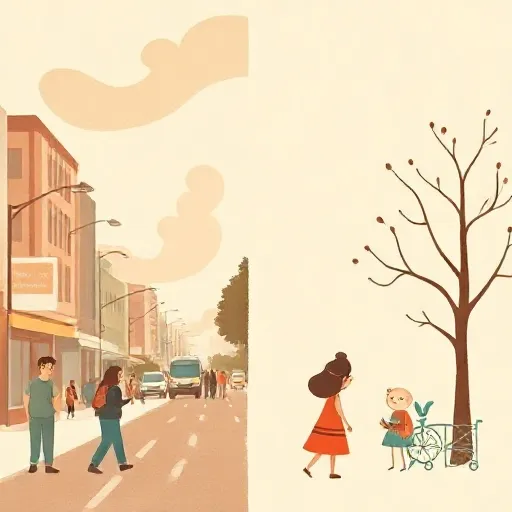
Even the probability-raising rule can backfire. Consider a world where smoking is common in the countryside, and city smog is an even stronger cause of lung cancer than smoking. Over the whole population, smokers might show a lower rate of lung cancer than non-smokers, because most non-smokers live in the smoggy city. That would suggest smoking lowers your risk — but we know it doesn’t. This reversal is called Simpson’s Paradox.
Nancy Cartwright (born 1944) and Brian Skyrms (born 1938) fixed this by insisting that a cause must raise the probability of its effect in every relevant background context. For smoking and lung cancer, we should look at city-dwellers and country-dwellers separately. In each group, smoking raises the risk. Cartwright required that this hold for all such contexts.
Later, Ellery Eells (1953–2006) sorted causes into positive causes (always raising the chance), negative causes (always lowering it), and mixed causes (raising in some contexts, lowering in others). Mixed causes are still causes — they’re causally relevant — but they don’t act as simple boosters everywhere.
Causal Maps: Drawing the Arrows
Modern philosophers use causal modeling with diagrams called directed acyclic graphs (DAGs). Variables like “smoking,” “city living,” and “lung cancer” are points, and arrows show direct causal influence. No arrow means no direct cause, and a missing arrow is as important as a present one.
The Markov Condition tells us how the graph links to probabilities: a variable is independent of all its non-descendants once you know its direct causes (its parents). For example, if city living causes both smoking and cancer, then conditioning on city living screens off the spurious link — exactly what Reichenbach aimed at.
With the right assumptions, including time order and no hidden common causes, you can sometimes recover the true causal graph from probability data alone. The PC algorithm, named after its creators Peter Spirtes and Clark Glymour, can search for colliders — variables where two arrows meet tip-to-tip — to orient arrows, because colliders leave a distinctive pattern of conditional dependence.
When we intervene to set a variable — like giving a drug to a patient — we break the incoming arrows. Pearl’s do-calculus lets us predict what happens after such an intervention, using the Markov factorization. This gives science a rigorous way to move from “smoking is correlated with cancer” to “if we could prevent smoking, cancer rates would drop.”
Who Actually Broke the Bottle?
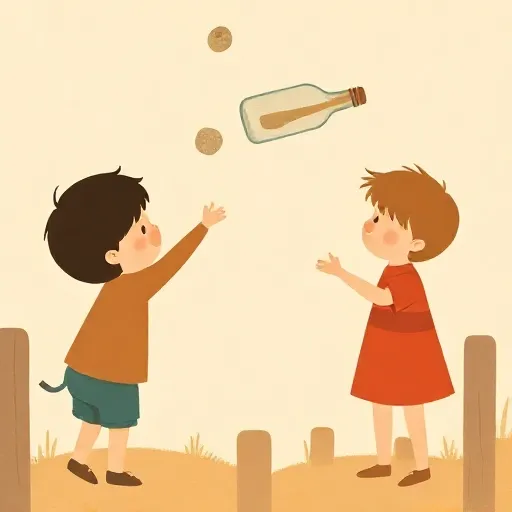
General causation is about tendencies over populations. But we also care about actual causation in a single case: which event really brought about the effect?
Suppose Suzy and Billy both throw rocks at a bottle. Suzy’s rock hits, Billy’s misses. Billy’s throw raised the probability the bottle would break — from Suzy’s alone 50% to the combined 95% — yet he didn’t cause the break. He’s a fizzler: his throw had the potential but fizzled out.
David Lewis (1941–2001) proposed a counterfactual theory using probabilities across possible worlds: an event C causes E if, in the worlds nearest to ours where C didn’t happen, the probability of E would have been much lower. That captures Suzy’s throw but runs into trouble with preemption — where one cause cuts off another before it can act.
Recent work by Luke Fenton-Glynn (born 1980) uses causal models. To check if X is an actual cause of Y, we fix some variables along the process to their actual values. If setting X to its actual value consistently raises the probability of Y compared to setting X to a different value — even when we hold those fixed variables constant — then X counts as an actual cause. This rules out Billy’s throw because when we fix that his rock missed, his throw no longer raises the chance of breaking.
Why It Matters for Your World

Every day you make judgments about causes: “Did that extra hour of study raise my test score?” “Did the new soccer drill reduce my injury?” These questions are about probability — not certainty.
Scientific experiments, from drug trials to climate research, rely on the ideas in this article. Random assignment breaks the hidden arrows that confuse correlation with causation. When you hear that “diet soda is linked to weight gain,” you can ask: was the link screened off by other factors, like overall eating habits? Did the study intervene, or just observe?
Probabilistic theories don’t give us a lazy rule. They give us sharper tools: look for common causes, check different contexts for Simpson’s paradox, and when possible, intervene. That way, you can think about causes the way scientists do — and when your uncle who smokes stays healthy, you’ll know the real story isn’t that one exception. It’s that smoking tips the scale, and the scale doesn’t need to tip every single time to be real.
Think about it
- If you put on sunscreen and still get a sunburn, did the sunscreen fail, or was something else at work? How would looking at different “background contexts” (like the UV index that day) change your judgment?
- Imagine a video game where your character’s attack always misses because a stronger teammate’s attack hits first. Did your attack cause the miss? How might a probabilistic model help you decide?
- Suppose a friend predicts a coin toss, and it comes true. Could the prediction be a cause of the outcome, or is it like the barometer? How would a philosopher test your answer?