
Is It a Cause If You Can Wiggle It to Change Something?
If You Can Wiggle It, Is It a Cause?

Imagine you are at a science fair. You planted identical seeds in ten cups. Some cups get a drop of fertilizer each day; the others get only water. After two weeks, the fertilised plants stand twice as tall. You point at the fertilizer and say, “This made them grow.” That claim feels obvious. But what are you really saying? You are claiming that the fertilizer is a cause of the growth — that wiggling one thing (the fertilizer dose) changed another thing (the plant height). Philosophers call this idea a manipulability theory of causation: a cause is something you can manipulate, at least in principle, in a way that reliably changes the effect.
This thought is so natural that many scientists take it for granted. The psychologists Cook and Campbell (1979) put it this way: “Causation implies that by varying one factor I can make another vary.” Still, trouble lurks beneath the surface. If your friend says that the moon’s gravity causes the tides, you cannot exactly wiggle the moon. Does that mean there is no causal connection? And if we only know what causes what by wiggling things, how do we avoid the suspicion that causation is just about us, the wiggler? These puzzles sparked a lively debate — and the answers reach all the way into how we test medicines and build machines.
The Agency Theory: Wiggling with Your Own Hands
In the 1990s, philosophers Peter Menzies and Huw Price (1993) proposed a version of the manipulability theory that put human free action at the center. Their idea: an event A is a cause of a distinct event B just in case a free agent could bring about B by freely bringing about A. In other words, if you (as a free person) could make B happen by choosing to do A, then A causes B.
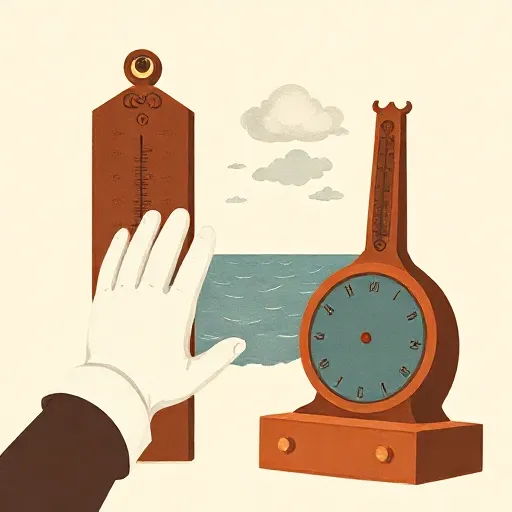
They used a clever example. A barometer’s reading (X) is perfectly correlated with storms (Y). But both depend on atmospheric pressure (Z). So X does not cause Y — the correlation is a spurious one. Menzies and Price said: if you could turn the barometer dial with a free act, independent of the pressure, the correlation with Y would vanish. If the correlation stayed, that would be evidence that X really does cause Y. They called this idea agent probability: the chance you would assign to Y if A came about by your own free act.
They believed this could give a non-circular account of causation. After all, we all have direct experience of doing something and seeing it produce an outcome. They claimed that this experience of agency comes before we learn the word “cause” — so we could use it to build a definition of causation without already smuggling in causal ideas.
But problems pile up quickly. What about causes that no human could ever freely manipulate? The 1989 San Francisco earthquake was caused by friction between continental plates, yet no one can freely move tectonic plates. Menzies and Price tried to handle this by saying the real situation resembles a small manipulable model built by seismologists. Critics, however, asked: doesn’t that resemblance itself depend on the very causal processes you’re trying to explain? If so, the attempted reduction fails.
Why “Free Acts” Are Not Enough

Even if we set aside the problem of unmanipulable causes, free action alone cannot do the job Menzies and Price wanted. Imagine a doctor freely gives a patient a pill (A) and the patient recovers (B). The correlation remains even when the act is free. But suppose the pill is a sugar pill — a placebo. The act of giving the pill causes recovery through the patient’s belief, not through the pill’s chemistry. So a free act can produce a correlation even when A does not cause B.
Another danger: what if the experimenter who freely turns the barometer dial actually watches the weather first and chooses the dial position to match it? Then the dial reading would still be correlated with the storm, but the correlation would be fake. To fix this, you would have to add extra conditions — for instance, that the free act must not be influenced by any other cause of B. But those conditions have nothing to do with the usual meaning of “free.” They push you toward a more surgical idea. That idea is called an intervention.
The Perfect Intervention: Cutting All Other Ties
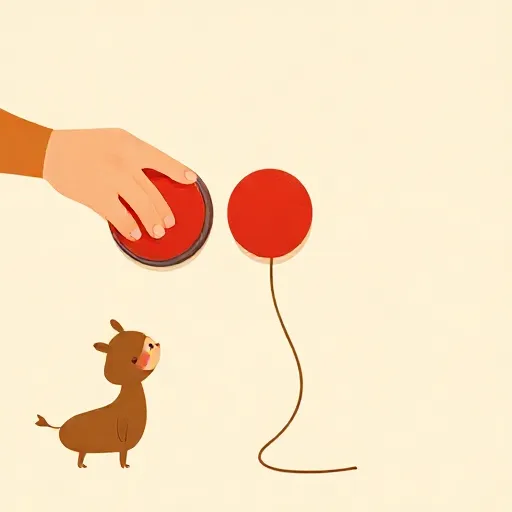
An intervention is a change in a variable that is so clean it breaks every other influence on that variable, leaving only the path to the effect intact. The computer scientist Judea Pearl (2009) pictured a system of equations. To intervene on a variable X, you rip out its old equation and replace it with one that sets X to a fixed value, while all other mechanisms in the system keep running. It is like a scientist who can surgically set a dial without touching anything else.
The philosopher James Woodward (2003) spelled out precise rules for an intervention I on a cause X with respect to an effect Y. I must be the only cause of X; I must not directly cause Y through any side route; I must not be affected by any cause that also affects Y without passing through X; and I must leave all other causes of Y unchanged. These rules (called M1–M4) ensure that whatever change shows up in Y must travel through X alone. Such an intervention gives you a counterfactual: “If X were set to x by an intervention, then Y would be y.” This is called an interventionist counterfactual.
Notice that an intervention is defined using causal language — we talk about “causing X,” “not causing Y directly,” and so on. So this version of the manipulability theory cannot reduce causation to non-causal terms. But Woodward and others argued that this “circularity” is not vicious. We do not need to know whether X causes Y to describe an intervention on X with respect to Y; we only need causal information about other relationships. So we can use one batch of causal facts to learn about a new causal connection — just as we do when we design a controlled experiment.
This solves the anthropocentrism worry, too. An intervention can be a natural event, like a random earthquake that breaks a pipeline — no human intentions required. And it helps with unmanipulable causes like the moon’s gravity. Even if no physically possible process can surgically change the moon’s position, our well-tested gravitational theory tells us what would happen if such an ideal intervention could occur. So we can still say, meaningfully, that the moon’s gravity causes the tides.
When You Cannot Even Imagine Changing Something
Some causes raise a deeper puzzle. Suppose you claim, “Being a raven causes blackness.” What would it mean to intervene on “being a raven”? We have no clear idea how to change a raven into a lizard without changing everything else about the organism. The variable “species” does not have a well-defined sense of varying. In the same way, many statisticians, like Paul Holland and Donald Rubin, have argued that factors such as race or sex cannot serve as causes in a clear causal claim, because you cannot conceive of a clean intervention that changes a person’s race while keeping all else equal.
This is not just a verbal quibble. In medical research, saying “race causes a higher risk of disease” may be less informative than saying “a specific genetic variant, more common in some populations, increases risk.” The manipulability theory presses us to replace claims about causes we cannot imagine wiggling with ones about causes we can — like genes, proteins, or environmental exposures. That push can make scientific questions sharper and answers more useful.
Why This Matters to You

The manipulability approach is not locked away in academic journals. It captures the logic behind every experiment you’ve ever done, whether in a lab or just seeing if staying up late makes you grumpy the next morning. When scientists say that carbon dioxide causes global warming, they mean that if we could intervene on CO₂ levels (and we can, by policies), we would change the earth’s temperature. That claim guides real decisions.
At the same time, the theory reminds us that causation is not just a label we slap onto a correlation. To call something a cause is to make a commitment about what would happen under specific, surgical changes — even when no human has ever actually performed the surgery. That is a powerful idea. It tells us why we can say the moon causes tides, why placebo buttons can fool us, and why some questions (“does your star sign cause your personality?”) might not even be proper causal questions. The debate over what counts as a cause is really a debate about how we can learn what to change in order to make a difference in the world.
Think about it
- Suppose a scientist cannot actually move the moon but can calculate exactly what would happen if its gravity suddenly changed. Is it still meaningful to call the moon’s gravity a “cause” of the tides? What makes you think so?
- Some researchers argue that you should not ask whether “being a teenager” causes risky behavior, because you cannot randomly assign someone to be a teenager or not. Do you agree? What makes a variable a proper candidate for a cause?
- Imagine you build a machine that waters a plant whenever you press a button, and the plant thrives. Unknown to you, the machine secretly adds a tiny dose of fertilizer from a hidden compartment. Would you say the button-press caused the plant’s good health? What might be wrong with that claim?