Who Really Caused the Fire? Law's Hunt for a Hidden Link
Two Fires, One House: A Legal Puzzle
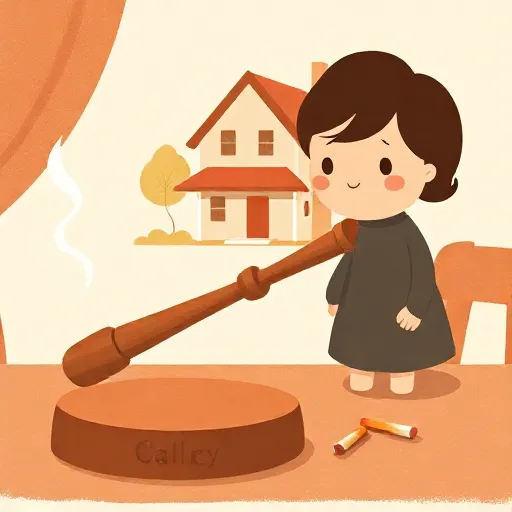
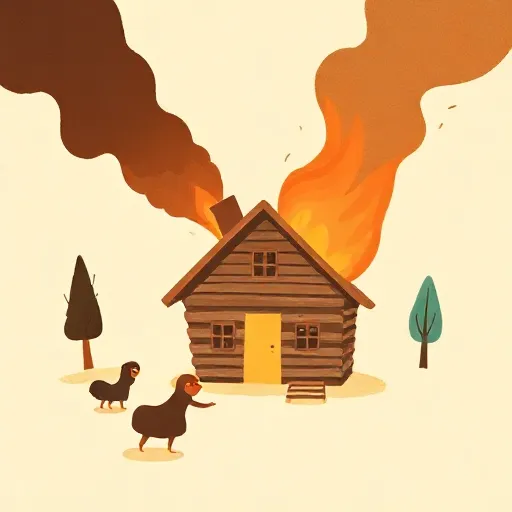
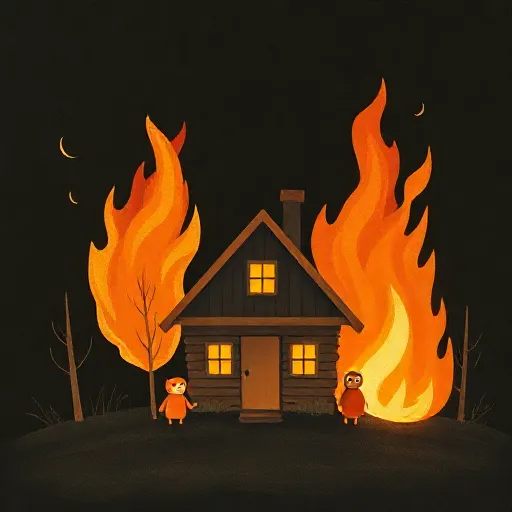
It’s a dry summer day. Two campers, miles apart, each carelessly toss a match into dry grass. Two fires start. The wind pushes them together. They merge and race toward a house, burning it to the ground. If either fire alone would have done the same damage, can you blame just one camper? The law says yes — both are responsible. But its most common tool for finding a cause, the but-for test, says neither of them caused the destruction at all. That puzzle sits at the heart of how the law thinks about causation.
The law uses causation to decide who must pay for a harm, or who has committed a crime. You can’t be guilty of burning down a house or be forced to pay for its loss unless you caused the damage. But what does “caused” really mean? For centuries, judges and legal thinkers have wrestled with that question. Their answers shape everything from playground accidents to huge lawsuits. This article explores how the Anglo-American legal tradition — the system used in the United Kingdom, the United States, and many Commonwealth countries — handles the tangled problem of legal causation.
The But-For Test: Did Your Action Make the Difference?
The simplest way to test whether someone caused a harm is to ask a counterfactual question: but for the person’s action, would the harm have happened? This is often called cause in fact. Imagine a crewman falls off a fishing boat and drowns. A friend had earlier destroyed the only life preserver. We ask: if the preserver had been there, would the crewman have survived? If the answer is no — that is, the death would still have occurred even with the preserver — then destroying it was not a cause. Only actions that are necessary for the harm count.
This but-for test, sometimes called the sine qua non test, has a strong appeal. When we blame someone or punish them, we care deeply about whether they really made a difference. If the bad outcome was going to happen no matter what, holding them responsible feels unfair. The test captures that intuition neatly.
Yet the two fires show its big blind spot. In that case, neither fire was individually necessary because the other one alone would have been enough. So the but-for test says neither was a cause. That seems absurd. Real courts reject that conclusion. They almost always hold both campers liable. Such cases of overdetermination — where two things each pack enough punch — make the but-for test too strict.
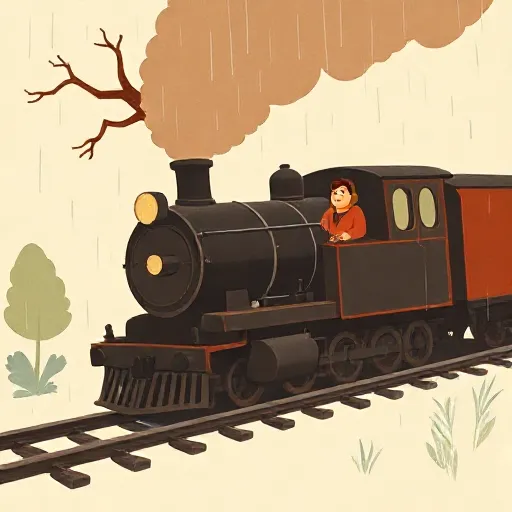
There’s also the opposite problem: the test is too generous. Imagine a train driver is speeding. At exactly the wrong moment, a tree falls on the tracks and hits the train. If the train hadn’t been speeding, it would have been at a different spot and missed the tree. So the speeding was necessary for the crash. But most people, and the law, say the driver did not cause the accident — the freakish falling tree did. The but-for test alone can’t tell the difference between a real cause and a weird coincidence.
To handle these flaws, lawyers have invented other tests. Some say an action is a cause if it was a necessary element of a sufficient set — part of a package of conditions that, together, were enough to bring about the harm, even if it wasn’t strictly necessary by itself. In the fire case, each match was a necessary part of its own package (the dry grass, the wind, etc.), so both count. Courts sometimes use a vague substantial factor test, simply asking whether the action was an important contributor. These fixes show that even “what factually caused something” is harder to pin down than it sounds.
But that’s only half the story. Even when an action clearly counts as a cause-in-fact, the law often refuses to hold a person responsible. For that, we need a second filter: proximate cause.
Proximate Cause: When the Law Draws a Line
After proving cause in fact, a judge or jury must decide whether the harm was too remote, too freakish, or too disconnected from the defendant’s action. This part is called proximate cause (or sometimes “legal cause”). The idea is ancient: the English philosopher Francis Bacon (1561–1626) coined the term causa proxima, meaning the nearest cause, because chains of connection seemed to fade over time and space.
Consider a knife attack. A defendant stabs his victim. The victim, for religious reasons, refuses a life-saving blood transfusion and dies. Did the attacker “cause” the death? The but-for test says yes: without the stabbing, the victim wouldn’t have faced the choice. But did the victim’s unusual choice “break” the chain? Courts use proximate cause doctrines to answer such puzzles. A famous rule is the thin-skulled man maxim: “You take your victim as you find him.” That means if the victim had an odd, pre-existing fragility — an especially thin skull — the attacker is still fully responsible for the death, even if the harm was unexpected. With hold-out victims, however, the law often sees the victim’s own choice as an intervening cause that severs the attacker’s responsibility.
Meanwhile, some bizarre coincidences shield a person from liability even when the harm wouldn’t have happened without their action. If a driver carelessly swerves and ends up in a spot where a sudden, extraordinary wildlife stampede crushes the car, a court might say the stampede was a superseding cause — a freakish natural event that wipes out the otherwise straightforward causal connection. The law’s intuitive goal is to avoid punishing people for “freak accidents” and to keep responsibility within sensible bounds.
But how do judges decide where to draw that line? That question has launched one of the longest-running debates in legal philosophy.
Real Links or Just Fairness? The Big Debate
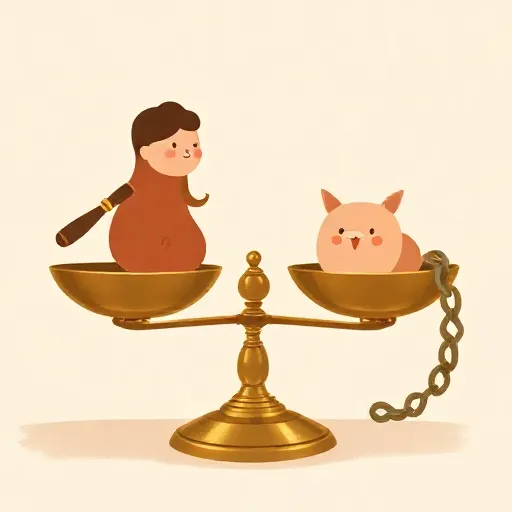
Legal thinkers split into two broad camps. One side treats proximate cause as a question of fact about real causal chains. The British legal philosopher H. L. A. Hart (1907–1992) and his colleague Tony Honoré (1920–2019) spent decades mapping how ordinary people talk about causation. They argued that in everyday life, we don’t treat all necessary conditions as causes. Out of the many factors that lead up to an event, only free, informed human actions and abnormal natural events count as proper causes — and those same kinds of events break chains if they come later. So if you light a fire in your yard, but a stranger deliberately relights and spreads it after you put it out, that stranger’s voluntary act “breaks” the causal chain back to you. Hart and Honoré believed the law largely followed this common-sense picture of interruptions and chain-breakers.
The other camp says that’s all a polite fiction. What really drives those decisions, they argue, are policy goals — ideas about what’s fair, what deters future harm, or what protects the economy. The most popular policy-based test is the harm-within-the-risk approach. Instead of hunting for some real causal thread, the court asks: was the particular harm that occurred one of the kinds of harms that made the defendant’s action wrong in the first place? For example, if you dangerously store a can of nitroglycerin because it might explode, but instead it falls on someone’s toe, causing them to bleed to death, a court might say that bleeding was not within the risk that made your act negligent. You’re off the hook not because you didn’t cause the death, but because the death wasn’t the type of harm you were supposed to guard against.
Other policy tests go even further. The foreseeability test asks whether a reasonable person in the defendant’s shoes could have foreseen the harm. Some skeptical legal thinkers — like the American Legal Realist Henry Edgerton (1888–1970) — concluded that all causal language in law is just a mask. When courts say “this wasn’t the proximate cause,” they are really saying “we don’t think this person should have to pay” based on hidden policy judgments, not on any fact about the world. Later critics, from the Critical Legal Studies movement and from law and economics scholars, pushed similar views: talk of causation is window-dressing for social goals like discouraging dangerous behavior or making the cheapest fixer pay.
Not everyone buys that. Defenders of retributive justice in criminal law and corrective justice in tort law insist that real, metaphysical causation matters. You can’t justly punish someone for a harm they didn’t truly cause. And you can’t demand that a wrongdoer make things right unless the harm actually flowed from their deed. So for these thinkers, the law must keep trying to track what causation really is — however messy that project becomes.
Why It Still Matters: Accidents Are Everywhere
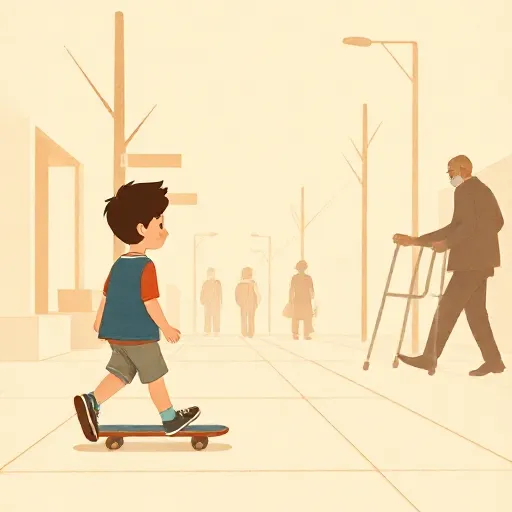
You probably don’t spend your day worrying about legal tests. But the arguments you just read show up every time something goes wrong and someone says, “That wasn’t my fault!” Imagine you leave your skateboard on the sidewalk. A neighbor trips over it, stumbles, and hits his head. He turns out to have a incredibly rare bone condition and suffers a serious injury. Are you to blame? The but-for test says yes — without your skateboard, he wouldn’t have fallen. Proximate cause analysis asks trickier questions: was the freak medical condition something you should have anticipated? Would a reasonable person see the link as too remote? Judges and juries wrestle with exactly these puzzles, often without a clear rulebook.
The debate reveals something deeper: our sense of responsibility isn’t just about cold facts. It’s woven together with judgments about fairness, foreseeability, and the kind of world we want to live in. That’s why the law’s concept of causation is still fiercely argued over, and why lawyers really do have to adventure with philosophers. Next time you hear about a car crash, a broken window, or a messy chain of events, you’ll know: finding a cause is never just a matter of following a trail — it’s also about where you decide that trail should end.
Think about it
- Two kids each throw a water balloon at a third kid at the exact same moment. Either balloon alone would have soaked the target. Should both kids be punished, or neither? Why?
- Suppose you jokingly hide a friend’s phone, and while they’re looking for it they trip over their own shoelace and break their wrist. Would you feel responsible? Where would you draw the line between your action and the accident?
- If judges sometimes decide cases based on what seems most fair rather than on a single clear rule, does that make the law more just, or more unpredictable? Can you think of a situation where fairness and a strict rule would clash?