Can a Number Be Blue? The Mystery of Jumbled Sentences
The Day Someone Said “The Number Two Is Blue”

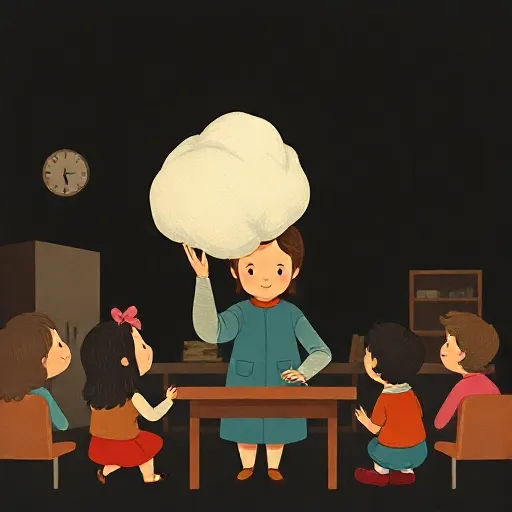
Imagine a classroom. A kid raises her hand and announces, “The number two is blue.” Giggles bubble up. The teacher asks, “Wait—is that true or false? Two isn’t a thing you can color. It’s not like an apple. So what exactly is wrong with that sentence?” This is not just a joke. It’s the beginning of a deep puzzle that philosophers have been chasing for nearly a century. They call sentences like “The number two is blue,” “Saturday is in bed,” or “Colorless green ideas sleep furiously” category mistakes. They don’t just sound false—they sound wrong in a whole different way. Even their negations, like “The number two isn’t blue,” feel just as weird. And strangely, the same words can be perfectly fine in another situation: “That is green” is fine if you’re pointing at a tree, but not if you’re pointing at the number two. So the puzzle is: why do these sentences give us a mental hiccup?
Philosopher Ryle and the Idea of Kinds of Things
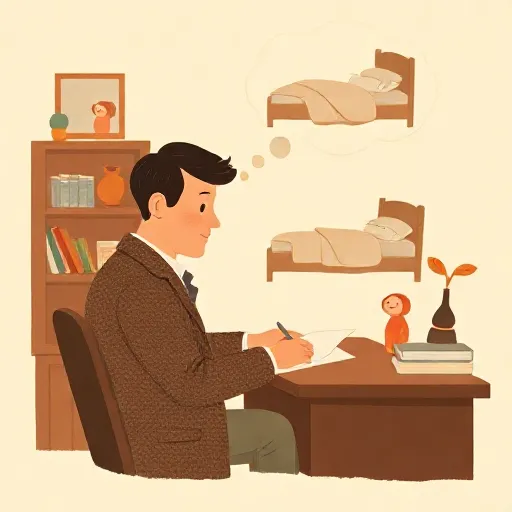
In the 1930s, the British philosopher Gilbert Ryle (1900–1976) gave this hiccup a name: “category mistake.” Ryle was obsessed with ontological categories—the most basic kinds of things that exist. Numbers are one kind of thing, beds are another. You can say “Gilbert Ryle is in bed,” but “Saturday is in bed” sounds silly because Saturday isn’t the kind of thing that can be in a bed. Ryle thought that by spotting category mistakes, we could map out the fundamental categories of reality. He got the idea partly from Bertrand Russell (1872–1970), who had used “type theory” to block logical paradoxes by insisting that some sentences aren’t just false—they’re meaningless because they mix up types. Ryle believed that many famous philosophical puzzles, like the mind-body problem, were really just giant category mistakes disguised as deep questions. By showing certain sentences were meaningless, he hoped to dissolve the puzzles altogether. Bold move—and it sparked a debate that still glows 80 years later.
Grammar’s Invisible Traffic Lights: The Chomsky View
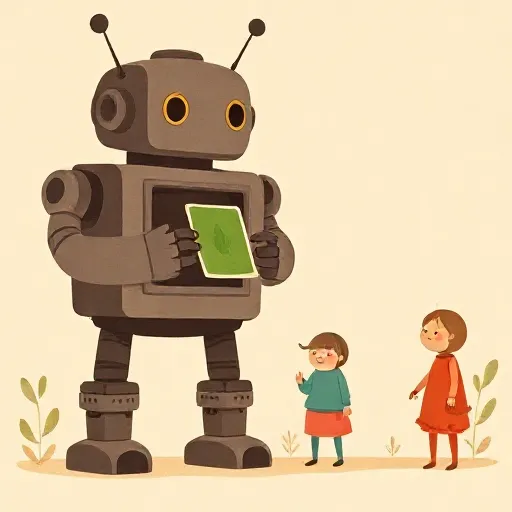
One straightforward answer came from linguistics. Noam Chomsky (1928–), the giant of modern grammar, argued that category mistakes are actually ungrammatical—just in a hidden way. In his 1965 book, he proposed that words come with tiny invisible tags called selectional features. The verb “admire” has a tag “+animate” for its subject, so “The boy admires sincerity” is grammatical while “Sincerity admires the boy” is a category mistake. These tags act like traffic lights inside our heads, forbidding weird combos. But there’s a catch. What about “The thing I am thinking about is green”? Whether that sentence makes sense depends entirely on what you’re thinking about—an apple or the number two. Grammar is supposed to be about the structure of a sentence, not about the contents of someone’s mind. A grammar rule that changes with context seems fishy. And some languages have incredibly specific verbs—in Hebrew, you use a special verb just for picking grapes. Would we really need a tag “+grape”? That feels like too much clutter for our built-in mental grammar. So perhaps grammar alone isn’t the whole story.
The “Just Meaningless” Idea and Why It’s Tricky
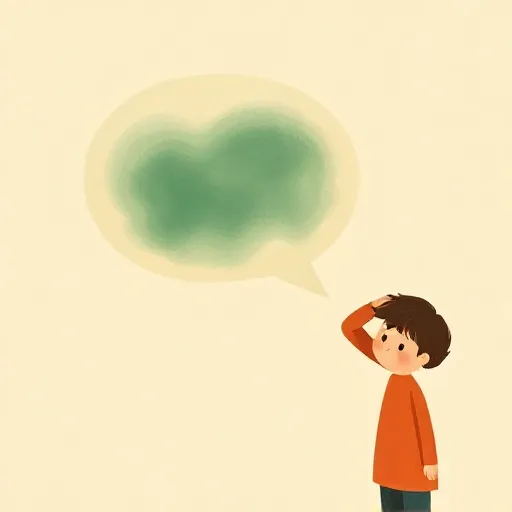
For decades, many philosophers stuck with Ryle’s intuition: category mistakes are simply meaningless. Words are in the right order, but the whole sentence adds up to zero meaning. This meaninglessness view feels right—you can almost sense the clunk. But it hits trouble fast. First, what about metaphors? When a critic says “The poem is pregnant,” we understand that as meaning it’s rich with ideas. If the sentence were literally meaningless, how would we ever arrive at that metaphor? Some accounts of metaphor need a literal meaning as a starting point. Second, we can embed category mistakes inside bigger sentences that sound fine: “John dreamt that the number two was green.” The whole report makes sense. But if the embedded chunk is meaningless, how can the larger sentence be meaningful? The principle of compositionality—the idea that the meaning of the whole is built from the meanings of its parts—would be broken in a sneaky way. That makes the meaninglessness view hard to maintain without some fancy footwork.
When a Sentence Has a Thought but No Truth
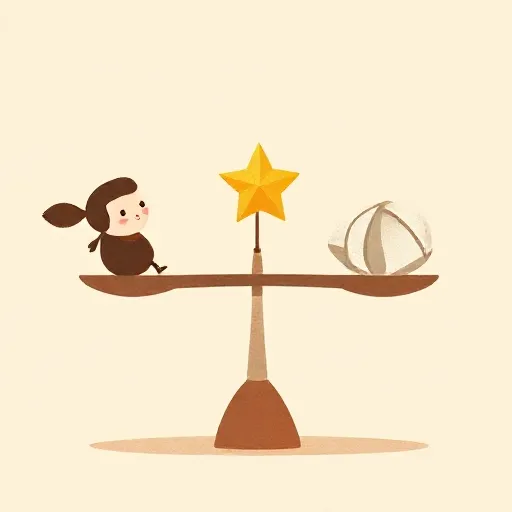
A more recent view offers a surprising compromise. Maybe category mistakes aren’t meaningless at all. Maybe they express a thought perfectly well, but that thought can’t be true or false. This is the truthvaluelessness view—the idea that some sentences have a truth-value gap. Think of it like a question with no answer: “What’s north of the North Pole?” It’s not false; it just doesn’t apply. Similarly, “The number two is green” might state a clear idea, but given how numbers work, that idea can’t be truthfully evaluated.
A powerful way to capture this uses the notion of presupposition. When you say “The king of France is bald,” you’re assuming (presupposing) that France has a king. If that assumption fails, the sentence isn’t simply false—it’s infelicitous, like a program that crashes. The presuppositional approach says category mistakes do the same thing. “The number two is green” presupposes that numbers can have colors. Since that’s not true, the sentence crashes—whether you say it’s green or it isn’t green. That explains why both versions feel equally odd. It also handles embedding elegantly: “If numbers have colors, then the number two is green” sounds okay because the “if” clause suspends the bad presupposition.
This view isn’t perfect. It asks us to accept that some meaningful sentences lack a truth-value, which goes against classical logic’s “true or false” rule. But many philosophers are willing to give that rule up anyway to handle other paradoxes, like the Liar sentence, which says that it is false. And questions remain about exactly what presuppositions are triggered—are they general type restrictions like “concrete object,” or something much more specific? Still, the presuppositional story does a great job explaining why category mistakes act so strangely across different sentence structures.
Why Our Minds Care About Silly Sentences
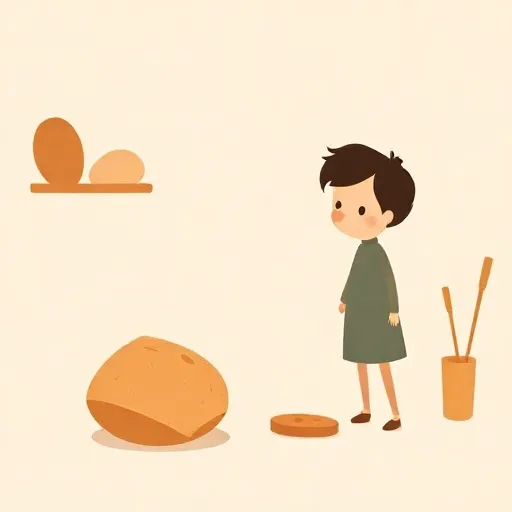
You might wonder: why should anyone care about weird sentences? Because category mistakes aren’t just linguistic leftovers—they shape real arguments. In metaphysics, there’s a hot debate about whether a statue is the exact same object as the lump of clay it’s made from. You can truthfully say “The statue is Romanesque,” but it feels wrong to say “The lump of clay is Romanesque.” If the statue just is the lump, why does one sound fine and the other like a category mistake? Some philosophers argue this shows the two are distinct; others say we’re just tangled in category habits. The whole debate leans on how we explain the category mistake.
In fiction, category mistakes roam free. Stories give feelings to trees, and Death walks around as a character. If such sentences were strictly meaningless, fiction would be a mess. Understanding that language can stretch across category borders in pretend-play helps us see how flexible meaning really is. Category mistakes remind you that the boxes your brain uses—numbers, physical things, events—are powerful but not airtight. And learning to spot them might make you a sharper thinker, catching when someone mixes up concepts in an argument.
Think about it
- Invent a sentence that sounds like a category mistake to most people today but might be perfectly true in a far‑future world where technology changes everything.
- When a friend says “My phone is angry” as a joke, is it a category mistake? What’s the difference between a funny category mistake and a metaphor that feels deep?
- Imagine a machine that calculates whether sentences are true or false. Should it crash when given “The number two is blue,” or should it just answer “false”? Why?