

Is Your Life Measured by What You Have — or What You Can Do?
Mina, Jaden, and the Question No One Was Asking
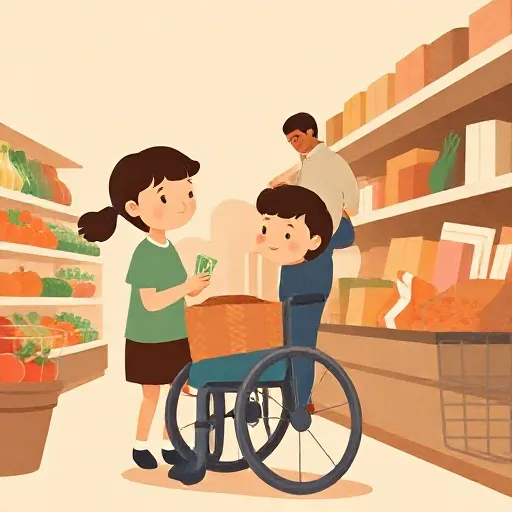
Mina and Jaden each have ten dollars. Mina uses a wheelchair; Jaden does not. With her money, Mina can either buy a healthy meal or put some toward a battery for her wheelchair, but not both. Jaden easily buys his meal and has change left over. Who is better off? If you look only at the money in their pockets, they are equal. But that feels wrong — Mina faces obstacles that Jaden never has to think about.
In 1979, the economist and philosopher Amartya Sen (born 1933) asked a startling question: “Equality of what?” He argued that most ways of judging how well someone’s life is going miss something huge. If we only count the resources people have, we ignore what they can actually do and be with those resources. Two people with identical amounts of money can have completely different real possibilities. Sen called these real possibilities capabilities — your genuine freedom to achieve the things you value, like being healthy, moving around safely, or getting an education. The things you actually end up doing or being — like riding a bike, voting, or being well‑nourished — are called functionings.
This idea grew into the capability approach, developed further by philosopher Martha Nussbaum (born 1947) and many others. Its core claim is simple: a good human life is not about piling up stuff, nor only about feeling happy. It is about having the real freedom to choose among worthwhile doings and beings — the kind of life you have reason to value.
The Real Difference Between Having and Being Able To
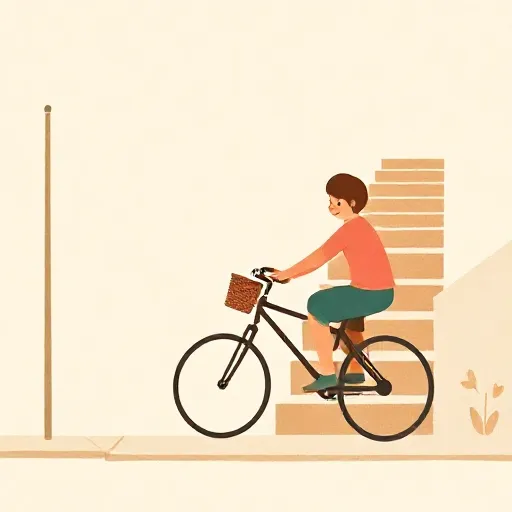
Sen wanted to shift our attention from means (the goods and money we have) to ends (what we can actually do and be). To see why, imagine two people each own a bicycle. One person has a physical impairment that prevents her from riding. Another lives in a city with no bike lanes and where it is socially frowned upon for women to cycle. A third person has a smooth road, strong legs, and the skills to ride. All three have the same resource — a bike — but their capability to use it for mobility is wildly different. The bike alone does not tell you who can get around.
The connection between a resource and a functioning depends on what Sen called conversion factors. These are the conditions that turn a resource into a real opportunity. Personal conversion factors include your body, your health, and your skills. Social conversion factors are things like cultural norms, discrimination, or public policies. Environmental conversion factors cover your physical surroundings — climate, roads, the buildings you need to enter. If any of these block you, the resource may be nearly useless.
The capability approach is careful to separate what is merely a means from what is a real freedom. Food is a means; being well‑nourished is an end. A ballot paper is a means; the genuine opportunity to vote without fear or huge obstacles is a capability. This fits the idea that a capability is a substantive freedom — not just a formal right on paper, but a real chance that is open to you. If the closest voting station is 200 kilometers away and you have no car, you have the formal right to vote, but you lack the real capability to do so.
The Pleasure Wizard and Why Happiness Isn’t the Answer

Some people argue that well‑being is simply about how much happiness or pleasure you get from your resources. A utilitarian might say: if Mina is just as happy with less, then we don’t need to give her more help. But Sen pointed out a devastating problem with this idea. Imagine Mina has a sunny personality — she’s a “pleasure wizard” who feels joy from very little. Jaden, on the other hand, is hard to please and grumbles even when things go well. If we distribute help only to increase total happiness, Jaden would get more, even though Mina’s needs are greater. That seems deeply unfair.
Worse, people who live in poverty or face discrimination often adapt their expectations downward. They might say they are satisfied with very little because they have learned to cope. As Sen noted, a person who is chronically hungry may stop expecting a full meal. Measuring well‑being by happiness alone can hide severe injustice. By focusing on capabilities — what people can actually do and be — the capability approach tries to capture the conditions of a life that is genuinely going well, not just a life that feels okay in the moment.
This does not mean happiness is irrelevant; it can be one valuable functioning among many. But the capability view insists that we look at the real freedoms someone has, even if that person chooses not to use them. A smoker may have the same capability to be healthy as a non‑smoker — both have access to medical care, knowledge about the risks, and support to quit. The smoker simply makes a different choice. If we only looked at functionings, the smoker would seem worse off in terms of health, even though their opportunity was just as good. The capability approach cares about the set of opportunities open to you, not only what you end up doing.
Two Philosophers, One Big Question: Who Picks What Matters?

The capability approach is not a single complete theory — it is more like an open‑ended framework that can be filled in different ways. And the biggest debate among capability thinkers is which capabilities count, and who gets to decide.
Martha Nussbaum offers a specific list of ten central capabilities she believes every person is entitled to, simply because they are human. They include being able to live a normal‑length life, to have good bodily health and bodily integrity, to use your senses and imagination, to feel emotions and form attachments, to use practical reason, to affiliate with others, to live with concern for animals and nature, to play, and to have some control over your political and material environment. Nussbaum argues that without these capabilities, a life falls below the threshold of human dignity. She thinks this list can be agreed upon across cultures and should be built into every country’s basic laws.
Amartya Sen disagrees — not because the items on the list are bad, but because he thinks no single philosopher should decide the list for everyone. He insists that people must participate in public reasoning to work out which capabilities matter most for their own communities. For Sen, what people “have reason to value” is crucial, but that valuing must be shaped through discussion, not handed down by an expert. The worry is that a fixed list might ignore important local differences or silence the voices of the very people it is meant to help.
Most capability scholars believe both approaches have strengths. In practice, many development projects use some combination: a broad list to guide policy and participatory methods to fill in the details. The important point is that both Sen and Nussbaum put the real freedoms of individuals at the centre — they just arrange the furniture differently.
Why These Ideas Shape Your World Right Now
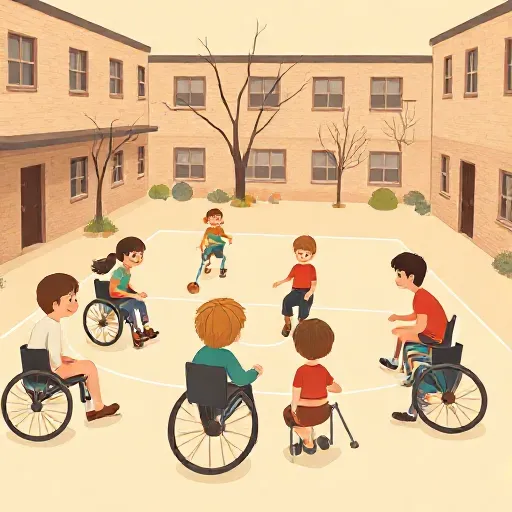
The capability approach is not only about huge global policies. It lives in the details of your own neighbourhood. If your school has ramps, accessible bathrooms, and classes that you can actually get to and understand, that is a capability‑friendly environment. If the park has smooth paths that a friend using a wheelchair can navigate, that expands the real freedom to play. When doctors and public health officials think about what keeps people well, they increasingly ask: what are people truly able to do — move around freely, breathe clean air, feel safe — and what barriers stand in the way?
On a larger scale, the United Nations’ Human Development Reports have used capability thinking for decades to rank countries not by how much money they have, but by what people can do — whether they can live long and healthy lives, get an education, and have a decent standard of living. Disability rights movements draw on the same ideas when they argue that society must remove the social and physical barriers that turn a person’s impairment into an inability to participate.
So next time you see a ramp, a sign language interpreter, or a school lunch programme, you are looking at an attempt to turn resources into real capabilities. The question “What are people actually able to do and be?” has quietly reshaped how many of us think about fairness. And you get to join the conversation, because the list of what matters is never finally closed.
Think about it
- If a city builds a beautiful new library but puts it at the top of a long staircase with no ramp, has it treated everyone fairly? Why or why not?
- Should we measure how well someone’s life goes by how happy they feel, or by what they can genuinely choose to do and be — even if they don’t always make the choices we expect?
- Imagine your class is given a sum of money to improve student life. Who should decide what the money is spent on: the principal, a team of experts, or the students themselves — and why?