Can You Make a Mirror by Rubbing a Tile? The Chan Buddhist Challenge
The Monk Who Tried to Rub a Tile into a Mirror
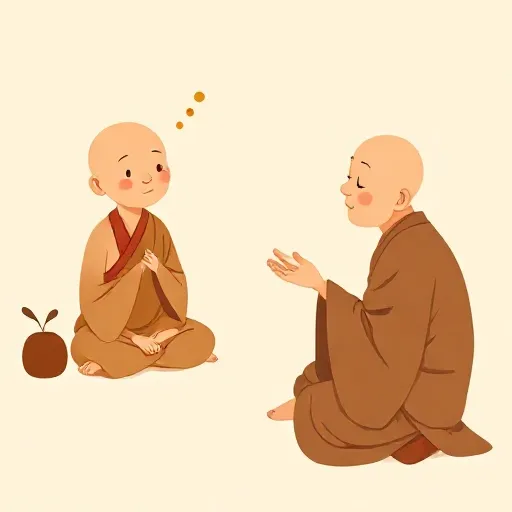
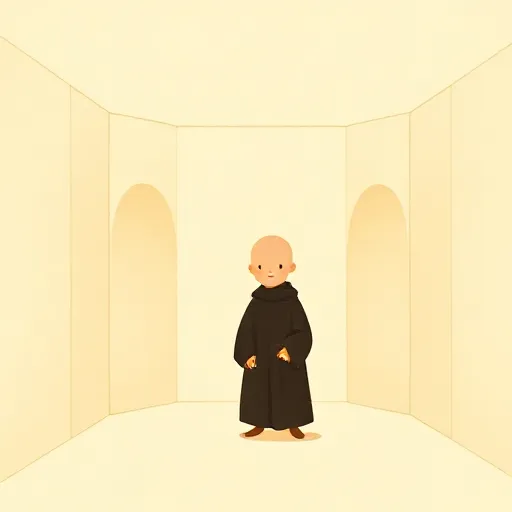
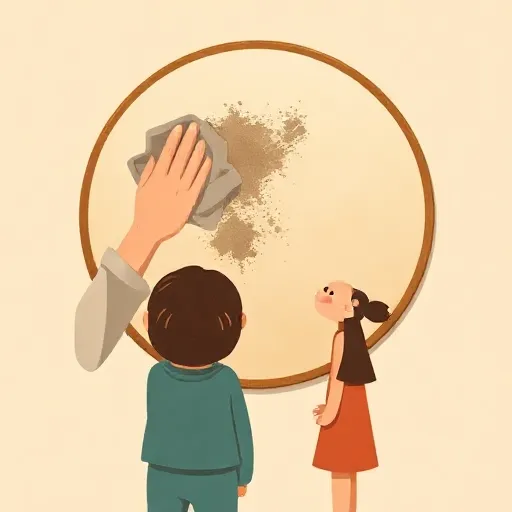
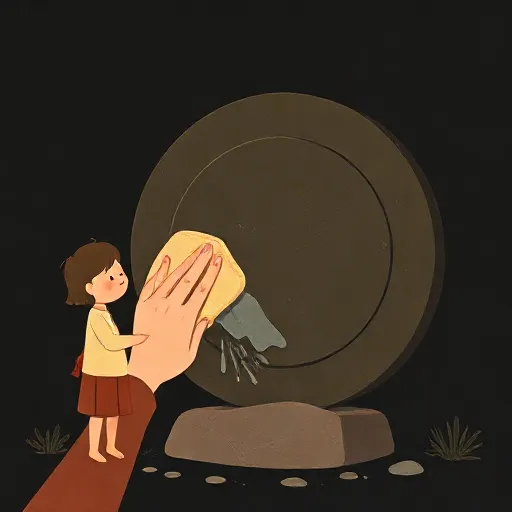
Mazu Daoyi (709–788) was a young monk who wanted only one thing: to become a Buddha. So he sat in meditation, day after day, convinced that discipline would get him there. One morning his teacher, Nanyue Huairang (677–744), spotted him and asked what he was doing. When Mazu said he was trying to become a Buddha, Huairang picked up a clay roof tile and started rubbing it with a stone.
Mazu, puzzled, asked what he was doing. Huairang said calmly that he was making a mirror. Mazu protested that you can’t make a mirror by rubbing a tile. Huairang’s reply hit like a thunderclap: he asked how you can become a Buddha by sitting in meditation if you can’t even make a mirror by rubbing a tile.
With that question, Mazu’s whole understanding flipped. The school of Buddhism we now call Chan (better known in the West by its Japanese name, Zen) built its entire approach around jolts like this. Chan teachers insisted that you are already a Buddha; you just don’t act like one. Practice isn’t a ladder you climb — it’s the ordinary, alert liveliness you bring to each moment. Books won’t give it to you. Rituals won’t earn it. You can’t think your way into it.
A Wild Origin Story: From a Flower to a Chinese Kitchen
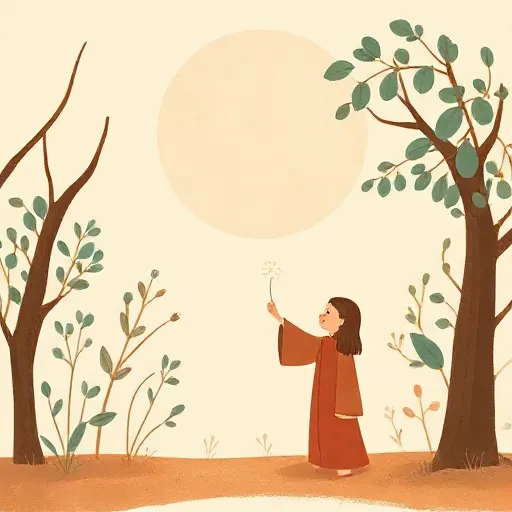
Chan traces its spark to a legend: the Buddha once stood before thousands of listeners, said nothing, and simply raised a flower. Only one student, Mahākāśyapa, broke into a grin. In that shared silence, a wordless transmission of insight happened — the first “mind-to-mind” seal. Centuries later, an Indian monk named Bodhidharma (early 6th century) is said to have carried this living transmission to China, becoming the first Chinese patriarch of Chan.
The real story is messier and more interesting. By the time Chan took shape, Chinese Buddhists were drowning in scriptures and quarrels. The key fight was over Buddha-nature — the idea, found in many Mahāyāna texts, that every sentient being already possesses the seed or capacity for awakening. Xuanzang (602–664), a famous Chinese monk, traveled all the way to India to settle the debate and came back convinced that the Buddha-nature thesis was mistaken. But Chinese Buddhists largely disagreed. They trusted the sutras that said everyone, even a person who had done terrible things, could eventually realize liberation.
Then something bold happened. Huineng (638–713), an illiterate laborer, was named the sixth Chan patriarch, and his collected teachings were given the title Platform Sutra. The word “sutra” had always been reserved for the recorded words of the Buddha himself. By calling Huineng’s words a sutra, Chinese Buddhists were practically declaring him China’s first homegrown Buddha. The message was clear: authority doesn’t live in old pages or fancy scholarship. It lives in the direct, face-to-face meeting of a teacher and a student who are wide awake.
Bodhidharma had already laid the ground rules. He taught that there are two ways into Buddhism: by principle — realizing straightaway that all beings share the same true nature — and by practice — making right the wrongs you’ve done, adapting to circumstances, and seeking nothing extra. He warned that whoever understands the Dharma only through reading will have weak qi (vital energy); real understanding must be absorbed in the thick of daily events, while walking, lying down, sitting, or standing.
A Universe That Holds Together Like a Timber-Framed Building
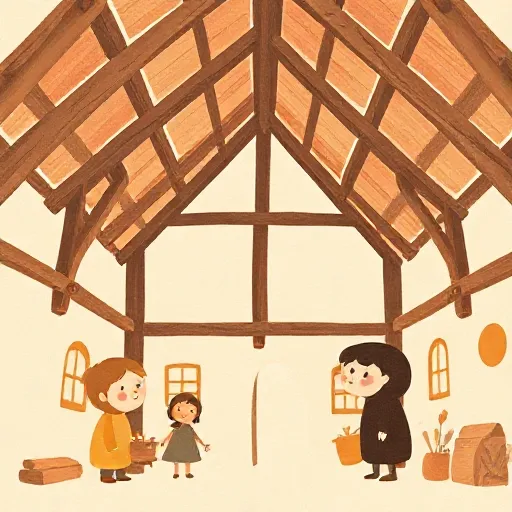
If you already have Buddha-nature, why does suffering happen? Chan’s answer rests on a view of reality that might feel unfamiliar. Instead of imagining the world as a collection of separate things bumping into one another, Chan thinkers — building on centuries of Buddhist philosophy — saw everything as thoroughly interdependent. Things don’t just rub shoulders; they interpenetrate. Every part of the whole is both caused by and causing every other part.
The great Huayan scholar Fazang (643–712) explained this with a traditional Chinese building. In a timber-framed hall held together by gravity alone, removing the clay roof tiles would collapse the entire structure. So those tiles aren’t just sitting on top; they are a cause of the whole building. Yet the same is true of every beam, every rafter, every pillar. Reality, Fazang said, is a realm where each particular thing contributes uniquely to the whole and is fully what it is only through that contribution.
This means Buddha-nature is not a hidden diamond inside you. It’s your capacity to enter into enlightening forms of relationship. The Chinese term for Buddha-nature, fo-xing, carries a dispositional flavor — it points to a propensity, a way of acting, not a substance. Mazu Daoyi later put it bluntly: “Ordinary, everyday mind is Buddha.” When you respond to people and situations without grasping, without calculating, without freezing up, you are already manifesting what Buddhists call true suchness — ultimate reality itself.
Why the Boy’s Finger Was Cut Off: Truth as Conduct
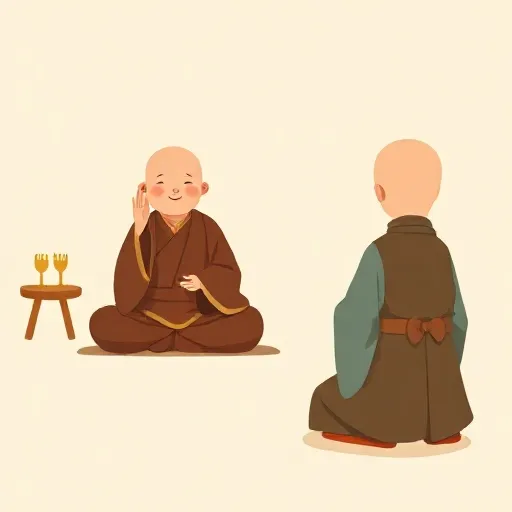
If reality is a living, relational dance, then you can’t state the deepest truth in a tidy sentence. Chan stated this with its famous four-line slogan: “A special transmission outside the scriptures; not established upon words and letters; directly pointing to the human heart-mind; seeing nature and becoming a Buddha.”
The records of Chan are packed with gong’an (public cases), famously called kōans in Japanese — short, baffling encounters between masters and students. These aren’t riddles meant to stump the intellect; they’re preserved moments of relational transformation.
Consider Master Juzhi (9th century). Whenever someone asked him a deep question, he would simply raise one finger. One day, while Juzhi was away, his teenage attendant copied the gesture for some visitors. When Juzhi returned and learned what had happened, he asked the boy to demonstrate. The boy raised his finger — and Juzhi cut it off with a knife. As the boy ran out in shock and pain, Juzhi called his name. The boy turned, and Juzhi calmly raised his own finger. In that instant, the boy’s mind opened.
Chan truth isn’t delivered in the gesture or even in the teacher’s intention; it’s what the whole encounter means for the student’s way of being. It’s a special transmission that spreads the way heat conducts through vibration — a resonant shift, not a passing of data. Huineng taught that from the ancients down to his day, the core teaching was without-thinking (wunian). This doesn’t mean having an empty head. It means not clinging to ideas, not weighing outcomes, not retreating into a mental control room. Mazu’s teacher, Huairang, put the deepest epistemological point this way: “You cannot see the Path, you can only see from it.” You don’t stand outside life, judging; you participate with such full attention that the right response arises.
The Art of Doing Good: Ethics as Improvised Jazz
If any action can be “liberating,” couldn’t someone use that as an excuse to be cruel or irresponsible? The monk Guifeng Zongmi (780–841) worried about exactly this: if Buddha-nature can function through anything, what stops hatred and violence from being treated as holy?
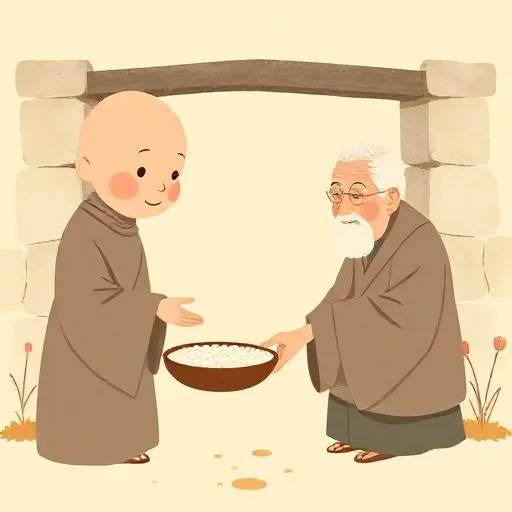
Chan didn’t shrug off ethics. When the poet Bai Juyi asked Chan master Niaoke (741–824) what the essence of Chan was, Niaoke answered with disarming simplicity: “As for doing evil, avoid it; as for the good, practice sharing it.” Bai Juyi laughed that this was advice for a three-year-old. Niaoke agreed — and added that most eighty-year-olds never manage it.
The “good” here isn’t a checklist. The Chinese word shan means the superlative: good as in expert, virtuosic. And Niaoke didn’t say “be good”; he said share it. Chan ethics is an improvisational art. The monastic rules that governed Chan communities — the Chan Rules of Purity, attributed to Baizhang (749–814) — provided a basic grammar, just as Confucian ritual norms had provided a grammar for Chinese social life. But authentic relational mastery goes far beyond grammar. Mazu described the ideal: like phrases written on water. Actions arise, do their liberating work, and leave no clinging trace.
Freedom, for Chan, is not independence — that would be impossible in an interdependent universe. It’s the capacity to enter any situation and, with fluid vigilance and unwavering care, turn the encounter toward mutual awakening.
What a Tiled Roof and a Finger Can Teach You Today
Chan may be a thousand-year-old tradition, but its questions feel startlingly modern. How often do you get stuck inside your own head, replaying what you should have said or weighing every option until you’re paralyzed? Chan describes that as being of “two minds.” The antidote isn’t to stop thinking forever; it’s to stop treating life as a problem to be solved from a distance. As Mazu’s teacher showed him, you can’t turn yourself into something you already are by grinding away at a method.
This doesn’t mean giving up on rules or kindness. It means that rules become wise only when they’re applied with full attention to the real person in front of you. Chan calls that skill upāya — responsive virtuosity. A child who shares their snack because they notice a friend is sad, without first consulting a handbook, is already practicing something close to it.
After spreading through East Asia, Chan reshaped painting, poetry, tea ceremony, and martial arts — each one a way of training the body-mind to respond with effortless precision. Today, when people outside those traditions pick up the threads of Chan, they aren’t just studying a museum piece. They’re stepping into a conversation about whether the truest wisdom is something you know or something you live. And that’s a question worth asking, whether you’re on a meditation cushion, walking home from school, or simply holding up your own flower and waiting to see who smiles.
Think about it
- If you wanted to teach a friend something really important — like how to be brave — would you use words, or would you try to create a situation where they have to be brave? Which way do you think works better?
- Chan says you don’t need to earn enlightenment; you just need to stop forgetting what you already are. What everyday habits, in your own life, might count as “forgetting” your best self?
- Are there moments when relying on rules feels safer, and moments when bending the rules might show more care? How can you tell the difference?