Did the Universe Have an Edge? The Fiery Ideas of Giordano Bruno
The Man Who Would Not Say “I Take It Back”
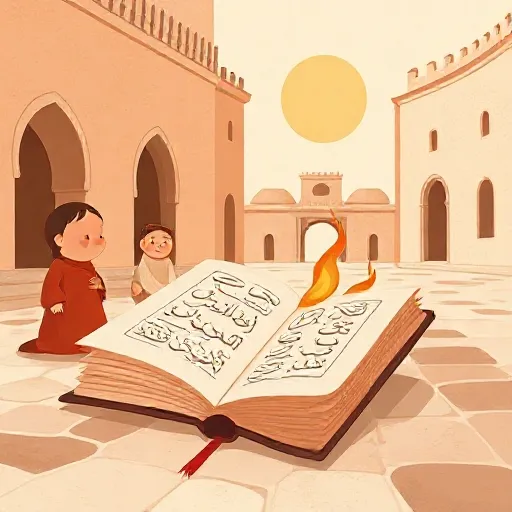
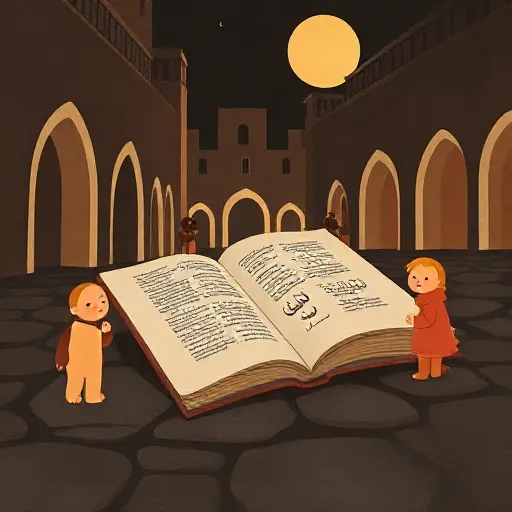
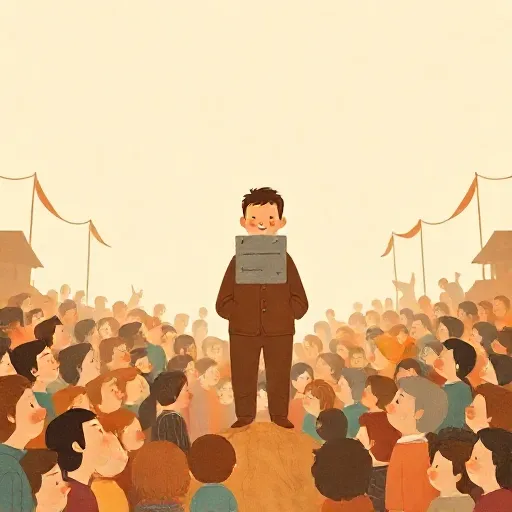
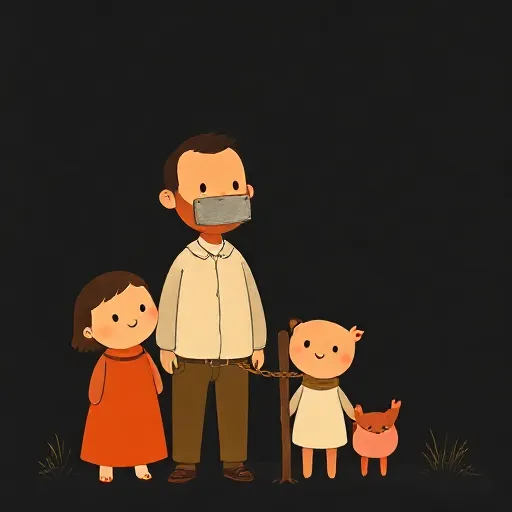
In the early morning of February 17, 1600, guards led a man with a metal plate bolted over his tongue into the Campo de’ Fiori, a busy square in Rome. Giordano Bruno (1548–1600) was about to be burned alive. He had been a Dominican friar, a wandering teacher, a writer of daring books. For eight years, Church authorities had tried to make him take back his ideas. He refused. What idea was worth dying for? Bruno believed the universe has no edge—and that changed everything.
Bruno was born near Naples and joined a convent at seventeen, taking the name Giordano. But his restless mind clashed with his order. By 1576 he fled, and over the next fourteen years he moved across Italy, France, England, Germany, and beyond. He taught, wrote, and annoyed people. He managed to get excommunicated by the Roman Catholic, Calvinist, and Lutheran churches—a remarkable feat for one philosopher. His books covered memory, magic, mathematics, and above all a new picture of the cosmos. That picture was so shocking that in 1591, when he returned to Venice, he was arrested, tried by the Inquisition, and eventually sent to Rome. There, after years of interrogations, he told his judges he “neither needed nor wished to recant.” They tied him to a stake.
Endless Worlds: A Universe Without a Shell
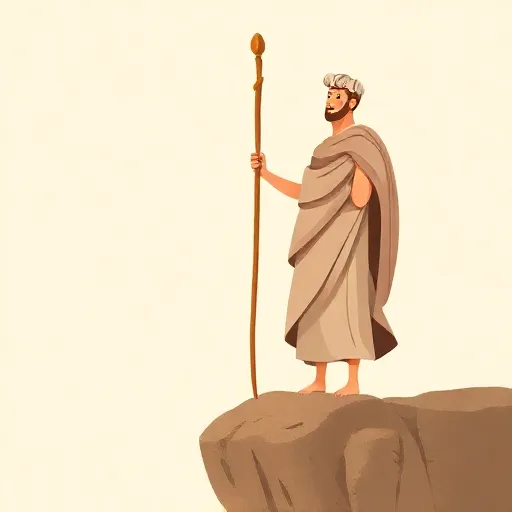
To understand why Bruno’s idea was so dangerous, we have to picture the medieval cosmos. Most people in the sixteenth century believed that the Earth sat motionless at the middle of everything. Around it spun seven concentric spheres carrying the moon, the sun, and the planets. Beyond the last planet, a great shell of fixed stars enclosed the whole universe like an onion skin. Everything inside that shell was made of four elements (earth, water, air, fire), and everything above was made of a perfect fifth element. The system seemed tidy and given by God.
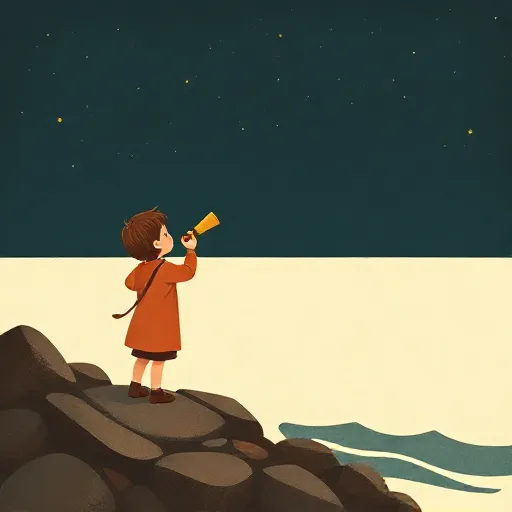
Nicolaus Copernicus (1473–1543) had already shaken this picture by moving the sun to the center and making the Earth a planet that orbits it. But even Copernicus kept the outer shell of fixed stars. Bruno saw that if the Earth moves, that shell is an illusion. The stars we see at night are not tiny lights glued to a wall. They are distant suns, each with its own planets, scattered without limit. Bruno called the universe infinite—it has no boundary, no single center, and contains an endless number of worlds.
He did not stop there. He argued that an infinite God would not create a puny, finite cosmos. A God of unlimited power must produce an unlimited effect. If God created at all, the result had to be as boundless as God’s own ability. Bruno also rethought gravity: things do not fall because they belong to the center of the universe. Instead, every piece of matter wants to stay with its whole. Once part of a planet or sun, it moves naturally with that body. This meant that weight and “up” or “down” were local, not universal rules.
God Inside Every Stone and Star
If the universe is infinite and full of worlds, where is God? Bruno’s answer was startling: God is inside everything, not up in heaven pulling strings from a distance. He called this view a revival of ancient Egyptian wisdom, but it was also a dramatic break with Christian teaching.
Bruno described two eternal principles that make up reality: the Universal Soul and Universal Matter. The Universal Soul is the active, living power that animates the cosmos. The Universal Matter is the passive “stuff” that receives form, like clay waiting for a shape. Together they produce the universe, which Bruno called the One Being—a single, unending, living whole. God, strictly speaking, is beyond even these two principles. But the universe is God’s “image” or “shadow,” the way a mirror reflects a face without being identical to it. Bruno often said, “Nature is God in things.”
Because the Universal Soul fills everything, there is no dead matter. A rock, a drop of water, a distant star—each has a tiny share of life and awareness. Bruno compared this to a single voice that fills a room; everyone hears it, but each ear catches it differently depending on where it sits. He even argued that animals are intelligent in their own way. A spider weaving a web or a bird migrating does not simply follow blind instinct; it participates in the intelligence that runs through the whole cosmos.
What Dies, What Lives Forever: The Journey of Your Soul
If everything is part of the One Being, what happens to us when we die? Bruno did not believe in a separate heaven or hell. Instead, he taught that each soul is an atom of the Universal Soul—indivisible and indestructible. When the body falls apart, the soul does not vanish. It turns its powers to forming a new body. This is metempsychosis, the idea that souls travel from one life to another, even into animals. Bruno insisted, unlike earlier thinkers, that the soul never hangs around in a shadowy underworld. It is always tied to matter.
This cycle of birth, death, and rebirth followed a law of constant change that Bruno called vicissitude. Nothing stays the same forever, but the whole remains perfect. The way you live now—whether you act with greed, cruelty, or courage—shapes what kind of body your soul will build next. Bruno once told a friend not to kill a spider, because the spider might be a former friend reborn.
This vision gave him a special idea of the good life. True happiness, he thought, was not a final reward. It was the moment of passing from a lack to a fulfillment—eating when hungry, understanding something after long confusion. The highest goal was to become a “heroic” philosopher: to use reason and the senses to climb from particular things to the great unity of the Universal Intellect. In that moment of insight, a person touched the divine mind without losing their own.
Why His Fire Still Burns: The Right to Ask
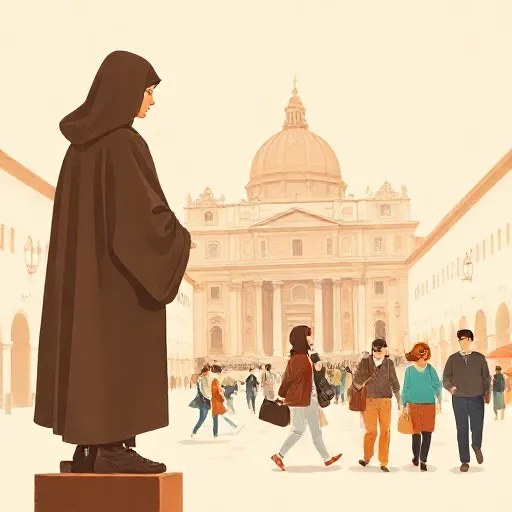
Bruno’s story did not end in 1600. His writings were banned, but they circulated in secret. Thinkers like Baruch Spinoza (1632–1677) developed similar ideas about God and nature, and later philosophers recognized Bruno as a forerunner. In 1889, a huge bronze statue of him was erected in the Campo de’ Fiori, right on the spot where he had been executed, staring defiantly toward the Vatican. For many, he became a symbol of the right to follow reason wherever it leads.
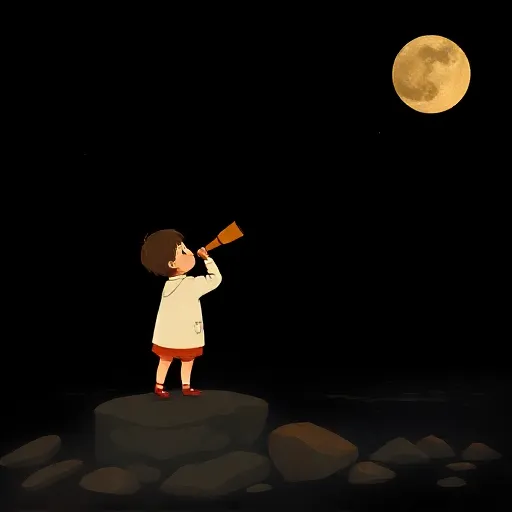
Today, we know that the universe has no center, that the stars are suns, and that planets orbit many of them. Bruno’s intuition—though based on philosophy rather than telescopes—turned out to be closer to the mark than the Church’s official picture. But the deeper question remains: who gets to decide which ideas are dangerous, and what do we do when authority tells us to stop thinking? That question still smolders, just as it did on a cold morning in Rome over four hundred years ago.
Think about it
- If someone shows you strong evidence that something you’ve always believed is wrong, how should you decide what to believe?
- Can a belief be dangerous even if it’s true? Who gets to decide?
- Bruno thought the universe is infinite because an infinite God would create nothing less. Do you think the size of the universe tells us anything about what God is like, or do we need other clues?