
Why an Oxford Hermit Thought Your World Is an Illusion
The Recluse and the Cats
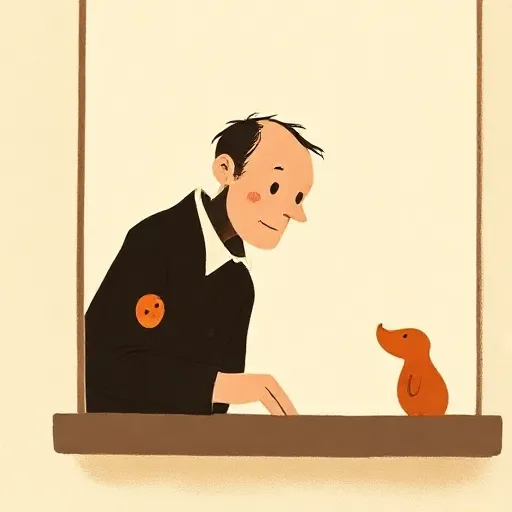
On a damp Oxford night in the 1890s, a stooped figure crept through the college grounds. He carried a gun, and his targets were the stray cats that wandered between the cloisters. F.H. Bradley (1846–1924) was a philosopher, not a hunter. He liked guns and disliked cats, and his nightly patrols fit his reputation as a prickly recluse who almost never appeared in public. One fellow thinker lived a few hundred yards away for sixteen years and never once laid eyes on him.
Bradley spent most of his life in a single room, protected from winter damp that threatened his health. But his ideas were anything but small. In 1893 he published a book with a deceptively calm title: Appearance and Reality. It set out to prove that the world you see — chairs, trees, stars, other people, even your own self — is not the final truth. Every one of those things, he argued, is an appearance, a kind of shimmering surface. The real stuff, the reality beneath it all, is one single, seamless experience. And the puzzle that got him there began with something very small.
A Single Cube of Sugar

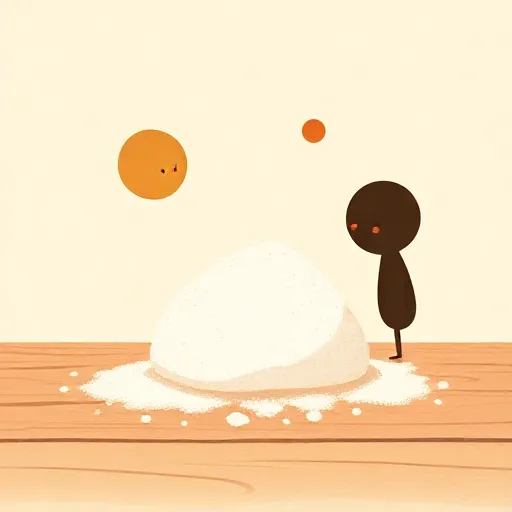
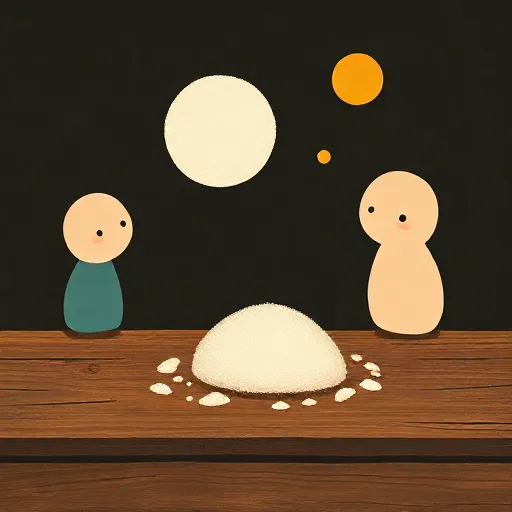
Take a lump of sugar. It is sweet, white, and hard. Those are different qualities, yet they all belong to the same one thing. How does a single object hold many properties together? You might say there is an invisible “substance” underneath the qualities, a bare thing that carries them. But what glues the qualities to that substance? If you answer “a relation,” you have simply moved the problem: what glues the relation to the substance and the quality?
Maybe the sugar cube is just a collection of its qualities. But a collection still needs something to bind its members into one lump. You can pile sweetness, whiteness, and hardness in your mind, but you don’t get a sugar cube unless they are united. This is the problem of unity, and it was Bradley’s doorway into a much bigger argument.
The Endless Glue of Relations
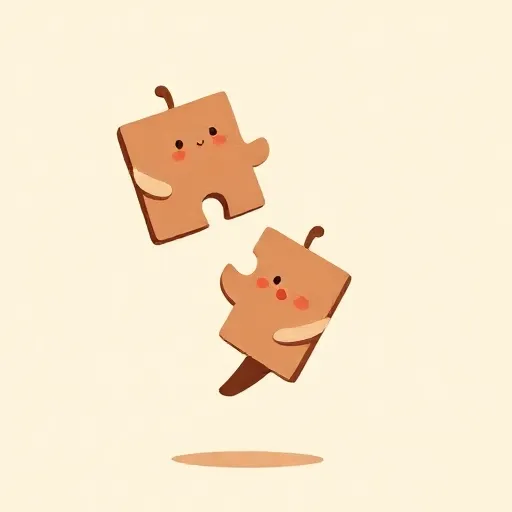
When we say “A is taller than B,” we are using a relation — “taller than” — to link two terms. Bradley asked: how does that relation exist? If you treat the relation as a real thing alongside A and B, then you need a further relation to connect the first relation to A, and another to connect it to B, and so on without end. This is his famous infinite regress argument.
If instead you think the relation is not a separate thing but somehow built into the terms, you run into a different snag. A term that is related must have a part that serves as the foundation of the relation and another part that is modified by it. Bradley argued that every related term turns out to be a tiny relational complex, so the regress starts again.
For Bradley, the upshot was clear: relations cannot be the ultimate furniture of the world. They have no independent reality. He did not deny that we experience a world of separate things linked by relations; he denied that this experience shows us how things finally are. Relations, he concluded, exist only “in and through a whole” that cannot itself be broken into relations and terms.
The Absolute: One Big Experience

If the world of separate objects is appearance, what is reality? Bradley called it the Absolute. The Absolute is not a person, not a god, and not a heap of atoms. It is a single, all‑inclusive experience that contains everything — every feeling, thought, colour, sound, and sensation — brought together in perfect harmony.
Imagine a painting. If you cut out a tiny piece and look at it alone, it might look ugly or meaningless. Put it back in the whole canvas, and suddenly it has beauty and purpose. Bradley believed that every fragment of our ordinary world is like that: an appearance that gets its reality from belonging to the Absolute.
He also held that the Absolute is sentient — it is made of experience, not of dead matter. But it is not your experience or mine. Our individual minds are partial, flickering centres within the one great whole. Evil and error exist, but they are less real than good and truth, because they are more fragmentary and further from the complete picture. Bradley admitted we cannot understand exactly how this works; he thought that the best we can do is grasp that reality must be like a primitive, pre‑conceptual state where differences exist without sharp separations.
A Ladder That Never Reaches the Top

Because every judgment rips a tiny piece out of the whole, Bradley believed that no ordinary statement is perfectly true. Truth, for him, comes in degrees. “This apple is red” is more true than “this apple is blue,” but still not entirely true, because it leaves out everything else about the apple — its shape, its weight, its history, its relation to the rest of the universe. A judgment is less true the further it stands from comprehending the whole of reality.
Ultimately, Bradley held an identity theory of truth: a statement would be perfectly true only if it were identical with reality itself. That would mean it would no longer even be a judgment — it would just be the world. Since no finite thought can be the whole universe, the complete truth is literally unsayable. This is why he described his own metaphysical system as pointing toward something that thought cannot fully reach. Philosophy, for him, was not a ladder you could climb all the way up; it was a way of showing that the top rung is missing, and that only the Absolute fills the space beyond.
Why Your Bedroom Still Holds the Puzzle

Bradley’s arguments didn’t vanish into the mist of old books. They helped ignite the revolution that became modern analytic philosophy. The young Bertrand Russell read Bradley closely and later acknowledged that the analysis of universal sentences — “All cows eat grass” really means “If anything is a cow, then it eats grass” — was suggested by Bradley. It was a key step toward the logic that shapes computers and programming today.
Russell and G.E. Moore broke away from idealism, but they never fully escaped Bradley’s question about relations. Wittgenstein, in his early work, tried to avoid Bradley’s regress by picturing objects linked like the links of a chain, without separate connecting relations. But even that image still struggles with the same deep problem: what holds a chain together?
You can see the puzzle in your own room. You say, “My book is on my desk.” You are using the relation “on.” Try to explain what “on” is without using other relations — you quickly find yourself talking about surfaces, contact, spatial location, and so on, each of which involves further relations. It is not just a word game; it is a genuine philosophical knot. Bradley’s challenge was that our whole way of breaking the world into pieces linked by relations may be a massive distortion. Even if we cannot live without those pieces, his thought leaves us with a permanent itch: maybe reality is not a heap of separate items but a single, breathing whole.
Think about it
- If all separate things are appearances, what would it feel like to experience the world as one seamless whole — the way you feel completely absorbed in a dream?
- Bradley said no statement is perfectly true. Can you think of a statement that might be perfectly true, even if you couldn’t describe the entire universe?
- If relations like “taller than” cause endless puzzles, does that mean you can never truly say that one friend is taller than another? Or can you still act as if it’s true while wondering about the puzzle?