How Do You Know What’s Real? Robert Boyle’s Two Kinds of Truth
The Air Pump That Shocked the World
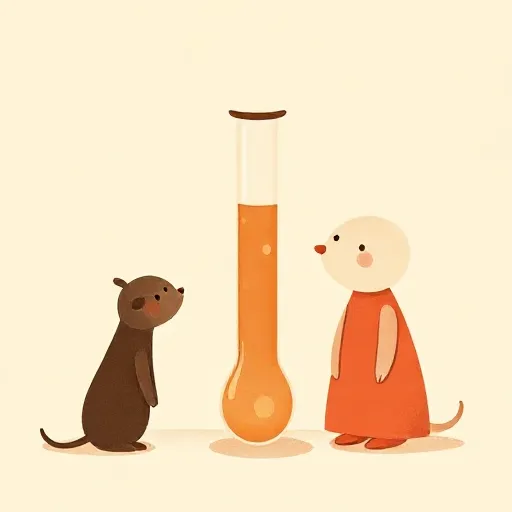
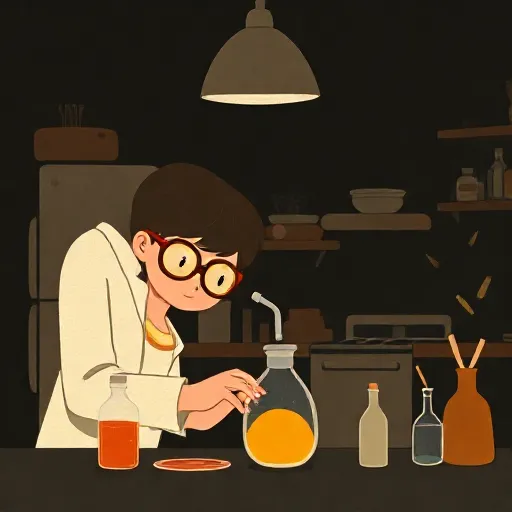
In 1660s Oxford, a man in a long wig stood over a strange contraption of glass, metal, and brass. With a crank and a piston, Robert Boyle (1627–1691) sucked the air out of a glass globe. Candles went out. A feather dropped as fast as a stone. Small animals could not breathe. This was no magic show — it was experimental philosophy, a new way of studying nature.
Boyle was not alone. He belonged to a circle of thinkers who believed that the old way of doing science — by reasoning from big, unquestioned principles — was broken. They thought real knowledge about the material world had to be built from the ground up, by gathering countless observations and experiments. This was a natural history: not just a list of plants and animals, but a vast collection of facts about cold, heat, colours, air, and even blood. Boyle’s famous History of Cold followed that blueprint. Because no single person could collect all that data, natural histories became a community project, with travellers sending reports and lists of queries from abroad.
Boyle’s method was shaped by the philosopher Francis Bacon, who insisted that the only way to discover nature’s deepest principles was to sift through an ocean of facts. So Boyle didn’t test a theory he already believed. Instead, he let experiments lead the way, hoping they would eventually reveal the hidden axioms — the underlying laws — of the physical world.
Experiments of Light and the Search for Laws

Boyle sorted his experiments into types, like a chef sorting knives. Some experiments, he said, were experiments of light (luciferous): they shone a beam on hidden causes. Others were experiments of fruit (fructiferous): they produced useful stuff, like gunpowder. Many experiments were both. When he figured out how to tell acids from alkalis with a plant-based indicator — an ancestor of litmus paper — he had an experiment that was both light-bearing and fruitful.
He also coined the term crucial experiment (experimentum crucis). This was a special test that forced nature to choose between two rival explanations. For instance, an experiment might settle whether light travelled instantaneously or at a measurable speed. A crucial experiment, Boyle thought, could prove an explanation to be correct — not with the iron logic of geometry, but strongly enough to compel a reasonable person. He called this proof by experiment. It wasn’t a mathematical demonstration, but it was rationally inescapable.
Then there was Boyle’s most famous result: the discovery that when you squeeze a fixed amount of air into half its volume, its pressure doubles. (He spoke of the “spring” of the air, because gases weren’t thought to exist yet; the air was considered a liquid.) The relationship we now call Boyle’s Law says PV = k, where P is pressure, V is volume, and k is a constant. Boyle, however, was far more cautious. He only claimed the pattern held for “common air” under the specific conditions he tested. He refused to declare it a universal law until many more trials, with stronger tubes and more mercury, could be done. That restraint was not uncertainty — it was a deep part of his philosophy: claim only what your evidence can support.
The Invisible World: Corpuscles, Qualities, and the Mechanical Affections
If experiments were the surface, what lay beneath? Boyle’s answer was a corpuscular matter theory. All matter, he argued, is made of unimaginably tiny prima naturalia — the smallest bits that no experiment could ever break, though God could divide them further. These corpuscles aren’t different elements like earth, air, fire, and water; matter is all one stuff. Their only basic features are mechanical affections: shape, size, motion, and, for clumps of corpuscles, texture. Colour, taste, smell — these are secondary qualities, produced when the mechanical affections act on our sense organs.
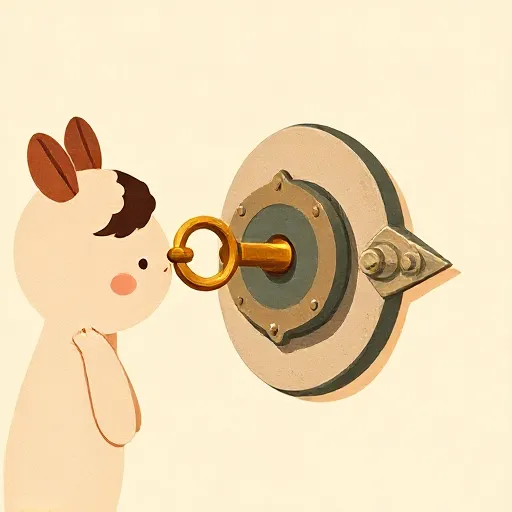
This idea let Boyle answer a puzzle: how can an object gain a new power without gaining any new substance? Imagine an iron lock and an iron key. Before they existed together, neither had the power to lock or unlock the other. Once the key exists, both seem to acquire a new capacity. Yet nothing physical has been added to either piece of iron. The new power, Boyle said, is a disposition — a relational feature that rides on the mechanical affections, not an extra ghostly ingredient.
Boyle insisted that all explanations in natural philosophy had to obey the Familiarity Condition: you must explain the unknown by comparing it to things you already know well. Because we see big objects push, collide, and transmit motion every day, it’s legitimate to imagine the smallest particles doing the same thing, following the same mechanical laws. Hence his view was called the mechanical philosophy: nature works like a vast clockwork, its parts moving only by contact and collision. But, crucially, Boyle didn’t think matter was the whole story.
How Sure Can You Be? Boyle’s Three Levels of Certainty

Boyle was a careful thinker, so he sorted knowledge into three tiers. At the top sits metaphysical certainty, which follows from absolutely necessary truths — like “the whole is bigger than the part.” Such demonstrations are as airtight as geometry. Then comes physical certainty, built from contingent facts discovered by experiment. Boyle’s air-spring relationship gave him physical certainty: it was confirmed by many trials, but it wasn’t a necessary truth, because God could have made a world where air behaved differently.
Finally, there is moral certainty: a high degree of probability, strong enough that a reasonable person would base her life on it. Juries use moral certainty when they decide a case beyond a reasonable doubt. Boyle thought this lower rung was perfectly respectable. In fact, he argued that medical ethics, laws, and the articles of Christian faith could never be proved with metaphysical or physical certainty — but they could still be supported by powerful moral demonstrations. The design of nature, the testimony of witnesses, and the historical reports of miracles all stacked up to make belief in God a morally certain conclusion, even if you couldn’t put God under a bell jar.
He also acknowledged that human knowledge has hard limits. Our sense organs are tuned to pick up only certain sizes of particles. Maybe God made the world comprehensible to angelic intellects, not to humans. New instruments and new experiments keep pushing back the boundary of the unknown, but nature, Boyle warned, “reveals her truths slowly, piecemeal and grudgingly.” So we should never be too certain that our current theory is the final word.
God, Miracles, and the Christian Virtuoso
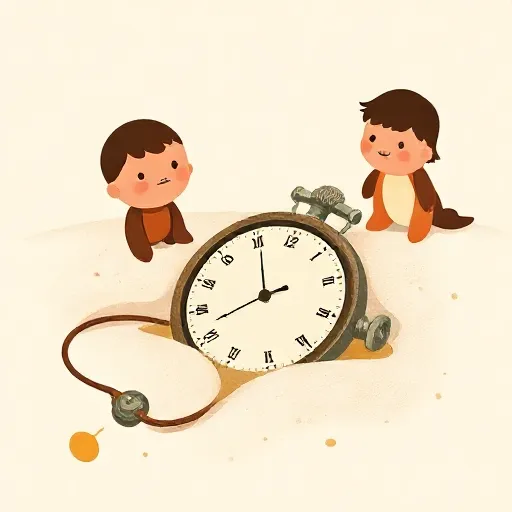
Boyle lived at a time when many feared the new mechanical science would lead straight to atheism. His mission was to prove that a Christian Virtuoso — a scientific expert and a devout believer — was a perfectly consistent thing to be. He gave design arguments for God’s existence. Imagine you find a pocket watch washed up on a beach. You’d instantly conclude some intelligent maker fashioned its gears and springs; it didn’t assemble itself by accident. Now look at the eye of an animal, the valves of the heart, or the way the whole world is arranged: the same reasoning, Boyle argued, points to a divine designer. These arguments didn’t deliver metaphysical certainty, but they provided moral certainty — enough to ground a religious life.
He also defended the reality of miracles. Boyle sometimes described a miracle as an event that surpasses the ordinary course of nature (like the sudden healing of a disease). Other times, he spoke of miracles as genuine violations of the laws of corporeal beings, such as the resurrection of Jesus. He thought the miracle of Pentecost was particularly strong evidence that Christianity was true. However, he warned that fake miracles and diabolical tricks exist; careful reasoning and philosophy must sort the real ones from the frauds. And he stressed that you cannot use miracles to prove God exists — because the very idea of a miracle already supposes a God who can break natural laws. For proof of God, stick to the design arguments; for proof that Christianity is the right religion, look to the miracles.
Boyle also held that the human soul is immaterial and survives after death. His main evidence was that we can know things no physical brain could capture: the exact idea of a thousand-sided figure (a chiliagon), or the fact that the square root of two is irrational — a proportion no arrangement of discrete corpuscles can represent. Such knowledge, he said, requires a non-material mind. He even took seriously reports of ecstasies — out-of-body experiences — as further hints that the soul is not confined to flesh.
Why Does This Still Matter? Questions That Experiments Can’t Answer

You live in a world that runs on experimental philosophy. When doctors test a new vaccine, when engineers crash-test a car, when you bake cookies and change one ingredient to see what happens — you’re walking the path Boyle helped pave. His caution — never claim more than your evidence lets you claim — is more important than ever in a time of flashy headlines and shaky online facts.
But Boyle also left us with a tougher puzzle. There are questions that no experiment can settle, even in principle: Does your life have a purpose? Is a friend truly loyal? Should you trust what you read? Boyle’s answer was that different kinds of questions need different kinds of proof. His category of moral certainty — being sure enough to live by it, even without a lab coat — is something you already use every day. You can’t measure love in a test tube, but you still make decisions based on it. Boyle simply thought the same logic applied to the biggest questions of all.
How much weight you give to that move is up to you. But the next time you wonder whether science can explain everything, you’re thinking right in Robert Boyle’s footsteps.
Think about it
- If a scientific experiment can’t ever prove whether a painting is beautiful, does that mean beauty isn’t real — or that we need a different way of knowing?
- Boyle said a watch found on a beach makes you infer a watchmaker. Can you think of something in nature that feels obviously designed — and something that doesn’t? Why the difference?
- When you trust a friend’s promise, you have moral certainty but not physical proof. What makes that trust strong enough for you to act on?