Is Your Real Self Bigger Than You Think?
A philosopher who left the classroom for the streets

Bernard Bosanquet (1848–1923) had the sort of education that could have kept him in a comfortable university tower forever. He studied at Harrow and then at Balliol College, Oxford, where he soaked up the big ideas of German thinkers like Kant and Hegel. His teacher, T.H. Green, called him “the best equipped man of his generation.” Bosanquet was so sharp that he beat out another brilliant philosopher, F.H. Bradley, for a fellowship.
But in 1881, when he was in his early thirties, Bosanquet did something unexpected. He inherited a small sum of money after his father’s death and left Oxford for London. Instead of writing only for other professors, he threw himself into adult education and social work. He joined the Charity Organisation Society, helped run a short-lived school of ethics, and spent his evenings giving free lectures to working people. He married Helen Dendy, a fierce campaigner for the poor who later sat on a royal commission. Bosanquet was determined to make philosophy talk to the real needs of the city.
This shift wasn’t a break from his thinking — it was the laboratory where his ideas grew.
Your will is not just what you want right now

Bosanquet believed that every person has a real will — a deeper, more complete version of what you want. It’s not the same as the immediate wish that pops into your head. If you grab a second slice of cake without thinking, that might be a want. But your real will would take into account the stomachache later, the promise you made to your sister, and the kind of person you hope to become.
He put it this way: “In order to obtain a full statement of what we will, what we want at any moment must at least be corrected and amended by what we want at all other moments.” In other words, your real will has to fit together with all your other goals, values, and relationships — not just the loudest craving of the minute.
To explain this, Bosanquet borrowed a phrase from Jean-Jacques Rousseau: the general will. For Bosanquet, the general will isn’t just some group vote. It’s what you would want if you could see the whole picture clearly, including what others legitimately need. It’s the version of your choices that makes sense when you connect them to everyone else’s.
The state as a gardener, not a puppeteer
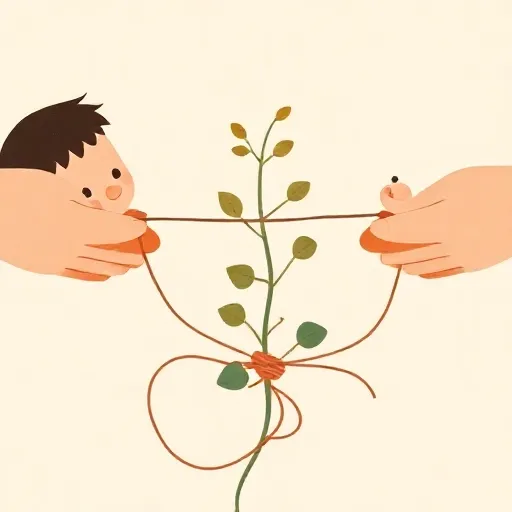
Why do we even have a state — with laws, police, courts, and governments? Bosanquet’s answer was striking. The state’s job is the hindrance of hindrances. That is, the state removes the things that block you from developing into your best self. A law that makes schools free removes the hindrance of ignorance. A rule that stops powerful companies from polluting a river removes a hindrance to health. The state doesn’t make you good; it clears the path so you can grow.
This view was very different from thinkers like Jeremy Bentham and John Stuart Mill, who focused on maximizing pleasure and minimizing pain for the largest number of people. Bosanquet thought that what really mattered was the development of human personality — “the excellence of souls,” he called it. The state should support the conditions that let people become fully themselves, not just keep them comfortable.
Because the real will is something shared, Bosanquet argued that the authority of the state is legitimate when it reflects that common good. He even followed Rousseau in saying that sometimes a person can be “forced to be free” — for instance, making education compulsory so that every child acquires the tools to think for themselves. The idea was that genuine freedom requires certain supports, and the community has a role in providing them.
Bosanquet’s critics saw a different danger
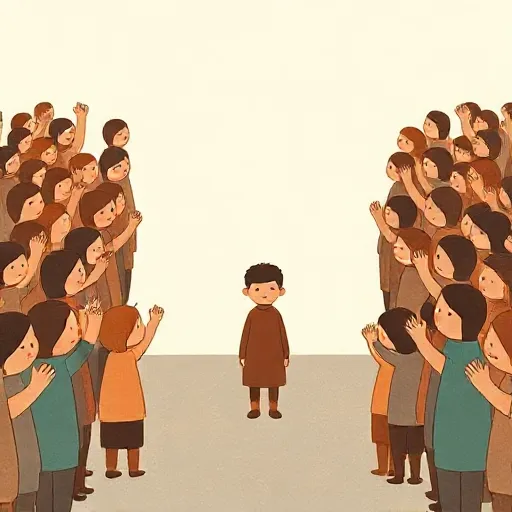
Not everyone was persuaded. Some philosophers and reformers charged that Bosanquet’s ideas were too cozy with authority. They worried that talking about a “general will” and “forcing people to be free” could crush the individual. If the state decides what my real will is, couldn’t it trample my actual wishes and conscience? The Fabian reformer Sidney Webb and others in the charity world thought Bosanquet focused too much on building character and not enough on fixing the rotten economic conditions that kept people poor. Leonard Hobhouse, a liberal thinker, wrote that Bosanquet’s philosophy was out of touch with the root of poverty and lacked safeguards against tyranny.
Bosanquet had a reply. He insisted that the state cannot directly make anyone moral. Morality has to come from inside a person, shaped by conscience and relationships. The state just sets up the framework. He also pointed out that he never said the state was infallible. If institutions were fundamentally corrupt, there might even be a duty to resist. And in his own politics, Bosanquet was no authoritarian — he supported Irish Home Rule, worker ownership, and was sympathetic to the Boer struggle for independence. He was an active Liberal who later backed the Labour Party. So the man who talked about the majestic authority of the state was also, in his daily life, a reformer who believed in local action and volunteer effort.
Philosophy on the ground: charity, handicraft, and the good life

Bosanquet didn’t just theorize about the state and the self. He spent decades working with the Charity Organisation Society, eventually becoming its chairman. He and his colleagues believed that effective help meant strengthening families, not just handing out money. This approach clashed with those who wanted sweeping government welfare programs — a debate that still sounds familiar today.
He also thought deeply about education and art. Bosanquet was the author of the first major history of aesthetics in English, and he argued that making things with your hands — craftwork, carving, drawing — could train a person to see and love beauty. For him, that wasn’t a luxury. It was part of becoming a full human being. In schools, he wanted more than memorizing facts; he wanted young people to encounter what he called the “spiritual” side of life — not ghosts, but the deeper meaning that art and nature carry.
His ideal, which he named “Christian Hellenism,” mixed the care for the soul found in religion with the Greek love of reason and beauty. The goal was the same: to help finite, messy humans grow toward a more complete, harmonious life within a community.
Why Bosanquet’s challenge still echoes

Bosanquet’s ideas faded for a while after his death, pushed aside by philosophers who wanted sharper logic and less talk of the “Absolute.” But his questions never really went away. Is your identity something you invent all on your own, or does it depend on the relationships, language, and communities you grow up in? When a government limits your choices — say, a curfew for teenagers — is that an attack on your freedom, or a structure that makes real freedom possible by keeping you safe and rested? Can you be “forced to be free” in a way that respects who you are?
These puzzles show up in arguments about education, public health, and even online spaces. Some modern thinkers, such as Charles Taylor and Alasdair MacIntyre, have returned to themes Bosanquet loved: the importance of a common good, the way individual identity is shaped by social ties, and the idea that freedom is not just being left alone. Bosanquet’s life reminds us that philosophy can live outside of universities. It can stand in a grimy London charity office, or in a workshop where a young person discovers the pride of making something beautiful.
Think about it
- If your community decided that playing video games for more than an hour a day harms young people’s development, would a rule limiting screen time be protecting your freedom or taking it away?
- Can you think of a time when what you wanted in the moment (like staying up late) clashed with what your deeper self wanted (like being sharp for a big game the next morning)? Which was the real “you”?
- Bosanquet believed that your best self includes other people’s needs. Is there a point where caring too much about the group could erase what makes you uniquely you? Where would you draw the line?