Can a Nation Have Many Religions and Still Hold Together?
The Kingdom in Flames

For over thirty years, France burned. The Wars of Religion tore the country apart, and the split was not just between armies but between neighbors, families, and even friends. Catholics and Protestants—called Huguenots—each believed they followed the one true faith, and each was ready to kill for it. In 1572, the killing reached a terrifying peak with the St. Bartholomew’s Day Massacre, when thousands of Huguenots were murdered in Paris and beyond. The kingdom seemed close to collapse.
Jean Bodin (born around 1530, died 1596) watched all this from the middle of the chaos. He was a lawyer, a royal counselor, and a man who loved order. He thought the violence was not just a political disaster but a sign that France had lost the very glue that holds a country together. So Bodin set out to understand what makes a state strong and how a ruler can stop a nation from eating itself alive.
One Law, One Faith: Bodin’s Early Answer

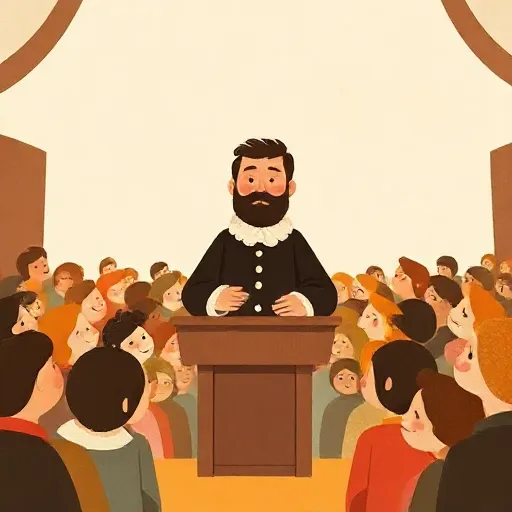
Even before the worst of the wars, Bodin was thinking about unity. In a speech to the leaders of Toulouse in 1559, he argued that the most powerful thing a city could do to stay peaceful was to give all children the very same education. He wrote:
I maintain that there may be no law so sacred and divine that could better reinforce the social ties of the city than a common and identical education for all children.
That sounds like a clever idea for a school system, but Bodin meant something much bigger. He thought that if everyone from the mayor’s son to the baker’s daughter learned the same values, they would all grow up with one religion and one way of seeing the world. To him, religious diversity was not a strength — it was a recipe for war. The job of the magistrate, he said, was to make sure young people did not wander off into “diverse beliefs.” In his mind, one education and one religion were the twin pillars that kept a commonwealth standing.
Sovereignty: The Supreme Power That Answers to No Human

Bodin’s most famous contribution to political philosophy is his definition of sovereignty, a term he reshaped and turned into a cornerstone of modern thought. In his massive work Six Books of the Commonwealth (1576), he wrote:
Majesty or sovereignty is the most high, absolute, and perpetual power over the citizens and subjects in a Commonwealth.
Sovereignty, for Bodin, is the one power in a state that can make laws that everyone must obey. It is “absolute” because the sovereign is not bound by the civil laws that he or his predecessors created — he can change them. But here is the twist that many people miss: an absolute sovereign is still not free to do anything at all. Bodin insisted that every sovereign remains bound by the law of God and the law of nature. A king can rewrite human laws, but he cannot command murder or theft as a matter of justice without becoming a tyrant.
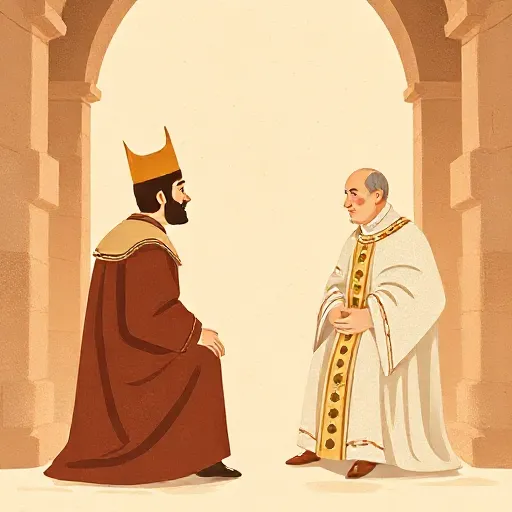
Bodin carefully distinguished between a despot and a tyrant. A despot is a ruler who, after a fair and just war, legitimately becomes the master of a conquered people — rather like the head of a household who controls his own property. A tyrant, on the other hand, seizes power through unjust force. Tyranny is always illegal, always against divine and natural law, and always wrong. This distinction meant that while Bodin opposed ordinary citizens raising arms against their sovereign prince, he did not deny that some rulers are so terrible that they stop being legitimate at all. But he was fierce about one point: if the prince is a true sovereign, no subject or group of subjects has the right to take up weapons against him, no matter how evil his deeds. For Bodin, armed rebellion by private persons was the surest path to the very chaos he was trying to prevent.
The Tricky Tolerance That Wasn’t Really Tolerance

So what should a ruler do when his subjects are already divided into rival churches? Bodin’s answer surprises many people today. He did not call for permanent religious freedom. For him, concord — the reunification of everyone into one single faith — was the only real solution. Until that could happen, he accepted temporary measures of tolerance as a way to stop the fighting. Think of it like a ceasefire while waiting for a proper peace treaty: you allow both sides to exist for a while, but the ultimate goal is still agreement, not a permanent split.
At the Estates General of Blois in 1577, Bodin led the deputies of the Third Estate and argued passionately against using war to crush the Huguenots. Instead, he proposed that the king ask his subjects to reunite peacefully under the Catholic religion “by all holy and legitimate means without war.” In the meantime, he wanted a general council held within two years to settle the religious disputes. This was a program of provisional tolerance, not a pluralist utopia.
Later in his life, Bodin joined the Catholic League — a group that fought to keep France Catholic. Many historians have accused him of betraying his earlier “tolerant” views. But Bodin himself never saw a contradiction. He always wanted religious unity; he just believed the wisest path to it was through persuasion and law, not massacres and revenge. He also firmly believed in freedom of conscience: you cannot force a person’s inner beliefs. But the freedom to worship in public, for multiple religions, was another matter entirely. That, he thought, would tear a state apart.
Why Bodin’s Puzzle Still Matters

Bodin lived in a world where almost everyone believed that a healthy country must have a single official religion. Today, many nations are secular, and some guarantee the right to worship freely, in public, for any faith — or none at all. Bodin probably would have worried that such a system invites deep, unresolvable conflict. And yet, many modern democracies have managed to hold together despite deep differences of belief.
The struggle Bodin faced has not disappeared. Should a government promote one set of values to keep society stable? What happens when religious groups refuse to accept the same laws as everyone else? And who gets to decide when a ruler has crossed the line from sovereign into tyrant? Bodin did not give us final answers, but he did give us some of the most powerful vocabulary we still use to argue about these questions. The word “sovereignty” — the idea that every functioning state needs a highest authority — remains at the center of politics everywhere on earth. Understanding Jean Bodin means understanding why that word is so powerful, and why it will never be simple.
Think about it
- If a government decides that one religion is the right one for the whole country, is it ever fair to make people follow it? What if the majority agrees?
- Bodin said a sovereign is above human laws but still must obey divine law. Who should decide what divine law says, and what happens when people disagree?
- Today, some countries try to have many religions live together publicly. Do you think Bodin’s fear — that this will always lead to fighting — is true? Why or why not?