Ernst Bloch Said the World Is Unfinished — and That’s a Good Thing
A Wall and a Choice: The Philosopher Who Jumped into the Unknown
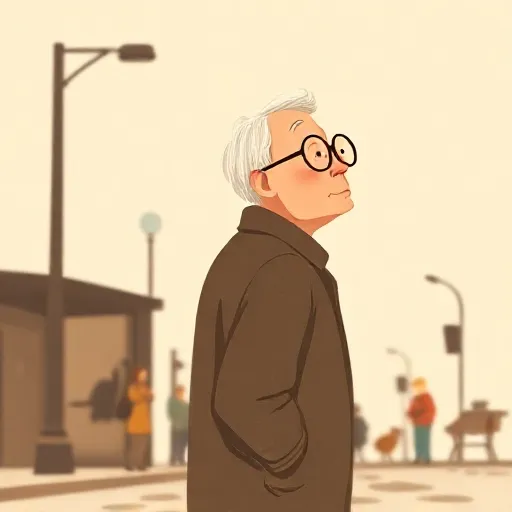
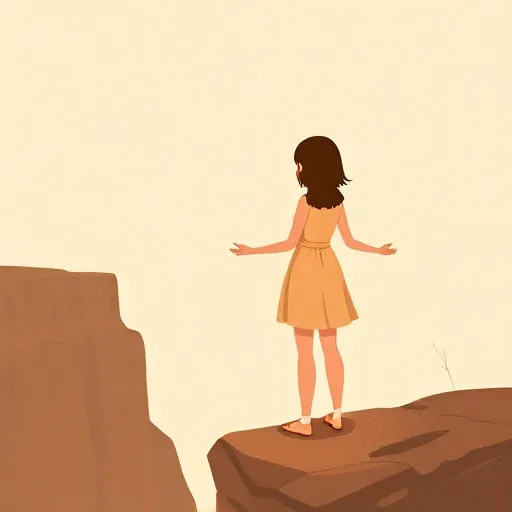
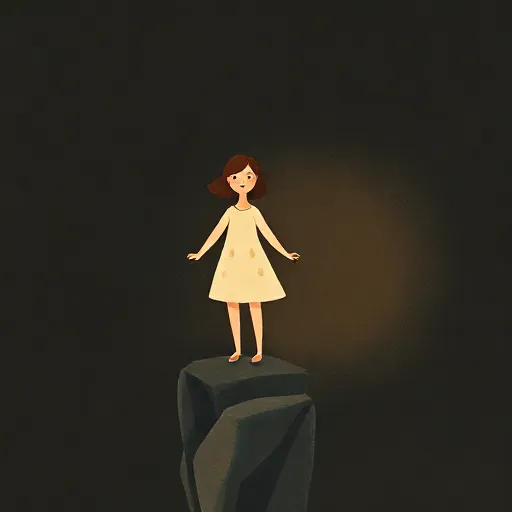
In August 1961, Ernst Bloch (1885–1977) was on vacation in West Germany. One morning, the radio brought shocking news: a wall was being built overnight, slicing the city of Berlin in two. Bloch’s home, his students, and his job as a philosophy professor were in the East. He could have gone back to everything familiar. Instead, he stayed in the West, leaving his old life behind. He later described the move as a leap from the world of necessity into the world of freedom.
That single decision summed up his entire life’s thought. Bloch believed the world is never sealed, never finished. The future is always open, and betting on it is worth the risk. He was born in 1885 to a railway family, far from any university, but he fell in love with ideas early and never let go. He fled Hitler’s Germany as a Jewish leftist, lived in American exile, and wrote his enormous book The Principle of Hope (published 1954–59) mostly while hardly speaking English. Later he taught in East Germany, but his ideas were too wild for the communist authorities. His whole journey was an argument against closed systems. For Bloch, reality itself was still under construction.
The World Isn’t Finished: What Bloch Called the Not-Yet

To understand Bloch, start with a simple sentence: “The apple is not yet red.” A small idea, but Bloch stretched it across the whole universe. He said the world itself is a Not-Yet — a process that hasn’t arrived at its final form. Things are never just what they are right now. They carry inside them what they could become. A lump of clay is not yet a pot. A seed is not yet a tree. The world, Bloch argued, works the same way: it is moving, searching for what it might be.
He described this with a short logical formula: S is not yet P. The subject hasn’t yet reached its predicate. Reality is like a story that’s still being written. This means the future is genuinely uncertain — it has never existed before, and it can’t be fully predicted from the past. Matter, for Bloch, isn’t dead stuff obeying fixed laws. Following old traditions from Aristotle and Renaissance thinkers, he saw matter as a creative, self-moving force — natura naturans, nature that makes itself, not nature that is already made. The world, he said, is “venturing beyond”.
This unfinishedness shows up inside you, too. Bloch pointed to the darkness of the lived moment: you can never completely grasp what you’re experiencing right now, because the moment is already slipping into the next one. The very core of your existence isn’t fully available to you. When the psychoanalyst Sigmund Freud (1856–1939) talked about the unconscious, he meant feelings pushed down from the past. Bloch added a not-yet-conscious: a forward-reaching part of your mind that dreams about what hasn’t happened yet. He thought Freud’s view was too backward-looking, like only ever reading the first half of a book and ignoring the blank pages ahead.
Hope, then, isn’t just a warm feeling. It’s the human way of sensing that forward pull. It can be disappointed — many hopes are illusions — but even an illusion points to a real wish. And because hope is aimed at something uncertain, it demands action, not just waiting.
From Wishful Thinking to Concrete Utopia
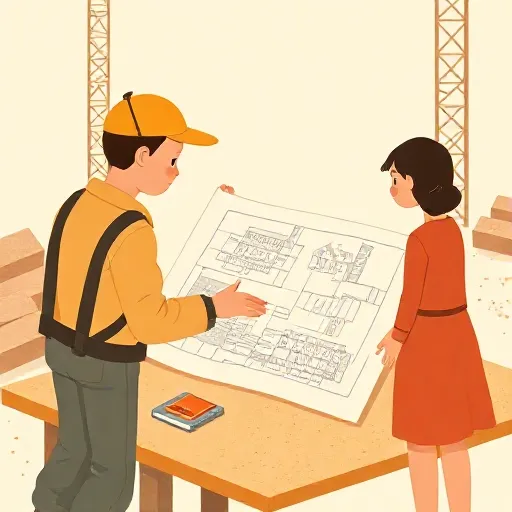
The word utopia usually makes people think of impossible fantasy islands. Bloch drew a sharp line. Abstract utopia is empty daydreaming — “I wish I could fly.” Concrete utopia is built from real possibilities that already exist in the world, like seeds in soil. It asks: what could actually happen if we work with the tendencies already present?
Bloch was a Marxist, but an unusual one. He thought Marxism was strongest when it had two streams. The cold stream analyzes how society actually works — the facts, the economics, the hard conditions. The warm stream carries imagination, hope, and the vision of a better life. Most Marxists of his time only cared about the cold stream. Bloch insisted you need both: without the warm stream, analysis becomes dry and lifeless; without the cold stream, hope floats away into thin air.
He also invented the idea of the front. This is the most actual slice of history, the cutting edge where new things emerge and decisions bend the future. At the front, the world is open and dangerous — a single action can tip things in a new direction. Bloch thought philosophy’s real job was to stand at that front, scanning the horizon for real possibilities, not just describing what already exists. He mapped out different levels of possibility, from the merely formal (anything you can imagine) to the objectively real (what the world is actually pregnant with). Real hope, he said, had to be anchored in the second kind.
When Different Times Collide: Non-Contemporaneity
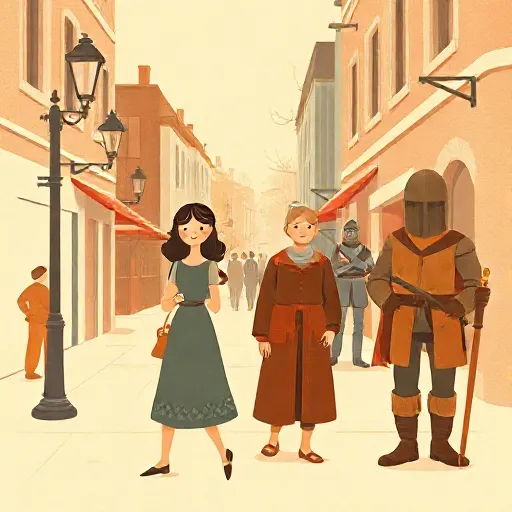
In 1935, while the Nazis were rising to power, Bloch published a book called Heritage of Our Times. His big idea was non-contemporaneity (he used the German word Ungleichzeitigkeit). This means that in any single society, different time layers exist side by side. Some people live with medieval attitudes, others belong to the present, still others dream of futures not yet born. History doesn’t move forward in a neat straight line. It’s messy, overlapping, full of old ruins and unfinished blueprints.
Bloch used this to explain why so many Germans supported the Nazis. The fascists had skillfully tapped into old resentments — the lost glory of a nation, the fear of modern cities, the longing for a mythical kingdom — that still lived inside people who were otherwise living in the twentieth century. A narrow economic analysis couldn’t see those emotional, non-contemporaneous forces. Bloch argued that the left needed to take those feelings seriously, not mock them. The past, he said, is full of heritage: unfulfilled promises, abandoned dreams, cries for justice that were never answered. Revolutions can pick up those old dreams and carry them forward.
He found a powerful example in Thomas Müntzer, a radical preacher who led a peasant uprising in sixteenth-century Germany. Bloch wrote a book about Müntzer, calling him a theologian of revolution. Müntzer’s fight hadn’t succeeded, but its spirit — its demand for dignity — was still alive. Bloch believed you could “actualize” such figures, make their unfinished business part of today’s struggle.
Art as a Sneak Preview of the Future
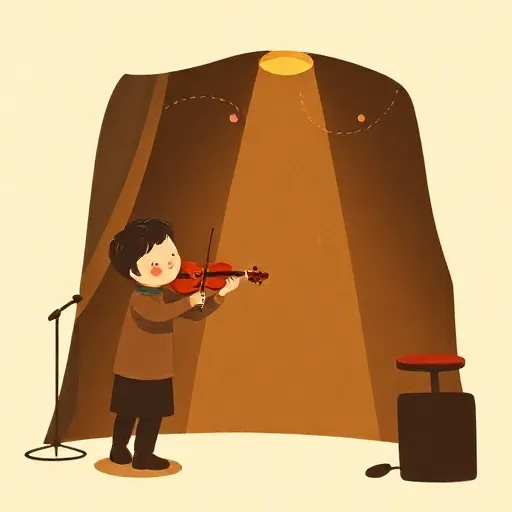
Art was never just decoration for Bloch. It was a laboratory of the future. He coined the term pre-appearance (Vor-Schein) to describe how a work of art gives you a glimpse of a world that doesn’t exist yet but could. A painting, a symphony, a fairy tale — all of them are “not-yet” in visible or audible form.
Music held a special place. Bloch thought that when you listen deeply, you’re not just hearing organized sound. You’re feeling what it would be like if the world were whole and reconciled, if the inner you and the outer world fit together perfectly. Music begins, he said, as “singing-to-oneself” — an attempt to overcome the darkness of the lived moment. It stays open, never settles into a final meaning, and keeps producing new possibilities with every performance.
He also loved popular culture. Fairy tales, for Bloch, are victories over hopelessness — they show the powerless outwitting the powerful, which is a deeply utopian gesture. Detective stories, with their search for a hidden truth, mirror the human quest to uncover what the world’s future might actually hold. Even the fragmentary, disrupted styles of modern art — the jarring cuts of a montage, the sudden interruptions — were for him the most honest realism, because they matched the unsettled, unfinished texture of life itself.
Why an Unfinished World Matters for You
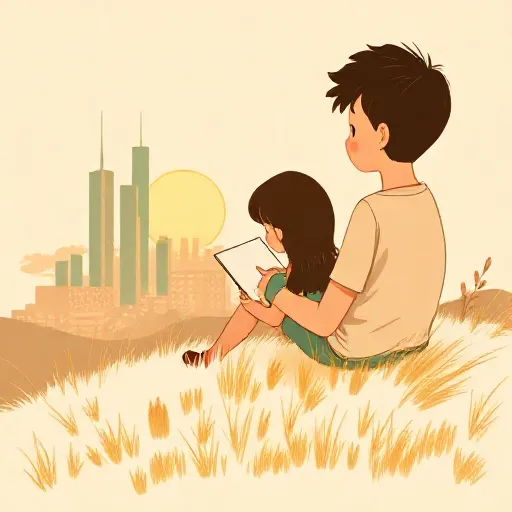
Every morning you wake up not knowing exactly what the day will bring. Bloch would say that uncertainty isn’t just something to get anxious about — it’s the space where hope lives. When you imagine a different future for yourself, for your friendships, or for your school, you’re practicing the same utopian impulse he spent his life studying.
He wouldn’t tell you to just dream. He’d ask: what concrete possibility is already in the room? What step can you take today, with what you already have, to move the world a little closer to the version you can almost see? Whether it’s repairing a broken trust, starting a project that feels too big, or thinking hard about what fairness really means, you’re adding a brick to an unfinished building.
The world’s last page hasn’t been typed. The clay is still wet. And that, Bloch believed with all his intensity, is not a flaw. It’s the only reason hope makes any sense at all.
Think about it
-
Imagine you’ve been planning a surprise party for a friend, but you’re not sure they’ll actually show up. How does that feeling of hopeful anticipation relate to Bloch’s idea that the future is genuinely uncertain — and why might that be a good thing?
-
Bloch said the past is full of unfinished promises. Can you think of a dream your family, your neighborhood, or a group you belong to once had that still hasn’t come true? What would it take to make it real today?
-
Pick a song, a drawing, or a story that makes you feel like a different kind of world is possible. What exactly in that artwork gives you that feeling? Do you think that feeling counts as a form of knowledge about the future, the way Bloch thought it did?