What Counts as One Living Thing?
Think about all the living things you can name. A dog. A rose bush. A mushroom. A beetle. These seem like an easy category: they’re physically separate, they move or grow on their own, they have clear boundaries. A dog is one thing. A flock of birds is many things. Simple.
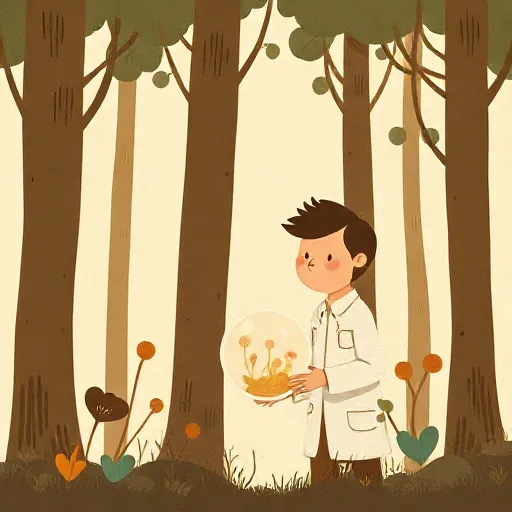
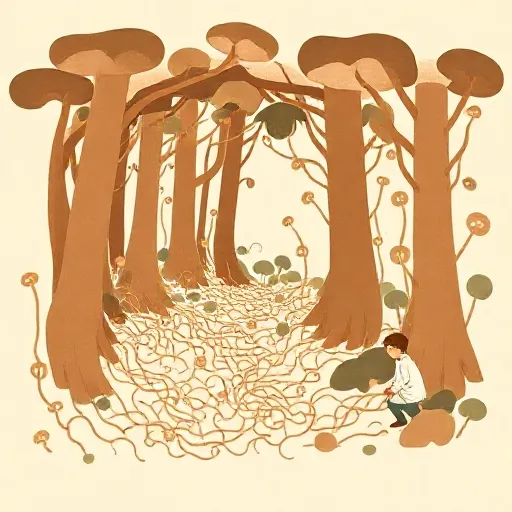
But what about this: in the 1990s, biologists found a fungus in Michigan that weighed more than ten tons and stretched across many miles of forest. When they tested samples from different parts of it, the genetic material was identical. It was all one organism, connected underground. One living thing, as old as the Roman Empire, covering an area bigger than a hundred football fields.
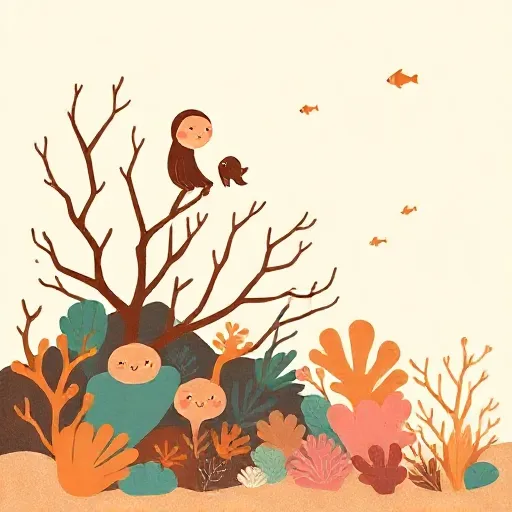
Or think about coral reefs. You’ve probably seen pictures: those colorful underwater structures teeming with life. When most people look at a reef, they see the coral animals (tiny polyps) that build the hard skeleton, and maybe the algae that live inside them. But some biologists argue that the entire reef—the polyps, the algae, the calcium deposits, all of it together—is a single living thing that grows and dies as one unit.
Suddenly the question “what counts as one living thing?” doesn’t seem so simple anymore.
This is the puzzle that philosophers of biology have been wrestling with. They call it the problem of biological individuality: what makes something a single biological individual?
The Fungus and the Reef
Let’s start with two real examples that show why this question is tricky.
The giant fungus (Armillaria bulbosa) discovered in Michigan is a single organism connected underground by a network of root-like threads. It’s one individual, yet you could walk through a forest for hours without realizing you were standing on top of it. A deer could eat a mushroom sprouting from one part of the fungus, while miles away another mushroom was sprouting from the same individual. Is it really “one thing” if it’s spread across such a huge area?
The coral reef case is even stranger. A reef is built by tiny animals called polyps. But those polyps can’t survive without single-celled algae called zooxanthellae living inside them, which provide energy through photosynthesis. And the polyps couldn’t build the reef without the hard calcium deposits they secrete. So what’s the individual? The polyp? The polyp-plus-algae? The whole reef including the calcium skeleton? Different biologists give different answers, and they all have evidence on their side.
The philosopher Jack Wilson and the physiologist Scott Turner used cases like these to show that what counts as “one living thing” isn’t written into nature—we have to decide which things to treat as individuals. And different scientific questions might require different answers.
Beyond Obvious Organisms
For a long time, scientists just assumed that “biological individual” meant the same thing as “organism”—the kind of thing you can see with your naked eye that has a clear body. A cat. A tree. A human.
But this assumption runs into problems fast. Consider:
-
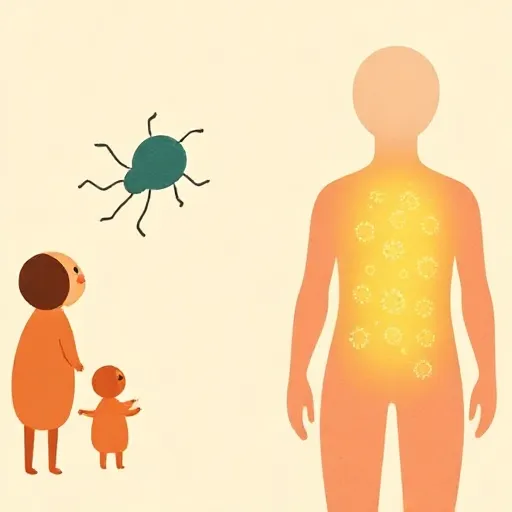
Microbes: Your body contains about ten times more bacterial cells than human cells. Are those bacteria part of you, or are they separate individuals living on you? If you swallow antibiotics that kill them, are you harmed? Most people would say yes—but that suggests they’re part of your biological self.
-
Lichens: Those crusty patches on rocks are actually partnerships between fungi and algae (or cyanobacteria). Are lichens one individual, or two? Or maybe three—the fungus, the algae, and the combined entity?
-
Clonal trees: Aspen groves often consist of many trees that are all connected by a single root system. They’re genetically identical. Each trunk looks like a separate tree, but they’re all the same individual. Biologists use special words: each trunk is a ramet, and the whole connected system is a genet.
This is where things get really interesting. Some philosophers argue that the old focus on visible organisms was a kind of bias—what they call macrobist bias. We paid attention to big things we could see, and ignored the microscopic world where individuality works differently.
A philosopher named John Dupré proposed something called promiscuous individualism: the idea that there are many equally valid ways to count biological individuals, depending on what you’re trying to understand. A lichen is one individual if you’re studying how it survives on a rock. The fungus in the lichen is an individual if you’re studying fungal reproduction. The algae in the lichen is an individual if you’re studying photosynthesis. None of these answers is more “right” than the others—they’re right for different purposes.
Two Kinds of Individuals
As philosophers and biologists dug deeper, they realized that “biological individual” might actually cover at least two very different kinds of things.
The first is an evolutionary individual. This is any entity that can evolve by natural selection. For something to be an evolutionary individual, three things need to be true:
- Variation: members of the group differ from each other
- Heritability: those differences can be passed to offspring
- Differential reproduction: some variants produce more offspring than others
Genes can be evolutionary individuals. So can organisms. So can whole species (if they compete and “reproduce” by splitting into new species). The philosopher Peter Godfrey-Smith calls these Darwinian individuals.
The second is a physiological individual. This is any entity that functions as an integrated, coordinated whole—something that has a metabolism, responds to its environment, and maintains itself. Hearts are physiological individuals. So are immune systems. So are whole organisms. The philosopher Thomas Pradeu argues that what makes an organism a physiological individual is its immune system: the immune system constantly patrols the body and decides what belongs and what doesn’t. Everything the immune system tolerates is part of the individual; everything it attacks is not.
Here’s the crucial insight: these two kinds of individuals don’t always line up. Something can be a physiological individual without being an evolutionary individual, and vice versa.
Consider the Hawaiian bobtail squid. This small squid has a partnership with a bioluminescent bacterium called Vibrio fischeri. The squid provides nutrients for the bacteria; the bacteria produce light that helps the squid hide its shadow from predators. The squid-bacteria combination is a highly integrated physiological individual—the squid can’t survive without its bacteria, and the bacteria can’t survive without the squid. But this combination doesn’t reproduce as a unit. When the squid reproduces, it doesn’t pass on its bacteria to its offspring. The baby squid has to collect new bacteria from the environment. So the squid-bacteria combination is a physiological individual but not an evolutionary individual.
Groups as Individuals
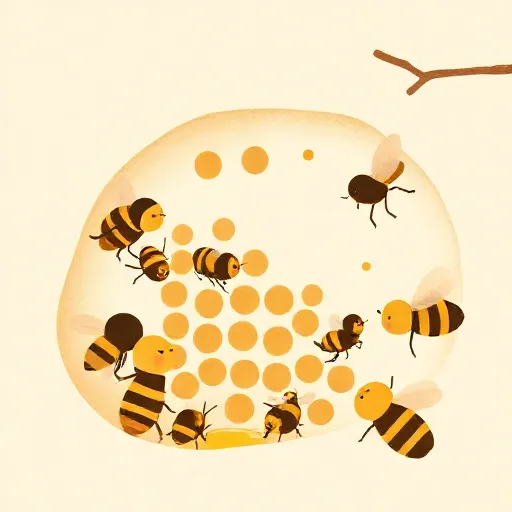
If the squid-bacteria combo can be an individual, what about bigger groups? Ant colonies are often called superorganisms—the colony acts like a single body, with different castes of ants functioning like organs. The queen is the reproductive organ; the workers are the digestive and defense systems; the colony as a whole grows, reproduces (by sending out new queens), and dies.
Some biologists and philosophers argue that whole species can be individuals too. This is the species-as-individuals thesis: species aren’t categories that organisms belong to, like “dog” is a category that individual dogs belong to. Instead, species are individuals that have organisms as their parts. The species Homo sapiens is a single living thing that began about 300,000 years ago, has spread across the planet, and will eventually go extinct. You and I aren’t members of the human species—we’re parts of it, like cells in a body.
This sounds weird, but it has a logic. Species change over time, have births (when they split from other species) and deaths (when they go extinct), and they have a continuous history. They’re spatiotemporally bounded—they exist in a particular place and time. That’s what makes something an individual.
Life Cycles and Bottlenecks
One of the most important ideas about biological individuality came from Richard Dawkins (yes, that Richard Dawkins). He noticed that most organisms start as a single cell—a fertilized egg, a spore, a bud—and then grow into a complex multicellular body. This “single-celled bottleneck” means that all the cells in a body are nearly genetically identical (mutations aside). That genetic uniformity helps prevent conflict within the body. If some cells tried to cheat and reproduce at the expense of others, the cheating cells would be genetically different from the rest, and the body’s systems could detect and suppress them.
Bottleneck life cycles are a key feature of organisms. But not all biological individuals have them. The giant fungus we started with, for example, doesn’t go through a single-celled bottleneck—it grows continuously, expanding its underground network. That’s one reason some biologists question whether it’s really “one individual” in the same sense.
The philosopher James Griesemer emphasizes that reproduction in biological individuals typically involves material overlap: offspring are literally made from the parent’s body. This is different from, say, a factory making copies of a product, where the original and the copy are completely separate. When a cell divides, the parent cell’s material is split between the two daughters. When an amoeba splits, the original literally becomes two new individuals. This material continuity is part of what makes biological individuals special.
Cooperation and Conflict
Here’s another way to think about what makes something one individual: how much do its parts cooperate versus compete?
The biologists David Queller and Joan Strassmann proposed that organismality (being an organism) is a matter of degree. Something is more organism-like when its parts cooperate highly and conflict rarely. A mouse is a highly integrated organism because its cells cooperate almost perfectly (they don’t compete with each other or try to reproduce independently). A yeast floc—a clump of yeast cells that stick together—is less organism-like because the cells are more independent and sometimes compete.
This creates a two-dimensional space. On one axis is internal cooperation (how well the parts work together). On the other is external cooperation (how much the individual works with other individuals). A high level of individuality means high internal cooperation and low external cooperation—the parts work together but the whole is independent.
The philosopher Ellen Clarke developed this idea further. She argues that what makes something an evolutionary individual is having two kinds of mechanisms:
- Policing mechanisms that prevent parts of the individual from competing with each other (like the immune system suppressing mutant cells)
- Demarcating mechanisms that create boundaries between the individual and others (like a skin or cell wall)
These mechanisms don’t have to be physical barriers—they can be chemical signals, genetic systems, or behavioral patterns. What matters is the function they perform: keeping the inside cooperative and the outside competitive.
The Evolution of Individuality
Here’s one of the most fascinating ideas in this whole debate: biological individuality has evolved. The first living things were probably single cells that reproduced by splitting. Then some cells formed colonies where different cells specialized for different tasks. Eventually, some colonies became so integrated that the whole colony became a new kind of individual—a multicellular organism. This happened at least several times in Earth’s history.
The philosopher John Maynard Smith and biologist Eörs Szathmáry called these major transitions in evolution. Each transition created a new kind of individual from the cooperation of smaller individuals:
- Molecules → protocells
- Protocells → cells with nuclei
- Single cells → multicellular organisms
- Multicellular organisms → societies (like ant colonies)
Each of these transitions required solving the problem of cheating: if smaller individuals cooperate to form a larger individual, what stops some of them from cheating? A cell in your body could, in principle, mutate and start reproducing like a cancer. The evolution of individuality required mechanisms to suppress such cheating—like the policing and demarcating mechanisms Clarke described.
This means that biological individuality isn’t a fixed category. It’s something that emerges and evolves. New kinds of individuals can form, and old kinds can break apart. Right now, we might be in the middle of another major transition: human societies with their complex division of labor and global communication might be evolving into a new kind of superorganism.
Why This Matters
You might be thinking: “Okay, but who cares whether a fungus is one individual or many? Does it actually make a difference?”
Yes, it does. Here’s why.
When conservation biologists talk about saving coral reefs, they need to know whether they’re saving individuals or ecosystems. If a reef is a single living thing, then protecting part of it is like protecting part of a body—the whole thing might collapse. If it’s an ecosystem, then protection might focus on maintaining the relationships between species.
When doctors talk about the human microbiome (the bacteria living in your gut), they need to know whether those bacteria are part of you or separate organisms. If they’re part of you, then treating you means treating your bacteria too. If they’re separate, then killing them with antibiotics is like removing unwanted guests.
When evolutionary biologists study how life got complex, they need to understand how new individuals form from old ones. This helps answer big questions: How did life go from simple cells to thinking beings? Could life elsewhere in the universe follow similar patterns?
The puzzle of biological individuality isn’t just an abstract philosophical game. It shapes how we understand life itself.
Key Terms
| Term | What it means in this debate |
|---|---|
| Biological individual | Any living entity that counts as “one thing” for some purpose |
| Darwinian individual | An entity that can evolve by natural selection (has variation, heritability, and differential reproduction) |
| Physiological individual | An entity that functions as an integrated, coordinated whole (has metabolism, responds to environment, maintains itself) |
| Superorganism | A group of organisms that acts like a single individual (e.g., ant colony) |
| Holobiont | A host organism plus all its symbiotic microbes, considered as one unit |
| Bottleneck | A life cycle stage where an organism consists of a single cell (helps prevent internal conflict) |
| Policing mechanism | Anything that prevents parts of an individual from competing with each other |
| Demarcating mechanism | Anything that creates a boundary between an individual and others |
| Major transition | An evolutionary event where smaller individuals cooperate to form a new kind of larger individual |
Key People
- Peter Godfrey-Smith — philosopher who developed the concept of Darwinian individuals and analyzed how reproduction shapes individuality
- Thomas Pradeu — philosopher who argues that an organism’s immune system defines its boundaries
- John Dupré — philosopher who proposed “promiscuous individualism” (many valid ways to count individuals)
- David Queller and Joan Strassmann — biologists who proposed that organismality is a matter of degree based on cooperation vs. conflict
- Ellen Clarke — philosopher who argued that evolutionary individuals need policing and demarcating mechanisms
- John Maynard Smith and Eörs Szathmáry — biologists who identified the major transitions in evolution
- Richard Dawkins — biologist who emphasized the importance of bottleneck life cycles for individuality
Things to Think About
-
If the bacteria in your gut are part of you (because your immune system tolerates them), does that mean you’re actually a community of many species, not a single individual? What would that imply about who “you” are?
-
Imagine scientists discover a fungus on another planet that covers an entire continent and is connected underground. Would it be one individual? What if it doesn’t have a single-celled bottleneck? Should we use the same criteria we use on Earth?
-
If human societies are becoming more integrated (through technology, global communication, economic interdependence), are we becoming a superorganism? What would count as evidence for or against this idea?
-
Is a cancerous tumor part of you, or is it a separate individual? It’s made of your cells with your DNA, but it competes with the rest of your body. Where should we draw the boundary?
Where This Shows Up
- Medicine: The debate about whether to treat the human microbiome as part of the patient affects how doctors prescribe antibiotics and probiotics
- Conservation biology: Whether coral reefs, forests, or other ecosystems are “individuals” affects how we protect them
- Artificial life: Scientists trying to create synthetic life need to understand what makes something a living individual
- Astrobiology: When searching for life on other planets, we need criteria for what counts as a biological individual
- Your own body: The question of who “you” are—your cells, your bacteria, your genes—is literally a question about biological individuality