
Can All Good Things Go Together? The Warning of Isaiah Berlin
A Boy, a Revolution, and a Question

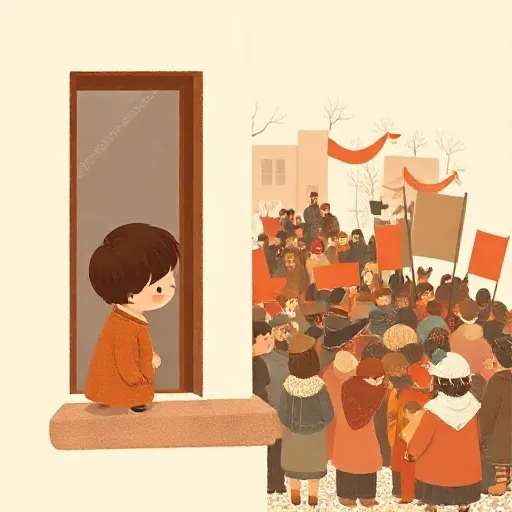
Isaiah Berlin was eight years old in 1917. From his family’s apartment in Petrograd, Russia, he watched the Russian Revolution unfold. Crowds marched, soldiers clashed, and the world he knew collapsed. He would later remember seeing a frightened policeman being dragged away by a mob. That moment planted a seed that grew into a lifelong question: When people fight for something they believe is good, why do they so often create something terrible?
That question carried Berlin (1909–1997) from Russia to Britain, where he became one of the most original liberal thinkers of the twentieth century. After studying philosophy at Oxford and serving as a diplomat during World War II, he returned to academic life. But he drifted away from the strict logic-chopping of his early colleagues and toward the messy, human problems of freedom, history, and moral conflict. His big idea — value pluralism — would challenge centuries of received wisdom. And his 1958 lecture “Two Concepts of Liberty” would remain a touchstone for anyone who cares about politics.
The Two Kinds of Freedom: “Free From” and “Free To”

When people demand freedom, what exactly do they want? Berlin noticed that they often mean two very different things. He called these negative liberty and positive liberty.
Negative liberty is freedom from interference. No one stops you from speaking, moving, or thinking as you wish. It’s the liberty of a person whose door is unlocked and whose hands are untied.
Positive liberty is freedom to be your own master. It’s about self-rule, about having the power to shape your own life rather than being pushed around by your impulses, your ignorance, or other people. Both concepts are real and valuable, Berlin insisted. But positive liberty, in particular, can be twisted into something monstrous.
Here is the danger: some thinkers have argued that you are only truly free when you follow your “true” self or your “real” good — even if you don’t feel like it. A child who wants to eat only candy isn’t free, on this view, because she is a slave to her cravings. So a wise authority — a parent, a teacher, a government — might force her to eat broccoli “for her own good,” claiming to set her free. Berlin saw that this slippery logic could be pushed much further. A dictator could tell an entire population: “You don’t know what you really want. I will force you to be free.” In the twentieth century, both Communist and Fascist regimes used this kind of argument to justify crushing individual choices under the banner of liberation.
Berlin did not reject positive liberty outright. He knew that a person who has no inner self-control is not fully free. But he warned that any move to identify freedom with a single correct path — your “true” will — invites tyranny. The safer, more humane anchor, he thought, was negative liberty: a protected space where no one can push you around, even for your supposed own good.
Why Can’t All Good Ideas Be Friends?

Beneath Berlin’s thinking about freedom lay a deeper belief about values themselves. For centuries, many philosophers had held a view he called monism. Monism assumes that all genuine human values — like justice, kindness, loyalty, and knowledge — form a single harmonious whole. If two values appear to conflict, monists say, that just means we haven’t thought clearly enough. There must be a master formula (like “maximum happiness” or “God’s will”) that shows how they all fit together.
Berlin found this fantasy both false and dangerous. He proposed value pluralism instead. Pluralism holds that there are many real, final goods in human life, and they often pull in opposite directions. Equality can clash with liberty. Mercy can clash with justice. Honesty can wound kindness. You cannot maximize all of them at once, because the world simply isn’t built that way.
Worse, there is no common yardstick to measure these different goods against one another. Berlin called this incommensurability. There is no universal “goodness unit” — no moral ruler — that tells you how many pounds of fairness equal an ounce of freedom. In each real situation, you have to use your own judgment. Choosing painfully is unavoidable, and every genuine choice means losing something real.
Berlin found early glimmers of this idea in thinkers like Machiavelli and Herder, but he sharpened it into a full-fledged ethical outlook. Monism, he believed, doesn’t just describe the world wrongly; it also tempts people into cruelty. Whenever a leader claims to possess the one true blueprint that will resolve all human conflicts forever, anyone who disagrees must be either stupid or wicked. That justification has been used to silence, punish, and even kill. Pluralism, by contrast, encourages humility and tolerance: we can be certain that no single vision will ever satisfy every legitimate human need.
Some critics have charged that pluralism collapses into relativism — the idea that any value is just as good as any other, and that there is no basis for criticizing cruel practices. Berlin disagreed. He insisted that all human beings share a core of basic values, a common “human horizon.” Atrocities like slavery and genocide fall outside that horizon and are genuinely evil, not just unpopular. Within the horizon, however, many different ways of life can be valuable, even when they are incompatible.
Do You Really Choose? Berlin vs. Determinism
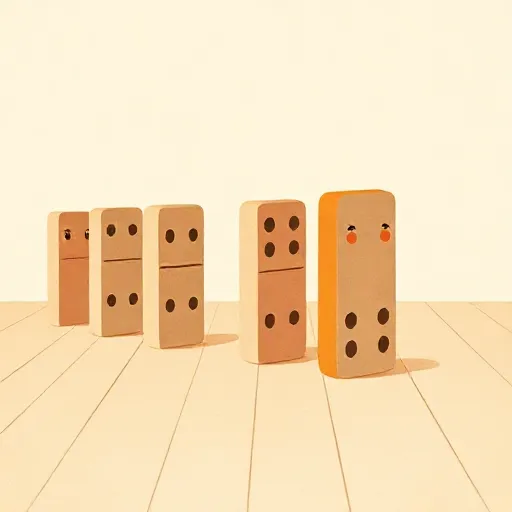
Berlin’s defense of choice faced another challenge from determinism. Determinism is the view that every event, including every human decision, is caused by forces completely beyond our control — our genes, our upbringing, the laws of physics. If determinism is true, can we ever really say that someone “chose” to do something, or could have done otherwise?
Berlin did not claim to have proved that determinism is false. But he argued that accepting it would require a radical rewiring of our moral lives. Every time we praise a person for being brave, or blame someone for a cruel act, we assume that they could have chosen differently. If all actions are locked in place like falling dominoes, praise and blame make no more sense than scolding a stone for falling downhill.
He also attacked historical inevitability — the belief that history follows a fixed, unchangeable path, and that individuals are mere puppets of grand forces. Berlin found this idea not only intellectually dubious but morally corrosive. It gives people an alibi for cruelty, because they can claim that history made them do it and that they are not to blame. He saw this alibi used often to excuse the suffering of millions. Against it, Berlin insisted that history is shaped by real human beings making genuine, unpredictable choices. That uncertainty is both frightening and what gives our actions weight.
Why It Still Matters: Choosing in a Messy World

Berlin’s ideas are not dusty museum pieces. You face value pluralism on a small scale every week. Should you be totally honest with a friend, even if the truth stings? Should you sacrifice an afternoon of studying (knowledge) to spend time with a lonely grandparent (love)? In such moments, no abstract rule can tell you exactly what to do. You must weigh, feel, and choose. Berlin would say that this is not a flaw in the universe but the core of what it means to be a person.
On the large stage, the same pattern plays out. Governments must balance safety against privacy, equality against freedom, the needs of the current generation against the future. Politicians who promise a single, painless fix for all these tensions are not being clever; they are being dishonest. Berlin’s pluralism is a permanent caution against utopian blueprints and the idea that any one value must always win.
He would also remind us that liberty, while precious, is only one value among many. A society that protects individual freedom must still care about fairness, community, and human connection. And when conflicts arise — as they always will — the best we can manage is a “precarious equilibrium” that avoids the worst suffering and keeps the conversation going.
Isaiah Berlin died in 1997, but his quiet, insistent message endures: the world is too rich and tangled for one-size-fits-all solutions. Learning to see the genuine good in opposing views, and to choose honestly with open eyes, is part of growing up — whether you are eight or eighty, looking out a window at a world full of conflict.
Think about it
- If you had to choose between total safety and total freedom, which would you pick? Is it possible to have both at the same time in a real society?
- Think of a time you had to choose between two genuinely good things. How did you decide? Could any rule or formula have made the choice for you?
- If a scientist invented a machine that could predict every choice you will ever make with perfect accuracy, would you still be free? Would it make sense to praise or blame anyone?