Why Time Flows Like Music, Not Like Frames: Henri Bergson’s Revolution
The Traffic Jam No One Expected
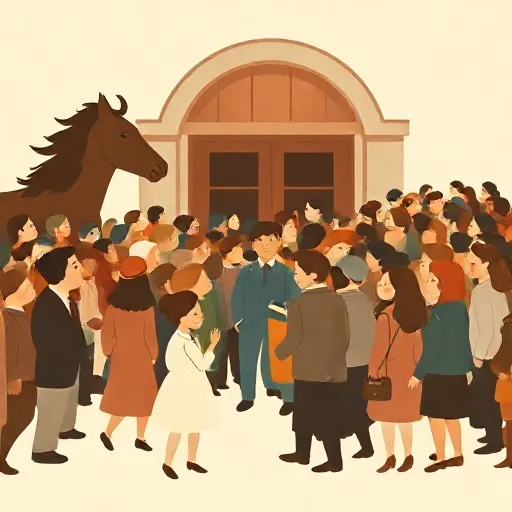
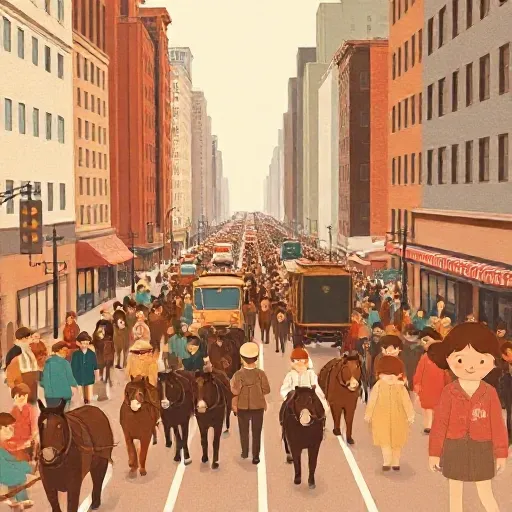
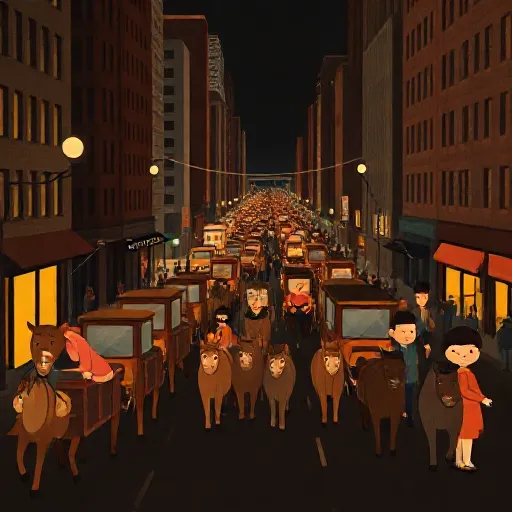
In January 1913, the streets of New York City froze. Broadway, usually noisy and moving, became a solid knot of carriages and motorcars. Drivers shouted, passengers jumped down, and newspaper reporters scribbled notes. The cause? Not a king, not a war — a lecture. Henri Bergson (1859–1941), a French philosopher, was about to speak at Columbia University, and thousands of people showed up to hear him.
That traffic jam tells you something important. Bergson wasn’t famous for a novelty or a scandal. He was famous for asking a question that had been hiding in plain sight: What is time really? Most people, including most scientists and philosophers, thought of time as a line of separate instants — a row of boxes, each one a tick of the clock. But Bergson said that this picture misses everything that matters. Real time, he argued, flows like a melody, not like frames in a movie. And if he was right, then we aren’t machines following a pre‑written script — we genuinely choose.
Bergson was born in Paris to a Polish father and an English mother, and he was a dazzling student. As a teenager he won the top math prize in all of France. His math teacher was horrified when Bergson decided to study philosophy instead. “You could have been a mathematician,” the teacher said. “You will be a mere philosopher.” Bergson would later use that mathematical mind to expose what numbers can never capture: the feel of time as it passes.
A Flock of Sheep and a Rainbow: Two Kinds of Multiplicity
To get at real time, Bergson pointed out that we use one word, “many,” for two completely different things. He called both multiplicities, but he split them: quantitative multiplicity and qualitative multiplicity.
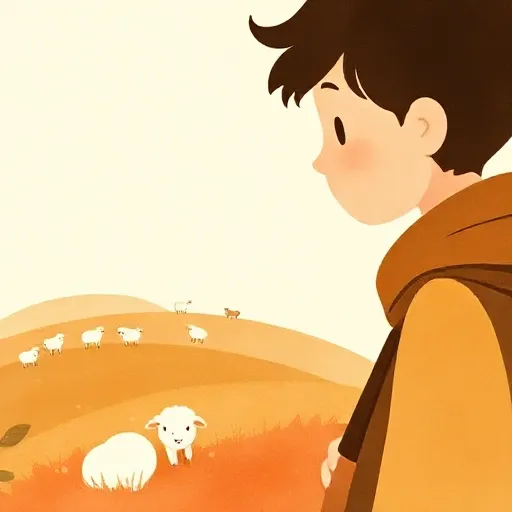
A quantitative multiplicity is what you see when you count a flock of sheep. You ignore that each sheep is a little different, that the grass smells sweet, that the light is turning golden. You focus only on what they share and separate them in your mind, sheep by sheep, so you can tally a number. Clocks and calendars work the same way: they chop the flow of your day into hours, minutes, seconds — into identical, side‑by‑side positions. This is useful if you need to catch a bus or sell wool, but it’s a stripped‑down, practical trick.
A qualitative multiplicity is entirely different. Here the parts don’t sit apart; they soak into one another and change each other. Bergson’s favorite example was the feeling of sympathy. At first you put yourself in someone else’s pain and feel disgust — you want to look away. Then you picture yourself in their place and feel fear. Then you realize that if you don’t help, no one will help you either, and you sense a pull to act. Finally, you discover that you’re willing to give up your own comfort just to ease their hurt. Bergson said true pity isn’t a single thing: it’s a qualitative progress from repugnance to fear to sympathy to humility. You can’t take these feelings apart and line them up like sheep. They interpenetrate; they become each other. And that, for Bergson, is what time itself is like.
He gave this flowing, qualitative multiplicity a name: duration (la durée). In duration, no two moments are identical. Every new moment carries all the previous ones forward, like a melody where each note is colored by the ones that came before. If time really is quantitative, our choices are just dominoes falling one after the next — determined. But if time is qualitative, if the future really grows out of the whole moving past in an unpredictable way, then we experience freedom right inside our own experience.
Inside the Orange: The Intuition That Knows From Within
If duration is real, how can we know it? Not by measuring it. Measuring is analysis — stepping back, dividing, labeling. That works for sheep, but it misses the inner flow. Bergson proposed a different kind of knowing: intuition. He called it “sympathy” — not just a feeling, but a way of plunging into something so deeply that you think with it, not about it.
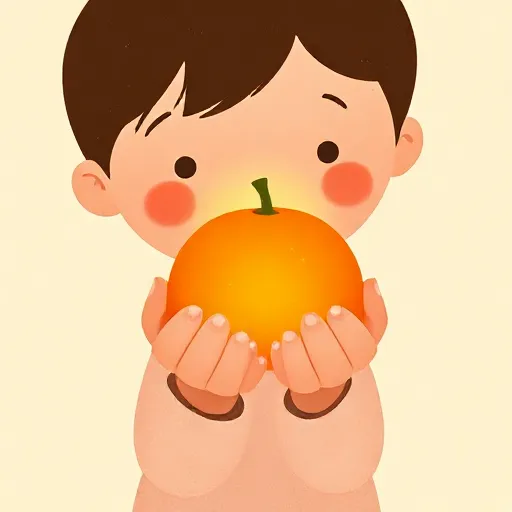
He offered three images to help. The first is a strip of tape running from one spool to another: one spool unwinding your future, the other winding up your past. That shows how the past grows continuously, never repeating. The second is a color spectrum. Imagine, Bergson said, that the only color you knew was orange. Yet if you really enter into orange, if you sympathize with it, you sense a tug in two directions — a deeper shade on one side, a lighter shade on the other. With effort, you feel red hidden there, and yellow hidden there. You’ve discovered the whole spectrum inside one color.
The third image is an elastic band being stretched. Don’t stare at the line the band makes in space; focus on the action of pulling. You’ll notice that the pulling is indivisible — you can’t slice it into frozen pieces without killing the movement. Intuition works the same way: you turn your attention away from fixed concepts and feel the stretching, the mobility, of your own conscious life. And because your own duration is a real part of the whole duration of the universe, Bergson said, you can enlarge that feeling outward — toward other minds, toward living things, even toward matter (which is just duration at its slowest rhythm, like a note held almost motionless). Intuition doesn’t give you a perfect map of everything, but it puts you in touch with reality as it goes on, not as it sits still.
The Cone of Memory: Why Your Past Keeps Growing
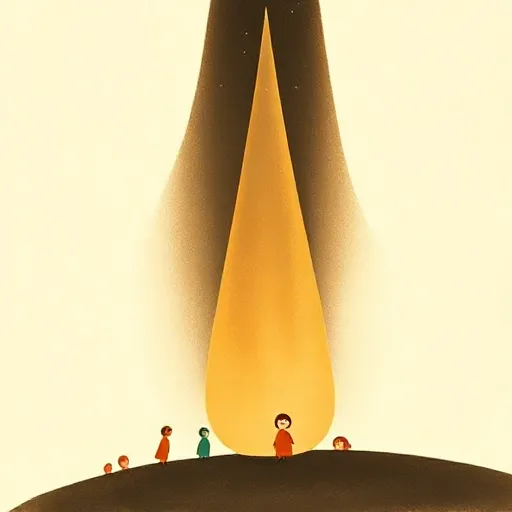
If duration is a continuous progress, then memory isn’t a filing cabinet. Bergson thought the word “memory” hides two very different things. There is habit‑memory — the way your fingers remember a piano scale after practice. Habit‑memory is really just a body‑skill, glued to the present. Then there is pure memory — the survival of everything you’ve ever lived, whether you’re thinking about it or not. This enormous reservoir is unconscious, but it pushes forward into your present moments, coloring them.
Bergson drew a famous picture to explain this: an upside‑down cone. The wide base is your deepest, oldest memories — the ones that surface in dreams — and the sharp point touches a flat plane, which is your present perception. When you try to remember something, you’re rotating and narrowing that cone, like pointing a telescope at the night sky. At first you see only a blur of stars. Then you twist the focus, and singular images condense out of the cloud. That movement from a cloudy interpenetration to a sharp image is what Bergson called virtuality — a power to unfold in many ways. Memory isn’t replaying a fixed recording; it’s a creative contraction of your whole past into a fresh now. And because the past is bigger for each new moment, no two Tuesdays can ever truly be the same. Your life literally adds onto itself, so the person choosing today is richer than the person who chose yesterday.
Life Is a Creative Storm, Not a Premade Puzzle
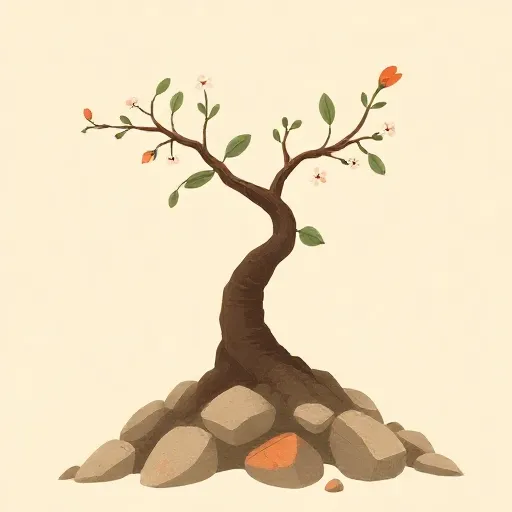
Bergson extended these ideas to all living things. In Creative Evolution (1907), he argued that life cannot be explained either by a blind mechanism or by a rigid final plan. Both pictures treat the future as already packed inside the past, like a jigsaw puzzle waiting to be assembled. But Bergson saw life as a vital impulse (élan vital) — a creative surge that produces genuinely new forms.
That impulse explains why species branch and diverge. The single movement of life splits into two great tendencies: instinct and intelligence. Instinct works from inside, using the body and its rhythms — a bee building a hive knows how without learning. Intelligence works from the outside, breaking things into pieces, making tools, planning. Humans are the intelligence‑specialists, and that gives us science and engineering. But it also traps us: intelligence views the world as a set of static, separate objects, so it can’t grasp the streaming, indivisible character of life. The good news is that a spark of instinct still glows inside us. When we make the effort of intuition, we reawaken that spark. We turn intelligence against itself and feel, however dimly, the very creative movement that makes the universe go. Intuition, then, is memory raised to the level of life itself.
The Open Heart and Why It Still Matters
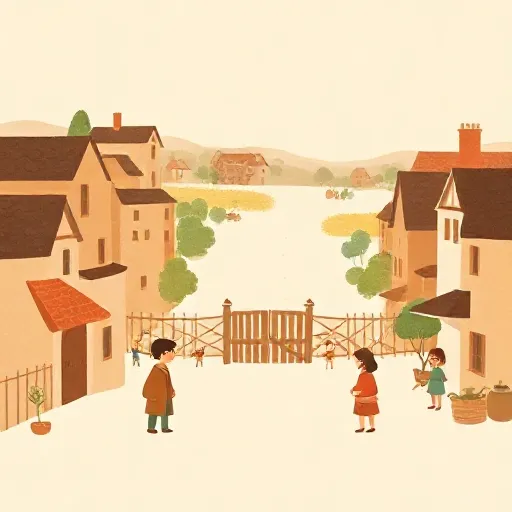
Bergson’s last big book, The Two Sources of Morality and Religion (1932), asked how human societies stay together and how they grow. He distinguished a closed morality, which is built on habit, obligation, and defense of the tribe, from an open morality, which is propelled by creative emotions — the kind of burst that a composer feels before writing a symphony. That emotion then expresses itself outward in acts of love, generosity, and the drive to include all people, not just the ones who look like us.
Closed morality and its static religion invent pictures of gods to enforce rules; open morality and its dynamic, mystical religion overflow those pictures and push toward an always‑widening circle. Bergson thought that the force of obligation we feel (like Kant’s strict “categorical imperative”) actually comes from two different sources: the natural need to belong, and the creative leap that opens the self to others. When we mix the two up and try to explain both with logical formulas, we miss the living power behind our best actions.
Bergson’s ideas faded for a while as new philosophies took over, but they roared back in recent decades — largely because the philosopher Gilles Deleuze (1925–1995) saw that Bergson’s concept of qualitative multiplicity offered a way to think about communities that aren’t forced into sameness. For Deleuze, a genuine people‑to‑come would be a multiplicity, not a closed unit. And that vision, in turn, echoes Bergson’s hope for an “open society” that never stops expanding its welcome. Each time you feel a melody pull at your chest, each time you understand a friend without needing to analyze, each time a new idea wells up and changes you — you’re brushing against the continuous, creative stream Bergson called duration. His revolution isn’t just about clocks; it’s about trusting that the world is still being made, and that your choices really count.
Think about it
- If you could press pause on your life and lay out every moment like a row of photographs, would that row capture what it feels like to be you? Why or why not?
- Bergson believed that deep sympathy means feeling another person’s experience as though it were yours — not just thinking about it. Can you recall a moment when someone else’s feeling completely rearranged your own? What changed?
- Suppose every new living creature is genuinely new, not just a remix of old parts. How would that change the way you treat a stranger, a pet, or even a weed growing through the sidewalk?