
Philosophy for Kids

What Makes Something Art? And Who Gets to Decide?

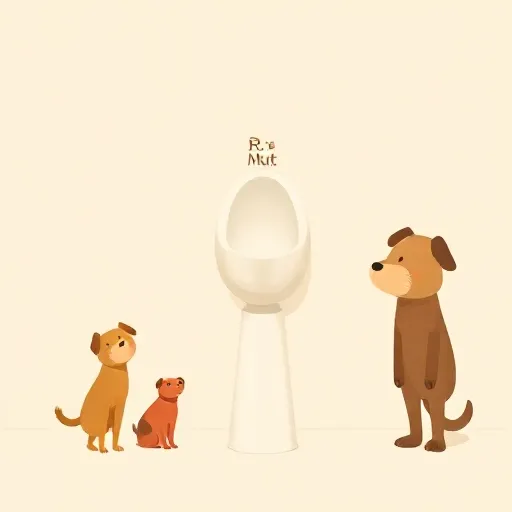
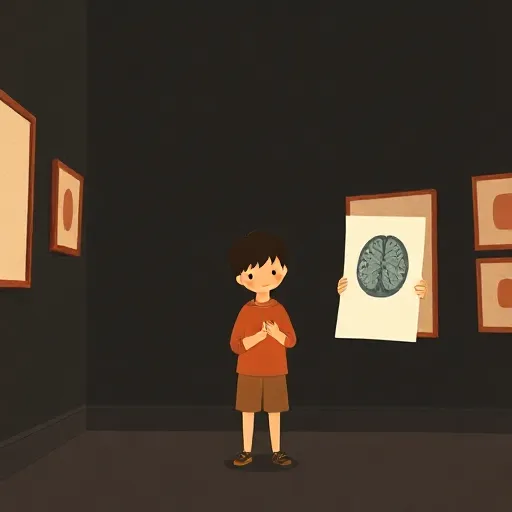
Imagine you’re walking through a museum. You turn a corner and see a urinal sitting on a pedestal. It’s clean. It’s white. It’s signed “R. Mutt, 1917.” Next to it is a painting of a bowl of fruit that took someone months to make. The museum calls both of them “art.” But one is a piece of plumbing someone bought at a store and turned upside down. The other is a painting that required years of training.

Is the urinal really a work of art? If you say no, what makes you so sure? If you say yes, does that mean anything can be art? And if both are art, then what does the word “art” even mean anymore?

These aren’t trick questions. Philosophers have been arguing about them for over a century. One philosopher who had a lot to say about them was a man named Monroe Beardsley. He loved art—poems, paintings, symphonies, sculptures—and he thought most philosophers who wrote about art didn’t love it nearly enough. They were too busy being clever with their theories. Beardsley wanted a theory that actually made sense of why people spend hours looking at paintings or listening to music.

What Is This Thing We’re Looking At?

Let’s start with a simpler question than “what is art?” Let’s ask: what kind of thing is a work of art at all?

Think about Beethoven’s Fifth Symphony. It exists as notes on a page (the score). It exists as a performance by an orchestra. It exists as a recording you can listen to on your phone. It exists as your experience of hearing it last Tuesday. So which one of these is the real symphony?

Beardsley thought about this carefully. He came up with a four-part distinction that makes things clearer:

  1. The artifact – the score Beethoven wrote down
  2. The production – the Philadelphia Orchestra’s specific recording
  3. The performance – playing that recording last night in your room
  4. The presentation – your experience of hearing it

For Beardsley, the thing critics should talk about—the thing they should judge—is the production. Not the score (that’s just instructions), not your experience (that’s too personal and different for everyone), but the actual public thing that people can share: the recording, the painting on the wall, the performance on stage.

This makes sense. If your friend says “that painting is beautiful,” and you say “no it’s not,” the argument is about the painting itself—not about the painter’s plan, and not about your private feelings. The painting is the thing you can both look at.

But here’s the problem: what about poems? If you read a poem silently in your head, where is the “production”? It’s in your mind. But if you read the same poem aloud at a poetry reading, the production is a public event. So the same poem would be a different kind of thing depending on how it’s experienced. That bothered Beardsley, and it still bothers philosophers today.

Can We Define “Art”?

Beardsley didn’t want to define “art” for a long time. He thought the question was a trap. But eventually he came up with a definition anyway. Here it is, in his own words:

A work of art is an arrangement of conditions intended to be capable of affording an experience with marked aesthetic character.

Let’s unpack that.

“An arrangement of conditions” just means something made by a person—an artifact. A rock isn’t art (unless you pick it up and put it on a pedestal, in which case you arranged it).

“Intended to be capable of affording an experience with marked aesthetic character” means the person who made it wanted people to have an aesthetic experience when they encountered it. An aesthetic experience is the kind of experience you have when you’re fully absorbed in something beautiful or meaningful—when you’re not thinking about your homework or what’s for dinner, but just paying attention to the thing itself.

This definition has a clear advantage: it connects art to what art actually does for people. It gives art a job. The job is to provide an experience worth having.

But it also has a clear problem: what about the urinal? Duchamp’s Fountain—the famous upside-down urinal—wasn’t made with any aesthetic intention. Duchamp didn’t think it was beautiful. He was making a joke about what counts as art. According to Beardsley’s definition, it’s not a work of art.

Some people say: fine, then your definition is too narrow. The urinal is art, because it’s in a museum, and art historians write about it, and it changed how people think about art. Beardsley would reply: being in a museum doesn’t make something art. Museums also display artists’ palettes and working clothes, and those aren’t works of art. They’re displayed because they’re interesting for historical reasons, not because they’re beautiful objects in their own right.

The Artworld Theory (And Why Beardsley Hated It)

Another philosopher, George Dickie, had a very different definition. He said something is art when “some person or persons acting on behalf of a certain social institution (the artworld)” has conferred upon it “the status of candidate for appreciation.”

In simpler terms: something becomes art when the art world—museum curators, critics, gallery owners, artists—decides it is. Art is whatever the people in charge say it is.

Beardsley thought this was nonsense. Here’s why.

First, what does “acting on behalf of the artworld” even mean? If the President of the United States signs a law, we know exactly what it means for him to act on behalf of the government. There are rules, procedures, and defined powers. But the “artworld” isn’t an institution like that. It’s just a loose collection of people who are interested in art. There’s no official ceremony where someone gets authorized to declare something art.

Second, the definition is circular. What’s the artworld? It’s the people who deal with art. What’s art? It’s whatever the artworld says it is. That’s like saying “a doctor is someone who does doctor stuff, and doctor stuff is whatever doctors do.” It doesn’t tell you anything.

Third, it gets the order wrong. Museums and art schools and galleries exist because there are already works of art that people care about. They didn’t invent the category of art. They just respond to things people already find valuable.

Beardsley thought the institutional theory confused cause and effect. We don’t build museums to create art; we build museums to house art that already exists.

Does the Artist’s Intention Matter?

This was Beardsley’s most famous fight. In a paper called “The Intentional Fallacy” (written with William Wimsatt), he argued that what an artist meant to say has nothing to do with what the work actually means.

Suppose a poet writes a poem about a sunset. You read it and think it’s about the passing of time and the sadness of growing old. But then you find the poet’s diary, and it says: “I wrote this poem because I was annoyed that my toast burned this morning, and the sunset just happened to be outside my window.”

Should you change your interpretation? Beardsley says no. The poem means what the poem means, regardless of what the poet thought it means. The poet could be wrong about his own work.

Why does Beardsley think this? Because language doesn’t belong to individual speakers. Words mean what they mean because of public conventions—the whole community of English speakers, not just one person’s private intentions. If your friend says “that’s cool” and means it’s literally cold, but everyone who hears it thinks she means it’s good, who’s right? The community, not the speaker.

But this gets tricky. Consider this example Beardsley used: a sculptor creates a large twisted wooden shape and says it symbolizes “Human Destiny.” You look at it and see nothing of the sort. Should you believe him?

Probably not. But things get more complicated when the artist’s intention could resolve an ambiguity. If a poem can be read two different ways, and the poet says “I intended it to be read the second way,” doesn’t that count for something? Many philosophers think it does—not as the final word, but as evidence that should be considered.

Beardsley stuck to his guns. He said the poet’s intention is “neither available nor desirable”—not always available (poets die, or forget, or lie) and never desirable (even when available, it shouldn’t affect your interpretation).

Later in his career, Beardsley tried to back up this view with a fancy theory about “speech acts.” The basic idea was: when you write a poem, you’re not actually saying anything the way you do in conversation. You’re pretending to say something, or representing someone saying something. Since it’s all pretend, the poet’s real intentions don’t matter.

But this is a hard sell. When Wordsworth writes “Milton! Thou shouldst be living at this hour,” is he pretending to address Milton, or is he actually expressing his real feelings through poetic form? Most readers feel it’s the latter.

The Real Disagreement

So where does this leave us? Beardsley’s view is that art should be judged on its own terms. The work is what matters, not the artist’s psychology, not your personal feelings, not what the culture says about it. Look at the thing itself. Judge it for what it is.

The alternative view—which Beardsley fought against his whole career—is that art is connected to human beings: to the people who make it and the people who experience it. You can’t understand a poem without understanding the poet. You can’t understand a painting without understanding the time and place it was made.

This debate hasn’t been settled. It probably never will be, because the question isn’t really about definitions. It’s about what we value in art. Do we value the object itself, or do we value the human story behind it?

Beardsley thought we should value the object. He loved art enough to think it could stand on its own, without needing the artist’s life story or the audience’s emotions to prop it up. Whether he was right is still something philosophers argue about—and it’s a question worth thinking about next time you look at something and wonder: is this art?


Appendices

Key Terms

TermWhat it does in this debate
Aesthetic objectThe thing that critics actually talk about and judge—not the artist’s intention or the audience’s reaction
Aesthetic experienceThe kind of absorbed, focused experience that art is supposed to provide
ProductionThe actual public version of a work (a recording, a performance, a specific painting) that multiple people can experience
Intentional fallacyThe mistake of thinking the artist’s intention determines what the work means
Institutional theoryThe view that something is art because the “artworld” says it is
ArtifactA human-made object—one necessary condition for something to be art
Criterial evidenceA type of evidence that counts toward a conclusion but doesn’t prove it for certain

Key People

  • Monroe Beardsley – An American philosopher who loved art and wanted a theory that took art seriously on its own terms. He argued that what matters is the work itself, not the artist’s intentions or the audience’s reactions.
  • William Wimsatt – Beardsley’s co-author on “The Intentional Fallacy,” the paper that started the fight about whether artists’ intentions matter.
  • George Dickie – A philosopher who proposed the “institutional theory” of art—that something becomes art because the artworld declares it so. Beardsley thought this was nonsense.
  • Marcel Duchamp – An artist who submitted a urinal (signed “R. Mutt”) to an art exhibition in 1917, creating a work called Fountain that made people argue about what counts as art for the next hundred years.
  • Humpty Dumpty – The character from Through the Looking-Glass who insisted that words mean whatever he chooses them to mean. Beardsley used him as an example of why individual intentions don’t determine meaning.

Things to Think About

  1. If you found an object that was beautiful but was never intended to be art—a perfectly shaped piece of driftwood, say—would it be art? What if you put it on a pedestal? What if a museum displayed it?

  2. Beardsley says the artist’s intention doesn’t matter for interpretation. But what about something like a sarcastic poem? If you couldn’t tell it was sarcastic from the words alone, and the poet told you it was, should you believe him?

  3. Is there a difference between “this is art” and “this is good art”? Could something be a bad work of art but still be art? Could something be beautiful but not be art at all?

  4. Beardsley thought the “artworld” theory was circular. But is it really? Can you define something using its context without being circular? For instance, is “money” just whatever a government says is legal tender?

Where This Shows Up

  • Museum arguments – When people argue about whether a pile of candy or an unmade bed in a gallery is “really art,” they’re having the same debate Beardsley had with Dickie.
  • School assignments – If a teacher asks you to explain what a poem “really means,” and you find out what the poet said it means, should that settle the question? Beardsley says no; many teachers say yes.
  • Copyright law – Courts sometimes have to decide whether something counts as a “work of art” to determine if copyright applies. This is a real legal question with real consequences, not just an abstract philosophy debate.
  • Your own experience – Next time you hear a song or see a painting that moves you, ask yourself: does it matter what the artist was thinking when they made it? Or does the thing itself say everything you need to know?