Could a World Full of Atheists Be Good?
The boy who argued himself in and out of trouble
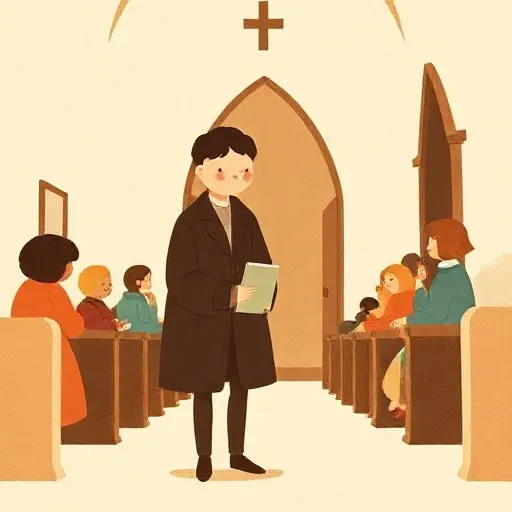
Pierre Bayle (1647–1706) grew up poor in a tiny French village, the son of a Protestant minister. Because money was tight, he had to wait until he was nearly twenty to start school. He was furious he’d missed so much time, so he tore through every book he could find. Soon the local Protestant academy bored him. At twenty-one, he enrolled at a top Jesuit university in Toulouse — and converted to Catholicism. Not because he had to. Bayle simply lost debate after debate against Catholic students and was convinced that they must be right. The city’s important people celebrated. Then Bayle got better at arguing, found new replies, and rejected Catholicism just days after finishing his exams.
That made him a relapse — someone who leaves and returns — and in 17th-century France that was a serious crime. He fled to Geneva, then cautiously returned to teach philosophy at a Protestant academy. When Louis XIV shut down that school, Bayle moved to Rotterdam and began writing the books that made him famous. Before long, many people called him the “Philosopher of Rotterdam.” Others called him far worse.
Can an atheist be a good person?

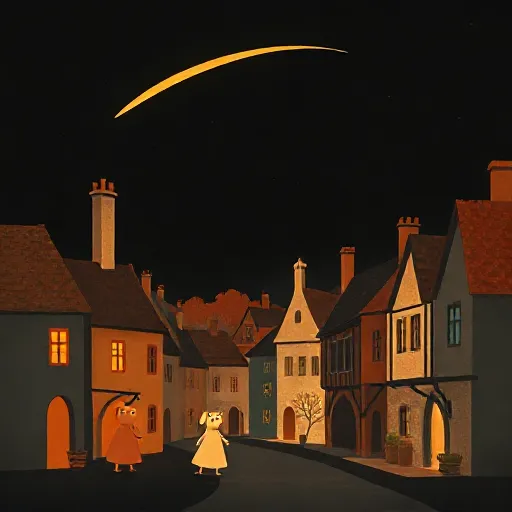
One of Bayle’s first big works was Various Thoughts on the Occasion of a Comet (1682). The book pretends to be about superstitions: do comets really carry messages from an angry God? Bayle quickly shows they’re just natural space rocks. But then he pivots. If comets aren’t signs, what about the deeper superstition that you can’t be moral unless you believe in God?
Bayle stacks up historical examples of virtuous atheists, ancient and modern. He points to Lucilio Vanini, a thinker who denied God’s existence and was burned at the stake in 1619, but who was known for his honest and peaceful life. Bayle’s key insight is this: actions do not spring from principles or beliefs. People behave well or badly because of temperament, education, and habit — not because of the god they do or don’t worship.
He quotes a simple rule he sees in everyday life: “from the fact that a man has no religion it does not follow necessarily that he will be led to every sort of crime or to every sort of pleasure. It follows only that he will be led to the things to which his temperament and his turn of mind make him sensitive.” (OD III: 113) So a whole society of atheists, raised with good habits, could be just as peaceful as any religious one. Bayle goes further — maybe even more peaceful, because religion often inflames people’s worst passions. He writes that the idea of fighting for temples and altars makes people dangerously brave and convinced that God is on their side. Atheists have one less reason to go to war.
The right to follow your own inner voice
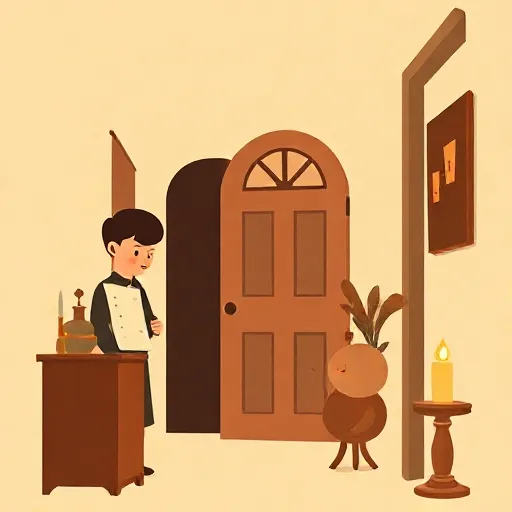
If God doesn’t settle every debate by speaking out loud, who gets to decide what’s right? Bayle’s answer is: you do. He builds his argument for freedom of conscience around a story. Imagine a master leaves his servant alone and says: only let people in if they show a certificate with a special mark. While the master is gone, the servant must judge each certificate himself. If a document looks authentic, he must honor it — even if it’s a clever fake. If a real document looks suspicious, he must reject it. He has no master to double-check his work.
For Bayle, conscience is that servant. It includes your natural sense of basic moral truths and the little judgments you build on them. God has ordered each human mind to let in only ideas that seem evident — crystal-clear and distinct, like a certificate that you can’t doubt. Even if you later find out you were wrong, you are still following God’s order when you act on what appeared evident to you. As Bayle put it: “if error appears to us in the form of the truth, then it acquires all rights over us.” This isn’t a loophole. It’s a duty. To ignore your own best judgment would be to disobey the inner command God gave you.
This means that no king or magistrate can punish you for your sincere beliefs. Your conscience answers to a higher authority. Bayle’s position here links the philosophy of René Descartes (1596–1650) — who taught that clear and distinct ideas are the test for truth — with a surprisingly modern idea: each person’s moral autonomy.
Why you can’t force someone to believe
Giving everyone the right to follow their conscience sounds fine — until someone’s conscience tells them to persecute others. Bayle tackled this head-on in his Philosophical Commentary on These Words of Jesus Christ: “Compel Them to Enter” (1686–88). For centuries, Catholics had used that Bible verse (Luke 14:23) to justify forcing Protestants to convert. Bayle argued that Scripture must be interpreted by reason. To figure out if a command is truly from God, he proposed a test.
Imagine a country where no one has ever heard of the action — say, forcing people to join a church. Would rational people there, after careful thought, vote to adopt it as a universal law? If the answer is no, then the action can’t be an evident moral truth. Persecution, Bayle shows, fails this test spectacularly. Persecutors claim they want others to love God properly, but “threats, imprisonment, exile, beatings, torture” (OD II: 371) are perfect tools for making people hate God, not love him. A sincere persecutor would be contradicting their own stated goal. Bayle’s nine arguments all circle back to this demand for integrity: you can’t preach love while using cruelty.
Some scholars point out a puzzle called the Persecutor Paradox. What if a person, after long and honest examination, is truly convinced that God wants them to use force? On Bayle’s own principles, wouldn’t that person then have a duty to persecute? Bayle never produced a knockdown answer that satisfies everyone, and the debate among historians remains open.
The problem of evil: the big question with no human answer

The question that obsessed Bayle more than any other is the problem of evil. If a single, perfectly good, all-powerful God created everything, why is the world full of pain, wickedness, and disaster? Bayle proposed a three-part position that got him into endless trouble.
First, he agreed that a priori reasoning — pure logic about what’s simplest and most elegant — supports monotheism. One perfect creator makes more sense than two warring gods. Second, however, a posteriori reasoning — looking at the actual mess of human experience — constantly makes monotheism harder to swallow. The Manicheans, who believed in two gods (one good, one evil), could explain every disaster as the work of the bad god. A good-and-powerful creator who permits evil looks, by contrast, like a contradiction. Third, despite all this, Bayle insisted you should still hold on to monotheism by faith, not by reason.
He sharpened this into attacks on every theodicy (a theodicy is an attempt to explain why God allows evil). Free will? If God knew Adam and Eve would fall, creating them was like handing a killer a knife and being surprised by the murder. The idea that the Fall led to a greater good — Jesus saving humanity? That makes God like a father who breaks his son’s arm just to show off how well he can set the bone. To Bayle, these aren’t answers; they’re a sign that the human mind hits a wall when it tries to unite infinite goodness and real suffering.
He concluded that the origin of evil, like the Trinity, is a mystery above reason and even against it. You can’t resolve it with arguments. You can only accept it by faith. Leibniz (1646–1716) and others would soon try to prove Bayle wrong, producing massive theodicies of their own. But Bayle’s unsettling voice, echoed later in Voltaire’s Candide, kept asking: does the world really look like it was managed by a perfect being?
The man behind the mask

Here’s the riddle historians call the Bayle Enigma. On one page, Bayle sounds like a faithful Christian who knows reason needs faith. On the next, he equips atheists and skeptics with their sharpest weapons. Some interpreters think he was secretly an atheist who spent a lifetime dismantling religion without saying so openly. Others see a sincere Calvinist attacking reason to make room for humble belief. Still others find a kind of skeptical reporter who presented both sides fairly and never picked a winner. All these readings have some evidence.
What makes Bayle so alive today is not one answer, but the habits he modelled. He showed you can demand evidence, refuse to punish people for their beliefs, and sit honestly with huge, unanswerable questions — all at the same time. The comet in the sky never shouted a message, and Bayle didn’t either. But his questions are still streaking across our own debates about religion, toleration, and how to be good.
Think about it
- If someone honestly believes a different religion from yours, does that give them the right to practice it, even if you are sure they are wrong? Where do you draw the line between respecting conscience and stopping harm?
- Can a person you know — or a character you admire — be truly good without believing in God? What parts of their goodness come from their beliefs, and what parts come from their temperament or upbringing?
- Is it ever fair to force someone to do something “for their own good” when they disagree? How would you decide whether the force is justified?