Can Your Ideas Change the World? Bruno Bauer’s Rise and Fall
The Toast That Ended a Career
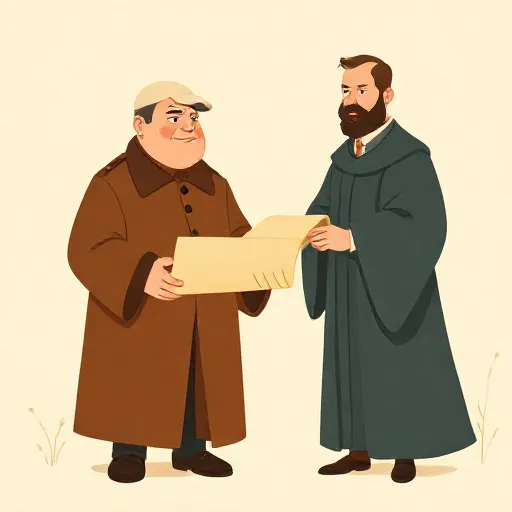
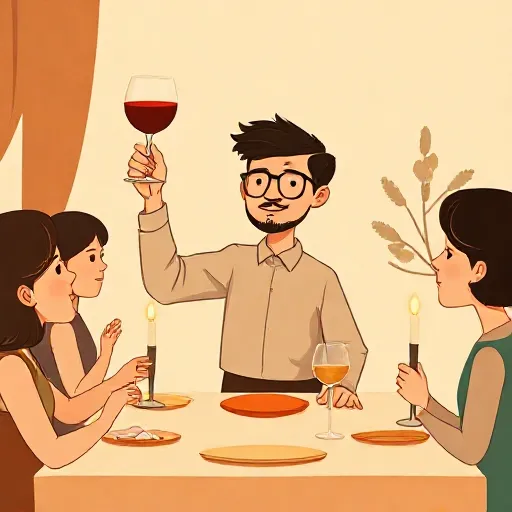
In November 1841, a young professor named Bruno Bauer (1809–1882) lifted his glass at a crowded banquet in Berlin. The guests were celebrating a liberal politician from south Germany. Bauer rose and proposed a toast to “Hegel’s conception of the state.” The words sounded academic, even a bit boring. But to the king’s spies, they were a call for revolution. Within months, King Friedrich Wilhelm IV personally ordered that Bauer be banned from teaching forever.
Bauer was not surprised. For years he had been arguing that the old world—the world of kings, nobles, and official churches—was built on a lie. He believed that human reason could tear down every authority that refused to justify itself before the thinking mind. To the Prussian monarchy, that made him dangerous. To Bauer, it just made him honest.
The Secret Message Hidden in an Angry Book
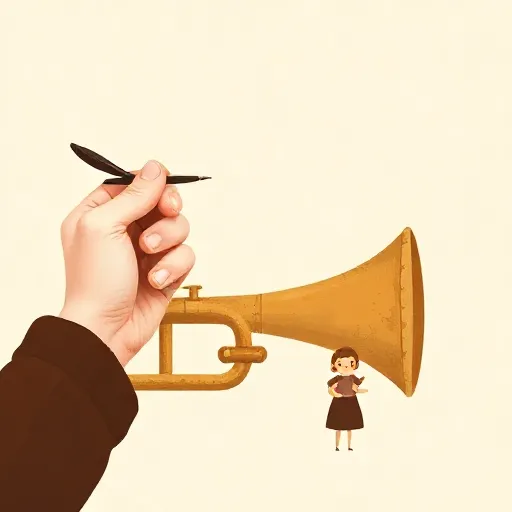
A few months before the banquet, an anonymous book had appeared in Berlin. Its title was The Trumpet of the Last Judgement, and it sounded like a terrified scream. It raged that the philosopher G. W. F. Hegel (1770–1831) was the deadliest enemy of Christianity and the state, a secret atheist and revolutionary. The author, it seemed, was a pious conservative trying to save the kingdom.
But the real author was Bruno Bauer himself. He had written the whole thing in disguise, using an outraged preacher’s voice to smuggle forbidden ideas past the censors. The book argued that if you took Hegel’s philosophy seriously, you would have to admit that every religion, every throne, and every unchangeable tradition was just a temporary stage in history. Reason, not divine command, was the only true ruler.
Bauer’s key idea was infinite self‑consciousness. This is the human power to step back from any belief—even your own—and ask, “Why should I accept that?” When people really use this power, they stop treating priests, kings, or holy books as untouchable. They realize that all authority must be earned by reason, not inherited by tradition.
But Bauer saw a big problem. Throughout history, people had given away their own thinking power to something outside themselves. Religion, he claimed, was an especially dangerous trick. It made one group feel that it had a direct hotline to God and that everyone else mattered less. Bauer called this alienation: you treat a part of your own mind as if it were a foreign power ruling over you. This turns shared human life into a collection of competing private clubs, each claiming a special pass.
Who Gets to Be Free? A Fight Over Emancipation
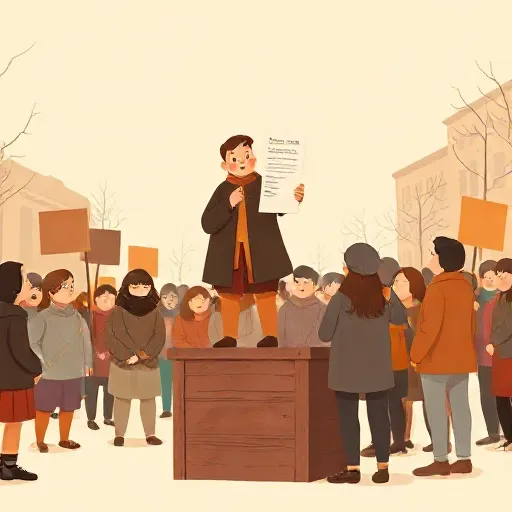
When the Prussian government debated whether to give Jews the same civil rights as Christians, Bauer jumped into the fight with a position that shocked everyone. In two essays from 1842–1843, he argued that neither Jews nor Christians should get special legal status based on religion. True freedom, he insisted, required everyone to leave religious identity out of public life entirely.
To him, any group that demanded rights because of its uniqueness was replaying the old game of particularism—the claim that “my community matters more than yours.” The only way out was to think and act as a universal human being, not as a member of a tribe. Many liberals and even other radicals thought Bauer had gone too far. You’re telling an oppressed minority that they must first abandon who they are just to become equal? Bauer’s answer was yes. Freedom, he argued, is not about clutching your identity tighter. It is about rising above private interests and remaking yourself in the light of reason.
He took this so seriously that he developed a perfectionist ethics. True freedom isn’t just having rights; it’s a constant project of self‑overcoming. You never say, “This is just how I am.” You ask, “Could I be fairer, braver, more just?” The goal is to shape yourself and your community so that everyone’s reason can flourish. Bauer dreamed of a republic where no one was stuck in a fixed role and where the state was the shared work of free citizens, not a machine for protecting private property or religious dogma.
Marx Fires Back: Who Should Build the New World?
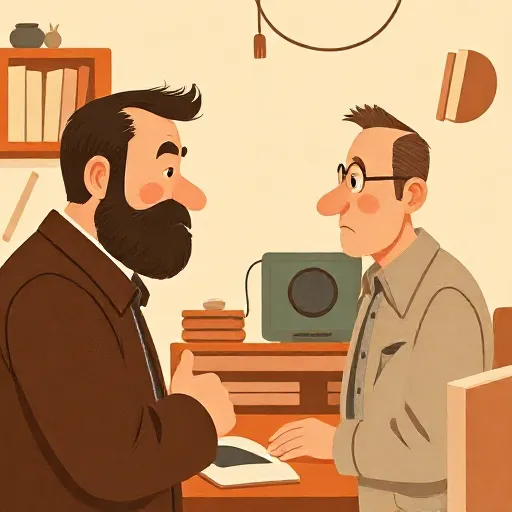
By 1844, Bauer’s old acquaintance Karl Marx (1818–1883) had had enough. Together with Friedrich Engels, Marx wrote a book called The Holy Family that made fun of Bauer and his friends as out‑of‑touch dreamers. Marx said you couldn’t change the world just by thinking about pure self‑consciousness while real people starved. The only force that could overthrow the old order was the working class, the people who actually produced society’s wealth.
Bauer fired back. He agreed that workers were suffering, but he warned that any group that fights only for its own interests becomes a new master once it wins. A working‑class victory might just replace kings with factory bosses or party chiefs. Real emancipation, he insisted, meant every person overcoming all private group loyalty. You had to fight for humanity as a whole, not for your particular corner.
This clash still echoes today. If you push for your group’s rights, can you do it without stepping on others? Or does justice always require a universal standpoint where no one gets to say “my people first”? Bauer thought compromise was impossible; Marx thought you had to start somewhere concrete. Neither side gave in.
When the Barricades Fell
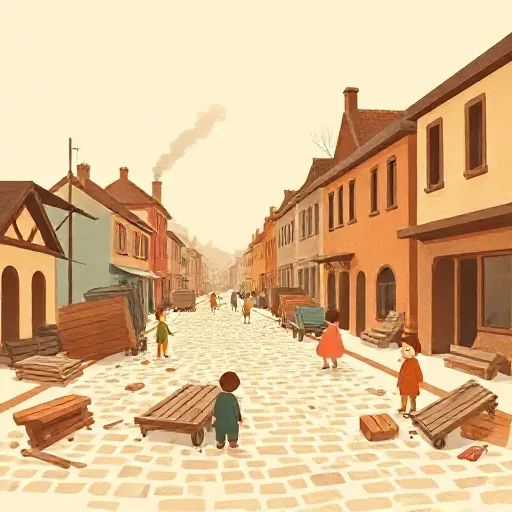
In 1848, revolutions erupted all over Europe. Workers, students, and middle‑class reformers built barricades and demanded real power. Bauer himself ran for a seat in a new Prussian assembly, championing popular sovereignty. But by 1849, the armies of the old order had crushed almost every uprising. Bauer’s hopes evaporated.
He looked at the world and saw something terrible. The masses, he decided, had not been fighting for universal freedom; they were driven by private envy and narrow wants. Liberalism celebrated selfish competition. Socialism tried to organize the poor without making them truly free. All these movements, Bauer concluded, were just mass society in the making—a flat, conformist world without genuine individuals.
Then came the darkest turn. Bauer abandoned his earlier belief that philosophy could lead to a better future. In the 1850s, he started predicting that Europe would sink into a global imperialism: huge empires like Russia and a united West would clash for supremacy. World war was inevitable. Reason would not save anyone. The best a serious person could do was observe the collapse from a distance, without illusion. He even began to describe Jews not as a religious group but as a separate, unchangeable race—a hateful anti‑Semitism that had no place in his earlier work.
The thinker who once believed that self‑consciousness could remake the world now seemed to believe that nothing could.
What Do You Do When Your Best Ideas Fail?
Bruno Bauer’s life traces a sharp turn: from a determined rebel who thought reason could overthrow kings, to a bitter observer who expected only war and decay. His story leaves a tough question hanging. When you try to fix something huge—a broken friendship, a club gone wrong, a rule that seems unfair—and it doesn’t work, what then? Do you decide that big ideas are useless? Or do you hold on to the hope that change is possible, even when the path is messy and slow?
Bauer chose to give up. But his younger, more hopeful self still matters. He showed that asking “Why should it be this way?” is never pointless, even if the answer takes a long time to arrive. True freedom, he once argued, means never being satisfied with the world as it is. That part of his thinking belongs to anyone who has ever looked at something broken and said, “We can do better.”
Think about it
- If you believed a completely new kind of society would be fairer, but almost everyone said it was impossible, would you keep arguing for it? What might make you change your mind?
- Bauer thought any group that fights only for its own power just replaces one master with another. Can you think of a case where a group struggled for its rights without harming others in the process?
- When you fail at something you really believed in, how do you decide whether to try again, adjust your aim, or let that hope go?