
Philosophy for Kids

What's Real Anymore? Jean Baudrillard and the Puzzle of Signs

Imagine you and your friend each get the same pair of sneakers. They’re the same brand, same color, same everything. But somehow, the ones your friend has just look cooler. Not because they’re different—they’re identical. But your friend got them first, or they’re the ones everyone’s talking about, or there’s just something about how they look on her. The sneakers aren’t just shoes anymore. They’re a sign of something: being in the know, having taste, being part of the group.

Now imagine that the whole world works like that. Everything you buy, everything you wear, everything you watch—it’s all sending signals. And those signals might matter more than what the things actually are.

That’s where Jean Baudrillard starts his thinking. He was a French philosopher who spent his life trying to understand what happens when signs—images, brands, status symbols—take over our lives. And he had some strange, unsettling ideas about where we’re headed.

The System of Objects: What Your Stuff Really Means

Let’s start with something you’ve definitely seen: a kid in your school who walks around with a brand-new phone, the latest model, even though their old one was fine. Why do they do that? The obvious answer is “because they can” or “because it has cool new features.” But Baudrillard would say there’s something deeper going on.

In the 1960s, when Baudrillard was starting out, most economists and thinkers thought about goods in two ways. First, things have use-value: a phone makes calls, a jacket keeps you warm. Second, they have exchange-value: a phone costs $800, and you can trade it for other things worth $800. But Baudrillard noticed that in modern consumer societies—the kind we live in now—there’s a third kind of value that’s even more important.

He called it sign-value.

A pair of sneakers might cost $30 to make and sell for $150. But the real reason someone pays $150 isn’t just for the shoes themselves. It’s for what the shoes say. That swoosh or that logo or that particular colorway—it’s a sign. It says something about who you are, what group you belong to, how much status you have. Baudrillard saw that in a world of mass production, where almost anyone can have almost anything, the only way to stand out is through sign-value.

This is why brands matter so much. A white t-shirt from the department store is just a white t-shirt. A white t-shirt with a tiny designer label costs ten times as much. The extra money buys you meaning—or at least the illusion of it.

And here’s the tricky part: the meaning isn’t fixed. A designer brand might mean “cool” one year and “trying too hard” the next. The value isn’t in the object itself; it’s in the whole system of signs, where everything gets its meaning by being different from everything else. Just like words in a language only have meaning because they’re not other words—“dog” means what it does because it’s not “cat” or “tree”—your stuff means what it does because it’s not their stuff.

Think about it: if everyone in your school suddenly started wearing exactly the same clothes from the same store, the whole system would break down. You’d have to find new ways to signal who you are. That’s why fashion changes so fast. The system needs constant novelty to keep meaning alive.

Baudrillard thought this was a trap. He believed that in modern consumer societies, people are alienated—cut off from their real needs and desires—because they’re always chasing signs rather than genuine satisfaction. You don’t just want a sandwich because you’re hungry. You want a particular sandwich from a particular place because of what it says about you. Your hunger has been hijacked by the system of signs.

The Consumer Society: Living Inside the Advertisement

By the early 1970s, Baudrillard was writing that the whole society had become organized around consumption, not production. This was a big shift. Previously, thinkers like Karl Marx had said that the most important thing about modern society was how things are made—the factories, the workers, the bosses. Baudrillard said: no, look at how things are bought and displayed. That’s where the real action is.

In the consumer society, advertising, packaging, fashion, and media create a constant flow of signs. Every ad tells you that buying this thing will make you happier, cooler, more attractive, more complete. And since you can never quite get enough sign-value to feel satisfied—there’s always someone with a better sign—you keep consuming. It’s like a treadmill that never stops.

Baudrillard pointed out that in this system, even your sense of who you are becomes something you consume. Your identity gets built out of the stuff you own and display. You’re not just a person; you’re a collection of signs. And those signs come pre-packaged by corporations and media.

This might sound gloomy, and it is. But Baudrillard wasn’t just complaining. He was trying to describe something many people feel but don’t have words for: that strange sense that the world of shopping and branding and status is somehow unreal, that it’s a game you’re forced to play even though you didn’t make the rules.

Symbolic Exchange: An Older, Stranger Way of Living

So Baudrillard spent years diagnosing how the consumer society works. But he also tried to imagine alternatives, different ways of relating to objects and to each other.

In the mid-1970s, he became fascinated with something he called symbolic exchange. This wasn’t about buying and selling at all. It was about older forms of giving and receiving that don’t fit into the logic of money, utility, or profit.

Baudrillard was influenced by the French thinker Georges Bataille, who had this wild idea that the real human drive isn’t to accumulate things but to waste them. Think about how people sometimes throw huge parties, or give extravagant gifts, or destroy things in celebrations. Bataille said this isn’t irrational—it’s more fundamental than rationality. The sun gives energy without asking for anything back. That’s the model for how humans really want to live: in a “general economy” of giving, spending, and celebrating, not in a “restricted economy” of saving and accounting.

Baudrillard was also influenced by anthropologists who studied gift-giving in small societies. In some of these societies, giving a gift isn’t just about being nice. It creates a bond. The gift has to be returned—not because anyone says so, but because the relationship demands it. The whole society is woven together through cycles of giving and receiving. Nothing is really “owned” in the way we think of ownership.

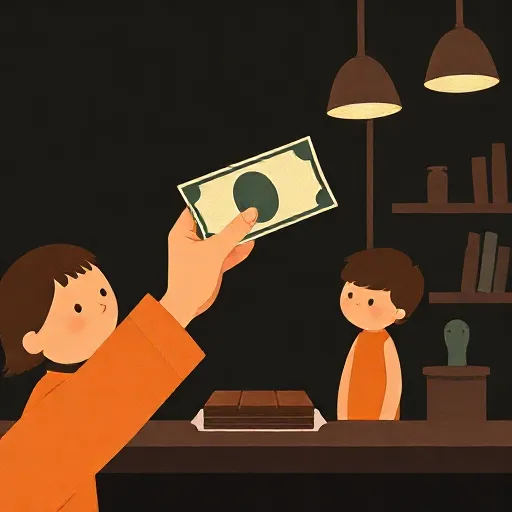
This sounded wonderful to Baudrillard. He contrasted symbolic exchange with the cold logic of modern capitalism, where everything has a price and relationships are reduced to transactions. In the symbolic world, things have meaning because they connect people. In the modern world, things have price because they connect to money.

But Baudrillard wasn’t naive. He knew you couldn’t just go back to living like a small tribe. The modern world had changed too much. And as he kept thinking, he realized the problem went even deeper than he’d thought.

Simulation and Hyperreality: When the Map Replaces the Territory

Here’s where Baudrillard’s ideas get really strange and really interesting.

Think about a video game. It’s made of code and graphics. It’s not “real”—but it can feel more exciting, more fun, more meaningful than real life. Now think about Instagram. You see pictures of your friends looking happy, having adventures, eating amazing food. But what you don’t see is the twenty failed shots before the one that got posted, or the fact that your friend was actually bored and tired and just wanted to go home. The Instagram version is a simulation of reality—and maybe it’s more interesting than the reality itself.

Baudrillard began to argue in the late 1970s and 1980s that we’ve entered a new stage of history, a postmodern stage, where simulation has won. We don’t just use signs to represent reality anymore. The signs have become more real than reality itself. He called this hyperreality.

Consider Disneyland. It’s a fake Main Street, a fake castle, fake adventures. But people love it, and the experience can feel more “real” than the messiness of actual life. For Baudrillard, Disneyland isn’t just a theme park—it’s a model for how the whole society works. The fake is presented so vividly that it becomes the standard. Real Main Streets start to look disappointing compared to the Disney version.

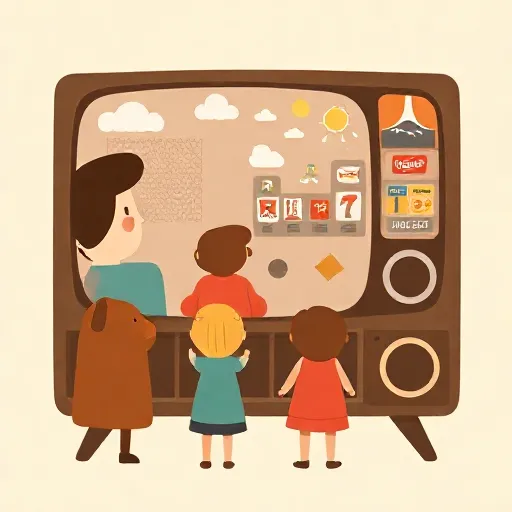
Or think about television news. Events are selected, edited, narrated, and presented in a certain way. The broadcast isn’t a window onto reality; it’s a construction. But after you’ve watched enough news, you start to see the world through the construction. The map has replaced the territory, as Baudrillard put it.

What happens when we live in hyperreality? Well, a lot of traditional ideas start to break down. The idea of “truth” becomes shaky. If everything is a simulation, what does it mean to say something is true or false? The idea of “the real” becomes nostalgic—something we vaguely remember but can’t quite reach. And the idea of “meaning” itself gets difficult. If signs just point to other signs in an endless loop, what does anything mean?

Baudrillard thought this was the situation we’re all in now. We’re surrounded by images, brands, media, virtual spaces, simulations of reality. We’ve lost touch with anything that isn’t a simulation. And most people don’t even notice, because the simulations are so compelling.

The Murder of Reality

Baudrillard got a lot of attention for some of his more outrageous claims. He said the Gulf War of 1991 “did not take place.” That sounds crazy—obviously there were bombs, soldiers, real deaths. But what he meant was that for most people watching on TV, the war was a media spectacle, a video game with real consequences that seemed unreal. The experience of the war was a simulation. The real war—the suffering, the confusion, the mess—remained invisible.

He also said something even more disturbing after the September 11, 2001 attacks. He wrote that the terrorists had used the logic of the system against itself. They turned airplanes and media into spectacular signs. And he claimed that “we all dreamed of this event”—meaning that the spectacle of destruction was something the global system of simulation had been building toward. This got him accused of justifying terrorism, which he insisted he wasn’t doing. He was trying to analyze how the system of signs and spectacle had become so powerful that even its own destruction could only happen as a simulation.

For Baudrillard, reality itself has been murdered. The murder weapon is the media, the brand, the image, the virtual. And it’s the “perfect crime”—because nobody even noticed it happened. We’re all living in the aftermath, in a world of pure simulation, where things are more real than real (hyperreal) and yet somehow not real at all.

What to Do? Fatal Strategies

So if the whole world is a simulation, what can you do about it? Baudrillard had some strange answers.

In his later writings, he argued that we’re no longer in charge. The old idea was that human beings—subjects—were the masters of the universe. We used objects, we controlled nature, we made history. But Baudrillard said that’s over. Now objects—by which he means everything from commodities to technology to signs themselves—have taken over. The subject has lost. The object wins.

His suggestion, which sounds weird on purpose, is to adopt what he called fatal strategies. Instead of trying to fight the system of simulation, you go along with it—but in an extreme way that breaks the system. You push the logic of the system so far that it collapses or reverses itself.

Think of it this way: if everyone is obsessed with signs and status, you could take that obsession to such a ridiculous extreme that the whole thing becomes absurd. You could wear the most absurd outfit, obsess over the most trivial brand, treat the simulation even more seriously than everyone else—and in doing so, expose the whole thing as a game. You’re not fighting; you’re out-simulating the simulation.

This is a very slippery idea, and Baudrillard never made it into a clear program for action. Some critics think he just gave up on trying to change anything. Others think he was playing a sophisticated intellectual game. Either way, his later work becomes more and more aphoristic—short, punchy, paradoxical statements—as if he’s given up on systematic argument and just wants to provoke.

But Is It True?

Baudrillard’s ideas are fascinating, but they’re also controversial. Lots of philosophers and critics have argued with him.

Some say he exaggerates. Sure, there are simulations, but there’s also real hunger, real pain, real pleasure. The simulation isn’t everything. Other people point out that Baudrillard’s claims are so sweeping and dramatic that they can’t really be tested. What would count as evidence that we are real? What would count as evidence that we’re not? If everything is simulation, then the claim “everything is simulation” is just another simulation.

Others argue that Baudrillard’s work is actually a kind of science fiction or pataphysics—a made-up “science of imaginary solutions.” He himself seemed to enjoy this ambiguity, never quite saying whether he was being serious or ironic.

Still, even his critics often find his ideas useful as provocations. He makes you look at the world differently. He makes you notice how much of your life is about signs and status and simulation. He makes you ask uncomfortable questions about what’s “real” and what’s just a really convincing copy.

Maybe that’s enough. Maybe the point isn’t to decide once and for all whether Baudrillard was right or wrong. Maybe the point is to let his strange, unsettling ideas make you think harder about the world you live in—a world of iPhones, Instagram filters, brands, logos, advertisements, virtual realities, and a million signs screaming for your attention.


Key Terms

TermWhat it does in the debate
Sign-valueThe worth something has as a status symbol or expression of identity, separate from what it’s actually useful for
Consumer societyA society organized around buying and displaying goods, where consumption becomes the main activity and source of identity
Symbolic exchangeA form of giving and receiving that creates social bonds, unlike the cold logic of buying and selling
SimulationA copy or representation that has become so widespread it replaces the original reality
HyperrealityA state where the simulation feels more real and intense than actual everyday life
SignAnything (image, object, brand, gesture) that carries meaning beyond itself within a system of other signs
Fatal strategiesWays of responding to a situation by pushing its logic to an extreme, hoping it will collapse or reverse

Key People

  • Jean Baudrillard (1929–2007). French philosopher and social theorist who argued that modern life has become dominated by signs, simulations, and consumer culture. He developed the ideas of sign-value, hyperreality, and fatal strategies.
  • Georges Bataille (1897–1962). French writer and philosopher who believed that real human nature was about excess, waste, and celebration—not about utility and saving. He influenced Baudrillard’s thinking on symbolic exchange.
  • Karl Marx (1818–1883). German philosopher and economist whose ideas about capitalism and commodities Baudrillard built on, criticized, and eventually rejected.

Things to Think About

  1. You’re scrolling through social media and see a post from someone you barely know, showing a perfect moment. Is that moment “real”? More real than their ordinary life? Does it matter that they probably staged it? Where does simulation end and reality begin?

  2. If everything you own says something about you, is there any way to escape sign-value? Could you own nothing and still be caught up in the system? What about people who try to “opt out” of consumer culture?

  3. Baudrillard says that in hyperreality, you can’t tell the difference between the real and the simulation. But does the difference matter? If a virtual experience makes you happy, sad, or thoughtful, isn’t that “real” enough?


Where This Shows Up

  • Social media is a perfect example of simulation and sign-value in action. The photos you post aren’t just records of your life—they’re signs that build your identity.
  • Movies like The Matrix explicitly reference Baudrillard’s ideas (the film actually shows a copy of his book Simulacra and Simulation). The whole question of “what is real” is straight out of his work.
  • Brand culture, fashion, and influencers all run on sign-value. The difference between a $20 t-shirt and a $200 one is almost entirely about what it signifies.
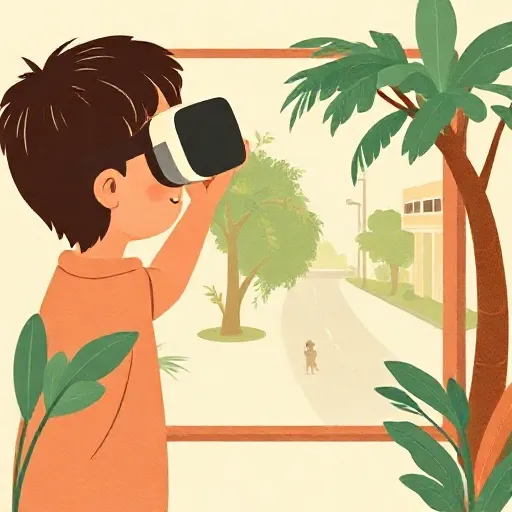
  • Video games and virtual reality create hyperreal worlds that can feel more compelling than real life, raising exactly the questions Baudrillard asked.