
Do You See What’s Really There? A Medieval Monk’s Radical Answer
Why Do Trees Dance When You Sail?

You’re on a slow riverboat. The shore is lined with thick oaks. As the boat drifts, the trees seem to glide past you, as if they’re dancing backward. You know the trees are standing still, but your eyes insist they’re moving. Now imagine you press a finger against the side of your eye while staring at a candle — suddenly you see two flames. A straight stick half in water looks bent. A glowing baton twirled super fast leaves a colored circle in the air, even though there’s no circle there.
Around 700 years ago, a Franciscan monk named Peter Auriol (c.1280–1322) collected experiences like these. He taught at universities in Bologna, Toulouse, and Paris, and he used these everyday illusions to shake up how thinkers understood the mind. Auriol wasn’t satisfied with the idea that our senses just passively copy the world like a camera. He insisted that our minds actively shape everything we see, hear, and think. That bold claim would make him one of the most talked-about thinkers of the Middle Ages — and it still rumbles through philosophy today.
The World in Your Mind: Apparent Being

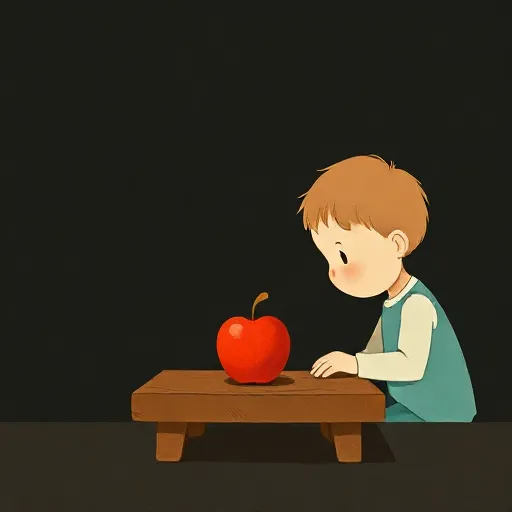
When you look at a red apple, what happens inside you? Most people picture a little image in the brain, a mental photo of the apple. Auriol rejected that completely. He argued that if you only had a picture of the apple, you’d never actually meet the apple itself — you’d be stuck staring at your own mental snapshot, like someone trapped in a hall of mirrors. Real knowledge of the world would be impossible.
His alternative was radical. Auriol said that when you perceive something, the thing itself gains a new kind of existence, which he called esse apparens — Latin for “apparent being” or “apparent existence.” The apple you see isn’t a copy; it’s the very same apple, but now existing in your perception as an object of awareness. Auriol described it as the apple with a new “mode of being,” one that is inherently tied to a perceiver. Without a mind to appear to, the apple only has real existence; with a mind attending to it, the apple lights up with apparent being.
Think of the twirling baton. The colored circle you see isn’t a physical object floating in the air, and it’s not inside your eye. Auriol would say it’s the baton itself placed into apparent being by your sense of sight. The baton-as-seen is the circle. Likewise, when you see a bent stick in water, the stick itself has apparent existence as bent, even though the real stick is straight. This explained illusions without blaming the world: your senses actively produce appearances, and sometimes those appearances don’t match the real thing.
Auriol thought this also solves a puzzle about concepts. If your idea of “dog” were a tiny mental statue, you could never truthfully say “a dog is an animal,” because the mental statue of dog wouldn’t be the same as the mental statue of animal. But if the concept is the real dogs themselves in apparent being, then “dog” and “animal” are the same individuals just conceived under different aspects. That made a lot of medieval thinkers sit up and take notice — and some of them panic.
Concepts Are Like Invisible Paintbrushes

Auriol was a conceptualist: he believed that only individual things exist in the extra-mental world — this poodle, that golden retriever, your neighbor’s howling beagle. There is no mysterious universal “dog-ness” floating around. So how do we form the single concept “dog” from all those different animals?
His answer relied on what he called rationes (singular: ratio). A ratio is a deep essential aspect of a thing — for example, Socrates has the rationes of being a substance, being corporeal, being alive, being sensitive, and being rational. These aren’t universal qualities; each individual has its own rationes that are “maximally similar” to the rationes in other individuals of the same kind. All dogs have a ratio of “canine-ness” that is so alike across poodles and beagles that your mind, when it focuses on that ratio, forms the universal concept “dog.”
The universal concept isn’t a new thing. Auriol said it is all the real dogs at once, appearing in apparent being as one concept. It’s like an invisible paintbrush that touches each dog and brings them together into a single mental shape. When you think “dog,” you’re thinking of every actual dog that has ever existed — not as separate individuals, but as a unified appearance. That’s why you can learn facts about dogs in general and trust they’ll apply to any dog you meet.
This view of concepts was carefully designed to dodge problems Auriol saw in other theories. If universals were real things outside the mind, we’d have to explain how one thing can be in many places at once. If they were just words, science would be impossible. Auriol’s middle way kept knowledge firmly tied to real individuals while explaining how we can think in universal terms. It was elegant — and it leaned heavily on the mind’s active power to make things appear.
Seeing vs. Imagining: Two Ways to Know
Auriol also redrew the map of how we know things. Many medieval thinkers, following John Duns Scotus (c.1266–1308), believed you have an intuitive cognition of an object only when it’s actually present and you’re directly aware of it; an abstractive cognition is for when the object is absent or you’re thinking about it through mental intermediaries. Auriol said no — the crucial difference isn’t whether the object is there, but how the cognition feels to you.
He described intuitive cognition as “ocular” — like seeing with your own eyes. It’s direct, present, and makes the object seem alive and existing right now. Abstractive cognition is “imaginary” — like picturing something in your head or figuring it out step by step. Even if the object is right in front of you, you can still have abstractive cognition of it, like when you think about “triangle” in geometry without really seeing one. Conversely, you can have intuitive sensory cognition of something that isn’t there, as when you dream or see an afterimage.
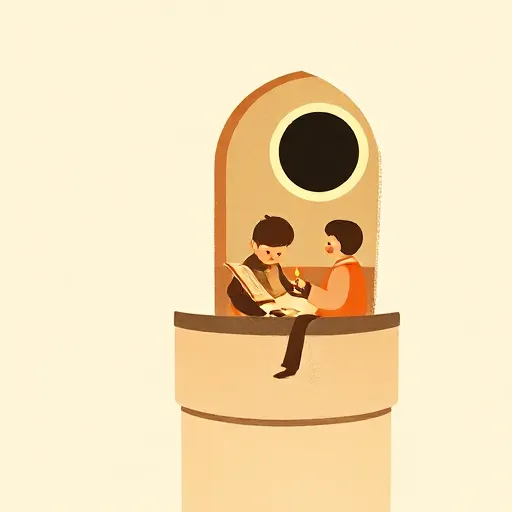
Auriol’s favorite example was an astronomer who calculates an eclipse. The astronomer can imagine the eclipse and know all about it, but that abstractive knowledge is totally different from actually standing outside and witnessing the moon block the sun. The intuitive experience carries a sense of presence and reality that abstractive reasoning cannot fake.
Here’s the twist: Auriol argued that while our senses deliver intuitive cognition, our intellect in this life can only have abstractive cognition. Because we’re tied to our bodies, we cannot directly think about a unique individual — this very oak tree, this particular sunset — with the same intuitive clarity that our eyes give us. All our intellectual concepts are abstract, universal, and mediated. Angels and souls in heaven, free from bodies, could enjoy intuitive intellectual cognition, but we travelers on Earth are stuck with a more discursive, roundabout kind of knowing.
This sharp limit had big consequences. Auriol claimed human reason couldn’t settle tough questions like whether the universe is eternal or created in time. We might suspect one answer, but without direct intellectual intuition of things like time itself, we can’t prove it. We have to rely on our senses and step-by-step reasoning, and that leaves some truths beyond our unaided reach.
Why It Still Matters: The Mind’s Creative Power
Auriol’s vision of the mind as an active creator of appearances didn’t sit well with everyone. Some later medieval thinkers worried that if everything we perceive is shaped by our minds, how can we ever be sure we’re seeing reality and not just our own mental fiction? Auriol himself was confident that God designed our cognitive faculties to generally get things right, so we could trust our normal perceptions even if we can’t step outside them. But the skeptical shadow he cast refused to fade.
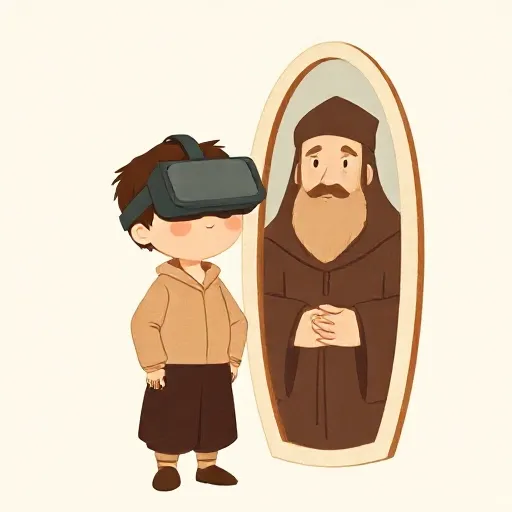
Today, we’re surrounded by experiences Auriol would have loved to analyze. Virtual reality goggles feed you sights and sounds that feel vividly present, yet nothing you see physically exists in front of you. Optical illusions still fool us, even after we understand them. Psychologists study how our expectations and attention shape what we actually perceive. In all these cases, the mind isn’t a passive camera; it’s a painter, adding brushstrokes to raw sensations.
Auriol’s core question — do you ever see the world as it truly is, or only as it appears to you? — hasn’t gone away. Every time you wonder whether your friend’s blue shirt looks the same to them as it does to you, or whether you can trust a memory that feels real but might be distorted, you’re brushing up against puzzles Auriol wrestled with in his Paris classroom. He never gave a final answer, but he forced later thinkers to take the mind’s activity seriously. Next time you see an illusion or close your eyes and picture your pet, you’re visiting the world that Peter Auriol built — a world where what appears to you is just as real, in its own way, as what’s out there.
Think about it
- If you dream of a fire-breathing dragon that feels completely real, could you prove right now that you’re not dreaming? Why or why not?
- Auriol believed your intellect can’t directly know a single, unique apple — only the universal concept “apple.” Do you think it’s possible to think about a particular object without using your senses? Try it: can you picture your own pet without revisiting its smell or the feel of its fur?
- If your mind actively creates the appearance of everything you see, how would you ever catch a mistake? Can you think of a time when you realized your senses had gotten something wrong, and how did you figure it out?