Why Couldn't Augustine Just Choose to Be Good?
A Restless Young Man in Carthage
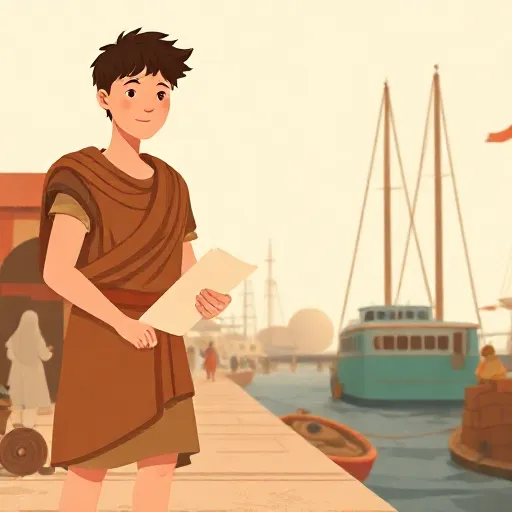
Augustine of Hippo (354–430) was one of the most brilliant minds of late antiquity. But before he became a famous bishop and thinker, he was a teenager in the bustling port city of Carthage, full of ambition, curiosity, and confusion. He studied rhetoric — the art of persuasive speech — hoping to rise in the Roman world. He also threw himself into a long relationship, had a son, and chased success. Yet something felt hollow. Augustine was haunted by a simple, urgent question: How can I find truth and live a good life?
He first turned to Manichaeism, a religion that explained the world as a battle between light and darkness, good and evil substances locked in conflict. It promised a rational answer to why we do wrong, and Augustine stayed with it for nine years. But he grew dissatisfied. The Manichaeans couldn’t answer his deepest doubts. He then drifted toward Academic skepticism, a school of thought that claimed humans can never be certain about anything. The result was despair. If he couldn’t know anything for sure, how could he ever find the way to a good life?
During this turmoil, Augustine moved to Milan, then the capital of the Western Roman Empire. There he met the bishop Ambrose, who introduced him to a way of reading the Bible that used philosophy. He also encountered books from the Neoplatonic tradition, thinkers who believed in a single, immaterial source of all reality — the Good itself. Those ideas finally helped Augustine see that evil wasn’t another substance fighting good, but a corruption of good. That intellectual breakthrough cleared the path. But his heart still wasn’t at peace. He knew what the good might be, but he couldn’t make himself choose it.
The Garden Moment: A Will Divided Against Itself

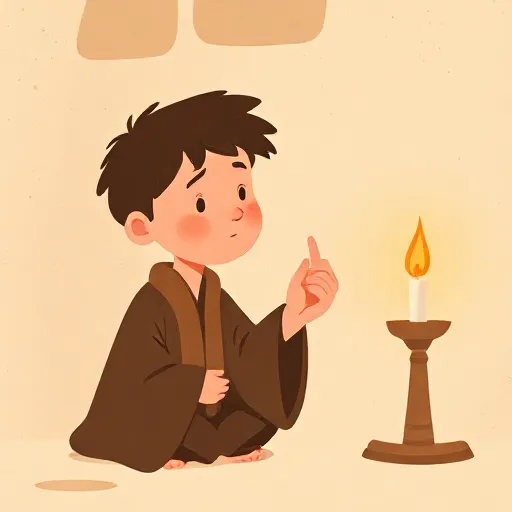
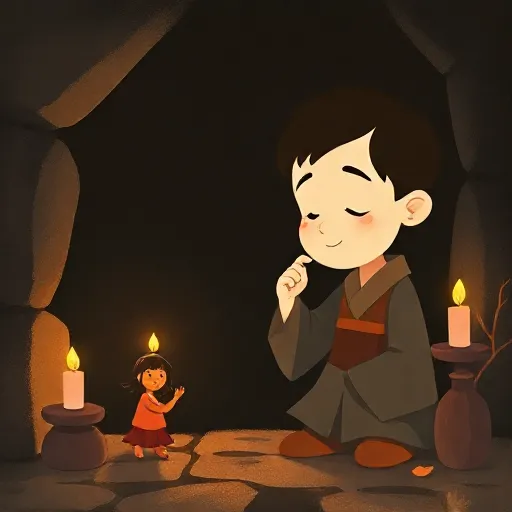
Augustine’s most famous moment comes from his autobiography, the Confessions. In the summer of 386, then in his early thirties, he sat in a garden in Milan, utterly torn. He wanted to commit to a life of philosophical and Christian devotion. But he also felt a fierce pull toward his old habits — pleasure, status, ambition. It felt like having two wills inside him, not a battle between a rational mind and wild desires, but two opposite volitions (acts of willing) that were both genuinely his. He was, he said, the very same self that both wanted and resisted the change.
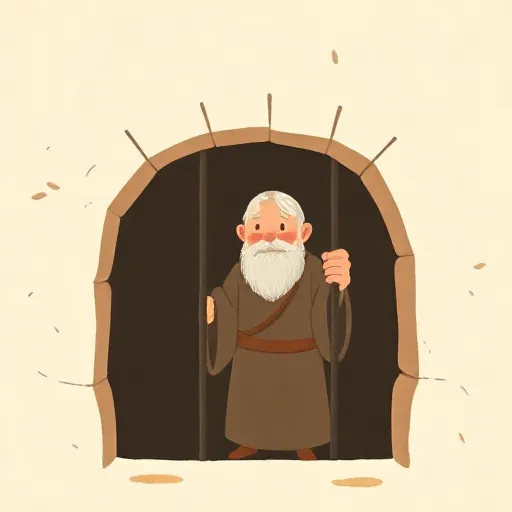
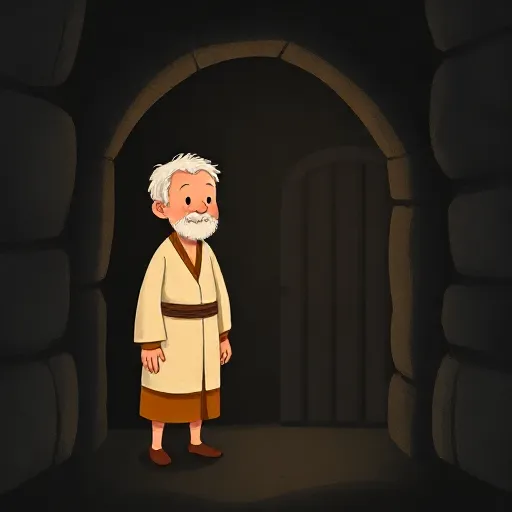
He had read about the ideal of wisdom and the life of the mind. He agreed with it completely. Yet when he tried to actually do it, he found he couldn’t. His own will seemed paralyzed. Augustine realized something startling: you can believe something is right, you can desperately want to do it, and still not be able to choose it. The problem wasn’t lack of knowledge — it was a broken will. His long habit of giving in to lesser desires had, he thought, turned into a kind of addictive necessity.
Then, in a sudden moment of clarity — an experience he later described as a gift from God — his inner war subsided. He felt able to choose the life he wanted all along. He abandoned his career plans, his upcoming marriage, and his worldly ambitions. The change felt, he said, like being set free from chains. This moment gave Augustine a core insight for his whole philosophy: the human will is real, it can be terribly broken, and sometimes it needs outside help to be healed.
Can You Be Certain of Your Own Will?

Before the garden, Augustine had wrestled with radical doubt. The skeptics said you can never be sure your senses aren’t tricking you. But Augustine found a path out. In his earliest writings, he constructed an argument that later inspired René Descartes’ famous “I think, therefore I am.” Augustine’s version went: even if I am mistaken about everything, I must exist in order to be mistaken. Si fallor, sum — “If I am in error, I am.” This didn’t just prove he existed. It proved he was alive, he was thinking, and — crucially — he was willing. He was as certain of his own volitions as he was of his own existence.
This had huge consequences. The Manicheans claimed that evil came from a foreign substance trapped inside the soul. But Augustine now saw that if he was undeniably the source of his own willing, then he — not some invading darkness — was responsible for his choices. You might blame your upbringing, your brain chemistry, or your circumstances, but at bottom, Augustine argued, you know that the act of willing is yours. So moral responsibility is inescapable. That idea stuck with him for life. No matter how much his views on freedom later changed, he never let go of the insight that you are the agent of your own volitions.
Why Do We Choose Wrongly? Augustine’s Answer
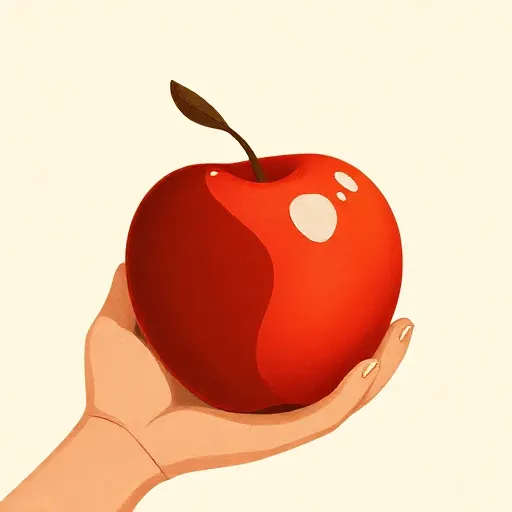
So why do we will evil? If everything God created is good, where does moral wrong come from? Augustine’s answer, developed in his fight against the Manicheans, became a landmark. Evil, he insisted, is not a substance at all. It is a privation — a lack or corruption of goodness. Think of a bruise on an apple: the bruise does not exist alongside the apple; it is just the apple where it is damaged. The apple is still basically good, but its goodness is spoiled at that spot. In the same way, a bad will is a will that has turned away from God, the supreme Good, and turned toward lesser goods — like wealth, power, or selfish pleasure — as if they were the ultimate answer. That turning away doesn’t need a separate cause, because a lack doesn’t have a cause; it’s simply the absence of what should be there.
Augustine struggled especially with the very first evil: how could the devil, a beautiful angel, become wicked? He argued that an evil will has no efficient cause — nothing makes it go wrong. It simply fails to remain oriented to God. It’s like a musician who stops playing a note, not because anything forces the silence, but because he just stops. This is a mysterious, almost bottomless idea: the origin of evil is a free defection, a nothing. Once that first defection happens, all of creation is wounded.
Augustine then tied this to the biblical story of Adam and Eve. Their disobedience wasn’t about sex or a magic apple; it was pride — loving themselves more than God. That act, he concluded, damaged human nature itself. All their descendants (that’s us) are born with a will that is bent, unable to fully control our desires. This is original sin — not a personal guilt we commit, but an inherited condition of inner disorder, like a hand that can no longer grip things as it should.
Grace and the Struggle to Be Good
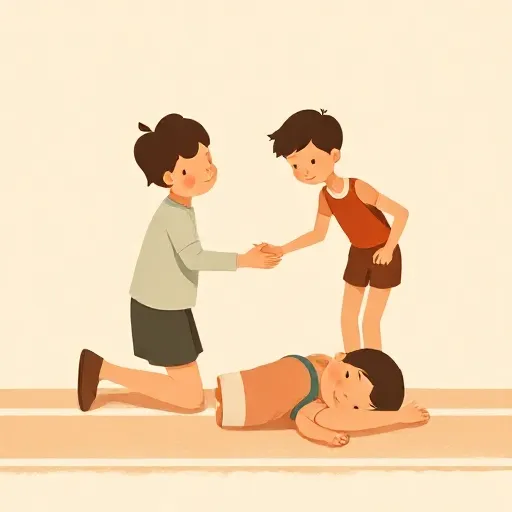
If our wills are damaged, how can we ever live well? Augustine’s answer, which grew stronger as he aged, was grace. Grace, for him, wasn’t just a friendly nudge; it was the divine power that first heals the will so it can freely choose good. Without it, he argued, we are like someone whose leg is broken — wanting to walk but unable to stand.
This brought him into a fierce clash with a British monk named Pelagius (c. 354–418). Pelagius believed that God created humans with the natural ability to avoid sin. If God commands us to be holy, he must also give the power. So we don’t need an inner miracle to choose good; we just need to try harder. Augustine saw this as proud and dangerous. It ignored that our will is sick, not just lazy. He pointed to his own garden crisis: he knew the good and wanted it, yet he was helpless. Pelagius’s view, he said, made Christ’s help unnecessary — and if we can save ourselves, what did Jesus’ suffering actually do?
Augustine pressed further. Even the first flicker of wanting to turn to God is itself a gift of grace. This became known as prevenient grace — grace that comes before any human effort. And God, being eternal, has always known who will receive this gift and who will not. That’s the difficult doctrine of predestination. Augustine held that God chooses some to be freed from the mass of fallen humanity, not because they deserve it, but purely out of mercy. He admitted this raises hard questions about fairness, but he insisted it must be true if grace is truly a gift and not a reward.
Pelagius’s followers accused Augustine of taking away free will. Augustine replied that grace restores free will — it doesn’t override it. A will healed by grace chooses the good without force, just as a healthy eye naturally sees light. The fight between these views was never fully settled, and it echoes whenever we argue about whether people can really change without outside help.
Why It Still Matters: Fighting Your Own Inner Battles

Augustine’s big question never went away: why is it so hard to do what we know is good? You might promise yourself you’ll finish your homework, only to find yourself scrolling videos. You might want to be patient with a sibling, yet snap when they annoy you. Philosophers call this akrasia, weakness of will — knowing the better and doing the worse. Neuroscience today talks about impulses, habits, and brain circuits that can override clear intention. But Augustine already named the experience in a deeply personal way: the will is real, fragile, and often divided.
His solution was divine grace, but you don’t have to share his religious beliefs to see the insight. Maybe what helps us isn’t supernatural, but it can feel that way — a friend who believes in you when you’ve given up on yourself, a sudden shift in perspective, or a community that supports better habits. Augustine would say that the power to change often comes from beyond your own ego. It is a gift, not an achievement of pure self-control.
His legacy splinters into countless later arguments. Martin Luther and John Calvin drew on him to stress human helplessness. Modern thinkers debate whether his view of the damaged will undermines justice: if someone’s evil choices stem from a twisted will they didn’t fully choose, are they fully to blame? Augustine himself would insist that you are still responsible for your will, even if it needs healing. But the tension remains. That very tension — between responsibility and need, between effort and help — is something every twelve-year-old already knows. Augustine named it, fought with it, and never quite solved it. That’s why he still matters.
Think about it
- Think of a time you really wanted to do the right thing but ended up doing the opposite. Did it feel like your will was “split,” as Augustine described? Could you have chosen differently with enough effort?
- If someone grows up in a terrible environment that shapes their character, are they fully responsible for their bad actions? Where does personal choice end and outside influence begin?
- Augustine believed that even the desire to be good can come as a gift, not something you earn. Do you think some people get more “inner help” than others, and is that fair?