Can You Fix a Broken Relationship? The Puzzle of Atonement
A Tear in the Fabric

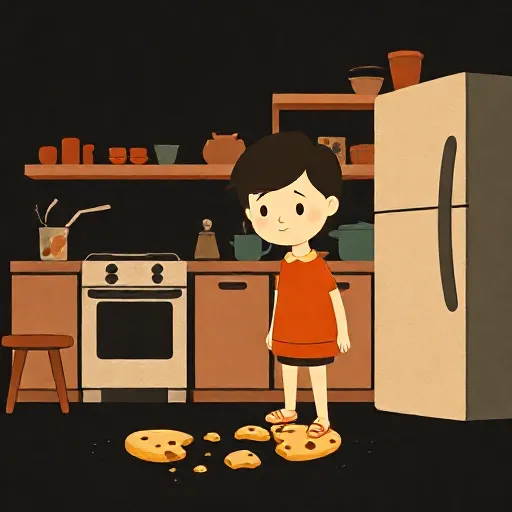
You accidentally break your best friend’s favorite mug. You feel awful. You apologize, you offer to replace it, and you promise to be more careful. But even after all that, something still feels off between you. That awkward space — that feeling that things aren’t quite right yet — is what philosophers call a “rupture” in your relationship. And the work you do to repair it is called atonement.
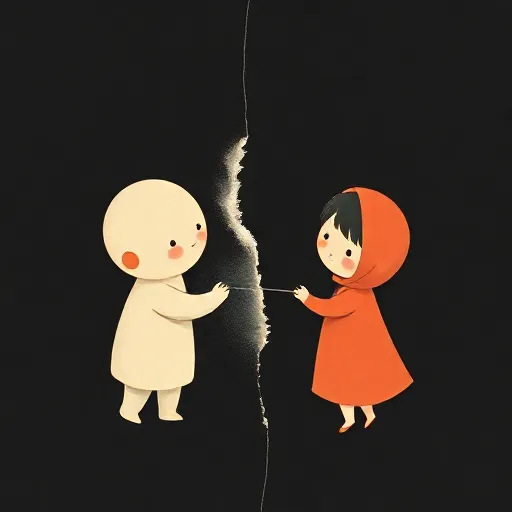
The word “atonement” comes from an old English phrase, “make at one.” It means to bring two sides back together — to reconcile. Think of it like mending a torn shirt. When the fabric rips, the threads are broken. Sewing them back together doesn’t erase the tear, but it restores the garment so it’s whole again. Atonement does the same for relationships damaged by wrongdoing. A wrong creates a tear in the social fabric. Atonement tries to stitch it back.
Philosophers typically break atonement into a series of events. First, someone commits an offense. Second, the victim feels hurt and separated from the wrongdoer. Third, the wrongdoer does something — apologizes, repairs the damage, changes their ways — to try to remove the rift. Fourth, if those actions are successful, the victim forgives and the two are reconciled. Not every case follows this script perfectly; sometimes the victim never even learns about the wrong. But the core idea remains: atonement is something you do with the aim of healing a broken relationship.
How Do You Mend a Wrong?

What exactly counts as atoning? Most philosophers agree that a genuine apology is a good start. Not a mumbled “sorry,” but a clear admission that what you did was wrong, that you feel bad about hurting the other person, and that you want to make it better. Behind a real apology sits repentance — a change of heart. The wrongdoer isn’t just going through the motions to avoid trouble; they honestly regret their action and resolve not to repeat it.
But for serious wrongs, words are rarely enough. You might also need to repair the harm. If you broke a window, you replace it. If you spread a rumor, you might need to publicly set the record straight. Some philosophers call this reparation — doing what you can to undo the effects of the wrong, even though you can never fully erase the past.
Sometimes, an apology and reparation still leave a chill in the air. You might need to go further. One medieval thinker, Anselm of Canterbury (c. 1033–1109), described a kind of extra step called penance — an act that shows you really mean it, like performing a difficult service for the person you hurt, or giving up something you value for their sake. A penance isn’t just more payment; it’s a way of disowning your wrong action by demonstrating that you now care more about the person than about your own comfort.
All of these efforts — apologizing, repenting, repairing, doing penance — aim at moral reconciliation. Even if the two of you never become best friends again, atonement can restore something basic: the mutual respect that says you both still count as equally valuable people.
Forgiveness: Before or After?

Imagine you’re the one who was wronged. Do you have to wait until the other person has done all that atoning work before you forgive them? Philosophers are divided right down the middle.
Some say yes: forgiveness should come only after the wrongdoer has shown genuine repentance and made amends. Charles Griswold, a contemporary philosopher, argues that resentment — that sharp, lingering anger you feel — can be perfectly reasonable. You shouldn’t let go of it until the offender does something that makes your resentment no longer warranted. Think of it like a debt. If someone borrows your money and never pays it back, you’re right to feel uneasy. Forgiveness, on this view, cancels the moral debt only once something of value has been offered in return.
Others think we can forgive without waiting. Eve Garrard and David McNaughton defend an idea they call unconditional forgiveness. They say forgiveness isn’t about wiping away a debt; it’s about releasing ill will and adopting an attitude of goodwill toward the wrongdoer. You can do that even if the other person never apologizes — not because you’re a doormat, but because you recognize that wrongdoers are still part of the human family. You can hope for their moral recovery without waiting for them to earn it.
This debate shows up everywhere. Should a parent forgive a remorseful teenager only after they’ve done chores to make up for a lie? Should a community forgive a corporation only after a costly cleanup? Your answer depends on what you think forgiveness really is.
Anselm vs. Abelard: Two Visions of Making Things Right
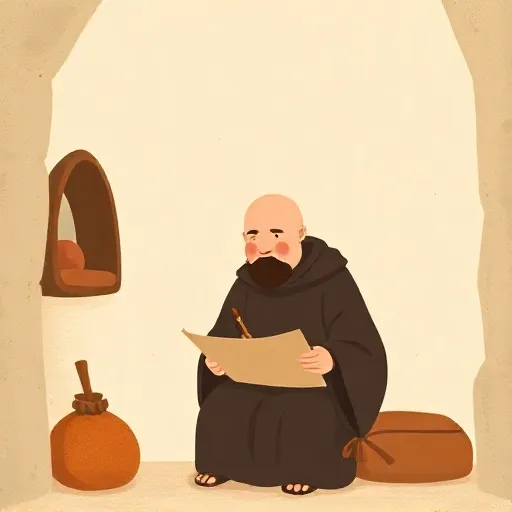
No area of philosophy has wrestled more with atonement than Christian theology. The central question: how does the life and death of Jesus Christ atone for human wrongdoing? Two medieval thinkers proposed extremely different answers.
Anselm argued that sin against God is no small tear. Because God is infinitely good, any offense against God creates an infinite dishonor. Justice, Anselm said, demands that the dishonor be countered. Since mere humans, already stained by sin, can never offer anything valuable enough to balance the scales, God needed to become human. Jesus Christ, as both God and a human descendant of Adam, lived a perfect life and then died a death he didn’t deserve. That death was a satisfaction — a superabundant act of honor offered to God, not a punishment, but a gift that repairs the infinite rift. By attaching ourselves to Christ’s act through faith, the story goes, we share in his atoning work.
Peter Abelard (c. 1079–1142) saw things very differently. For Abelard, Christ’s death wasn’t a payment to satisfy divine honor. It was a display of love so powerful that it would melt even the hardest heart. When we see God willingly suffering for our sake, we are inspired to love God back and to change our lives. That inner transformation is what atones — not some cosmic transaction, but a moral awakening. This is often called the moral influence theory.
Which picture feels truer? Anselm’s view takes sin’s seriousness almost mathematically. Abelard’s view puts the focus on the human heart. Both approaches have shaped how Western culture thinks about guilt, punishment, and the possibility of a fresh start.
From Playgrounds to Nations: Atonement Today
Why does any of this still matter? Because atonement isn’t just ancient theology or playground drama. It’s alive in the headlines.
In recent decades, entire nations have attempted to atone for historical wrongs. Germany has offered apologies and reparations for the crimes of the Nazi era. Canada’s government has worked to atone for the mistreatment of Indigenous children in residential schools. These public acts raise tough questions: can a whole group be responsible for something done generations ago? Is an apology enough, or does real atonement require giving land back, changing laws, or offering financial compensation?
Feminist philosophers have added an important caution. Throughout history, women were often told to endure suffering silently, like Christ on the cross, and to forgive without ever being apologized to. Some worry that celebrating self-sacrifice can be twisted to keep oppressed people from standing up for themselves. A healthy idea of atonement, they argue, must never require victims to accept abuse or skip the hard work of justice.
So the next time you break a mug you didn’t mean to — or hurt someone in ways that no replacement can fix — remember that you’re stepping into a very old human puzzle. Atonement asks us to look squarely at what we’ve done, to reach across the tear, and to ask what really heals a heart. There’s no perfect formula, but the fact that we keep trying says something important about who we are.
Think about it
- If someone wrongs you and then says sorry, do you think they still owe you something more, like fixing what they damaged? Why or why not?
- Can a whole country atone for something its people did long ago? What would that look like?
- If you could give someone a perfect apology and reparation, but they still never forgive you, have you truly atoned?