
Is Your Mind a Spark of God? Mary Astell's Rebel Philosophy
What If Everything You’ve Been Told About Yourself Is Wrong?
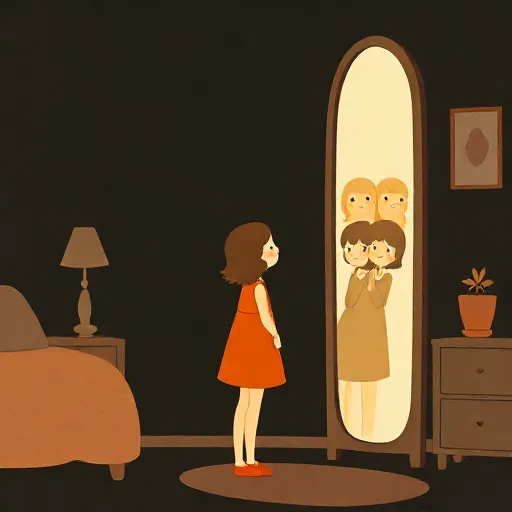
Imagine a young woman in England around 1694. She has been raised to care about dresses, dancing, and catching a husband. Everyone — her family, her church, the books she reads — tells her that women are naturally vain, proud, and incapable of deep thought. But something doesn’t feel right. When she sits alone in her room, she senses a different truth: that her mind can grasp things clearly, if only someone would show her how.
This is exactly the situation Mary Astell (1666–1731) wrote about. She was a philosopher who believed that many women suffered from a kind of sickness — not a sickness of the body, but a sickness of the mind, caught from a society that told them they were defective. Her project was at once philosophical and personal: she wanted to prove that every human mind is born with something divine inside it, and that learning to think well could heal the damage custom had done.
Astell did not simply complain about inequality. She built a complete system of metaphysics — a theory about what exists — and epistemology — a theory about how we know things — to show that women’s apparent weakness is not natural but learned, and therefore can be unlearned.
The Spark Inside You: Minds, Bodies, and God

Astell believed that reality contains two completely different kinds of things: minds and bodies. Minds think. Bodies take up space. They are so different, she argued, that one cannot be reduced to the other.
But not all minds are equal. God, in Astell’s view, is the infinite, perfect mind — the First Intelligence whose nature includes every perfection: wisdom, goodness, power, and self-existence. Human minds are finite and limited, but here is the key point: each one contains what Astell called a “particle of Divinity.” There is something of God already inside you, a spark waiting to be kindled.
Bodies work differently. A human body, like a chair or a piece of wood, is made of tiny particles arranged in a particular pattern. When the arrangement changes, the body dissolves and the object ceases to exist — but the particles themselves never go out of being. Your body is corruptible. Your mind, Astell insisted, is not. Because the mind has no parts, it cannot be divided or fall apart. It is naturally immortal.
This matters for a very practical reason: if your mind is what matters most about you, then what you do to train it matters more than anything you do to your body. And yet, Astell observed, the women of her social circle were taught to care almost exclusively about their bodies — their clothes, their appearance, the impression they made. This was a deep error, and it had a cause.
The Mystery of the Mind-Body Union

Astell admitted a puzzle she could not fully solve. Minds and bodies are completely different substances. Yet in a human being, they are somehow united. You feel pain when your body is injured. You decide to raise your hand and your hand goes up. How does that work?
“We know and feel the Union between our Soul and Body,” Astell wrote, “but who amongst us sees so clearly as to find out with Certitude and Exactness, the secret ties which unite two such different Substances?” You experience the connection every waking moment, but the mechanism remains mysterious.
This mystery was important to Astell’s larger argument. Some philosophers of her time claimed that women were intellectually weaker than men because women’s souls were more tightly bound to their bodies. Astell turned this around: the mind-body union is the same kind of thing for everyone. If women’s minds seem weaker, the cause is not their bodies or their souls. The cause is how they were educated — or, more precisely, how they were not educated. The problem is epistemological (about knowledge), not metaphysical.
Why You Should Love God: Astell’s Debate with John Norris

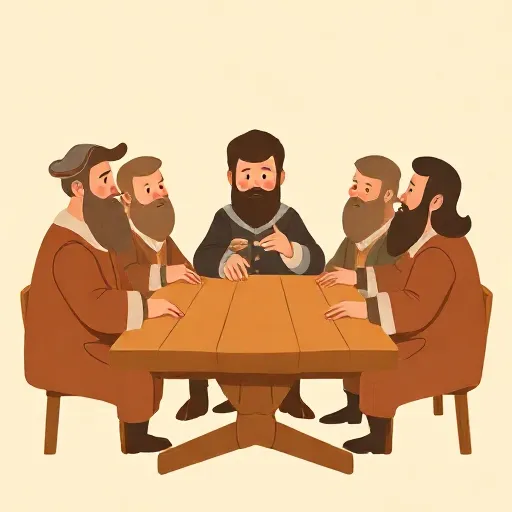
Astell’s metaphysics led her into a sharp debate with a fellow philosopher, John Norris (1657–1711). Norris was an occasionalist — he held that God is the direct cause of everything that happens, including your sensations. When you see a tree, Norris argued, the tree itself does nothing to cause your perception. God directly produces the sensation in your mind on the occasion of the tree’s presence.
Astell found this view both extravagant and slightly insulting to God. If God directly causes every sensation, she argued, then why did he bother creating physical objects at all? They become pointless stage props. Moreover, it offends God’s majesty to imagine him constantly intervening to move bodies and produce mental events — like a clockmaker who refuses to let the clock run on its own.
But Astell and Norris agreed on something crucial: humans owe God a special kind of love. They distinguished between two forms of love. Benevolence is wishing another being well — the love you offer a friend, expecting nothing in return. Desire is the love you feel for something that is your good, something that can satisfy your deepest needs. Humans deserve benevolence from each other. But only God, who lacks nothing and can give everything, merits desire. You cannot wish God well (he needs nothing from you), but you can turn toward God as the source of your fulfillment.
Faith and Knowledge: Who Gets to Think?

One of Astell’s most striking moves was to defend the dignity of faith against those who saw it as second-rate knowledge.
Many philosophers contrasted knowledge (which you grasp through reason and cannot doubt) with faith (which you accept on authority and could, in principle, disbelieve). Faith looked weaker. Astell disagreed. Faith, she argued, involves an active choice of the will in a way that knowledge does not. When you see something clearly — that two plus two equals four — your mind is compelled to agree. No effort is required. But when you accept something on faith, you freely direct your will toward it. And because that choice involves effort, it is capable of being rewarded in a way that automatic knowledge is not. Faith, on this view, is not a failure of reason — it is a deliberate act that knowledge cannot replace.
This had practical consequences. The philosopher John Locke (1632–1704) had suggested that day-labourers, tradesmen, and “spinsters and dairy-maids” could not be expected to grasp deep truths through reason. They lacked the time and training. They should simply believe what they were told. Knowledge for the privileged; faith for everyone else.
Astell saw the danger instantly. If you tell marginalized people to accept authority without understanding, who protects them when authority manipulates them? “The difference between a plow-man and a Doctor,” she wrote, “does not seem to me to consist in this, That the Business of the one is to search after Knowledge, and that the other has nothing to do with it.” Everyone — men and women, rich and poor — has the capacity for just thinking: clear, well-ordered thought that examines ideas for itself. Some people may have more time for capacious thinking (wide-ranging book learning), but just thinking is what matters, and it is available to all.
Six Rules for a Clear Mind

So how do you actually do it? Astell offered a method — six rules for thinking well, designed specifically for the women of her audience, whom she called the “Ladies.” These women had been trained in idleness and flattery. They needed a path back to their own minds.
The rules are strikingly practical. First, know exactly what question you are asking — get a clear grip on your subject and your terms. Second, cut away every idea that is not strictly relevant. Third, proceed in order from simple ideas to more complex ones. Fourth, do not skip any part of your subject. Fifth, keep your subject directly in view and do not wander. Sixth, do not accept anything as true unless you clearly perceive it to be so.
These rules sound like common sense, but Astell understood that her readers faced a deeper obstacle: a skeptical predicament about their own natures. They had absorbed the prejudice that they were born vain, proud, and incapable of improvement. Before they could use the six rules, they first had to unlearn that lie. Astell’s strategy was to lead them through reflections on God’s goodness: if God created you, and God is perfectly good, then God would not have made you naturally defective. The very desire to improve that you feel is evidence of a capacity to improve. The spark is real.
Why Astell Still Matters

Astell’s world was different from yours in obvious ways — no internet, no democracy, rigid social ranks. But her central insight remains urgent: what you believe about your own mind shapes what you can do with it.
When Astell argued that women’s intellectual weakness was a social product rather than a natural fact, she was doing something that philosophers still do today: examining the invisible stories a culture tells about who can think and who cannot. She was not perfectly inclusive by our standards — her project focused on elite White Englishwomen and did not address the women from other races and nations who were enslaved or employed by her patrons. But her core argument has a logic that extends beyond her own circle. If thinking well is rooted in something every human mind possesses, then anyone who is told they cannot think is being lied to.
The next time someone tells you that a certain group is naturally bad at reasoning, or naturally emotional, or naturally unfit for a subject, remember Astell. She would ask you to examine the idea carefully. Is this claim based on something you see clearly for yourself? Or did it come from custom — the “Tyrant Custom,” as she called it — that wants you to accept it without looking?
Think about it
- If everyone has a “spark of divinity” in their mind, as Astell believed, what does that mean about how we should treat people who think differently from us?
- Astell argued that some beliefs we absorb from our culture are like diseases that need healing. Can you think of a belief you once accepted without question and later rejected? What made you change your mind?
- Is it ever fair to ask someone to accept a truth on faith without understanding it for themselves? When might that be necessary, and when might it be dangerous?