Why Do You Reach for Salt When You See Pepper?
The Dog Who Drooled to a Bell

In the early 1900s, a Russian scientist named Ivan Pavlov (1849–1936) noticed something strange. His dogs drooled for food, but soon they drooled when they heard the footsteps of the assistant bringing the food. Pavlov set up an experiment. Every time he fed the dogs, he first rang a bell. Before long, the dogs drooled the moment the bell sounded — even with no food in sight. This is associative learning: linking two things that happen together so tightly that one triggers the other.
Pavlov had stumbled onto an old philosophical idea. For centuries, thinkers like John Locke (1632–1704) and David Hume (1711–1776) had claimed that the mind is a big association machine. Associationism is the theory that all your thoughts, habits, and learning are built from simple links between experiences. The question that drives the whole debate is this: if a mind is just a pile of links, can it ever really think?
How Ideas Get Stuck Together: Hume’s Simple Toolkit
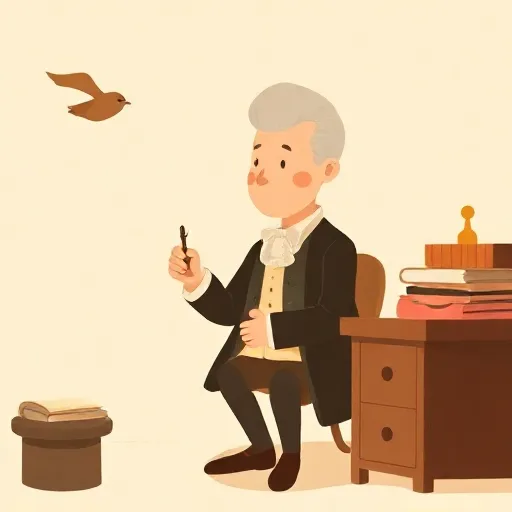
Hume thought the mind had only one basic power. He called it a kind of mental glue: the ability to connect ideas based on patterns from your experience. He pointed to three kinds of links that nature uses to stick ideas together.
- Cause and effect: fire and heat, lightning and thunder.
- Contiguity: things that happen close together in time or space, like a flash and a boom.
- Resemblance: a photograph reminds you of a friend.
When you live through these patterns enough times, the corresponding ideas become bound in your mind. For Hume, every idea starts as a sensory impression — a smell, a sound, a feeling — and association determines how those ideas flow from one to the next. You don’t move from an idea of “salt” to “pepper” by logic. You move because they always appeared together at dinner.
This kind of thinking is called an associative transition. You might think of a hot coffee shop, and without any logical reason suddenly picture penguins — not because it makes sense, but because you once saw a documentary about penguins while holding a warm mug. Hume believed this explained all of learning. He didn’t have labs to test the idea, but others soon did.
When a Bell Makes You Hungry: The Behaviorist Revolution
Pavlov gave the world classical conditioning. Start with a stimulus that naturally triggers a response — food makes a dog salivate. The food is the unconditioned stimulus, and the drool is the unconditioned response. Pair that food with a neutral signal, like a bell, many times. Eventually, the bell alone becomes a conditioned stimulus that triggers the drool — now a conditioned response. It’s a straight swap: the bell stands in for the food.
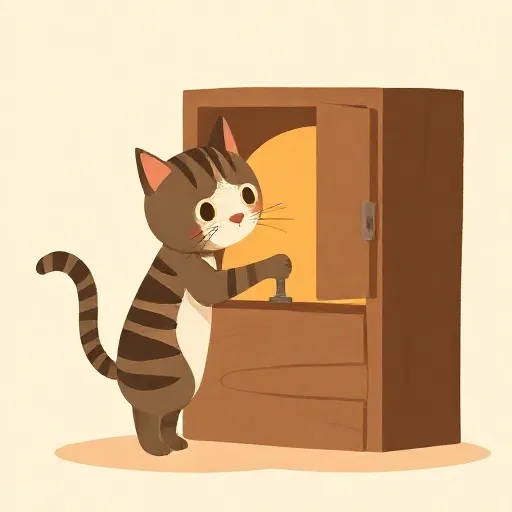
But can all learning be explained by swapping signals? Edward Thorndike (1874–1949) showed otherwise. He put cats in “puzzle boxes” and watched them learn to press a lever to escape. The cats weren’t just substituting stimuli; they were discovering new actions. Thorndike proposed his Law of Effect: a behavior that leads to a satisfying result gets stamped in; a behavior that leads to discomfort gets stamped out. This is operant conditioning — the organism operates on its environment.
B.F. Skinner (1904–1990) expanded the idea. He argued that all behavior could be shaped by reinforcement — rewards that make an action more likely. Skinner and Pavlov both assumed what is called domain generality: any stimulus could become linked to any response, as long as the pairing history was right. A bell, a light, a shock — the content didn’t matter. That assumption was about to be shattered.
What’s Wrong With Just Linking Things?
Critics quickly found cracks in the pure associationist picture. Three big problems stood out.
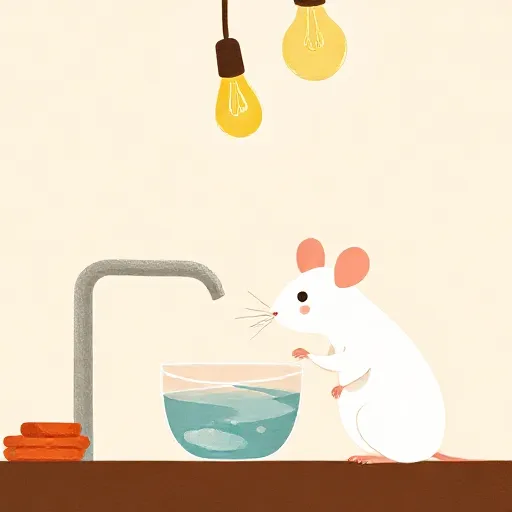
First, the taste aversion work of John Garcia (1917–2012) broke the rule of contiguity. Rats that got sick after drinking flavored water still avoided the taste, even when the sickness came hours later. They easily associated nausea with taste, but not with a simultaneous flashing light. If you switched the outcome to an electric shock, the rats linked the shock to the light, not the taste. The content of the experience mattered — the learning was not domain-general, and contiguity wasn’t always necessary.
Second, Leon Kamin (1927–2017) showed that contiguity isn’t sufficient either. His blocking experiments went like this: a rat already learned that a light predicts a shock. Then a new tone was added alongside the light. The rat never learned to fear the tone, because the light already “blocked” it. Even though the tone was perfectly contiguous with the shock, no new association formed. The system cared about prediction, not just raw pairing.
Third, philosophers pointed to the problem of predication. An association is just a two-way causal link: activate “bird” and “fly” springs to mind. But having a thought like “the bird flies” is different — it’s about something being true. It has a structure that a simple link lacks. As the philosopher Jerry Fodor (1935–2017) argued, you can’t build a sentence from two-word chains. If you only had associations, you couldn’t explain how we understand novel complex thoughts like “the giant green bird flew over the rainbow.” Associationism seemed too thin a tool for the richness of a mind.
Why You Still Can’t Stop Thinking of Salt When You See Pepper
Even critics admit that our minds do contain associative structures: pairs of concepts tied together so that activating one pulls up the other. These links are stubborn in a special way. Locke noticed this long ago. Once ideas are glued by experience, he wrote that reason cannot help us. If you eat a strange fish and then vomit, you will feel sick at the sight of that fish for years — even after you learn the fish was perfectly safe and you just had a stomach bug.
Associations can only be changed by two routes, both forms of associative unlearning. Extinction means presenting the bell again and again with no food, slowly draining the connection. Counterconditioning means pairing the fish with a new, positive outcome to weaken the old link. No amount of good arguments or logical facts can delete an association directly. This insight matters because modern psychologists suspect that our hidden implicit biases — the snap attitudes we don’t consciously control — may be stubborn associative structures that live outside the reach of everyday reasoning.
Why Does It Matter? Your Hidden Brain and Learning Machines
Associationism didn’t die. Many scientists now describe the mind as having two systems. System 1 is fast, automatic, and built from associations — it flinches at a snake before you even name it. System 2 is slow, deliberate, and rule-based — it solves a math problem step by step. Implicit biases are thought to sit in System 1, which explains why they’re so hard to talk yourself out of. Today’s researchers are still battling over whether those hidden attitudes really are purely associative, or whether they’re actually tiny unconscious beliefs that can be changed with evidence.
The same old ideas also power cutting-edge artificial intelligence. Reinforcement learning (RL) trains computers much like Thorndike’s cats: an algorithm tries an action, gets a reward or a penalty, and gradually shifts its “policy” to favor actions that bring long-term success. An RL system called AlphaGo learned Go by playing millions of games, linking board patterns to winning moves. In a famous match, it even played a move so creative that human experts gasped — a move no human would have invented. Yet the program still needed mountains of experience to get there, while a human can learn from one story.
The ghost of Hume and Pavlov lives in your phone’s recommendations, your hidden first impressions, and the ways you reach for salt the instant you spot pepper. Whether that’s the whole story of what it is to think — or only a small part — is a question you get to wrestle with.
Think about it
- If a childhood scare makes you flinch at dogs even after you know they’re friendly, should we trust our feelings or our facts?
- Suppose a computer studied your past choices and could predict your next move perfectly. Would that make you feel less free — or just mean your habits are very consistent?
- Advertisers often show a product with laughing friends and sunny music, never giving you reasons to buy it. Can you think of a time that made you want something illogically? Could you break that link on purpose?