
When You Say "I Know That," What Have You Really Done?
The Cat on the Roof

You are visiting a friend. You glance out the window and announce, “Your cat is on the roof.” Your friend scrambles to look. But the cat isn’t there — maybe it jumped down seconds ago. Did you do something wrong?
Philosophers would say you performed a speech act. Not all talking is the same. When you ask “Is the cat on the roof?” you’re doing one thing; when you command “Get the cat down!” you’re doing another. When you state a fact — when you assert something — you’re doing something special. You’re not just making noise, and you’re not just sharing words. You’re taking a stand about how the world is.
The English philosopher J. L. Austin (1911–1960) pointed out that sentences have different kinds of force. He called the act of saying something meaningful a locutionary act — just uttering words with a sense. But on top of that, we perform illocutionary acts: asserting, questioning, warning, promising, and so on. An utterance with assertoric force is one that claims something is true. Austin noticed that even a single sentence like “There’s a cat on the roof” can carry different forces depending on tone and context. That observation opens a big question: what exactly makes a claim a claim?
The Same Words, Different Jobs

The German logician Gottlob Frege (1848–1925) was among the first to separate what you say from what you do with it. He called the thought itself — the idea that the cat is on the roof — the content. You can simply think that content, or you can judge it to be true and then assert it. The very same content can show up in a question (“Is the cat on the roof?”), a wish (“I wish the cat were on the roof”), or a command (“Put the cat on the roof!”).
This means that the force of an utterance is not the same as its content. Consider the sentence “Kepler died in misery.” If you assert that, you also seem to take for granted that “Kepler” refers to a real person. But are you actually asserting that Kepler existed? Frege argued no — that part is a presupposition, something assumed by both speaker and hearer, not something you put forward as new information. The test is simple: if you deny the sentence (“Kepler did not die in misery”), you still take it for granted that Kepler exists. So a presupposition survives even when you flip the sentence around. Real assertions typically add something, while leaving some background facts untouched.
The American philosopher Charles Sanders Peirce (1839–1914) had a similar insight: “one and the same proposition may be affirmed, denied, judged, doubted, inwardly inquired into, put as a question, wished, asked for, effectively commanded, taught, or merely expressed, and does not thereby become a different proposition.” Content and force are two different handles on language.
What’s the Rule for Saying Something?
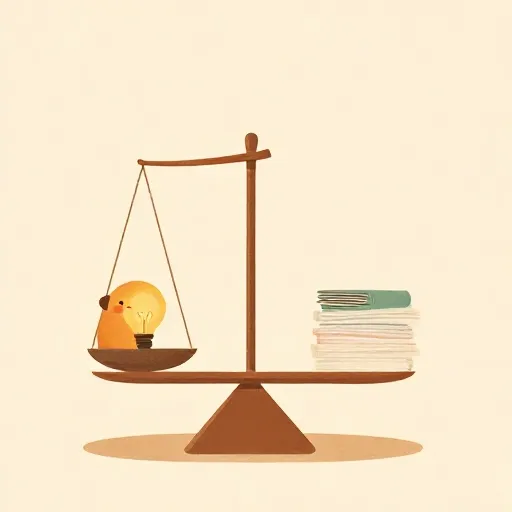
So when is it okay to make an assertion? Most philosophers today agree that there is a norm of assertion — a rule that tells you what kind of shape your mind has to be in before you can properly claim something. The big fight is over what that rule is.
One popular answer is the knowledge norm: you should assert that something is the case only if you know it. Timothy Williamson (born 1955) gave this view its modern form. Supporters point to odd-sounding sentences like “It’s raining, but I don’t know that it’s raining.” That feels as self‑defeating as “It’s raining, but I don’t believe it’s raining.” If the rule really is “assert only what you know,” then this sentence violates it, which would explain why it sounds so weird.
Another piece of evidence is the lottery. Imagine a fair lottery with a million tickets, only one winner. Your friend holds a ticket, but nobody yet knows the result. You say confidently, “Your ticket lost.” Even though it’s extremely likely to be true, most people feel you shouldn’t say it — because you don’t know it. The knowledge norm makes sense of that hesitation.
But a different camp supports the justification norm: you should assert only what you have good reasons (or evidence) to believe, even if you don’t know it for certain. Lackey, Douven, and others developed this view. Return to the cat on the roof. If you saw the cat climb up minutes ago, you had excellent reason to think it was still there. Unluckily, a thief stole the cat the moment you turned away. Did you do something wrong by asserting? Many people’s guts say no — you had every right to say it, even though it turned out false. The justification norm handles such cases smoothly, while the knowledge norm marks your assertion as improper (since you didn’t know the cat was no longer there).
The debate gets even more interesting when we look at what ordinary speakers actually think. Recent psychology experiments put people in unlucky‑assertion scenarios and ask whether it was okay to speak. Early results seemed to favor the knowledge norm, but newer studies with more careful wording tip the scale toward the justification norm. This is a live dispute — no side has knocked the other out yet.
Making a Promise with Every Sentence

There is another way to think about assertion: as a kind of promise. When you assert something, you don’t just describe the world; you take on commitments toward your hearer. Peirce put it bluntly: an assertion “renders the speaker liable to the penalties of the social law … in case it should not be true, unless he has a definite and sufficient excuse.” In other words, if you claim the cat is on the roof and it turns out not to be, people get to call you out. You have to answer for it.
The American philosopher Robert Brandom (born 1950) sharpened this idea into a game of giving and asking for reasons. When you assert that p, you commit yourself to defend that claim if someone challenges it. You also authorize your listener to rely on it and to pass that responsibility along. If your claim gets into trouble, you must either back it up or take it back.
Thinking of assertion as a commitment helps explain why we care so much about honesty and evidence. When you promise to meet a friend at four o’clock, you don’t just utter words — you create an obligation. An assertion isn’t a promise to do something; it’s more like a guarantee that what you said is true, backed by your willingness to be held accountable.
So, Can You Say Something When You’re Not Sure?

Let’s bring this back to real life. You’re hanging out with friends and someone asks, “Is the new Marvel movie out yet?” You read something online that makes you pretty confident, but you aren’t one hundred percent certain. You say, “Yeah, it came out last Friday.” Did you do something wrong?
The answer depends on which norm you think governs assertion. If the rule is knowledge, then you shouldn’t have said it unless you actually know it for a fact. If the rule is justification, then a strong, well‑grounded belief might be enough — especially if the stakes are low and nobody will be hurt by a mistake. Either way, knowing the rule helps you navigate when to speak and when to stay quiet.
These rules also shape how we trust each other. We rely on what people tell us to form beliefs about everything from homework deadlines to the weather. If speakers followed no norm at all, communication would collapse into a guessing game. That’s why philosophers care so much about pinning down the right standard — and why the debate is still wide open.
Think about it
- If a friend tells you they’re certain the math test is postponed, and you later find out they were just guessing, have they done something wrong even if it turns out the test really is postponed?
- In a video game, you have a 90% chance of guessing an opponent’s next move. Can you fairly claim, “I know what they’re going to do,” or is that too strong?
- Should the rule for what makes a proper claim change depending on how important the situation is — for example, telling a joke versus giving testimony in court?