Can You Persuade Someone Without Cheating?
The Art of Persuasion: More Than Smooth Talk
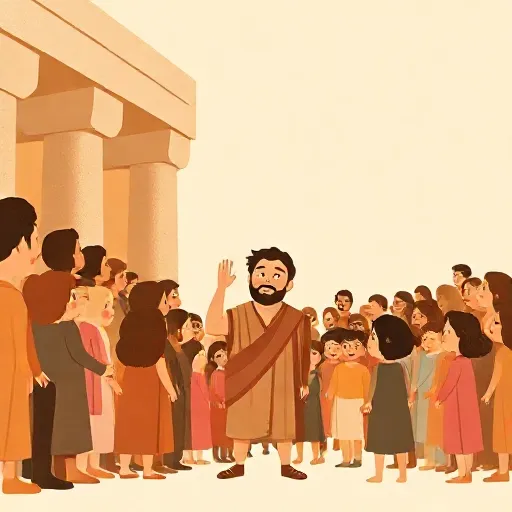
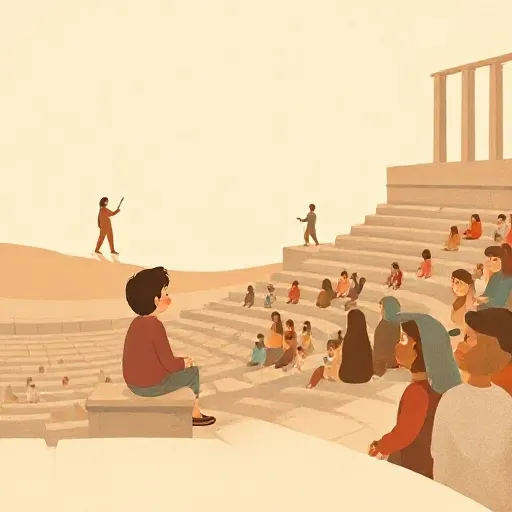
It is 350 BC. You stand in a dusty Athenian court, accused of a crime you didn’t commit. There’s no lawyer, no police report — just your voice and a crowd of several hundred jurors who will decide your fate. If you can’t speak persuasively, you lose, even if you’re innocent.
That was everyday life in the democracy of ancient Athens. Public speaking was not a hobby; it was survival. And that is exactly the world that Aristotle (384–322 BC) stepped into when he decided to write a book about the art of persuasion.
The book we now call the Rhetoric did not aim to teach cheap tricks. Aristotle’s big idea was that persuasion is not about shouting louder or making people cry — it is about understanding why some words change minds and some don’t. He defined rhetoric as the ability to see what is possibly persuasive in every given case. If you master that, you don’t just win arguments; you start to see how every argument works.
Rhetoric: A Cousin to Logic?

Most people in Aristotle’s time thought rhetoric had nothing to do with real thinking. The philosopher Plato, Aristotle’s teacher, had described it as a kind of trickery — like cooking for the soul. But Aristotle saw things differently.
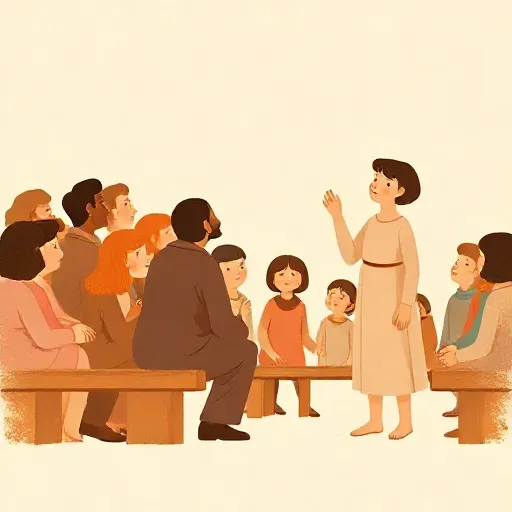
He claimed that rhetoric is a counterpart to dialectic. Dialectic was the method philosophers used to test ideas through question-and-answer reasoning, moving from what people already believe to conclusions that follow logically. Aristotle thought public speaking worked the same way, just with a different audience: not trained philosophers, but ordinary citizens in a courtroom or an assembly.
Both dialectic and rhetoric, he said, rely on endoxa — accepted opinions. You don’t start from absolute truths, because in most public debates you can’t prove things like a math theorem. Instead, you build your argument on what your listeners already find convincing. If you want to persuade a jury that peace is better than war, you begin from beliefs they already hold — about safety, money, or honor — and then show how your conclusion fits.
This was a huge shift. It meant that rhetoric wasn’t a bag of sneaky maneuvers. It was a method, almost a science, of finding the right path from what people think to what you want them to think.
Three Ways to Win People Over

Aristotle argued that every persuasive speech works through three pisteis — means of persuasion. They are technical, meaning the speaker can create them by what they say, not just by having a good reputation in advance.
The first is ethos, the character of the speaker. If the audience trusts you, they are far more likely to accept what you say. But trust doesn’t come from nowhere. Aristotle said a speaker must appear to have practical intelligence, good moral character, and goodwill toward the listeners. If you seem smart but selfish, people will suspect you’re hiding something.
The second is pathos, the emotional state of the hearer. Emotions change how we judge things. If a jury is angry, even a small offense looks enormous. If they are calm and friendly, the same event might seem like nothing. Aristotle didn’t think speakers should just whip up feelings randomly. He gave them a method: understand what causes each emotion (anger, fear, pity, and so on), then show the audience that those conditions are present in the case at hand.
The third is logos, the argument itself. This is the logical core — proving, or seeming to prove, your point. And that brings us to Aristotle’s most famous invention.
The Enthymeme: The Body of Persuasion

Aristotle called the enthymeme the “body of persuasion.” Everything else — character, emotion, style — he saw as accessories. An enthymeme is a deductive argument specially designed for public speech.
A full logical deduction might go:
- All humans are mortal.
- Socrates is a human.
- Therefore, Socrates is mortal.
But in a courtroom or political debate, you don’t have time for long chains of reasoning, and your audience can’t follow twenty steps. So an enthymeme leaves some premises unstated because everyone already accepts them. You might say, “She has given birth, because she has milk.” The missing premise — that milk is a sign of childbirth — is common knowledge, so you don’t need to spell it out.
Enthymemes work because they build on endoxa, the beliefs the audience already holds. They often use things that are probable (“It is likely that…”) or signs (“If X is the case, then Y is probably happening”). Some signs are reliable enough to form a valid deduction — for example, a fever is a necessary sign of illness. Others are more fragile, like rapid breathing as a sign of fever, which can be refuted.
Aristotle also collected topoi — argumentative schemes or “places” to look for premises. A topos is like a reusable template: “If something is true of the whole group, it must be true of any member.” Using topoi, a speaker could quickly construct many different enthymemes without reinventing the wheel each time.
Can Persuasion Be Fair and Honest?
Right away you might wonder: if you can argue both sides of any question, isn’t rhetoric just a tool for manipulation? Aristotle didn’t dodge this question. Yes, the same art can be used to defend a just cause or a wicked one — just like money or strength. But that’s not a flaw of the art itself.
He went further. In the very first chapter of the Rhetoric, he attacked older teachers who focused on speaking “outside the subject” — rousing anger or pity in ways that had nothing to do with the real issue. That, he said, would be like bending a ruler before you measure with it. His own method asked the speaker to stay on topic: emotions and character should be connected to what the case is about, not just thrown in to distract.
Moreover, Aristotle believed that truth and justice are naturally easier to defend than their opposites, if you argue properly. Someone using rhetoric responsibly doesn’t try to win at any cost. They aim at something more like a reasoned judgment — a decision the audience reaches by actually considering the evidence and arguments, not just by being tricked.
What Aristotle’s Rhetoric Means for You Today

You may never stand before an Athenian jury. But you face moments of persuasion every day. A class debate, a family discussion, an essay, or even a social media post — all of them ask you to win someone over.
Aristotle’s tools are still the ones you actually use. When a friend trusts your advice because you’ve shown good sense and kindness, that’s ethos. When a story online makes you feel outraged or inspired before it makes its point, that’s pathos. When you reason, “If the park closes at sunset, and it’s already dark, then we’re not allowed to be here,” you’re using an enthymeme.
Learning to see these three elements — and to spot when someone is using them well or badly — turns you into a clearer thinker and a harder target for manipulation. Aristotle didn’t just write a manual for ancient orators. He gave us a way to understand the hidden structure of every argument we hear.
Think about it
- If you can find arguments for both sides of almost any question, how do you decide what to actually believe?
- Can a speaker change your emotions without tricking you? How would you tell the difference?
- If you had to convince your class to adopt a new school rule, would you focus most on logic, your own reputation, or how your classmates feel — and why?