What Makes a Government Just? Aristotle’s Answer
A Crowded Assembly in Ancient Athens
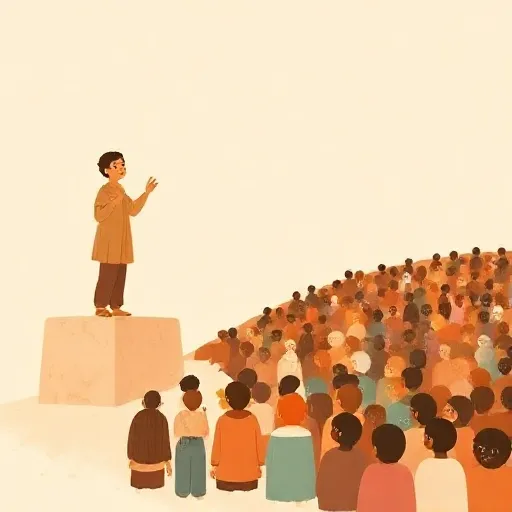
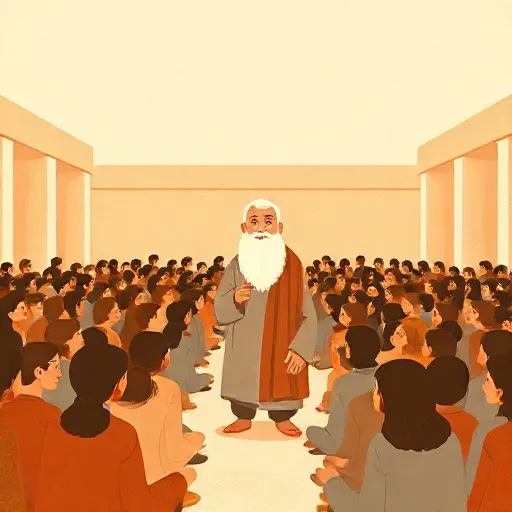
It’s a sunny morning in Athens around 330 BCE. Thousands of citizens climb the Pnyx hill, find a spot on the rocky slope, and settle in for a long debate. A man rises to speak. He wants the city to change its laws about shipping grain. If he can persuade the crowd, the assembly will vote and the law will change — right then, right there. These citizens aren’t just watching politics; they are the government. Their decisions determine who gets what, who fights in wars, and what the city values most.
The philosopher Aristotle (384–322 BCE) often watched gatherings like this. He wasn’t just interested in who won the argument. He wanted to know: what makes a political community well-organized? And what makes it just? He called this study political science (in Greek, politikê epistêmê). Unlike astronomy or mathematics, which aim at knowing for its own sake, political science is a practical science — it aims at good action. Its goal is nothing less than helping citizens achieve happiness (eudaimonia), which for Aristotle meant a life of virtuous activity, not just a good feeling. That’s why he called political science the most authoritative science; it decides what other practical skills, like military strategy or household management, should be used for. If the city-state isn’t organized to help its people flourish, then politics has failed.
Why Aristotle Compared a Lawgiver to a Potter

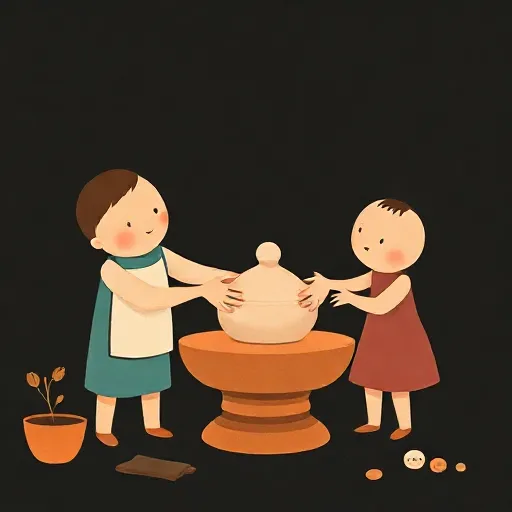
If political science is about creating a good community, how does it work? Aristotle reached for a surprising comparison: politics is a kind of craft. Just as a potter turns clay, water, and wheel into a drinking cup, a lawgiver (nomothetês) turns a population, territory, and laws into a city-state (polis). He analyzed both cups and cities using four causes: the material cause (what it’s made of), the formal cause (its shape or organizing principle), the efficient cause (who makes it), and the final cause (its purpose).
For a city-state, the material is the citizens and the land. The formal cause is the constitution (politeia). Aristotle didn’t mean a single written document; he meant the whole ordering of offices, habits, and ways of life — like the soul that gives a body its character. The efficient cause is the lawgiver, the person who first designs the constitution, and the politicians who keep it running. The final cause, the purpose of it all, is the good life: a city exists so that citizens can live well, not just survive.
This craft analogy has a sharp practical edge. A good craftsperson never tries to impose a form on unsuitable material. You can’t build a house out of sand. Likewise, a lawgiver can’t just dream up a perfect blueprint and force it on a population that can’t live it. That’s why Aristotle criticized the ideal city in his teacher Plato’s Republic, where children and property would belong to everybody in common. People naturally care far more about what is their own, he argued, so such a system would breed neglect and conflict. Changing laws too casually is also dangerous, because it can weaken the citizens’ habit of obeying the law. The central problem of politics, then, is: what constitution should a lawgiver establish, in what kind of population, for the sake of what end?
The Six Flavors of Government

Aristotle sorted governments by two questions. Who rules: one person, a few people, or the many? And for whose benefit do they rule? If the rulers aim at the common advantage of all citizens, the constitution is correct and just without qualification. If they rule only for their own benefit, it is deviant and unjust. That gives a table of six basic types.
In the correct column, rule by one person is kingship; rule by a virtuous few is aristocracy; rule by the many is what Aristotle called polity (or sometimes “mixed constitution”). In the deviant column, one-person rule for selfish ends is tyranny; rule by the wealthy few for their own enrichment is oligarchy; rule by the poor many for their own interest is democracy — Aristotle used the term that way, though today we use it very differently.
What made a constitution just or unjust, in Aristotle’s view, boiled down to justice. He distinguished two senses. Universal justice means lawfulness aimed at the common advantage; that’s what separates the correct forms from the deviant ones. Particular justice, especially distributive justice, is about dividing benefits and burdens fairly. Everyone agrees, Aristotle said, that equals should be treated equally and unequals unequally. But equals in what? Oligarchs think wealth makes people unequal and deserving of more political power. Democrats think free birth makes everyone equal and deserving of an equal say. Both, Aristotle argued, miss the point. The city-state isn’t a business to maximize money, nor a club to protect equal liberty. It’s a community for living a noble life. Therefore, political rights should go to those who contribute most to that life — those with virtue (aretê) as well as freedom and property. That is his aristocratic principle, and it makes the best constitution literally the rule of the best people (aristoi).
Today, many readers bristle at Aristotle’s confidence about who naturally deserves to rule. He argued, without evidence we would find convincing, that some people are natural slaves who lack a full deliberative faculty and need masters, and that women, though they have the power to deliberate, have it “without authority” so that men should lead households. These claims feel deeply unjust to a modern ear. Even so, his framework forces a hard question that is still alive: if a political community has a purpose beyond just keeping order or protecting property, then who really deserves the strongest voice in shaping it?
Why the Middle Class Might Save a City

Aristotle didn’t stop at the ideal. He knew most cities can’t reach the highest form because their citizens don’t have the same level of virtue and resources. Political science, like gymnastics, must study what is best for most bodies, not only the star athlete. So he explored the second-best constitution, one that is realistic yet more just than the deviant forms.
His solution surprises people who expect philosophers to chase perfection. The best attainable constitution, he argued, is one where the middle class holds power. People of moderate wealth, he reasoned, are least likely to act arrogantly or enviously. They find it easiest to follow reason, and they are the most reliable foundation for a stable community. A constitution anchored in the middle is “the freest from faction” — civil war and violent conflict are rarest where the middle is strong. This mixed system, blending elements of democracy and oligarchy under the guidance of law, is the polity Aristotle ranked as the best achievable option for most cities.
But Aristotle also gave democracy — even his deviant version — a surprisingly fair hearing. In one passage, he considered the idea that a crowd of ordinary people, each with a small share of practical wisdom, might together make better decisions than a single brilliant expert. It’s like the way many people pooling their money can create a bigger feast than one wealthy host, or how a jury of many eyes and ears can judge a case better than one pair. This argument, sometimes called “the wisdom of the multitude,” has influenced democratic thinkers for centuries. Aristotle didn’t endorse it fully, but he admitted that it probably contained some truth. That willingness to hold multiple perspectives in tension — to find what is right even in an opponent’s argument — is one reason his work still feels alive.
Changing Laws Without Breaking the City

Should laws ever be changed? It sounds like a simple question, but Aristotle turned it into a dilemma. On one hand, refusing to change is foolish. Medicine improves over time; why shouldn’t laws? He mentioned a primitive legal practice from the city of Cyme, where an accuser could drag a bunch of his own relatives before the court as witnesses against a murder suspect. That law clearly deserved to be replaced. On the other hand, law gets its power from habit. If you tinker with the rules every time a new idea pops up, people stop feeling that any law is settled and worthy of obedience. Pull too many threads and the whole fabric unravels.
Aristotle’s delicate advice: observe a mean between stubborn traditionalism and reckless innovation. But he broke off the discussion before saying exactly who decides when change is justified, or by what procedure. That gap is exactly where real political disagreements live. Today, people heatedly debate whether to change laws about everything from voting age to bathroom access. Aristotle’s framework doesn’t settle those debates, but it gives a name to what’s at stake: every change strengthens or weakens shared habits of justice.
Why This Still Matters to You

You might never have to design a constitution for a city-state. But you are part of groups that need to decide how to share power: a student council, a sports team, a group project where everyone has to pull their weight. Every such group has a purpose, whether it’s performing a play, organizing a field trip, or just making sure friends get along. Aristotle’s question lands right there: what is this group really for? And who should have a voice in making its rules?
He doesn’t hand you an easy answer. He gives you a way to think. Is the group’s point just to finish a task, or to help everyone in it grow into a better person? Should decisions be made by one person who knows the play inside out, by a few who have the most experience, or by a vote of everyone who will be affected? Aristotle reminds you to look at what each member contributes to the group’s real goal, and also at what kind of material you’re working with — a brand-new team may need different rules than a group of longtime friends.
The tension he spotted between ideal justice and what’s actually possible is the same tension you feel when the perfect plan collapses because some people won’t cooperate. His thinking doesn’t solve that problem, but it makes it clearer. And it insists that you never forget the most important question: what good are we trying to build together?
Think about it
- If a group’s official purpose is “to make sure everyone has fun,” should the people who work hardest get a bigger say in the rules?
- When a school club changes its rules every year to fix small problems, what might be lost — even if each change seems sensible at the time?
- Aristotle thought the best rulers are those who are personally virtuous. Can a person be a just leader even if they often act unfairly in their private life?