Why Does the Ball Roll Downhill? Aristotle’s Four Answers
The Question That Stops You in Your Tracks
A rock tumbles down a slope. A puppy grows into a dog. A house rises from a pile of bricks. Each of these is a change — something new appears, or something moves. But why?
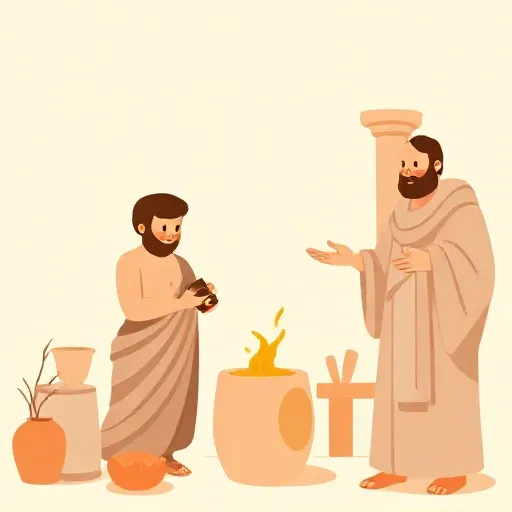
Twenty-four centuries ago, a Greek thinker named Aristotle (384–322 BCE) decided that one “why” was never enough. Whenever anything changed, he found four different kinds of reasons hiding inside it. He called them the four causes. If you can answer all four, he said, you have truly explained the change.
The Four Answers to Every “Why”
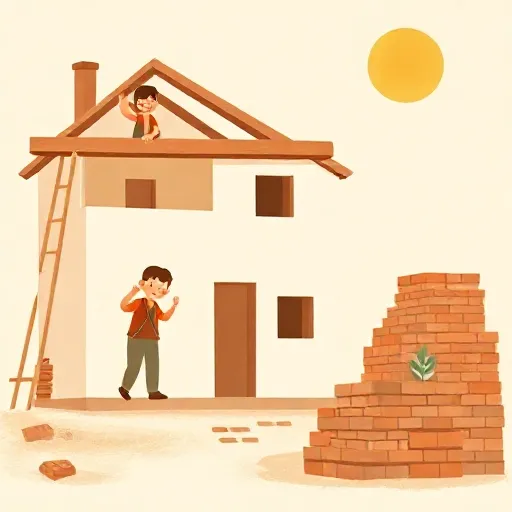
Take that house. If you ask why it exists, Aristotle would give you four answers.
First, the material cause: what is it made from? Bricks, wood, mortar. Without the right stuff — you cannot build a house out of liquid water — nothing can get started. He called this stuff matter.
Second, the formal cause: what is it? A house is not just a heap of bricks. It has a shape, a plan, an arrangement that makes it a shelter and not a wall or a tower. Aristotle called this the form. Matter and form always work together, a pairing he later thinkers labelled hylomorphism (from the Greek words for wood and shape).
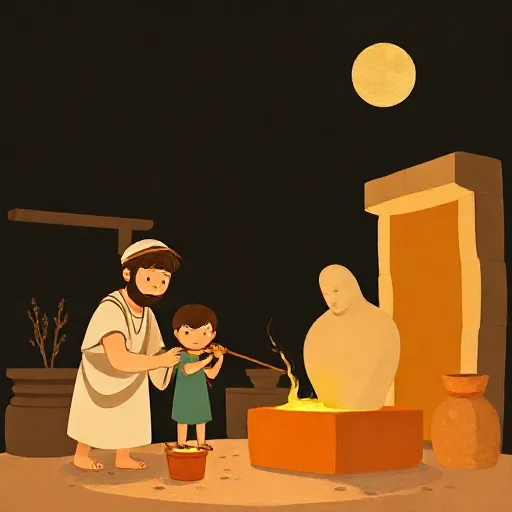
Third, the efficient cause: who or what made it happen? The builder, swinging a hammer. The builder carries the form of the house in her mind and uses tools to stamp that form onto the matter. Without her, the bricks stay stacked in a yard.
Fourth, the final cause: what is it for? A house provides a safe place to sleep and eat. That purpose is what got the builder moving in the first place. For Aristotle, every natural thing and every human-made object has a goal, a final cause — even if the goal is just being itself.
These four causes do not compete. They cooperate. The matter provides the potential, the form gives it a shape, the efficient cause starts the process, and the final cause keeps everything pointed in the right direction.
The Inner Guide: Nature Itself
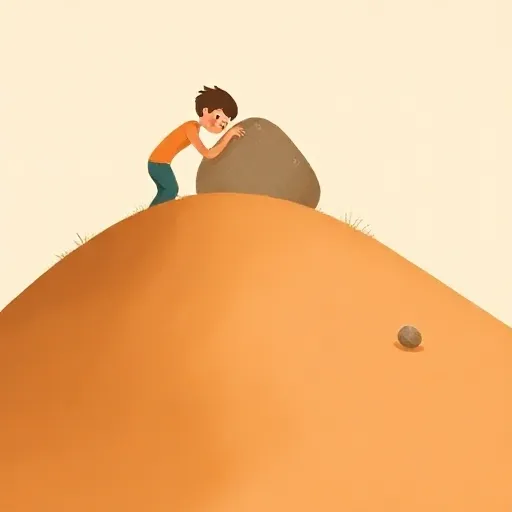
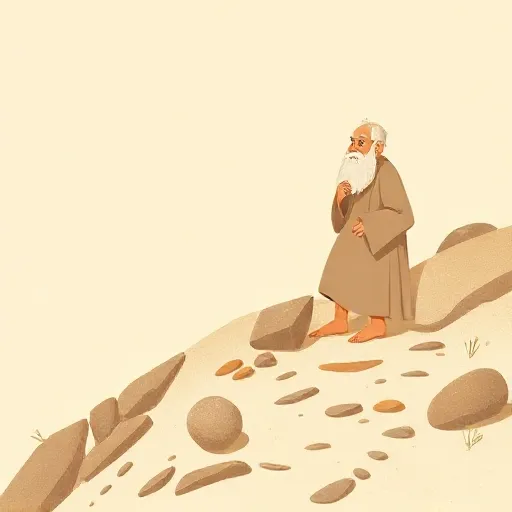
When the rock rolls downhill, no one is pushing it. So where is the efficient cause? Aristotle’s answer begins with another big word: nature.
A thing’s nature, he wrote, is an inner principle of change and rest. The rock has a built-in tendency to head downward. A flame’s nature is to leap upward. A puppy’s nature is to grow, bark, and chase its tail. When something moves or changes according to its nature, you do not need to point at a separate pusher right now — the nature itself explains why it happens, provided nothing blocks it.
Toss the rock into the air, though, and you are moving it contrary to nature. That is forced motion. The mover is obvious: your hand. Once the hand lets go, the rock returns to its natural path.
For living things, the nature is especially clear. Aristotle called it the soul (psychē), which is not a ghost but the form and the efficient cause of the body — what makes an acorn become an oak and a kitten become a cat.
The Big Change: From Potential to Actual
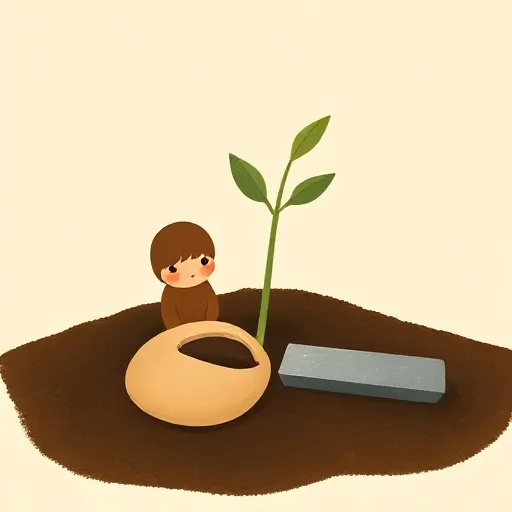
But what is change, exactly? Imagine a cold iron bar near a fire. Right now the bar is not hot, but it could be. Aristotle would say the iron is hot in potentiality (dunamis) but not yet in actuality.
When the fire heats the iron, a transformation begins. The iron is no longer simply cold, but it is not yet fully hot either — it is on the way. Aristotle called this in-between moment motion or change (kinêsis). It is the actuality (energeia) of a potentiality in so far as it is still potential. The heating-up is real, but it is incomplete. Once the bar matches the fire’s warmth, the change stops.
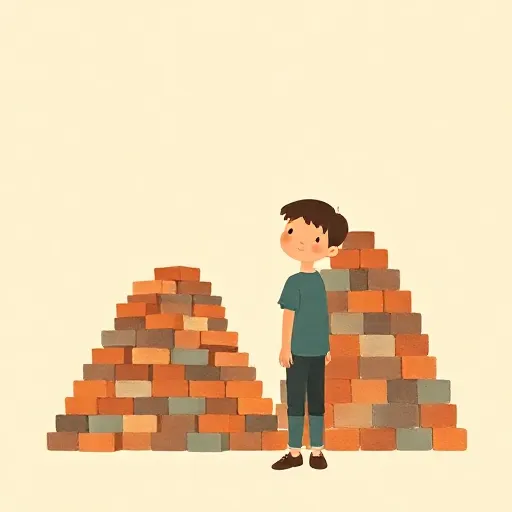
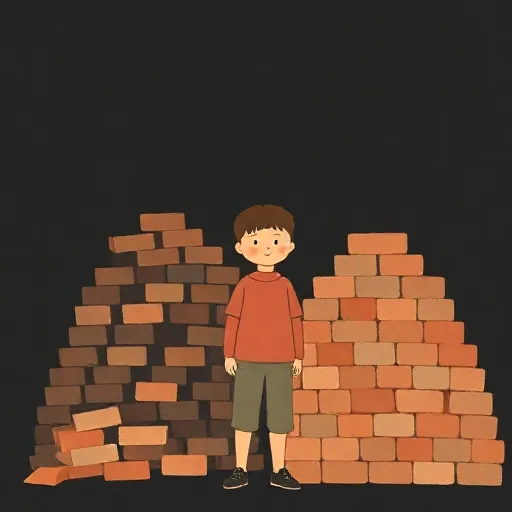
You can see the same pattern everywhere. A seed is an oak tree in potentiality. Sprouting is the motion that carries it toward actuality. A pile of bricks is a house in potentiality. Building is the motion. Until the final form appears, the process is still underway — an actuality that is not yet finished.
This also tells you who can set a change in motion. Aristotle held a striking rule: the mover must already possess the form it gives away. Only a hot thing can make another thing hot. Only a human parent can generate a human baby. A sleeping pill does not work because it has a “sleep-making power”; it needs to warm or calm the body in a way that matches the final state. The builder has the house’s design in her mind before the first brick is laid. Aristotle called this the principle of causational synonymy — the cause and the effect share the same form, though not at the same time.
The Chain of Movers and the Unmoved Mover
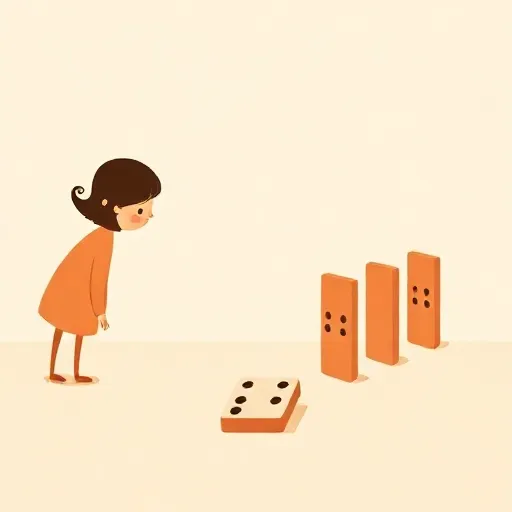
If the iron bar needs the fire, and the fire needed a match, and the match needed a hand, does the chain ever end? Aristotle was convinced it must.
He examined the heavens — the eternal wheeling of the stars and planets. These circular motions, he argued, cannot be forced. They must be natural and yet they cannot have simply started on their own, because every motion needs a mover. So there has to be a first mover that sets the celestial spheres turning, without ever being moved itself.
This unmoved mover is a strange and beautiful idea. It cannot have any potentiality — if it could become something else, it might stop moving the heavens. It is pure actuality, fully and perfectly what it is, with no unfinished business. It moves everything not by pushing or pulling, Aristotle said, but “as an object of love and striving” — the way a beautiful goal draws you forward without the goal itself budging.
The unmoved mover, without size or parts, sits (so to speak) at the very edge of the universe. Its endless activity keeps the sun on its annual path, the seasons turning, and every natural process from simply fizzling out. In Aristotle’s picture, a father is the immediate cause of his child, but the sun — driven by that first mover — is also a cause, providing the warmth that makes life possible.
Why a 2,400-Year-Old Toolkit Still Matters
Today we explain falling rocks with gravity, not with inner natures. But Aristotle’s four causes did not vanish. A car mechanic still asks about the material (metal and rubber), the form (the design), the efficient cause (the factory robots), and the final cause (getting people from A to B). A biologist describing a heart still talks about muscle tissue (matter), its four-chamber shape (form), how it develops in an embryo (efficient cause), and what it does — pump blood (final cause).
Even the unmoved mover left a fingerprint. When people argue about whether the universe had a beginning or ask what set off the Big Bang, they are walking a trail Aristotle marked. And every time you pause to wonder why something is the way it is — a falling leaf, a laughing friend, a star blinking overhead — you are doing what he did on that hillside: noticing that one “why” is never quite enough.
Think about it
- Pick an ordinary object — a sandwich, a bicycle, a video game. What are its four Aristotelian causes? Is one of them hardest to find?
- If everything that moves needs a mover, could there really be a first mover that never moves? What would such a thing be like — and how would it draw the whole universe?
- Aristotle thought every change has a purpose, even a falling rock. Can you think of anything that seems to happen for no purpose at all, or does that idea of “no purpose” just feel uncomfortable?