Can You Prove It? Aristotle’s Three-Line Logic Machine
“I’ll Prove It!” — The Need for a Logic Machine

Imagine you and a friend are arguing about whether it will rain tomorrow. You say, “It will rain because grey clouds are moving in.” Your friend asks, “How does that prove it?” Suddenly, you’re stuck. What makes a reason prove its conclusion, rather than just sound convincing?
More than 2,300 years ago, the Greek philosopher Aristotle (384–322 BCE) asked that same question. But he didn’t just want handy tips for winning debates. He wanted a machine — a mental tool that could test any argument and say for sure whether the conclusion had to be true, given the starting points. He called that kind of argument a deduction (in Greek, sullogismos). In a deduction, if you accept certain statements — called premises — then a different statement, the conclusion, must be true, no escape. Not because it sounds right. Because the shape of the ideas leaves no other option.
Aristotle’s deduction machine is not about facts or shouting. It’s about structure. And he believed that structure could be written down in just a few lines.
All, Some, and None: The Secret Code of Sentences
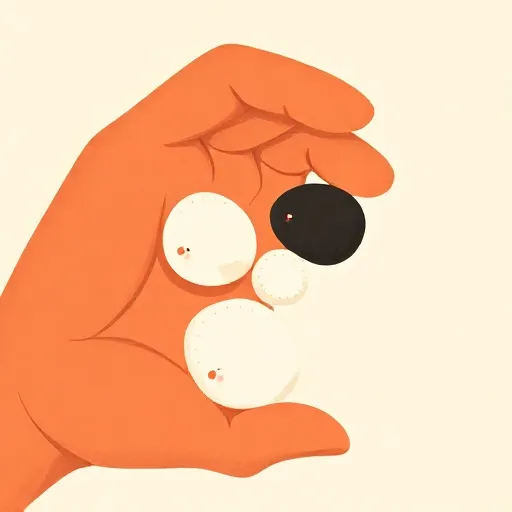
Before you can test an argument, you have to break down every statement into its simplest parts. Aristotle noticed that any claim that can be true or false — an assertion — always does two things: it picks out a subject and says something (a predicate) about it. And it either affirms or denies that predicate.
When the subject is a whole group, you get four powerful sentence shapes:
- All S are P (every member of S has property P)
- No S is P (no member does)
- Some S is P (at least one member does)
- Some S is not P (at least one member does not)
Aristotle gave these patterns careful attention. He saw that each one has an exact opposite — a contradiction — that cannot be true at the same time. “All ravens are black” contradicts “Some raven is not black.” One must be true, the other false. This simple map of opposites became a logic engine. By treating words like “all,” “no,” “some,” and “some not” as formal pieces, Aristotle could swap them around without caring what the words meant — as long as the puzzle fit.
He did assume one important thing: every term names something real. So words like “unicorn” or “dragon” can break the machine, because you might end up claiming “Some unicorn is a horse” while also holding that no unicorns exist. Aristotle’s logic works best when all the pieces refer to things in the world.
The Three-Line Formula: Figures and Moods
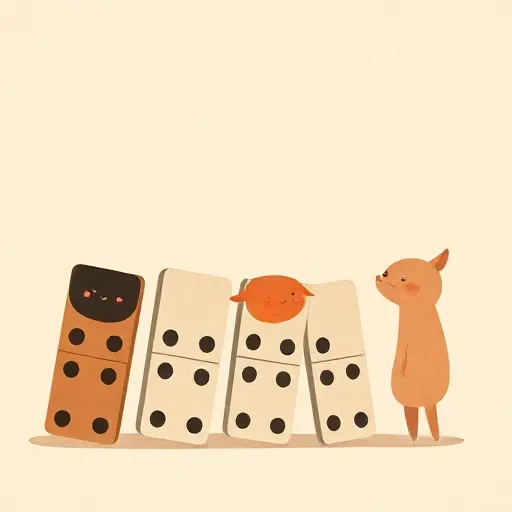
Aristotle’s favorite deduction has only three statements: two premises and a conclusion. And those three statements share exactly three terms — like three columns in a game board. The term that appears in both premises (but not the conclusion) is the middle term. Its job is to link the other two terms together. Depending on where the middle term sits — subject or predicate in each premise — you get different shapes, or figures.
Aristotle found three figures. In the first figure, the middle term is the subject of one premise and the predicate of the other. That arrangement gave him four “perfect” deductions — forms so clear that the conclusion is visible just by looking. The most famous one, nicknamed Barbara in medieval times, runs like this:
- Premise 1: All humans are mortal.
- Premise 2: All Greeks are humans.
- Conclusion: Therefore, all Greeks are mortal.
The shape here is: All B are A, All C are B, so All C are A. When the pieces lock into that pattern, the conclusion is inescapable.
But what about arguments where the middle term is in the predicate of both premises, or the subject of both? Those give the second and third figures. The conclusions aren’t as instantly obvious, so Aristotle had to prove them. He did this by reducing the less obvious forms into the perfect first-figure deductions, using two techniques. One trick was conversion: flipping some statements around. For instance, “No horse is a bird” automatically means “No bird is a horse.” The other trick was proof through the impossible, where he assumed the opposite of the conclusion and showed a contradiction followed. By the end, he had identified fourteen valid patterns, now called moods, and proved that every single one could be traced back to the first figure.
The Proof Police: Counterexamples and the Search for Truth

Proving which forms work is only half the job. Aristotle also wanted to show which forms don’t work — and why. His method was startlingly modern: if a pattern is invalid, all you need is a single counterexample — a real case where the premises are true but the conclusion is false.
For instance, take two premises like “No horse is a bird” and “No bird is a dog.” Can we squeeze out a conclusion? Maybe “All horses are dogs”? Surely not. Aristotle would supply terms: “horse,” “bird,” “dog.” The premises are true, but the conclusion is clearly false, so that pattern can’t be trusted. He cleverly gave sets of terms that worked as universal counterexample makers, proving that many combinations of “all,” “no,” and “some” simply never lead to a guaranteed conclusion.
He also proved sweeping metatheoretical rules — rules about rules. Among them: no deduction has two negative premises, none has two particular premises, and every valid deduction can eventually be reduced to the two universal moods of the first figure. In other words, the whole system rests on just two perfect forms. That wasn’t just useful; it showed that logic itself could be studied logically.
Why Aristotle’s Logic Still Shapes Your Brain

You might think all this is dusty ancient history. But every time you say, “If all my friends are going, and you’re my friend, then you’re going,” you’re using a first-figure deduction. When a lawyer proves a case by linking evidence through a chain of reasoning, the skeleton is syllogistic. When a computer scientist writes a program that checks whether a set of rules is consistent, she’s walking in Aristotle’s sandals.
Of course, Aristotle’s system has limits. It can’t handle arguments like “Alex is taller than Bo, and Bo is taller than Casey, so Alex is taller than Casey,” because “is taller than” involves a relation, not just a simple property. And modern logic has grown far beyond the three figures. But the big idea — that you can test reasoning by its form alone, without caring about the subject — is Aristotle’s lasting gift. He showed that clear thinking isn’t about being loud or clever; it’s about whether the puzzle fits.
Next time someone says, “Prove it,” you don’t have to shout. Just check the shape.
Think about it
- If a friend insists that “all video games with great graphics are fun,” and you find a game with great graphics that you find boring, what would Aristotle say about your friend’s argument?
- Aristotle assumed every term names something real. What happens to his system if you try to reason about imaginary things like perfect circles or superheroes?
- Can an argument be a valid syllogism and still lead to a false conclusion? (Hint: look at the premises, not the shape.) Give an example from your own life.