Why Does a Bird Have Feathers? Aristotle’s Blueprint for Life
Two Friends and a Fish

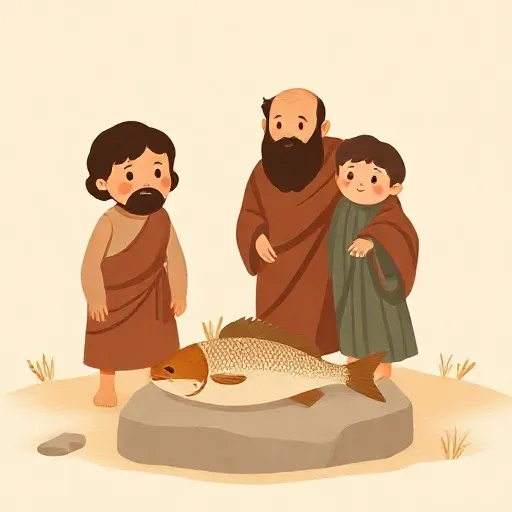
In the 340s BCE, on the sunny island of Lesbos, two friends spent their days gathering every animal they could find. They scooped sponges from the shallows, peered into beehives, and sliced open squids. Aristotle (384–322 BCE) and his younger companion Theophrastus (c. 371–287 BCE) were doing something nobody had done before. They were not just naming living things — they were trying to figure out why they were built the way they were. That was the moment biology was born.
Aristotle had already spent twenty years studying in Plato’s Academy in Athens. He would later tutor Alexander the Great and start his own school, the Lyceum. But here on Lesbos, surrounded by life, he found his deepest passion: understanding the animal world from the inside out. Together, Aristotle and Theophrastus launched a systematic investigation of animals and plants. It was the beginning of a project so ambitious that it would organize an entire science.
First, Gather the Facts
Before you can explain why something happens, you need to know that it happens. Aristotle believed that science must start with careful observation and fact‑collecting. He called this early stage historia, meaning inquiry or investigation. In his book History of Animals (a better translation is Animal Inquiries), he compiled an enormous catalog of differences among animals: which ones have blood, which have lungs, how they give birth, what they eat.
He didn’t just dump the facts in a pile. He used a method called division — splitting groups into smaller subgroups based on shared features. But he warned against dividing animals in silly ways. Don’t put all winged animals together and then divide them into “tame” and “wild”; tameness has nothing to do with wings. Instead, look for many features that naturally go together. All birds have feathers, beaks, wings, and two fleshless legs. That’s a kind — a real group you can study as a whole.
This phase answers the question “What is true?” Aristotle called it the hoti — the fact. It’s like drawing a detailed map. You’re not yet explaining the landscape; you’re just making sure every hill and river is in the right place.
Then, Find the Causes

Once the facts are clear, you can move to the next question: why. Aristotle called this the dioti — the reason why. In his works Parts of Animals and Generation of Animals, he switched from describing to explaining.
Think about trees that lose their leaves in winter. A fact‑book would record that fig trees and grape vines both shed leaves. But that’s not an explanation. The real cause, Aristotle argued, is that when the weather cools, moisture at the base of the leaf hardens. This hardening cuts off nutrients, and the leaf falls. That chain — leaf‑loss, broad‑leafed tree, sap solidification — is an example of a causal explanation. The step that connects the effect to its cause he called the middle term. It’s the hidden glue that makes the explanation work.
For thunder, the middle term is “fire being quenched in the clouds.” So a proper definition of thunder isn’t just “a loud noise in the sky” — it’s “a noise caused by fire being quenched in the clouds.” Finding the middle term gives you both the cause and the essence of the thing. In biology, that means discovering what job each organ does: the lung for breathing, the eye for seeing. The goal is knowing not just what an animal part is, but what it is for.
What Every Part Is For
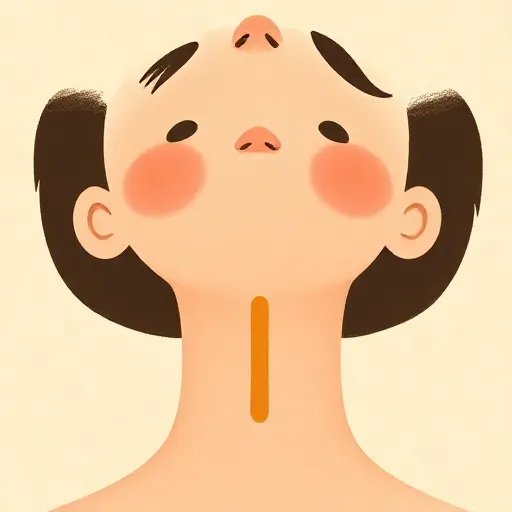
Aristotle thought every part of an animal has a purpose, or telos. This way of thinking is called teleology. The lung is for breathing, the eye for seeing. Even the neck isn’t just a random stretch of throat: it protects the windpipe so air can safely reach the lung.
He argued that in a living thing, the form — the whole animal’s way of living, its capacity to grow, sense, and move — is more important than the matter, the flesh and bone it’s made of. The parts exist for the sake of the whole, just as bricks exist for the sake of a house, not the other way around. This doesn’t mean an animal was designed by a builder. Nature works with a kind of conditional necessity: if a creature is going to breathe air, then it must have a lung, a windpipe, and a neck to hold them. The outcome makes the parts necessary, not the reverse.
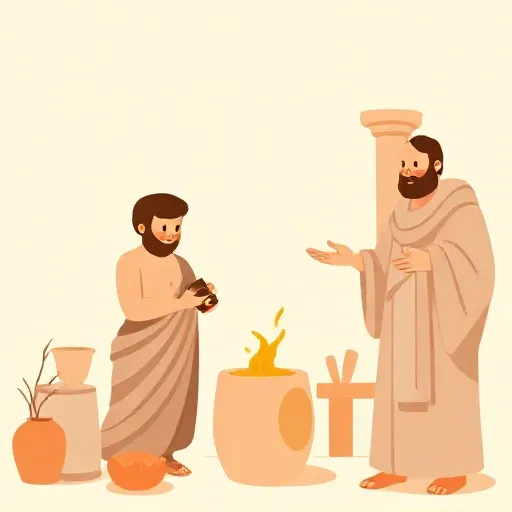
This idea is so central that Aristotle even praised the study of “lowly” animals. In a famous passage, he told the story of visitors who found the philosopher Heraclitus warming himself at an oven and hesitated to enter. Heraclitus said, “Come in; there are gods here too.” Similarly, you shouldn’t be disgusted by dissecting a sea slug or a bug. Inside every creature, there is purpose and something marvelous. For Aristotle, nature never does anything pointless, and the goal — the “good” of the organism — is what you’re really looking for.
The First Heartbeat and the Chick in the Egg
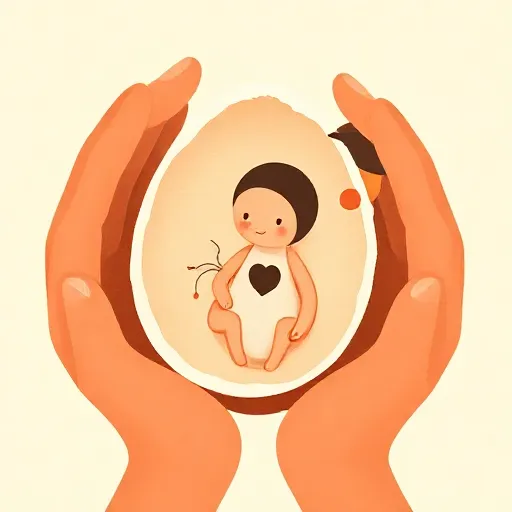
Aristotle didn’t just write about causes in the abstract. He applied his method to real animals in astonishing detail. In History of Animals, he described cracking open a hen’s egg on the fourth day after it was laid. He saw a spot no bigger than a blood speck — and it was beating. That spot was the heart.
In Generation of Animals, he explained why the heart appears first. The male parent’s semen contributes a kind of heat, like a spark, which sets the female’s material in motion. Then the heart forms and takes over. It becomes the engine of development, pumping blood and directing the rest of the body to grow. He compared this process to a clever automaton — a self‑moving toy that, once wound up, performs a whole sequence of movements on its own. All the organs appear in a coordinated order because the end goal, a living animal, pulls the process forward.
He also noticed that embryos start with huge eyes that later shrink. That’s not a mistake, he argued: the eye’s sensitive part needs a special body, so it forms early and is refined later. His observations were so precise that scientists during the Renaissance repeated his chick‑egg experiment centuries later. From the tiniest vessel to the whole developing creature, Aristotle was practicing teleology as a working scientist.
A Puzzle and a Living Legacy
There’s a strange thing about Aristotle’s biological writings. He split the fact‑gathering stage and the causal‑explanation stage into completely separate treatises. History of Animals collects the facts in careful, organized detail — never using terms like “purpose” or “soul.” Then Parts of Animals and Generation of Animals explain those same facts using teleology and causes. He didn’t do this for astronomy, psychology, or ethics. Why only for living things?
Perhaps animals are so complex that you genuinely need a separate reference work before you can even begin to ask why. The fact book gives you a clear picture of what you’re explaining; the explanation books then tell you why. This rigorous division shows just how seriously Aristotle took his own scientific method.
Today, biologists still follow his core habit: observe carefully, then ask what each trait does for the organism. The next time you wonder why a cat has whiskers or why a heart beats, you’re thinking like Aristotle. He got some details wrong — he thought the heart was the seat of thought, for example — but his method of asking “why?” changed the world. He taught us that the living world isn’t a pile of disconnected oddities; it’s full of functions waiting to be discovered, exactly the kind of puzzle a curious twelve‑year‑old can start to solve.
Think about it
- If you found a creature with a weird extra appendage, how would you go about figuring out its purpose? Could it have no purpose at all?
- Aristotle claimed nature never does anything pointless. Can you think of something in the natural world that seems useless? Could you be missing its hidden job?
- When scientists today study an animal, they often still separate description from explanation. Do you think that’s necessary, or could you mix them? What might get lost?