

Do You Need to See It to Know It? The A Priori Puzzle
The Bedroom Puzzle: Knowing Without Looking
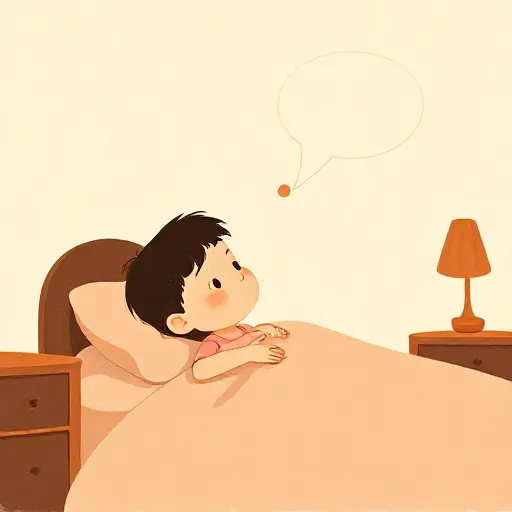
Imagine you are lying in bed with your eyes closed. Your friend asks, “How do you know that all bachelors are unmarried males?” Do you need to open your eyes and count bachelors? No. Just by understanding what the word “bachelor” means, you know it is true. That’s a classic example of a priori justification — a kind of support for a belief that comes from thinking alone, without needing your five senses.
Now suppose she asks, “Are bachelors in the U.S. taxed differently from married men?” To answer that, you would have to look at tax laws, ask an adult, or search the internet. That knowledge requires sense experience — seeing, hearing, or reading. This is called a posteriori (or empirical) justification.
Philosophers have studied this contrast with many pairs of sentences. “All vixens are female” (a priori) vs. “All vixens are cunning” (a posteriori). “2 + 2 = 4” (a priori) vs. “2 quarts of any liquid plus 2 more quarts always equal 4 quarts of liquid” (a posteriori — because some liquids, like alcohol and water, don’t add up neatly to four quarts). The first claim in each pair can be justified just by grasping the ideas involved. The second depends on going out into the world and checking.
Of course, you still need to learn the words and concepts — that requires some experience. But the idea is that, once you have those concepts, the experience does not act as evidence. You don’t need a new observation to know that a bachelor is unmarried. The thinking itself provides the reason.
Not Just Definitions: When Your Mind “Sees” Necessary Truths
There is an obvious group of a priori truths: the ones that are true simply by the meanings of the words. Philosophers call these analytic truths. If you define “vixen” as a female fox, then “All vixens are female” is just spelling out the definition. Immanuel Kant (1724–1804) thought that wasn’t the whole story. He argued that some a priori truths are synthetic — they are not just built into the meanings of the words, yet we can still know them without experience.
Consider these claims: “No object can be red and green all over at the same time.” “If A is taller than B, and B is taller than C, then A is taller than C.” “Torturing children just for the fun of it is wrong.” These don’t seem to be true merely because we defined “red” and “green” or “taller” or “wrong” a certain way. Yet many people feel they can see these truths just by thinking, without checking any particular red-and-green objects or measuring heights. Philosophers who believe in synthetic a priori truths say that our faculty of reason can grasp necessary connections that aren’t just about words.
How? George Bealer (20th-century) described rational intuitions as mental seemings that a proposition must be true or that it is possible. For instance, when you consider a case where a lucky guess leads to a true belief but no real knowledge, it seems to you that knowledge is absent. For Bealer, this seeming is like an intellectual version of seeing — but directed at abstract necessities.
Laurence BonJour (20th-century) called such an experience a rational insight, a direct grasp that a proposition is necessarily true. You don’t infer it; you just apprehend it. Importantly, these philosophers admit that a priori justification is fallible. You can be justified in believing something that later turns out false. A famous sorites paradox shows this: If you have a heap of a thousand beans, taking away one bean still leaves a heap. Repeating that step, eventually you get to one bean — or none — and it no longer looks like a heap, but the reasoning is hard to stop. You might have been a priori justified in believing the principle that removing one bean never destroys a heap, yet that leads to absurdity. So even our strongest seemings can be mistaken.
The Skills Challenge: Is There Really a Special Kind of Knowledge?

Not everyone agrees that a priori reasoning is fundamentally different from ordinary, experience-based knowledge. Timothy Williamson (20th-century) imagines a person who has learned through practice to judge distances in inches and in centimeters. One day, without using a ruler, they form a mental image of two marks nine inches apart and two marks nineteen centimeters apart and “see” that nine inches is more than nineteen centimeters. They also imagine an ant and “see” that the distance between an ant’s front and back legs is less than nine inches. Traditional philosophers would call the first judgment a priori (it seems about necessary length comparisons) and the second a posteriori (it depends on knowing what ants are like). But Williamson says both rely on the same kind of skill at manipulating ideas in imagination, a skill shaped by previous experience. To him, the difference is not very deep — like seeing with a telescope vs. with the naked eye.
Defenders of the a priori disagree. Not all a priori knowledge uses mental imagery. Consider this piece of reasoning: “If a < 1, then 2 − 2a > 0.” You can reflect on a few hypothetical cases — a = 0, a = 0.5, a negative number — and grasp that it must be true without forming any pictures of rulers or lines. That kind of purely conceptual reflection, they argue, is quite different from imagining a nine-inch line next to an ant. So a significant division remains.
Whose Intuitions Count? The Experimental Philosophy Debate
Recently, a movement called experimental philosophy has tested whether people’s a priori intuitions really are universal. In studies, participants are given scenarios like the “Sheep” case (a field with poodles that look like sheep) and asked whether someone knows there are sheep or merely has a true belief. In ethics, they might be asked whether it’s wrong to push one person in front of a trolley to save five. Early results suggested that people from different cultures, economic backgrounds, or genders sometimes give different answers.
Critics respond that these surveys miss what philosophers mean by “intuition.” A genuine rational intuition, according to Bealer, requires a full understanding of the concepts and ideal cognitive conditions — not just a quick reaction from a student in a noisy lab. Professional philosophers, who spend years clarifying the concepts, might have better access to the real seemings. That said, even experts can be swayed by the order in which examples are presented or how they are described (called framing effects). So the debate is alive.
Another worry is calibration: how can we check whether our intuitions are accurate? With vision, you can touch an object to confirm you didn’t hallucinate. With intuition, you can’t “touch” an abstract truth. But defenders note that we trust memory and perception even though we can’t step outside them to check them directly. And we can check one person’s a priori seemings against another’s — just as we do with observations.
Why It Matters: The Quiet Power of Pure Reason
Every day you rely on the a priori without thinking about it. When you multiply numbers in your head, you expect the answer to be right without measuring blocks. When you reason that “if all humans are mortal and Socrates is human, then Socrates is mortal,” you trust the logical pattern. When you feel sure that it is unfair to punish someone for something they didn’t do, you might be leaning on a moral seeming that isn’t proved by any experiment.
If a priori justification turned out to be an illusion — if every belief had to be checked by the senses — then mathematics, logic, and even basic principles of fairness would be unsteady. Science itself would wobble, because science depends on math and on logical inference. So the puzzle matters far beyond the bedroom thought about bachelors. It’s about whether the human mind can reach truths by its own light, or whether we are always tied to what we can see, hear, and touch.
Think about it
- Can you know that “all triangles have three sides” without ever having seen a triangle? If a person born blind learned geometry, would they have a priori knowledge of that truth?
- If two thoughtful people disagree about whether a certain action is morally wrong, does that mean no a priori seeming is reliable? Or could one of them be mistaken, just as two people might disagree about a math problem?
- Imagine a supercomputer that proves mathematical theorems without any sensory input. Would we say it “knows” those theorems a priori? Why might a human’s a priori knowledge be different?