Can You Really Know Anything? The Ancient Rebel Who Said Yes
The Letter That Turned a Follower into a Rebel
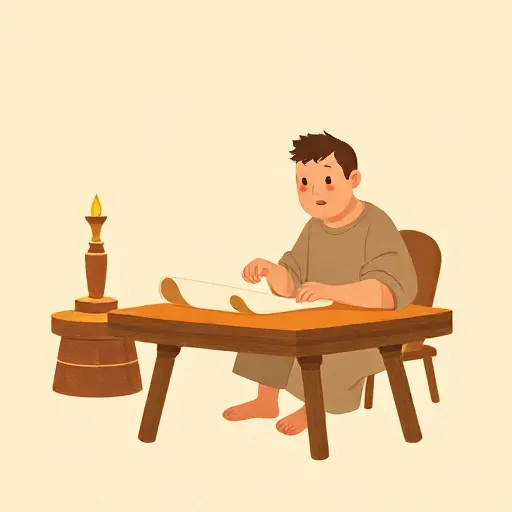
Antiochus of Ascalon (c. 130–69 BCE) was a loyal student. For years he defended the views of his teacher, Philo of Larissa, the head of the Academy — the school Plato had founded in Athens. Philo taught that human beings cannot know anything for certain. The wise course, he said, is to hold all judgments lightly, never fully committing to any claim. Antiochus wrote works supporting this position, and he spent his days arguing that the skeptical Academy was right.
Then, around 87 BCE, Antiochus was far from Athens, traveling with a Roman general in Alexandria. A package arrived: a pair of books his teacher Philo had just published in Rome. Antiochus unrolled them expecting more of the same arguments. Instead, he found something that made him furious. Philo had changed his mind in a way Antiochus thought was impossible. He now claimed that knowledge was, after all, attainable — just not the way the rival Stoic school described it. According to Philo, the whole Academy had always been searching for truth, not denying it.
Antiochus felt betrayed. He fired back with a book of his own, the Sosus, and broke away completely. He started calling his group the “Old Academy” to signal that Philo and the skeptics had betrayed Plato’s true teaching. More than that, Antiochus became a dogmatist — someone who is convinced that some things can be known with certainty. This was more than a family feud. It was a battle over whether your mind can ever touch reality.
Why the Academy Thought You Could Never Be Sure
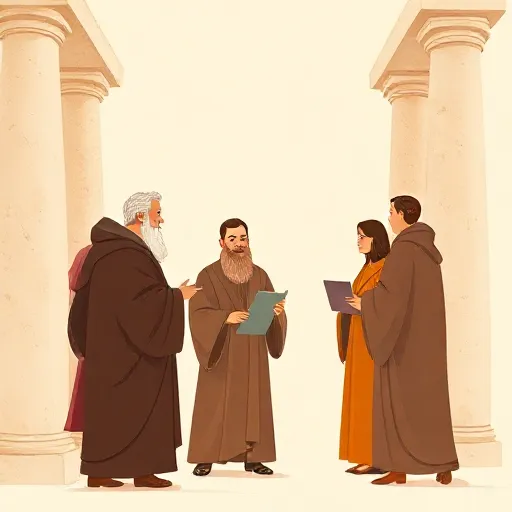
To understand Antiochus’s revolt, you need to see what the skeptics were up against. For more than a century before his time, the Academy had pressed a single, razor-sharp question: can you ever tell the difference between a true impression and a false one?
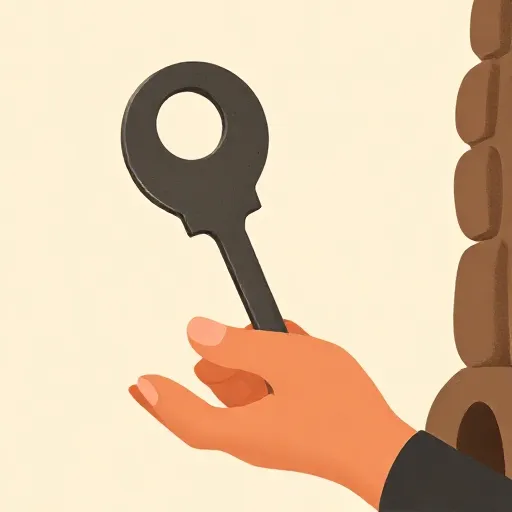
The Stoics, their main rivals, had a confident answer. They said there is a special kind of mental image — a cognitive impression — that works like a perfect lock and key. A cognitive impression is an impression that comes from a real object, is stamped on the mind exactly as that object is, and has a distinct character that could not belong to a false impression. Think of it as the moment you recognize your own house from the street; you aren’t guessing. The Stoics believed that if you only agree to impressions of this flawless kind, you will never make a mistake, and you can build genuine knowledge.
The Academics, first under Arcesilaus (c. 316–241 BCE) and then more fully under Carneades (c. 214–129 BCE), attacked this idea from the inside. They argued dialectically — using the Stoics’ own assumptions — to show that no impression could have that special, unmistakable stamp. Couldn’t a dream seem just as vivid as waking life? Couldn’t a perfect counterfeit coin feel indistinguishable from real silver? If no mental marker guarantees an impression is true, then you have no criterion of truth — no yardstick to measure truth by. And without that yardstick, in the Stoic system, nothing can be known.
From this, the Academics drew two conclusions they often defended: first, that knowledge is impossible; second, that the wise person should suspend judgment about everything. To live a normal life, they proposed following probable impressions — the ones that seem most persuasive — without ever fully believing them. Some Academics even said you could tentatively assent to probable claims, always holding open the possibility that you are wrong.
Antiochus himself had once championed this “mitigated” skepticism. But by the time Philo’s Roman books arrived, he had already come to believe it was a dead end.
How Antiochus Argued That Knowledge Is Real
Antiochus did not defend just any kind of knowledge. He adopted the Stoic theory of cognitive impressions almost wholesale, a move that shocked his contemporaries. Some accused him of being a Stoic in disguise. Antiochus replied that the original Old Academy — Plato, Speusippus, Polemo — had always believed knowledge was possible, and that Zeno, the founder of Stoicism, merely gave it new words and a few corrections. In Antiochus’s eyes, he wasn’t abandoning the Academy; he was rescuing it.
His arguments against skepticism were direct and powerful. First, he pointed to the senses. In order even to form a concept of what “truth” means, he said, you must already have grasped some truths in a way that is impossible without cognitive impressions. If every impression could be false, you would never learn what a true one is.
Second, he attacked the skeptic’s reliance on probable impressions. Choosing your actions based on probability, he argued, is not enough for a human life. If you cannot distinguish what is true from what merely seems persuasive, you lose the very basis for decision. Without a solid floor of knowledge, every step wobbles.
Third, and most famously, he pressed the charge of self-refutation. Anyone who asserts “nothing can be known” must claim to know at least that one thing. But if you really believe you know nothing, you have already contradicted yourself. For Antiochus, the skeptic position collapses under its own weight.
When Philo’s Roman books claimed that Academic arguments only disproved the Stoic definition of knowledge, not knowledge itself, Antiochus was even more scathing. Philo now said that a true impression that is accurately formed is enough for knowledge, even without the special “unmistakable” character. Antiochus shot back: without the full Stoic standard, you have returned to a world of mere probabilities. And if you do that, you have handed the skeptics exactly what they want — the conclusion that real knowledge is impossible.
What Really Makes a Life Good? The Battle Over Virtue
The fight over knowledge was only half the story. Antiochus also had to answer the second great question of philosophy: what is the goal — the telos — of human life? And here, too, he set himself against the Stoics, though he used their own tools.
The Stoics taught that virtue — the perfection of reason — is the only genuine good. Health, wealth, friendship, even a life free from pain: these are “indifferents.” They might be natural to prefer, but they cannot make a life truly better or worse. A virtuous person on the rack, they said, can still be perfectly happy because only inner goodness matters.
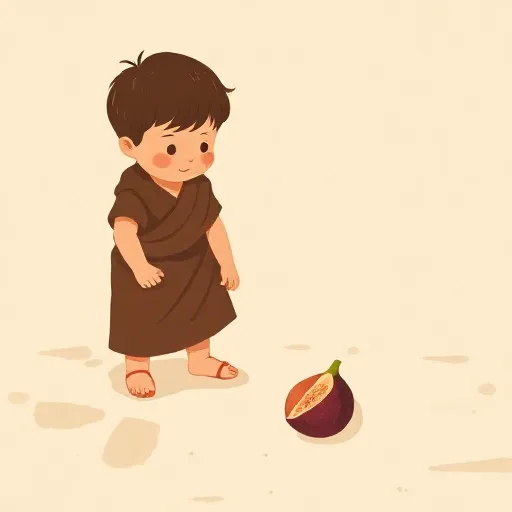
Antiochus thought this was nonsense. He turned to what modern scholars call the cradle argument. Look at an infant, he said, before society has taught it to want strange things. What does it reach for? Warmth, food, comfort, bodily safety. Those are not “indifferents” — they are the very first objects of natural concern. If a fully developed human being is to flourish, then what agrees with our nature, from these first impulses onward, must count as good.
He found authority for this in the Old Academy, especially in Polemo, who had led the school a century before. Antiochus concluded that virtue is indeed the highest good, the chief good — but it is not the only good. Bodily and external things like health, friends, and a secure home are also goods. They just matter less than a well-ordered mind.
This put Antiochus in a sly position. He could say to the Stoics: you pretend your “preferred indifferents” are not goods, but you treat them exactly as if they were lesser goods. Why not be honest? And he could say to the old skeptics: knowledge of what is truly good matters, because living well depends on grasping the real goods of human nature, not just drifting among appearances.
The Happy Life and the Happiest Life

Here Antiochus faced a tough problem. He admitted that health, friends, and material security are real goods. But didn’t that mean a virtuous person who lost everything would no longer be happy? The Stoics could avoid that conclusion by denying those things were goods at all. Antiochus could not.
His solution was a careful distinction between two kinds of happiness. A happy life (in Latin, vita beata), he said, needs only virtue. Even in poverty or sickness, a wise person remains happy because her soul is in order. But the completely or entirely happy life (vita beatissima) requires bodily and external goods as well. A life rich in friends, health, and pleasant activities, crowned by virtue, is more fully happy than a life of virtue alone.
This might sound like splitting hairs. But it tried to capture something you probably feel yourself. Imagine a person who is deeply kind and honest, but who lives in constant pain, abandoned by everyone. You might admire that person’s strength, and you might even say she is happy in some deep sense. Still, you would never say her life is as good as it could be. Antiochus gave philosophers a way to say both things at once without contradiction. Virtue is still king; it’s just not the whole kingdom.
Why a 2,000-Year-Old Argument Still Echoes Today

It’s easy to think of an ancient school quarrel as dusty history. But the dispute between Antiochus and the skeptics touches a question you face every day: how do you know what you think you know?
When a news story sounds too wild to be true, you need a criterion. When a dream feels so real you wake up confused, you rely — without thinking — on a mental assumption that your waking senses are more trustworthy. When you debate with friends whether a promise should be kept even if it hurts, you are arguing about what makes a life good and whether some goods matter more than others.
Antiochus’s idea that you need both a solid floor of knowledge and a clear picture of human flourishing has not gone away. Modern science trusts its instruments because it assumes there is a real world that can be known. Modern ethics wrestles with whether health, pleasure, and achievement are extras that can’t touch your true worth — or whether they genuinely help compose the best life.
Antiochus lost the immediate battle; his new school did not last long as a separate movement. But his attempt to weld the best of Stoic rigor to a richer vision of human nature prefigured debates that have never stopped. And the next time you catch yourself saying, “I’m sure of it,” you might wonder: what is the key that fits the lock so perfectly that you know you are not mistaken?
Think about it
- Antiochus thought you need to trust your senses to have any knowledge. Can you think of a time your senses fooled you? Does that mean you should never trust them, or is there a middle ground?
- If someone lives a life of perfect moral goodness but never experiences friendship, fun, or physical comfort, can that life still be called happy? What would be missing?
- Suppose a scientist could prove that every one of your beliefs is probably wrong. Would it be wiser to keep living as you do now, or to change your whole way of thinking — and why?