Can We Live Without Rulers? The Anarchist Challenge
A Woman Who Dreamed of Freedom: Emma Goldman’s Challenge
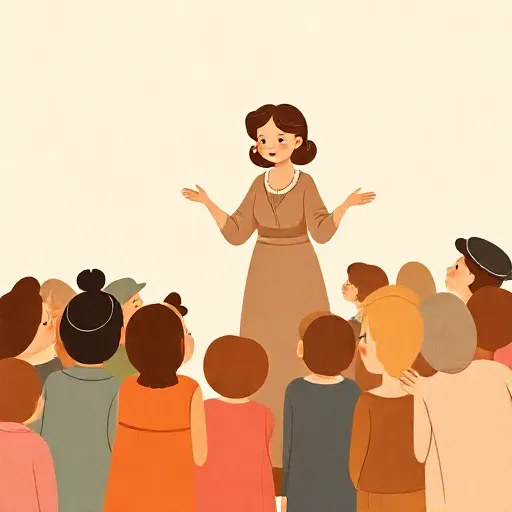
In the early 1900s, Emma Goldman (1869–1940) stood before a crowd and declared, “I want freedom, the right to self-expression, everybody’s right to beautiful, radiant things.” She was an anarchist—someone who believed that no government, boss, or ruler has a right to tell you how to live.
Goldman’s words capture the heart of anarchism: a deep longing to be free from the commands of others. But anarchism is more than a feeling. It is a set of sharp arguments that question why any person or group should have authority—the right to order others around. This article dives into those arguments, the thinkers who made them, and why they still push us to think hard about power and freedom today.
What Does Anarchism Even Mean?
The word “anarchy” frightens many people. It makes them think of broken windows, riots, and confusion. But the term itself comes from the Greek an- (without) and archē (ruling power). Anarchy literally means “no ruler.” Anarchists don’t want chaos; they want a society where nobody is forced to obey another person’s commands simply because of their position.
Anarchists target three connected things: hierarchy (ranking people above and below), centralized power (decisions made by a few people far away), and authority (the claim to have a right to give orders). They say these structures hide a simple truth: that some people dominate others through threat and force. Instead, anarchists picture communities built on mutual aid—helping each other freely—and consent, where everyone agrees to the rules before they’re bound by them.
Not all anarchists draw the same map for the future. Some focus mainly on getting rid of the state—the whole system of laws, courts, police, and armies. Others extend the critique to bosses, religious leaders, traditional family structures, and even unwritten rules about how to act. But they all share the belief that coercion—using threats or violence to control behavior—is wrong, and that human beings can cooperate without it.
Is Every Government a Criminal Gang?

The Russian revolutionary Mikhail Bakunin (1814–1876) made a strong claim: wherever there is a state, there is domination of one class by another. The contemporary philosopher Gerard Casey goes even further, writing that “states are criminal organizations. All states.” Behind these statements lies the anarchist argument that all governments ultimately rest on violence—imprisonment, weapons, and war. Since nobody asks to be born under a particular flag, anarchists say you never really consented to be ruled.
But not all anarchists are street rebels. Some are philosophical anarchists, like A. John Simmons. They argue that the state simply lacks moral authority. This means you have no moral duty to obey the law just because it’s the law. You might still follow it to avoid trouble, but a police officer’s badge doesn’t give them the right to tell you what to do. The linguist and activist Noam Chomsky (born 1928) puts it this way: “The burden of proof has to be placed on authority.” If someone claims they can boss you around, they need to prove it. Anarchists maintain that governments almost never succeed in doing so.
The most famous reply comes from Thomas Hobbes (1588–1679). In his book Leviathan, Hobbes argued that without a common power to keep order, life would be a war of all against all. He famously described that existence as “solitary, poor, nasty, brutish, and short.” To escape the state of nature, people make a social contract: they agree to hand over power to a ruler in exchange for safety. From this view, even a harsh government is better than none.
Anarchists push back. First, they say Hobbes’s state of nature is a myth. Many early human communities lived without chiefs or police, using custom and mutual aid. Second, even if anarchy were dangerous, states themselves have caused immense suffering through war, slavery, and oppression. The English thinker William Godwin (1756–1836) argued in 1793 that “government, even in its best state, is an evil.” So the anarchist isn’t claiming that a world without rulers would be perfect—only that it might be less awful than the one ruled by kings, presidents, and generals.
Third, anarchists doubt the social contract. Did anyone ever sign it? The libertarian Murray Rothbard (1926–1995) joked that “no existing state has been immaculately conceived.” Most states were born from conquest, not from voluntary agreement. Your “consent” is simply the fact that you haven’t fled the country yet. Anarchists say that’s not real consent at all—it’s just being trapped.
The Camping Trip Test: Can We Cooperate Without Bosses?
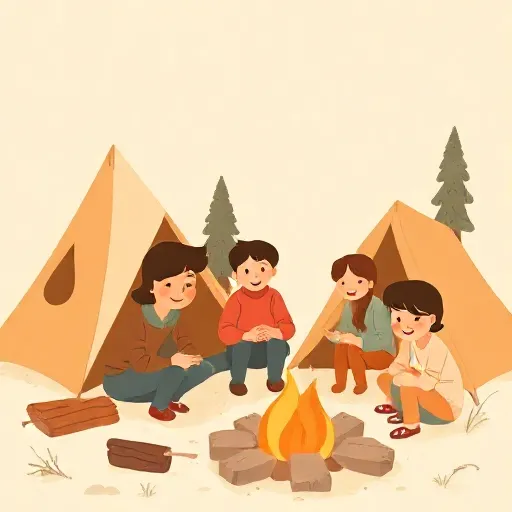
Philosophers Jason Brennan and Christopher Freiman use a simple analogy: imagine a camping trip with friends. No one is elected “tent president.” Everyone just pitches in—carrying water, cooking, cleaning. If someone tries to give orders, the others might ignore them. Brennan and Freiman argue that a fully just society could operate like that camping trip: through voluntary cooperation without threats. In their words, a perfectly just society “would not rely on coercion or threats of coercion.” It would be anarchist.
But anarchists don’t all agree on what this society would look like. Some, like Max Stirner (1806–1856), were individualists. They held that each person should be free to follow their own path, unbound by any group or duty. For them, the single person is what matters most. Others, like Peter Kropotkin (1842–1921), envisioned anarchist communism. Kropotkin believed that people naturally want to share and help each other. His motto was “all for all.” He imagined a world where farms, factories, and workshops were run by communities themselves, not by private owners or state planners.
This tension—me versus we—is a central puzzle for anarchism. If everyone only looks out for themselves, can a community survive? And if a majority votes on a rule, isn’t that just replacing one boss with many? Some anarchists answer with consensus: the idea that decisions should be made only when everyone agrees, so that no one is forced. Historical experiments, like the anarchist collectives during the Spanish Civil War or indigenous societies with no permanent chief, offer hints that self-organized freedom can work, at least for a time.
Anarchy and You: Questioning Authority Every Day
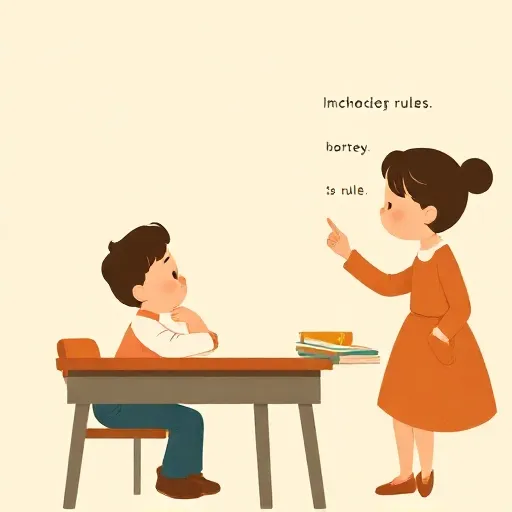
You probably won’t smash a window or refuse to pay taxes tomorrow. But the anarchist challenge lives inside your own everyday life. Why do you have to follow rules at school, at home, or on the playground? Because grown-ups said so? Because “it’s the law”? Anarchists encourage you to ask: Is this rule truly fair, or is it just backed by someone bigger and stronger? If a rule is unjust, what should you do—stay silent, protest, or break it?
Anarchists don’t share a single answer. The Russian pacifist Leo Tolstoy (1828–1910) believed in nonviolent resistance—refusing to cooperate with unjust systems while treating everyone, even enemies, with love. The Italian activist Errico Malatesta (1853–1932) argued that violence was sometimes a necessary evil against a violent state. But all anarchists agree that blind obedience is not a virtue.
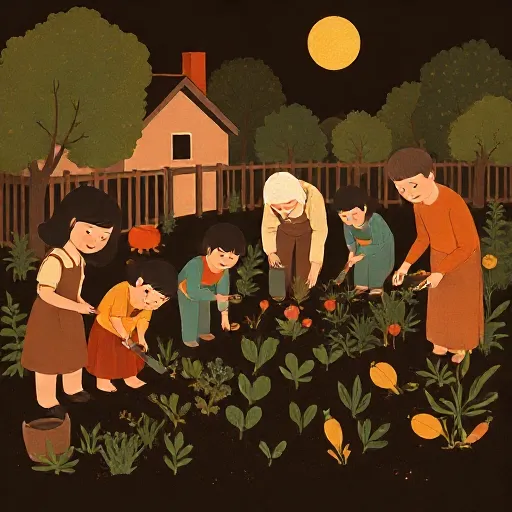
These ideas aren’t dusty museum pieces. When students walk out to protest unfair school policies, when workers form a union to demand fair treatment, when neighbors plant a community garden without waiting for permission—these acts echo anarchist thinking. They are examples of people organizing horizontally, without a boss, to meet real needs.
The philosopher Andrew Fiala (born 1966) suggests that anarchism “gives us reason to wonder about much that we take for granted.” That wondering doesn’t have to lead to chaos. It can lead to a sharper sense of fairness and a willingness to build freer, more equal relationships—starting right where you are.
Think about it
- If your favorite teacher started giving orders that seemed unfair, would you obey just because they’re the teacher? What makes a rule worth following?
- Can you imagine a school with no principal or headteacher—just students and teachers making decisions together by consensus? What might go right, and what might go wrong?
- Anarchists say no one should be forced to do something they disagree with. But what if your neighbor disagrees with paying for streetlights, and so the street goes dark? Is there any way to have community without some form of authority?