Why Would an Animal Risk Its Life for a Stranger?
A Scream That Saves, a Puzzle That Stumps
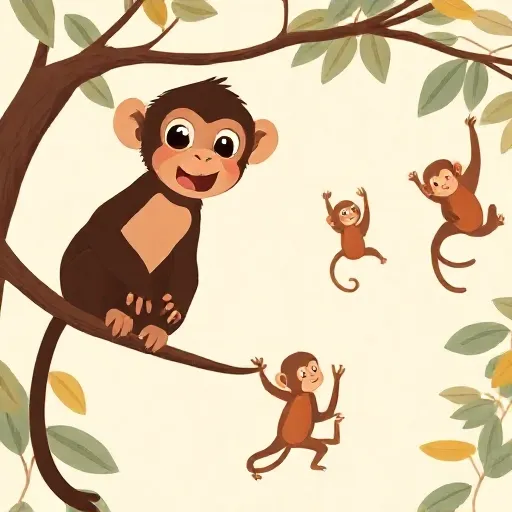
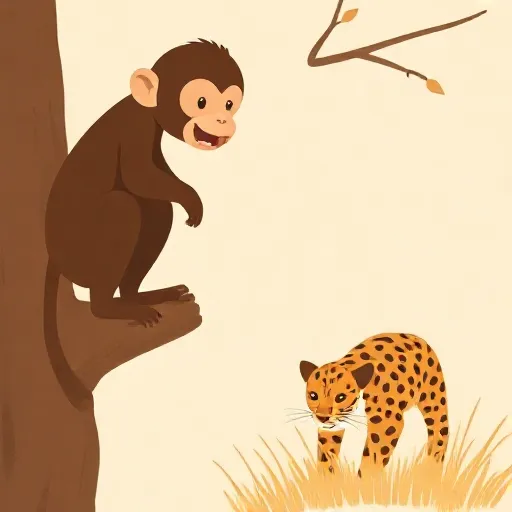
It’s morning on the African savanna. A Vervet monkey spots a leopard slinking through the tall grass. Instead of staying quiet and safe, the monkey lets out a piercing alarm call. The rest of the troop hears it and bolts for the trees. The leopard’s ambush is ruined—but now the predator’s attention is on the monkey that screamed.
Why would an animal put itself in danger to help others? Biologists call this kind of behavior biological altruism: an action that lowers the helper’s own chance of surviving and reproducing, but boosts the chance for someone else. In everyday language, “altruism” means caring about others so much that you’re willing to sacrifice. In biology, it’s not about feelings—it’s about fitness, which is just a measure of how many offspring you leave behind. An altruistic act costs you fitness and gives fitness to another.
That’s a huge puzzle for the theory of natural selection. Natural selection, the engine of evolution, favors traits that help an organism survive and reproduce better than its neighbors. If a gene makes you do something that reduces your own fitness, that gene should become rarer with each generation—it ought to disappear. So how did alarm-calling, food-sharing, and other self-sacrificing behaviors ever evolve? The question has a surprising answer, and it started with Charles Darwin.
Darwin’s Group Answer—and Its Free-Rider Problem
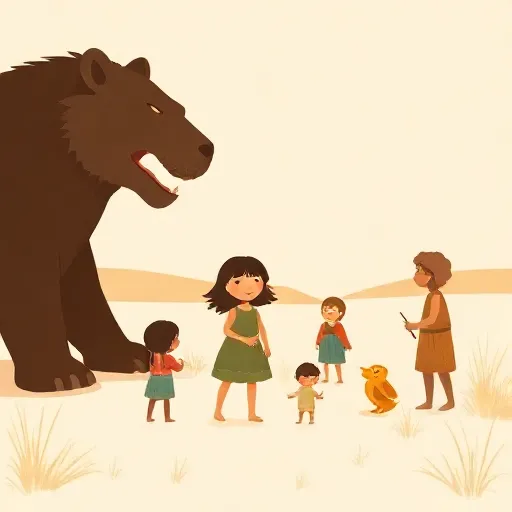
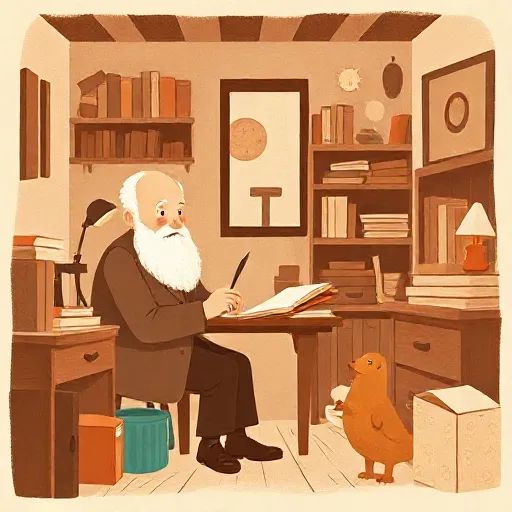
Charles Darwin (1809–1882) saw the problem clearly. In The Descent of Man, he wrote about humans who were ready to risk their lives for their comrades. Such bravery, he noted, might mean that the hero leaves no children at all—a dead end for those generous genes. But Darwin had an idea: what if the real competition isn’t just between individuals, but between whole groups?
A tribe containing many members who help each other—who share food, warn of danger, and fight together—would have a huge advantage over a tribe where everyone is out for themselves. Group-against-group competition might allow altruism to spread, even though selfish individuals do better within each group. This idea is called group selection.
For a while, many biologists found group selection appealing. But in the 1960s, researchers like George C. Williams (1926–2010) and John Maynard Smith (1920–2004) pointed out a serious flaw—one that Richard Dawkins (born 1941) later nicknamed “subversion from within.” Imagine a group made entirely of helpful, sharing monkeys. Now a single mutant appears who takes food from others but never shares back. This free‑rider gets all the benefits of the group’s kindness without paying any costs. Inside the group, the selfish freeloader has higher fitness than the altruists—so selfishness will spread like wildfire, generation after generation, until the group’s altruism collapses. Because individuals reproduce much faster than whole groups die out, free-riders almost always win this race. Group selection alone couldn’t easily explain how altruism got started.
If group selection was too weak, what was the real engine?
The Family Solution: Kin Selection
The breakthrough came from a quiet British biologist named William Hamilton (1936–2000). His insight was beautifully simple: altruism might make genetic sense if it’s aimed at relatives. Your relatives share copies of your genes. So if you help a sister or a cousin survive and reproduce, you’re helping copies of the genes that made you helpful in the first place. This became known as kin selection.
Hamilton worked out the exact condition under which an altruistic gene can spread, now called Hamilton’s rule. In its simplest form, it says:
r × B > C
r is the coefficient of relatedness—the chance that you and the relative share a particular gene by common descent. For a full sibling or a parent-child pair, r is ½; for a grandchild or a half-sibling, it’s ¼; for a first cousin, it’s ⅛. B is the benefit to the relative, measured in extra offspring they get because of your help. C is the cost to you, measured in offspring you lose by helping instead of looking after yourself.
Think of it this way: if you sacrifice one of your own future offspring to save three of your full sibling’s offspring, the math says ½ × 3 = 1.5, which is greater than 1—so the altruistic gene still comes out ahead. The gene doesn’t care about you; it “cares” about copies of itself. Hamilton’s rule shows that helping close kin can be a winning genetic strategy, even when it hurts you personally.
Hamilton also introduced the idea of inclusive fitness. Instead of counting only the babies an organism produces (its personal fitness), you add the babies it helps its relatives produce, multiplied by the relatedness. An organism’s actions are favored if they increase its inclusive fitness—not just its own survival.
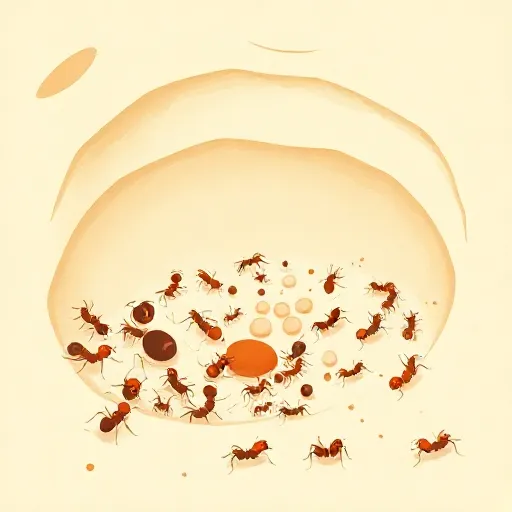
This elegantly explains one of nature’s most dramatic sacrifices: the sterile workers of ants, bees, and wasps. In many of these insects, a quirk of genetics called haplodiploidy makes sisters more closely related to each other (r = ¾) than a mother is to her daughters (r = ½). A female worker can get more of her genes into the next generation by helping her mother—the queen—produce many extra sisters than by having offspring of her own. Kin selection thus shows how complete sterility can evolve by natural selection.
Crucially, animals don’t have to do math or consciously recognize their relatives. A simple rule like “share food with anyone who lives in your nest” does the job, because nest-mates usually are relatives. (Cuckoos exploit exactly this by laying eggs in the nests of other birds, tricking them into feeding an unrelated chick.)
Kin selection doesn’t demand that genes rigidly control behavior; it only requires that genes influence behavior to some degree, which is true of almost every trait. And it doesn’t say animals are secretly calculating selfishly—it describes why a pattern of helping relatives can spread through a population over evolutionary time.
Returning Favors: Altruism as an Investment
Kin selection explains altruism among relatives, but sometimes animals help non‑relatives—even members of a different species. In 1971, Robert Trivers (born 1943) proposed reciprocal altruism: you help someone now because you expect they’ll help you later, like “I’ll scratch your back if you’ll scratch mine.”
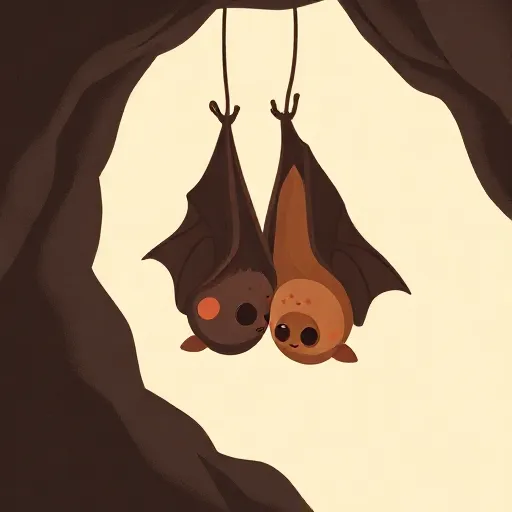
For this to work, individuals must meet repeatedly and recognize each other, so a cheat who takes favors without repaying can be punished by being denied future help. A famous illustration is the vampire bat. Vampire bats can starve if they go more than a couple of nights without a blood meal. Bats that found food will often regurgitate blood for roost-mates who came back hungry—especially bats that have shared with them in the past. By sacrificing a small amount now, they effectively insure themselves against future bad nights.
Another example swims on tropical reefs: tiny “cleaner” fish that pick parasites from the mouths and gills of large fish. It’s a win‑win—the big fish gets cleaned, the little fish gets a meal. But Trivers noticed that when a predator approaches, a large fish with a cleaner in its mouth will wait for the little fish to swim out before fleeing, instead of swallowing it and making a quick escape. The big fish treats the cleaner as a long‑term partner; the promise of a future cleaning is worth more than a single snack.
Reciprocal altruism is only altruistic in the short term. Over a lifetime, the helper gains more than it loses—so these behaviors don’t reduce an animal’s lifetime fitness. That’s why many biologists prefer to say that reciprocal altruism explains cooperation, not genuine biological altruism. Still, the mechanism is important: it shows that repeated interactions can turn self‑interest into something that looks a lot like loyalty.
Real Kindness vs. Genetic Strategy
Here’s a thought you might have: “If altruism is just genes looking after copies of themselves, isn’t it all fake? Don’t those theories take the altruism out of altruism?”
It’s a natural worry, but it mixes up two very different meanings of the word. Biological altruism is about fitness effects—how many offspring result. It’s silent about what an animal feels or intends. Ants and termites don’t have conscious plans at all, so it makes no sense to call their behavior “secretly selfish.” When a biologist says a gene “wants” to spread copies of itself, that’s a metaphor, not a little person with desires inside your cells.
For creatures that do have conscious intentions—like us—we can ask a different question: is the act done with the genuine aim of helping someone else? That’s psychological altruism, or “real” altruism in the everyday sense. Philosopher Elliott Sober (born 1952) has argued that biological evolution doesn’t force us to be psychological egoists—it could just as easily shape us to really care.
Imagine two parents. One genuinely loves her child and feels concern for the child’s well‑being. The other only pretends to care, faking affection because it’s useful. Sober points out that the genuinely caring parent would probably take better, more reliable care of her child—and that might lead to higher inclusive fitness. Natural selection could favor genes that build brains capable of real compassion, not just cold calculation.
So where does all this leave us? The evolution of altruism reveals that nature can paint kindness out of the raw material of self‑interest, without a designer and without magic. It doesn’t make kindness worthless; it shows how deeply cooperation and caring are woven into the fabric of life. Knowing why a monkey calls out or a bat shares blood doesn’t cancel the beauty of those acts—it gives you a new reason to notice them.
Think about it
- If a scientist could perfectly predict every kind act you’ll ever do, would it make the kindness less real? Why or why not?
- In a world where everyone’s fitness depended on helping only their relatives, would you be more likely to trust a stranger? What might push people to cooperate beyond their family?
- Hamilton’s rule doesn’t say animals are consciously following it—just that genes that follow its pattern tend to spread. Does this change how you think about the difference between “I help because I feel like it” and “I help because the gene that made me feel like it survived”?