
Louis Althusser and the Hidden Code Inside Marx’s Books
From Prisoner to Rebel Reader

In 1940 a young French soldier named Louis Althusser (1918–1990) was captured and spent the rest of World War II in a German prison camp. The camp was grim, but Althusser found something unexpected there: a feeling of shared struggle and a new interest in the ideas of Karl Marx (1818–1883). After the war he entered the elite École Normale Supérieure in Paris and joined the French Communist Party. For years he was a quiet, hard‑working teacher and party member. Then, in 1961, he fired a philosophical thunderbolt.
At the time, many French Marxists were returning to Marx’s earliest, most human‑centered writings. They argued those youthful pages held the real key to Marx’s philosophy. Althusser said that approach was a dead end. In his essay On the Young Marx he insisted that Marx’s early work was still soaked in old, ideological ideas borrowed from thinkers like Hegel and Feuerbach. If you wanted the real Marx, you had to stop treating every page as equally valuable. You needed a new way of reading.
Reading Between the Lines
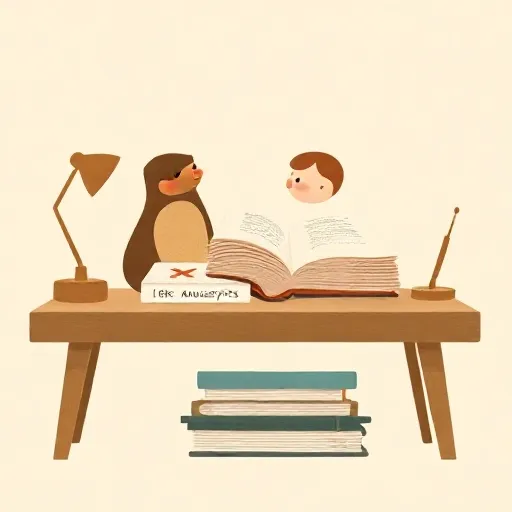
Althusser called his method a symptomatic reading. The word comes from medicine: a doctor looks at a symptom, like a fever, to find an invisible illness. In the same way, Althusser looked at gaps, silences, and contradictions in Marx’s mature works. He believed those symptoms pointed to a powerful but unspoken philosophical framework that Marx himself hadn’t fully put into words.
Why would a great thinker leave his best ideas unspoken? Althusser borrowed an idea from the philosopher Baruch Spinoza (1632–1677): every writer is trapped, at least partly, in the ideas of their time. Even a revolutionary like Marx couldn’t escape the leftover vocabulary of German idealism. So Althusser set out to disentangle the genuinely new, scientific concepts from the old, ideological ones.
The result was a dramatic claim. Around 1845, Althusser argued, Marx underwent an epistemological break—a sudden shift where ideological ideas were replaced by scientific ones. Before the break, Marx was a humanist critic. After it, he became the founder of a real science of history, which Althusser called Historical Materialism, and its philosophical backbone, Dialectical Materialism. The job of a Marxist philosopher was not to invent new opinions but to read carefully and make these hidden concepts visible.
Why History Has No Built‑in Ending

Many of Marx’s followers believed history had a direction. Feudalism would lead to capitalism, and capitalism would inevitably lead to socialism. Althusser rejected that guarantee. He said history is a process without a subject—there is no single boss (not the economy, not human will) driving everything forward along a fixed path.
To explain how societies actually work, he used the concept of structural causality. Imagine a huge, three‑dimensional mobile hanging from the ceiling. Every piece affects every other piece. You can’t say one string is the “real” cause of the whole thing’s movement. A society, Althusser argued, is made up of many practices—economic production, politics, family life, science, art, religion. Each practice transforms its own materials, and none simply causes the others in a one‑way chain.
This led him to the idea of overdetermination. Any event, like a revolution, is not caused by just one thing. It happens because many contradictory pressures pile up at once. Some parts of society may be racing ahead while others lag behind—what Althusser called uneven development. At any moment there is often a structure in dominance—maybe the economy, maybe religion—that pulls the other parts into a rough order. But that order is always temporary and never the necessary result of a cosmic plan. History, for Althusser, had no guaranteed happy ending.
Ideology: How We Learn Who We Are

If history has no built‑in destination, why do societies keep reproducing themselves so smoothly? Althusser answered with his theory of ideology. Ideology is not simply a set of political slogans. It is the background story that makes the world feel normal and makes your place in it feel natural.
In the 1970s he developed the famous idea of interpellation, or “hailing.” Picture a police officer shouting, “Hey, you!” You turn around. In that moment, Althusser said, you become a subject—you recognize yourself as the person being called. Society hails you all the time. When you walk into a classroom, a church, or a family dinner, you are given a role and expected to play it. These settings are Ideological State Apparatuses: schools, religious buildings, courts, media, and families that train you to see yourself a certain way and to accept the world as it is.
Most of what we think we freely choose, Althusser believed, is actually ideology pulling the strings. But he didn’t think we were completely trapped. In his writing on art, he noticed that some authentic works—like a disruptive play or a strange painting—could make you feel the distance between your usual view of the world and reality itself. That uneasy feeling can open a tiny space for criticism, and maybe even for change.
A Roll of the Dice
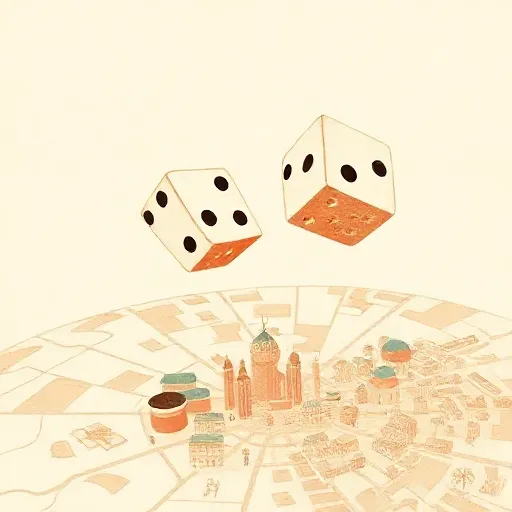
In his final years Althusser developed a position he called aleatory materialism, from the Latin word for “dice‑player.” He claimed there was a hidden tradition in philosophy that saw the world as the result of chance encounters, not iron laws. Material elements bump into each other. Sometimes they “take” and a new pattern—a new society, a new idea—is born. Sometimes they don’t, and the old world continues. Nothing had to happen the way it did.
For the philosopher, this means a modest but real power. You can’t predict the future or command it. But you can describe how things are, point out that they could be otherwise, and hope someone listens. If chance smiles, a different arrangement might take hold. Althusser’s own life was full of upheaval and deep pain. Yet his ideas linger wherever people ask whether the way things are is the only way they can be.
You know that feeling when you’re stuck inside an unfair rule or a system that seems bigger than you? Althusser would say the first job of thinking is to notice that rule is not a law of nature. It’s a product of many accidental collisions. And noticing that is, already, a small roll of the dice.
Think about it
- If most of what you believe about yourself is shaped by ideology, how could you ever tell the difference between a thought you really chose and one you were taught to have?
- Suppose history has no guaranteed direction. Does that make you feel more responsible for trying to fix things, or less?
- Imagine you discover a hidden meaning in a book that nobody else can see. What kind of evidence would you need to be sure it’s really there, and not just a story you’re telling yourself?