
Philosophy for Kids

Can You Be Responsible If You Couldn't Have Done Otherwise?

Imagine you’re playing a video game, and you come to a fork in the path. You choose to go left. A few minutes later, you find a treasure. Good for you, right? But what if you later discover that the game was rigged — the path to the right was actually blocked by an invisible wall you couldn’t see. You had to go left. There was no other option, even though you felt like you had chosen. Are you still responsible for finding the treasure? Should you get credit for it? Or does it matter that you couldn’t have done otherwise?

This is a question philosophers have been arguing about for a very long time. It comes down to something called the Principle of Alternative Possibilities, or PAP for short. Here’s the basic idea:

PAP: A person is morally responsible for what they did only if they could have done otherwise.

On the surface, this sounds pretty obvious. If you couldn’t have avoided doing something, how can you be blamed or praised for it? If someone grabbed your hand and forced you to hit another kid, you wouldn’t be blamed — you couldn’t have done otherwise. But is that always true? What if you wanted to hit them, and you did it for your own reasons, even though you also couldn’t have avoided it? Are you responsible then? Philosophers disagree sharply about this, and the debate touches on some of the deepest questions about freedom, control, and what it means to be a person.


Why This Matters

The stakes are surprisingly high. Here’s why.

First, if PAP is true, and if it turns out that nobody ever has real alternatives — if everything we do is forced by causes we can’t control — then nobody is ever morally responsible for anything. This could be true if the universe runs on deterministic laws (like a giant machine where every event causes the next), or if God already knows everything you’re going to do, or if your brain is wired by genetics and environment in ways you can’t escape. Philosophers call these “universal alternative-blockers.” If any of them are real, and PAP is true, then praise and blame are never justified. You can never truly deserve credit or blame for anything.

Second, PAP matters for how we think about the law. When someone is sleepwalking or hypnotized when they commit a crime, we usually say they’re not responsible — they couldn’t have done otherwise. The law agrees: you need a “voluntary act” to be guilty. But where do we draw the line? Does a childhood trauma that makes someone extremely angry count as blocking alternatives? What about an addiction? These are real questions that courts and philosophers still wrestle with.

Third, PAP is connected to something deeper about what it means to be a person. We’re both physical beings (our bodies follow the laws of nature) and moral beings (we make choices and are held accountable). How do these two sides of us fit together? PAP, if true, is one piece of that puzzle: it says our moral status depends on having a certain kind of power — the power to choose among real alternatives.


Arguments For PAP (Why It Seems Obvious)

The main reason people believe PAP is that it fits our everyday experience. Imagine someone with severe kleptomania — they can’t resist stealing, no matter how hard they try. We don’t blame them, because they couldn’t have done otherwise. Or picture a child who genuinely can’t control their temper yet. We cut them slack because they lack the ability to act differently. These cases make PAP feel natural: lack of alternatives = lack of responsibility.

There’s also a moral argument. Philosophers often say “ought implies can” — you can’t be obligated to do something that’s impossible for you. You’re not required to fly to the moon or cure cancer single-handedly, because you can’t. Now apply this to blame: If you’re blameworthy for doing something wrong, then you ought not to have done it. And if “ought implies can,” then you must have been able to avoid it. So blameworthiness requires alternatives. This argument has a limitation — it only seems to work for blame, not praise. When you do something good, you did what you should do, so “ought implies can” doesn’t give us an alternative.

Still, these arguments make PAP look very plausible. Many philosophers throughout history — including Aristotle and Thomas Aquinas — accepted something like it. But things get interesting when people started looking for counterexamples.


Arguments Against PAP (When You Can’t Do Otherwise But Seem Responsible Anyway)

The Irrelevance of Determinism

Here’s a strange observation: Most of us have no idea whether the universe is deterministic (where everything is caused by prior events) or not. Scientists haven’t settled this. But we go around praising and blaming people all the time. We don’t wait for the physics results before deciding whether your friend deserves credit for helping you with homework. This suggests that whether we actually have alternatives might not matter for our everyday judgments about responsibility. If PAP were true, we’d have to suspend all praise and blame until we knew whether determinism is real. But that seems absurd. So maybe PAP is wrong, and having alternatives isn’t actually required.

The Willing Addict and the Content Prisoner

Imagine a drug addict who is completely hooked — they truly cannot resist taking the drug. But suppose this particular addict doesn’t mind being addicted. They willingly take the drug, happily, for their own reasons. Are they responsible? It seems like maybe they are, even though they couldn’t have done otherwise. The compulsion is there, but it’s not what’s driving them in this case.

Here’s another example, from the philosopher John Locke. Picture a man who falls asleep and is carried into a room with someone he desperately wants to talk to. When he wakes up, he finds himself in this wonderful company and stays — happily, willingly. But the door is locked. He can’t leave. Is he responsible for staying? He’s there because he wants to be, but he also couldn’t have left. The example feels puzzling, and philosophers have argued about whether it really refutes PAP.

Volitional Necessity: Luther’s “Here I Stand”

Perhaps the most famous counterexample comes from Martin Luther. When ordered to take back his writings, Luther reportedly said, “Here I stand. I can do no other.” His conscience compelled him; he truly felt he couldn’t do otherwise. Yet we admire him for it. In fact, the fact that he couldn’t do otherwise might even increase our admiration — it shows how deeply committed he was to his principles.

If PAP were true, Luther wouldn’t be responsible for his refusal. But that seems wrong. We praise people for standing up for what they believe, even — maybe especially — when they feel they have no choice.

Defenders of PAP have a response here. They say that even if Luther couldn’t do otherwise at the moment, his past choices built the character that made him that way. He had alternatives earlier in life, when he was developing his values and commitments. So we can trace his responsibility back to those earlier choices. This is called “tracing,” and it’s a way of saving PAP by adding a historical clause: You’re responsible for what you do if you either could have done otherwise at the time, or your inability to do otherwise is the result of earlier choices where you could have done otherwise.

This seems to handle Luther and the willing addict. But it leads to a new challenge: Can we find cases where someone is responsible, couldn’t have done otherwise, and their inability can’t be traced back to earlier choices with alternatives?


Frankfurt-Style Cases: The Most Famous Challenge

This is where things get really interesting. In 1969, philosopher Harry Frankfurt created a kind of thought experiment designed to refute PAP directly. These are now called “Frankfurt-Style Cases” (FSCs).

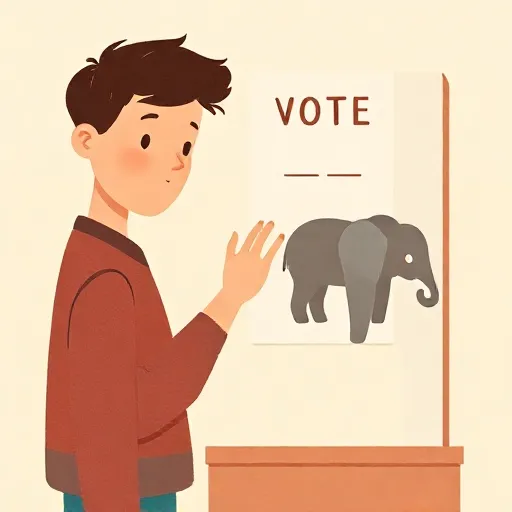
Here’s a classic version: Imagine a neurosurgeon named Black. He secretly implants a device in Jones’s brain that monitors his thoughts. Black wants Jones to vote for a particular candidate, let’s say the Republican. The device is programmed so that:

  • If Jones shows any sign of deciding to vote for the Democrat, the device will intervene and force him to choose the Republican.
  • If Jones decides on his own to vote for the Republican, the device does nothing — it just watches.

Now suppose Jones, on his own, for his own reasons, decides to vote for the Republican. The device never activates. Jones votes as he wanted to.

Here’s the key question: Is Jones morally responsible for voting for the Republican? Most people’s gut reaction is yes — he did it on his own, for his own reasons, just like a normal voter. And yet, he couldn’t have done otherwise. If he had tried to vote for the Democrat, the device would have forced him to vote Republican anyway. His action was inevitable, but the factor that made it inevitable (the device) played no role in actually causing it.

If Jones is responsible, then PAP is false. We have a case where someone is responsible despite lacking alternatives.

Frankfurt’s examples have generated an enormous amount of debate. Critics have raised many objections:

The “General Abilities” Objection: Maybe Jones did have an alternative — just not in the specific circumstances. He had the general ability to vote for the Democrat; he just couldn’t exercise it right then because of Black’s device. And perhaps general abilities are what matter for responsibility. This is a bit like saying a skilled pianist who is handcuffed can still play the piano in one sense (she has the skill), even if she can’t do it right now. Maybe PAP should be about general abilities, not specific circumstances.

The “Flicker of Freedom” Objection: Maybe Jones still had a tiny alternative. For instance, he could have tried to decide for the Democrat, even though the device would have blocked it. Or he could have voted for the Republican on his own as opposed to being forced — and that’s a real difference. These “flickers of freedom” might be enough to satisfy PAP.

The Dilemma Objection: This is a more technical criticism. It says that FSCs either involve a prior sign that causes Jones’s choice (in which case Jones might not be responsible because the sign determines everything) OR the sign is indeterminate (in which case Jones actually could have chosen otherwise, contrary to what the example claims). Either way, the example fails.

Frankfurt’s defenders have responses to each of these objections, and the debate continues.


What If PAP Is False?

Suppose for a moment that PAP is wrong — that having alternatives isn’t necessary for responsibility. What changes?

First, this is good news for people who believe in “compatibilism” — the view that determinism and responsibility can coexist. If PAP is false, then even if determinism blocks all your alternatives, you might still be responsible. You don’t need the power to do otherwise; you just need to act for your own reasons, in the right way.

Second, philosophers have started looking for what does matter for responsibility, if not alternatives. Some focus on whether your actions come from who you really are — whether you “identify” with your motives. Others focus on whether your decision-making process is “reasons-responsive” — whether it can respond to good reasons, even if it doesn’t in the actual case. These approaches try to explain what makes someone responsible without requiring alternatives.

Third, some philosophers argue that even if PAP is false, determinism still threatens responsibility — but for a different reason. They say determinism makes you not the source of your actions; the real source is in the distant past. You didn’t create yourself, so you can’t be ultimately responsible. This is “source incompatibilism,” and it sidesteps the debate about alternatives entirely.


Still A Live Question

The debate about PAP is far from settled. Philosophers keep producing new examples, new objections, and new refinements. Some believe PAP is obviously true and FSCs fail. Others believe FSCs have decisively refuted PAP. Still others think the truth is somewhere in between — maybe PAP is true for some things (like omissions — not doing something) but false for others (like actions).

What seems clear is that the connection between having alternatives and being responsible is more complicated than it first appears. Our everyday judgments pull in different directions. We want to say that people who can’t help themselves aren’t responsible. But we also want to praise people like Luther who act from deep conviction, even when they feel they have no choice.


Key Terms

TermWhat it does in the debate
PAP (Principle of Alternative Possibilities)The claim that responsibility requires being able to do otherwise
Frankfurt-Style Case (FSC)A thought experiment designed to show that someone can be responsible even without alternatives
TracingA way to save PAP by saying responsibility can come from past choices where you did have alternatives
DeterminismThe idea that everything that happens is caused by prior events, which would block all alternatives
General abilityA skill or capacity you have, even if you can’t use it right now
CompatibilismThe view that determinism and responsibility can both be true
Guidance controlA kind of control over your actions that doesn’t require alternatives

Key People

  • Harry Frankfurt (20th century American philosopher) — Created the famous “Frankfurt-Style Cases” that challenged PAP and argued that moral responsibility doesn’t require alternatives.
  • P.F. Strawson (20th century British philosopher) — Argued that moral responsibility is about our emotional responses to each other (like resentment and gratitude), not about metaphysical freedom.
  • John Locke (17th century English philosopher) — Gave the example of the “content prisoner” that has been used in debates about PAP for centuries.
  • Martin Luther (16th century German theologian) — His “Here I stand” moment has become a classic example of someone who couldn’t do otherwise but is still praised.

Things to Think About

  1. Think of a time when you felt like you had to do something — maybe you couldn’t bring yourself to cheat on a test, or you felt compelled to help a friend. Were you still responsible for what you did? Does it matter whether you wanted to do it?

  2. If someone bullies you because they were bullied themselves, are they less responsible? The bullying might have shaped their character so deeply that they can’t help it. But if we accept that as an excuse, where do we draw the line?

  3. Frankfurt’s examples use technology like brain implants. How would you design a real-world experiment to test whether people think someone is responsible when they couldn’t have done otherwise? What would be the hardest part of setting it up?

  4. Suppose PAP is false and determinism is true. Should we still punish criminals? If they couldn’t have done otherwise, is punishment ever justified — or should we only try to protect society and rehabilitate people?


Where This Shows Up

  • In courtrooms: Judges and juries struggle with whether defendants who had difficult backgrounds or mental conditions could have done otherwise. The insanity defense and the concept of “diminished capacity” directly involve questions about alternatives.

  • In parenting: When you punish or praise a child, you’re implicitly making judgments about whether they could have acted differently. Different parenting philosophies make different assumptions about this.

  • In debates about addiction: There’s a real disagreement about whether addicts are responsible for their drug use. Some say addiction is a brain disease that removes alternatives; others say addicts still have choices. The philosophy of PAP is at the heart of this debate.

  • In AI and robotics: As we build autonomous systems, we have to decide what it means for a machine to be “responsible” for its actions. Do they need alternatives? Can they have them? These philosophical questions are becoming practical engineering questions.