Could Space and Time Give Birth to Everything—Even God?
A Universe That Grows: The Big Idea
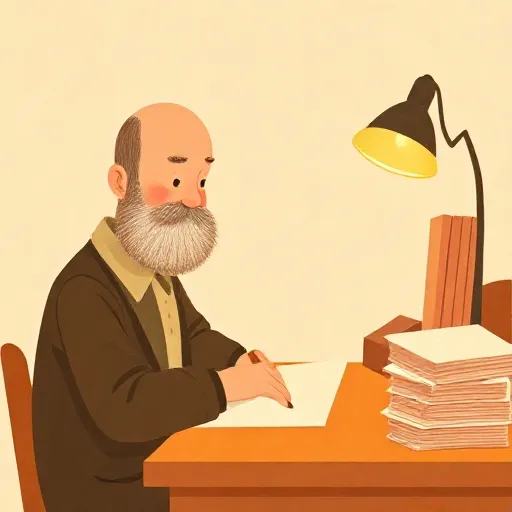
Samuel Alexander (1859–1938) felt small. It was just after the First World War, and this quiet professor in Manchester was trying to write a book that would explain everything—why rocks exist, why minds think, why we feel beauty, and even what God is. He had been working on it for years, and the task often felt too big for one person. But he finished it anyway. In 1920, his book Space, Time, and Deity made a claim so startling that philosophers are still arguing about it: God does not exist yet. The universe is still making God.
This was not a rejection of religion. It was a whole new picture of reality. Alexander believed that everything you can point to—your desk, your dog, your own thoughts—is built from a single, invisible fabric: space-time. He argued that space and time are not just the stage where things happen. They are the stuff things are made of, a vast, moving whole. And as this fabric twists into more complicated patterns, completely new things leap into being. Matter appears. Then life. Then minds. And someday, Alexander predicted, a divine quality he called deity will emerge. We stand on the ladder of existence, looking up at a rung that hasn’t been built yet.
The Fabric of Everything: Space and Time as One
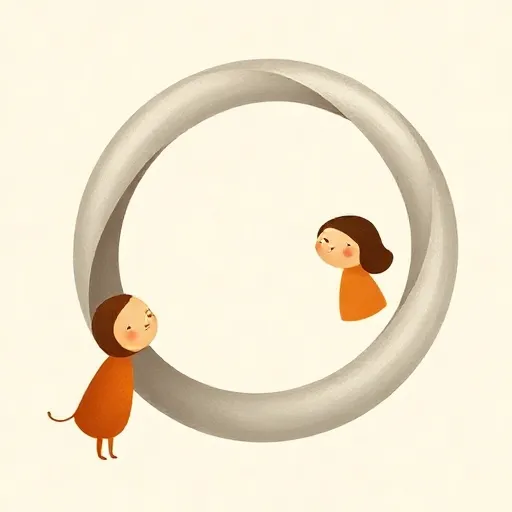
If someone asked you what the universe is made of, you might say “atoms” or “energy.” Alexander gave a stranger answer: it is made of space-time. But how can empty space and passing time make anything?
Alexander insisted that space and time are not two separate things. They are a single, four-dimensional whole that he called Motion (with a capital M). To see why they must be united, try this thought experiment. Imagine a universe that had time but no space. It would be a ticking clock with nothing to tick for—a featureless, empty now. Now imagine a universe with space but no time. It would be a frozen snapshot, a blankness where nothing ever changes or moves. Separately, space and time are incomplete. Together, they become a living, flowing reality where things can happen. Alexander’s own words captured the idea: without each other, time would be “a mere now” and space would be “a mere blank.” All the motion in the universe—planets spinning, hearts beating, thoughts flickering—is just space-time doing its work.
For Alexander, space-time is not a container that holds objects. Every rock, every tree, every thought is a grouping of space-time itself. The simplest points of motion are like knots in a cosmic thread. This means the foundation of everything is not dead stuff—it is restless, pulsing activity.
When Complexity Sparks Something New: Emergence
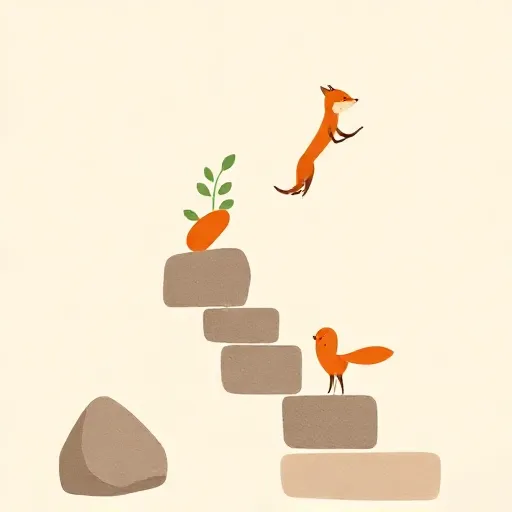
If the world is just space-time, where do colors, thoughts, and feelings come from? Alexander’s answer is emergence. When space-time knots get complex enough, something genuinely new pops out that wasn’t there before.
Think of water. Hydrogen and oxygen are gases with no wetness at all. But when they combine in just the right pattern, a new quality—wetness—appears. Wetness is real, not an illusion, even though it cannot be found in either atom alone. Alexander saw the universe as a ladder of such surprises. When space-time motion grew intricate enough, matter emerged. Later, from complex matter, life emerged. And when living bodies became complex enough, minds emerged—a new quality as real as wetness or color.
Alexander loved to compare the mind to color. Light vibrations are not themselves colored, but when they strike a surface, color appears. Similarly, your brain’s physical motions are not themselves thoughts, but when they reach a certain pitch of complexity, conscious experience emerges. Mind is not a ghost stuck inside a machine. It is the universe learning to feel itself. This was a deeply naturalistic view: thoughts are part of nature, not something floating above it.
The God That Isn’t Yet: Nisus and the Future
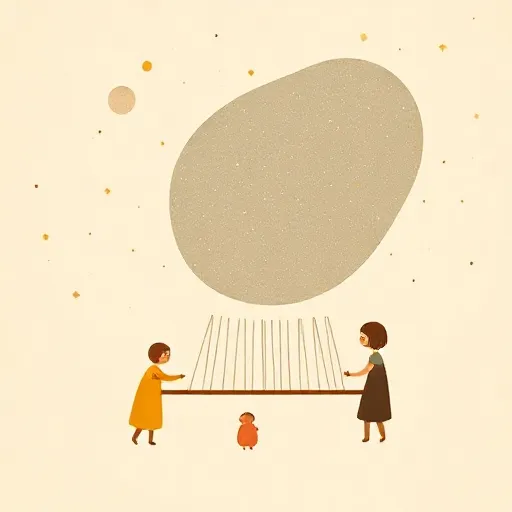
Why does the ladder keep climbing? Alexander believed space-time has an inner push, a restless tendency to reach toward higher levels. He borrowed a Latin word for this: nisus (pronounced NYE-suss), meaning a striving or effort. Spacetime is not just pointlessly churning; it contains a faint directionality, like a plant leaning toward the sun.
This nisus has already carried the universe from bare motion to matter, life, and mind. Alexander argued it will not stop there. The next quality to emerge, he thought, is deity—a level of perfection and wholeness that we can barely imagine. The whole world, when it finally possesses this quality, would be what people call God. But since the process is unfinished, God does not fully exist yet. There is only the universe on its long climb toward becoming divine.
One surprising advantage of this idea is that it softens an old problem. If God created the world from the start, why is there so much suffering? Alexander’s reply was simple: God does not create the world; the world creates God. The pain along the way comes from the long, messy struggle of emergence, not from a divine plan. We are the ones responsible for our choices, not a finished deity.
Alexander later discovered that his system echoed the 17th-century philosopher Baruch Spinoza (1632–1677), who also believed in one single substance that is both nature and God. Alexander’s twist was to plunge time into the heart of it. For him, reality is not timeless perfection—it is a growing, striving thing.
Why This Still Matters to You

If Alexander was right, the universe is not a finished machine. It is more like a story still being written. And you are one of the writers.
He applied the same emergence idea to values—beauty, truth, goodness. These, he argued, are not handed down from another realm. They are human constructions that grew out of our deepest instincts, just as beavers build dams and bees build hives. Our love of beauty grew from the impulse to make and shape things. Our sense of right and wrong grew from our sociality, the same urge that keeps wolf packs and bee societies working together. Even morality, he said, is a kind of art. That doesn’t make values fake. It makes them ours—things we craft and care for, rather than rules we can’t touch.
If God is still in the making, and values are things we build, then your choices matter in a cosmic way. You aren’t just moving through a world that was finished long before you arrived. You are adding a stitch to a tapestry that isn’t done yet. The future quality of the universe—perhaps even its deity—depends partly on what we do together. Alexander’s philosophy turns us all into participants in the longest, biggest construction project imaginable.
Think about it
- If the universe is still making itself, do we have more responsibility for how things turn out, or does it just mean things will happen anyway?
- Alexander thought minds emerge from brains when they get complex enough. Do you think a computer program could ever develop a mind, or is there something special about living brains?
- If beauty and goodness are human inventions, does that make them less real than gravity? Can you live your life as if they are real anyway?