Your Brain, Your Soul, and the Democracy Inside You
A Book That Started with a Puzzle
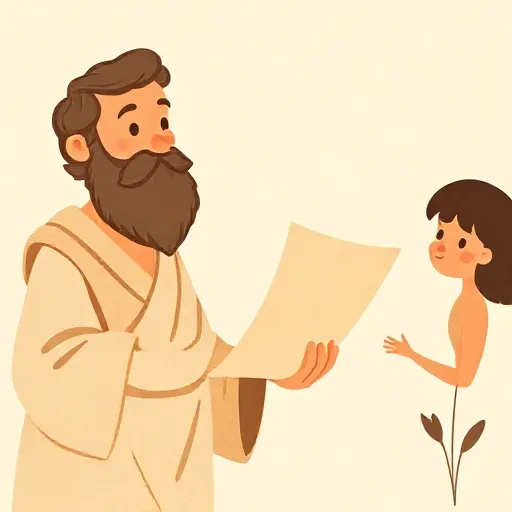
Around 500 BCE, in the Greek city of Croton in southern Italy, a man named Alcmaeon (active around 500 BCE) wrote a book. He was probably a physician and a philosopher—back then those roles often overlapped. His book began with a bold sentence: he addressed it to three men, Brotinus, Leon, and Bathyllus. We know almost nothing about those listeners. Some ancient writers thought they were followers of Pythagoras, the famous mathematician and mystic who also lived in Croton. But Alcmaeon himself didn’t seem to belong to any school. He was an independent thinker, and what he said next was startling: human beings can’t have certain knowledge about invisible things. That didn’t stop him. He went on to argue that the brain is the command center of the body, that the soul might be immortal, and that health works like a tiny political system inside you. His ideas were so original that Aristotle later wrote an entire book responding to him.
The Brain Takes Charge
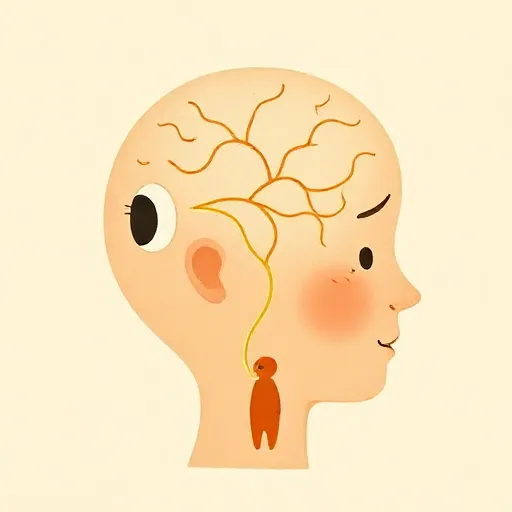
Alcmaeon was the first Greek thinker to claim that the brain is the organ of thought and sensation. Before him, many people believed the heart was where thinking happened. Alcmaeon looked at the body differently. He noticed that the eyes, ears, nose, and tongue are all on the head. He thought there must be hidden passages—he called them poroi, or channels—connecting each sense organ to the brain. When the brain is shaken or damaged, the senses shut down. That, he said, was proof that everything flows to the brain.
He also drew a sharp line between animals and humans. Animals have sense perception, but only humans have understanding (the Greek word is suniēmi, which means “bringing together”). Alcmaeon probably meant that humans can combine what they see, hear, and smell into a single picture of the world, and then make judgments and inferences from it. Animals, even though they have brains, can’t do that kind of thing. This idea—that sensation is one thing and understanding is another—was a huge step. It made the human mind a topic for investigation, not just a mystery.
The First Argument for an Immortal Soul
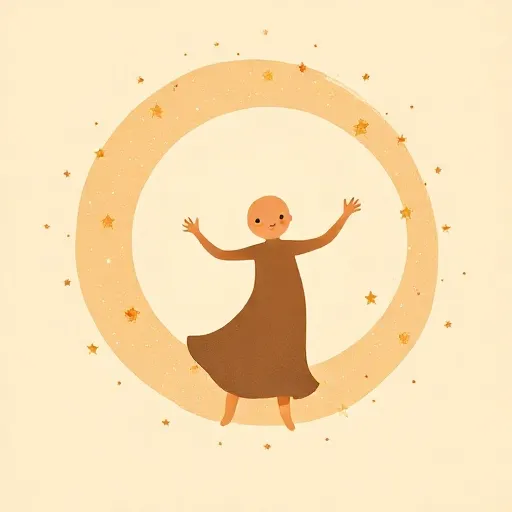
Alcmaeon didn’t stop at the brain. He also tried to prove that the soul is immortal. His argument was the first of its kind that we know of. He noticed that the heavenly bodies—the sun, moon, and stars—move in endless circles. Ancient Greeks considered them divine. Alcmaeon thought the soul is always in motion too, just like those divine things. If something is always in motion, he argued, it must be immortal. So the human soul, constantly moving, must share in that immortality.
This wasn’t just a guess. It was a chain of reasoning. Later, Plato would develop a much more famous argument for the soul’s immortality that sounds a lot like Alcmaeon’s. But Alcmaeon left us a puzzling extra thought: “Human beings perish because they are not able to join their beginning to their end.” Possibly he meant that human life, with its birth and old age, isn’t a perfect circle like the life of the stars. The soul may be immortal, but the body eventually fails. We don’t know what he imagined the soul does after death—whether it joined the stars or began another life. What matters is that he turned the soul into something you could argue about, not just something you had to accept on faith.
Health as a Democracy of Opposites
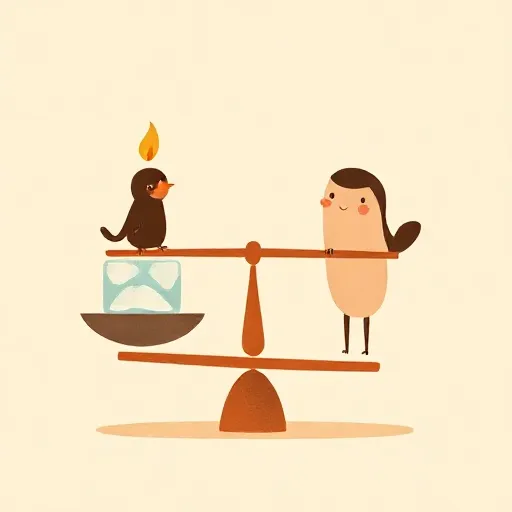
Alcmaeon explained health and sickness with a metaphor from politics. He called health isonomia, which means “equal rights” or “equality before the law.” In a healthy body, he said, the different powers—wet and dry, cold and hot, bitter and sweet—all have an equal say. No single power dominates. Disease happens when “monarchy” takes over. The Greek word monarchia means “rule by one.” If one quality, like excessive heat or cold, grabs too much power, the body falls sick.
This was a radical way to think. It wasn’t just a description; it was a value judgment. He implied that the body works best when it is fair and balanced, almost like a democratic city. We don’t know what Alcmaeon’s own political opinions were, but the language he chose—if he really used those words—was strongly connected to the idea of democracy, which was a new and exciting experiment in Greece at the time. Whether he was praising democracy or just borrowing its vocabulary, he turned the human body into a small political arena where health means avoiding a tyrant.
How Can We Know the Invisible?
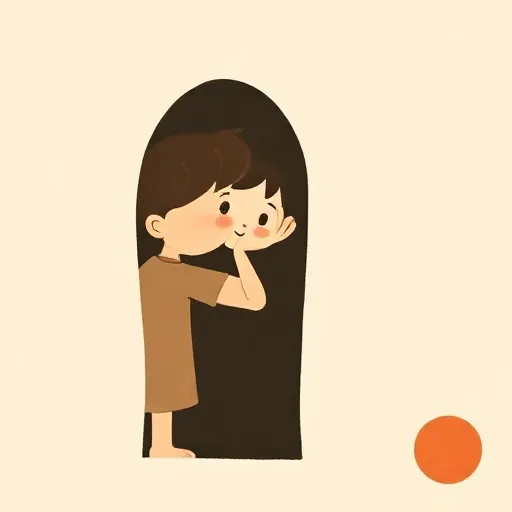
The opening of Alcmaeon’s book directly faced a problem: how can humans know about things they cannot see or touch? He said that the gods have clarity about “things that are not perceptible.” Human beings, on the other hand, can only make judgments from signs. The Greek word he used for this process is tekmairesthai—drawing conclusions from evidence, like a detective. He wasn’t a total skeptic. He didn’t say we know nothing. He just said that when we can’t observe something directly, we have to rely on clever inference.
This fits his own method. He talked about channels inside the skull without ever dissecting a human brain (he probably only excised an animal’s eyeball once). He described the balance of invisible powers inside the body. He even admitted that he couldn’t be sure which part of an embryo formed first—nobody can see inside the womb. But that didn’t stop him from making his best guess: the brain, the organ that controls us in life, probably develops first. His approach is recognizably scientific: start from what you can perceive, and then reason carefully toward what you can’t.
Why a Half-Forgotten Thinker Still Matters
Alcmaeon didn’t leave us a full system or a polished philosophy. His book is lost. All we have are a few sentences quoted by later writers, plus reports that often disagree. Yet what remains is astonishingly modern. He put the brain at the center of mental life, a view that neuroscience confirms every day. He turned health into a problem of balance, which echoes in everything from nutrition to mental well-being. He wondered about the limits of human knowledge, a question you might face every time you can’t be completely sure about someone else’s feelings or about how a machine works. And he raised the possibility that something about you—your consciousness, your soul—might not be strictly physical.
Right now, you are using a brain that, in a way, is still trying to understand itself. Alcmaeon was one of the first people in history to make that attempt explicit. He reminds us that you don’t need a laboratory full of gadgets to ask deep questions. You only need curiosity and the courage to admit when you’re guessing.
Think about it
- If your brain is what thinks, are “you” just your brain, or is there something else? What would Alcmaeon’s soul add to the picture?
- Imagine your body as a city where different needs—hunger, rest, excitement—compete for power. Would you rather it be run like a democracy or a monarchy? Why?
- Alcmaeon thought we can only guess about things we can’t see. Can you think of something today that science still knows very little about, even though it affects you every day? What makes it so hard to know?