Can You Boil a Religion Down to Just Three Beliefs?
The Debate in Tortosa, 1413

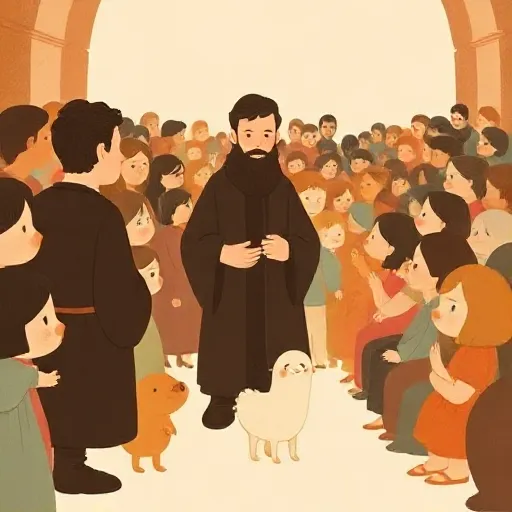
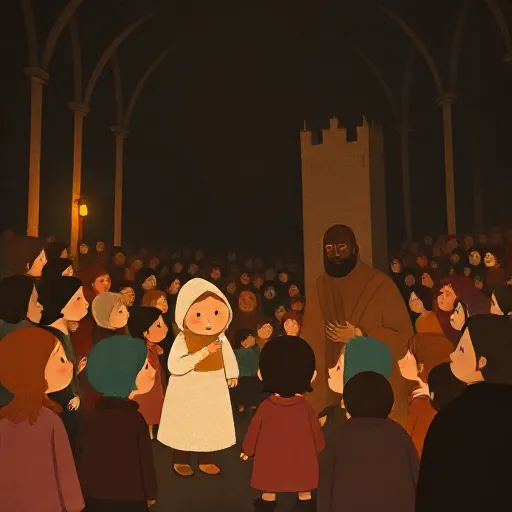
It is 1413 in the Spanish town of Tortosa. A rabbi named Joseph Albo (before 1380–around 1444) steps forward to speak for his community. Facing him are Christian authorities and a former Jew who now attacks Judaism. The whole event is a forced public debate aimed at proving Christianity superior. Albo knows the pressure: many Jews are being pushed to convert or face violence. He argues for hours, trying to hold onto what matters most. That tension stayed with him. About a dozen years later, Albo finished a book that would try to settle a huge question: when your faith is under attack, what beliefs can you not afford to give up?
Why a New List of Principles?

Long before Albo, the great Jewish thinker Maimonides (1135–1204) had listed thirteen principles of faith — essential beliefs every Jew should hold. Albo admired Maimonides but thought his list had serious problems. For one thing, when he looked around at his own time, he saw that many Jews who tried to follow all thirteen were still crumbling under pressure and converting. Maybe the list itself wasn’t doing its job. And Albo felt Maimonides had never really explained why these particular beliefs, and not others, made the cut.
So Albo set out to rethink the whole idea of “principles” from the ground up. He asked: what are the absolute minimum beliefs without which a system of divine law — a law given by God — makes no sense at all? His answer was three. First, the existence of God. Second, the divine origin of the Torah (that the law really comes from God). Third, reward and punishment (that our actions matter to God and have consequences). Everything else, he argued, is built on these.
Albo didn’t stop there. He organized belief into three levels. The three big ones he called principles. Deny any of them, and you had stepped outside the divine law entirely — you were a heretic. Next came eight roots, which spelled out what each principle meant in more detail (God is one, God has no body, God’s knowledge is real, prophecy happens, etc.). Deny a root, and you were also a heretic. Finally came six branches — beliefs like creation out of nothing, the resurrection of the dead, and the coming of a Messiah. Albo said every believer should accept these, but rejecting them wasn’t heresy. It was a mistake that required correction, not a reason to be cast out. Even more strikingly, Albo wrote that someone who sincerely misunderstood a principle because of mistaken reasoning was not a heretic. They were still among the faithful. For him, intent mattered enormously.
Divine Law, Human-Made Law, and the Law Written in Us

Albo didn’t just list beliefs. He stepped back and asked what “law” even means when we talk about religion. He distinguished three types. Divine law, like the Torah, comes from divine revelation. Conventional law is something human beings agree on to keep society running — traffic rules, tax codes, the rules of a guild. Natural law is a set of basic moral truths that any person can recognize without being told: don’t steal, don’t murder, treat people fairly.
This last idea was unusual for a Jewish thinker of his time. Albo was one of the first to discuss natural law explicitly, picking up ideas from the Christian theologian Thomas Aquinas. But scholars disagree about how much weight he actually gave it. Most think he mentioned natural law mainly to round out his picture, not because it did heavy lifting in his argument.
A more pressing question for Albo was: if both Judaism and Christianity claim to be divine law, how can you tell which one really is? His criteria were simple. First, the true divine law will never demand belief in something that contradicts the three core principles. Second, it will provide undeniable proof that its messenger is trustworthy. For Albo, Christianity failed the first test because some of its doctrines (like the Trinity) conflicted with the root belief that God is absolutely one. Notice what he was not doing: he wasn’t using philosophy to prove Judaism true. He used it only to disqualify a competitor whose beliefs, he thought, broke basic logical rules. Philosophy for him was a negative tool, not a positive proof.
Walking the Tightrope Between Knowing and Not Knowing God

When Albo turned to describe God’s nature, he found himself pulled in two directions. His teacher, Hasdai Crescas, thought we could speak about God using positive descriptions: God is good, God is loving, and so on. But Maimonides had argued for a strict negative theology: we can only say what God is not — not limited, not bodily, not changeable — because human words just don’t fit the divine.
Albo’s book, Sefer ha-Ikkarim (Book of Principles), seems to say both things in different places. Sometimes he sounds like Maimonides, insisting that God’s attributes are all negative. Other times he sounds like Crescas, treating divine attributes as real and positive. Scholars have argued about this for over a century. Some see a messy, eclectic thinker who couldn’t make up his mind. Others suspect Albo was writing in layers — an outer, traditional layer for ordinary readers, and an inner, hidden layer for careful readers who could spot the contradictions. This esoteric writing, the argument goes, let him protect his private views while appearing to toe the official line. Either way, the tension shows a philosopher who felt the pull of both clarity and mystery and refused to pretend the tension wasn’t there.
What Makes a Life Truly Perfect?

Albo also tackled a deeply personal question: what does a perfect human life look like? Rationalist Jewish philosophers often said it depends on how much you understand — the more you grasp with your intellect, the more perfect you become. Albo pushed back hard. In large parts of his book, he insisted that human perfection depends on actually doing the commandments of the Torah, not just thinking about them. Worship through action mattered.
But again, he didn’t stick to one line. Elsewhere he said that awareness and intention counted more than the deed itself. And in his discussion of fear and love of God, he placed love at the very top — and love, for him, was a matter of the mind. The more you truly know God, the more you love. So in the end, the intellect crept back in. Some scholars see these swings as more evidence of esoteric writing; others call them a practical necessity: Albo knew that different audiences needed to hear different emphases.
On prophecy, Albo was clear about one thing: God chooses whom to inspire, and the goal is always to guide people toward the commandments. He held that Moses’ prophecy was supreme because it came directly to his intellect, without the imagination getting in the way — so its content was beyond doubt. This wasn’t just theological detail. If Moses’ prophecy was the most reliable, then the law he delivered was the true divine law. Albo was still fighting the debate from Tortosa.
Why Albo’s Three Beliefs Still Echo Today

Albo’s book didn’t stay on a shelf gathering dust. It was printed in 1485, one of the first works of Jewish philosophy on the press. Later thinkers like Baruch Spinoza and Moses Mendelssohn wrestled with it. Christian theologians read it too. Even now, his project raises live questions.
Every tradition, religious or not, has to decide what’s non-negotiable and what’s up for discussion. In a family, in a school, in a country — you inherit a set of core ideas. But which ones can you not let go of without it becoming something else entirely? Albo’s answer was three. Your list might look different. The value of his work isn’t in the final number. It’s in the act of asking: what must be true for this whole way of living to make sense? And if someone gets it wrong while genuinely trying to get it right, are they really an outsider? Albo’s surprising “no” to that last question is perhaps his most humane move.
Think about it
- If you had to pick only three things your whole worldview depended on, what would they be? Why those and not others?
- Albo said that a person who accidentally misunderstands a core belief is not a heretic, but still faithful. Is a sincere mistake ever just as serious as a deliberate lie, or does intent change everything?
- Could a divine law change over time, or must its absolute core stay fixed forever? What would Albo’s principles-and-branches model suggest?