Can You Be a Scientist and a Saint? Albert the Great’s Big Experiment
The Big Plan: A Guide to Everything
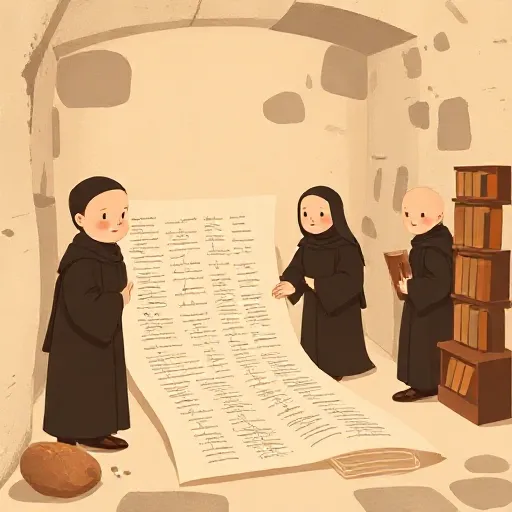
In the year 1251, a 51-year-old German friar named Albert sat down to start a colossal task. He was going to explain every book of natural science written by the ancient Greek philosopher Aristotle (384–322 BCE) — and then write the missing books himself. He wanted his fellow Dominican brothers to understand how the physical world works, from falling rocks to the stars above, all while giving glory to God. Albert (c. 1200–1280) didn’t just study philosophy. He aimed to make all of it clear and useful for Christian students. This was the beginning of one of the most ambitious philosophical projects the Middle Ages had ever seen.
Albert was born around 1200 to a noble family in Lauingen, in what is now Germany. As a young man he studied at the University of Padua, where he joined the Dominican order of friars. After years of teaching in convents, he was sent to the University of Paris, the intellectual capital of Europe. There he became a Master of Theology and quickly gained a reputation as a razor-sharp teacher. In 1248 he was sent to Cologne to found a new school. He brought along a brilliant young Italian student he had met in Paris: Thomas Aquinas (1225–1274), who would one day become even more famous than his teacher.
But Albert’s real adventure began when he decided to write a series of paraphrase commentaries — books that would walk through Aristotle’s thought step by step, without quoting him directly, and fill in any gaps. His goal? To satisfy the brothers who kept begging him for a complete, trustworthy guide to natural science. And that was just the start. Soon Albert was writing commentaries on logic, mathematics, ethics, and metaphysics (the study of being itself). He even tackled works that he believed — mistakenly — were written by Aristotle, such as the mysterious Book of Causes. No one in Western Europe had ever attempted anything so enormous, and Albert knew it.
Why Aristotle Was Dangerous (and Why Albert Loved Him)

To understand how bold Albert was, you have to imagine the world he lived in. For centuries, the Christian West had relied mainly on the Bible, the Church Fathers, and a limited collection of ancient writings to think about big questions. Then, in the twelfth and thirteenth centuries, a wave of new books arrived — many of them lost works of Aristotle, often accompanied by brilliant commentaries by Muslim and Jewish philosophers. These texts were exciting, but they raised hard questions. Aristotle explained the world without mentioning a creator who made it from nothing. He seemed to think the universe had always existed. He taught that the soul was the form of the body — but did that mean it died with the body? Some church leaders worried that studying Aristotle would corrupt Christian minds.
Albert refused to panic. He believed that reason and faith could be friends, not enemies. He called Aristotle the greatest authority in philosophy, just as Augustine (354–430) was the greatest authority in Christian teaching. Albert was convinced that if you read Aristotle carefully, and filtered his ideas through the light of reason, you would find profound truths about the world — truths that ultimately pointed toward God. He didn’t agree with everything Aristotle said, but he thought the philosopher was right far more often than he was wrong. To help his students, Albert also leaned on thinkers from the Islamic world, especially Avicenna (Ibn Sina, 980–1037) and Averroes (Ibn Rushd, 1126–1198). He saw them as completing Aristotle’s project, not undermining it.
Albert also turned to a mysterious Christian writer called Pseudo-Dionysius (writing around 500 CE), and to the Book of Causes, which he wrongly thought came from Aristotle. Those works emphasized that all reality flows out from God and eventually returns to Him — a grand cycle of exitus (going out) and reditus (returning). Albert wove this vision into his own thinking, seeing Aristotle’s physics and biology as describing the middle part: our concrete, changing world. That strategy allowed him to present ancient Greek science and Christian spirituality as two pieces of one big picture. Not everyone was convinced, then or now, but Albert’s attempt was a milestone.
Getting Your Hands Dirty: Albert the Scientist

Albert didn’t just sit in a library. He loved getting his hands on the physical world. In his view, natural philosophy — what we would call science — is the study of mobile body, that is, everything in the universe that can change: plants, animals, stars, rocks, even the human body. To know these things, you have to trust your senses. Pure reasoning isn’t enough; you have to go out and look.
Albert followed Aristotle in thinking that every physical thing is made up of two principles: matter (the stuff that something is made of, which is pure potential) and form (the organizing pattern that makes a thing what it actually is). This pair, together with privation (the absence of a form that could be there), explains every change in the natural world — falling, growing, heating, even birth and death. Albert called this view hylomorphism (from the Greek words for “matter” and “form”), and he used it everywhere: in his explanations of how an acorn becomes an oak, how a rock falls, even how a soul makes a body alive.
But Albert also paid close attention to the messy details. He wrote long treatises on minerals, plants, and animals. He described bees, elephants, and comets. He often reported his own observations, like how a certain flower opened or how a falcon behaved. Sometimes he even tested things — for instance, by experimenting with plants to see what happened when you changed their conditions. He wasn’t doing modern laboratory science, and he didn’t use mathematics the way a physicist today would. Still, his respect for experience and his curiosity about the world’s smallest parts made him stand out. Centuries later, the Catholic Church would name him the patron saint of natural scientists.
The Invisible Soul: A Journey Upward

How do you study something you can’t see? That was the puzzle of the soul. Albert put the study of the soul inside natural philosophy, because the soul is the principle of life in a living body. But the human soul is special. Through careful reasoning, he argued that the intellect — the part of us that understands universal concepts — must be immaterial. After all, your mind can grasp what a triangle is, not just this or that drawing of one. And it can understand things like justice and nothingness, which have no physical shape. If the intellect were made of matter, Albert thought, it couldn’t do these things. So the intellect cannot die when the body dies. The soul is immortal.
Albert also believed the intellect has a unique power: it can know itself. Whenever you think about a tree or feel afraid, you also experience yourself thinking and feeling. That inner experience gives you a special window into your own soul. By reflecting on the way your mind works, you can catch a dim glimpse of higher, purely intellectual beings — separate substances like angels, and ultimately God. For Albert, this was the point where natural philosophy starts to turn into metaphysics, the study of being as being. The soul becomes a bridge between the material world and the divine. The human person, he wrote, is a kind of nexus — a link — between the two realms.
This investigation of soul and intellect drew heavily on Neoplatonic ideas from Pseudo-Dionysius and the Book of Causes. Albert described a great chain of being flowing from God, the First Cause, through higher intellects, down to our own minds. By turning inward and thinking deeply, you could start to understand that chain. Reason alone, Albert held, could show that God must exist as the source of all being. But what God is in Himself is beyond any human concept. Philosophy can climb only so high.
The Highest Happiness You Can Reach
Albert was fascinated by a question that still bugs twelve-year-olds (and adults): what makes a life truly good? To answer it, he wrote two full commentaries on Aristotle’s Nicomachean Ethics — the first person in Western Europe ever to do so. In those works, he argued that ethics can be a genuine science with its own starting points. And he insisted that Aristotle, though a pagan, had gotten the essentials right: a happy life is a life of virtuous activity guided by reason. Moral virtues like courage and self-control are not just about following rules; they free you from being controlled by your passions and make your mind clear.
But Albert pushed further. He thought the highest happiness possible on earth is contemplation — the steady, quiet gaze of the intellect on the most important truths. When you practice philosophy your whole life, your mind can reach a state that he called, using a phrase from his Arabic sources, the acquired intellect (intellectus adeptus). This is a condition in which your intellect is so perfectly sharpened and enlightened that it can understand all intelligible forms, even the highest separate substances. It no longer depends on your senses or imagination. You become, in a sense, like a pure mind.
Did Albert believe a human being could actually reach this state in ordinary life? He changed his mind somewhat over the years. In his earlier writings, he thought such pure intellectual intuition was impossible for natural reason during this life. Later, he suggested that with enough moral training and lifelong study, a person might briefly taste it. In any case, he saw that contemplative happiness as a foretaste of the perfect union with God that Christian faith promises after death. For Albert, the ultimate purpose of a well-ordered society — politics — was to make that kind of life possible. A city isn’t just about food and safety; it’s about creating the peace and leisure people need to think.
Why Albert Still Matters
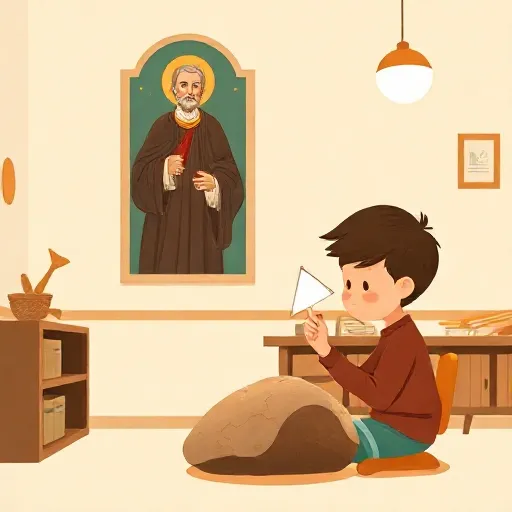
Albert the Great died in Cologne in 1280. His remains rest today in the crypt of the Dominican church of St. Andreas. But his ideas didn’t stay buried. His most famous student, Thomas Aquinas, built a whole philosophical and theological system on foundations Albert had laid. A string of German Dominicans — Ulrich of Strasbourg, Dietrich of Freiberg, Berthold of Moosburg — carried forward his vision. Even in the fifteenth century, a school known as Albertism kept his readings of Aristotle alive in universities across Europe.
In 1931, Pope Pius XI declared Albert a saint and a Doctor of the Church. Ten years later, Pope Pius XII made him the patron saint of natural scientists. Why? Because Albert had shown, with his own life, that you don’t have to choose between honest observation and religious belief. He poured himself into physics and metaphysics, logic and ethics, mineralogy and theology — all to understand creation and its Creator. He never finished his giant Summa of Theology, but the project itself was the point: keep asking, keep learning, keep building bridges.
If you’ve ever worried that believing in God means you can’t trust science, or that science means you can’t have faith, Albert’s story is for you. He didn’t think the two were enemies, and he worked like crazy to prove it. You don’t have to agree with every one of his answers. But his relentless curiosity, his respect for facts, and his belief that reason is a gift worth using — that’s a model that endures. Eight hundred years later, the questions he tackled are still yours.
Think about it
- Albert thought asking scientific questions was a way to praise God. Can you imagine a situation where a scientific discovery might feel like it clashes with a religious teaching? How would you decide which one to trust?
- He believed the happiest life is one spent thinking deeply about the biggest questions. Do you agree, or do other things — friendships, adventures, creating art — matter just as much for a good life?
- If you decided, like Albert, to try to understand every part of the world, where would you start and why?