Can You Become More of a Person?
A Strange Compliment and a Double Meaning
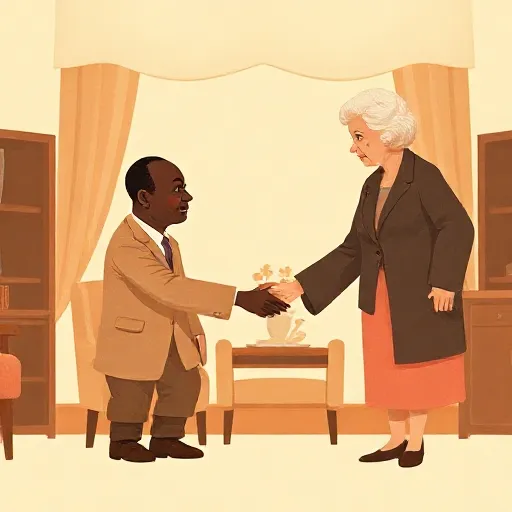
Kenneth Kaunda, the former president of Zambia, once paid a strange compliment to the British prime minister, Margaret Thatcher. He called her “truly a person.” At first, that sounds odd — isn’t every human being a person? But Kaunda was drawing on a way of thinking shared by many West African cultures, especially the Akan people of Ghana. In that tradition, the word onipa can mean two very different things. Onipa can refer to a member of the biological species, a human body. But it can also mean a human who has achieved something much harder: a special moral and social standing.
This double meaning sparked a huge philosophical debate between two of Ghana’s leading thinkers: Kwasi Wiredu (1931–2022) and Kwame Gyekye (1939–2019). Their disagreement gets right to the heart of a question that matters everywhere: are you born a person, or do you have to become one?
Wiredu insisted that personhood is not automatic. It is something you earn by how you live, and you can earn it in degrees — more of a person, or less. Gyekye pushed back hard. He argued that every human is already a full person from birth, no matter how poorly they later behave or how little they achieve. The two philosophers looked at the same Akan sayings, the same funeral customs, and the same ideas about the soul, and drew completely opposite conclusions.
Earning Your Humanity, One Action at a Time
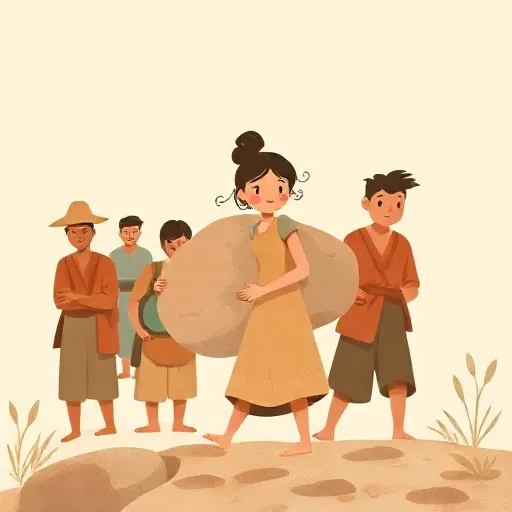
According to Wiredu, the Akan treat being a human and being a person as two separate things. You are born a human — that’s a biological fact, not an achievement. Being a person, however, is a status you build slowly. You can be more of a person or less of a person, depending on how well you live up to your responsibilities to your family and community.
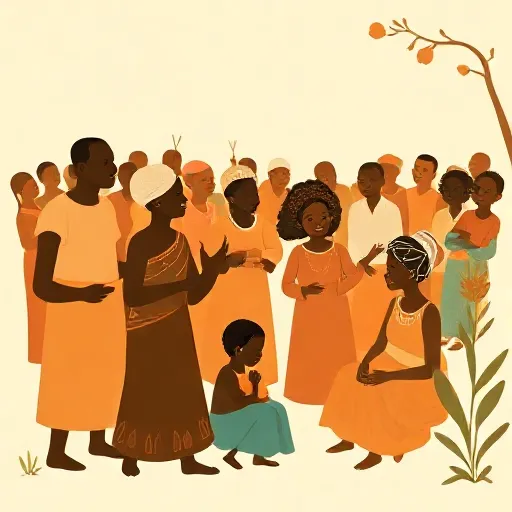
What raises your personhood? Wiredu lists clear standards. An Akan adult is expected to marry and raise a healthy, well-nourished family. The household should be run as a joint, equal partnership between spouses. Taking in distant relatives, shouldering the burden of raising non-relatives, and making concrete material contributions to the whole lineage all count heavily. Then there is participation in community projects — building bridges, clearing roads, cleaning public spaces, attending the burials and mournings of deceased community members. Someone who does all this reliably will hear approving phrases like oye onipa paa (“she is a real person indeed”). Someone who shirks these duties will be called onnye nipa (“he is not a real person”).
That judgment sounds harsh, but Wiredu says it is not about stripping away someone’s human worth. A person who contributes nothing can fall low on the scale of personhood, but there is a floor beneath which they cannot sink. That floor is built by the okra, the life-giving essence every human receives. Even the most useless adult retains basic dignity and unconditional rights, simply by virtue of being human. Personhood adds to that foundation, but never destroys it.
The Objection: You Can’t Earn What You Already Are
Kwame Gyekye found Wiredu’s graded picture of personhood deeply wrong. His core argument was simple: you cannot earn what you already are. For Gyekye, personhood is not a prize you win through effort; it is an unchanging fact about you as a human being. The moment you exist, you are a person.
Gyekye placed huge weight on the Akan concept of okra. The okra is the innermost self, the divine spark that makes a human being alive, unique, and a moral agent. It is what connects each individual to the Supreme Being and carries that person’s destiny. Since every human — from a gurgling newborn to a frail elder — possesses an okra, every human is already a person. Personhood, Gyekye argued, cannot come in degrees any more than being a member of the species can come in degrees.
So what about those Akan expressions that seem to praise someone as “a real person” or dismiss someone as “not a person”? Gyekye insisted that these are moral judgements about someone’s character and social status, not statements about their metaphysical personhood. A hardworking, generous individual earns high social respect; a lazy, cruel one loses it. But their basic personhood — the thing that entitles them to respect simply as a human — never changes. One is a person because of what one is, not because of what one has acquired.
Why No Funeral for a Baby?
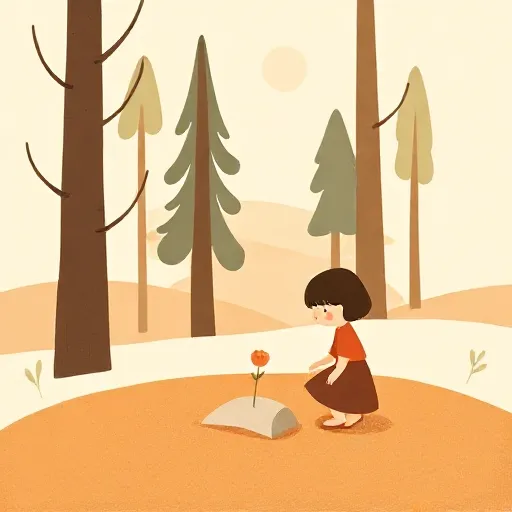
This philosophical clash becomes painfully concrete when you look at how the Akan treat the death of an infant. Among the Akan, no funeral ceremonies are permitted for a child who has not yet grown. Parents are expected to behave normally and cheerfully, not to mourn publicly. For an adult, by contrast, an elaborate funeral is an essential send-off to asamando, the ancestral world.
Wiredu’s explanation follows directly from his idea of earned personhood. An infant possesses the okra, so she is a human deserving of basic respect. But she has not yet built any personhood — she has not demonstrated moral agency, taken on responsibilities, or contributed to the community. She simply is not the kind of being for whom a funeral journey to the ancestral world makes sense. Wiredu says these infants become what he calls limbo people: humans who died with their potential for full personhood untapped but through no fault of their own. In Akan cosmology, they are given a second chance through selective reincarnation, returning to life so they might one day achieve full personhood.
Gyekye rejected this entire line of reasoning. For him, an infant is already a person, full stop. The difference in funeral treatment has nothing to do with whether the child was a person and everything to do with social status. The size and grandeur of a death celebration, he argued, simply reflects the deceased’s wealth, connections, and age. No one throws a huge feast for a newborn who lived only a few days, but that does not mean the newborn was any less a person. Gyekye went further: he believed the Akan stories about reincarnation and graduated personhood are powerful moral narratives, much like the Western idea of a social contract. They motivate people to be cooperative and hardworking, but they are not literal facts about who counts as a person.
Free Will, Responsibility, and the Fall from Personhood
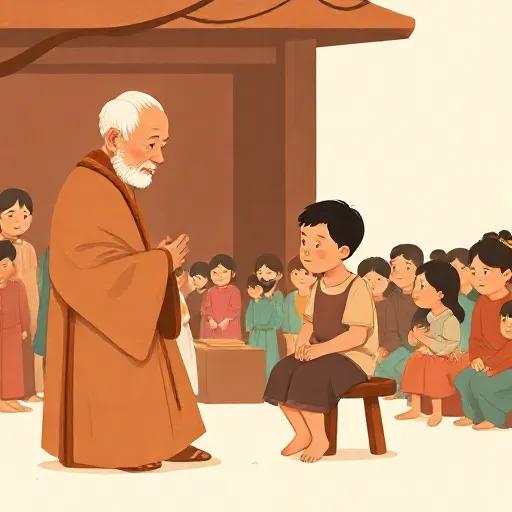
Wiredu’s graded personhood raises a difficult question: how do you judge someone who acts badly or erratically? If a person becomes “more of a person” through good deeds, can someone sink so low that they stop being a person altogether?
Here, Wiredu tied personhood tightly to free will and responsibility. The Akan, he observed, will not rush to blame someone whose behavior is wildly unpredictable. First, the community investigates whether the person’s actions are truly voluntary. An expert diviner might be called to determine whether the strange behavior comes from forces beyond the individual’s control — perhaps a psychological affliction, an environmental pressure, or plain bad luck. If it turns out the person is not acting out of free will, the community shifts its judgment from irresponsibility to non-responsibility. That person may not be a full person in the richest sense, but she is also not morally blameworthy. Her fall stops at the basic floor of human dignity.
This practical method also equalizes unequal starting conditions. Someone born into extreme hardship or a family of thieves faces a much steeper road to achieving personhood. The Akan answer, according to Wiredu, is to judge each adult relative to her own starting capacities. The person who overcomes terrible odds and still manages to contribute meaningfully might earn a special honor, perhaps even a “ticket” to the ancestral world. The idea of selective reincarnation also helps here: if a life is cut short before personhood can be achieved through no fault of the individual, a second chance is offered.
What This Means for How We See Each Other
Wiredu and Gyekye’s debate might seem remote, but it touches a question we all face every day. When we meet someone, do we respect them because of who they are or because of what they do? Think about a classmate who never helps with group projects, or a neighbor who seems selfish. Our instinct might be to judge them as less worthy of our time. But if we follow Gyekye’s view, that person’s personhood is unshakeable, no matter how frustrating they are. If we follow Wiredu’s view, respect grows as people live up to their responsibilities — yet even the most disappointing person never loses the basic protection of being human.
This tension shows up in big societal questions, too. Should a person with a severe disability who can achieve little by Wiredu’s standards be seen as a full person? The Akan would say yes — not because they have earned personhood, but because they possess the okra and are owed an irreducible minimum of respect. The argument between Wiredu and Gyekye is not just about definitions. It is about the double foundation of human dignity: one part earned through action, the other given unconditionally at birth.
Think about it
- If a classmate never helps with group projects, would you say they are “not a real person” in the way the Akan might? Why or why not?
- Should a newborn baby have exactly the same rights as an adult? What if the baby has a severe disability that means they will never be able to contribute to society?
- Imagine a person who does terrible things but later changes and works to help others. Did their personhood increase? What does that say about second chances?