Can an Elder in a Village Teach a Professor Philosophy?
A Young Professor and a Village Sage

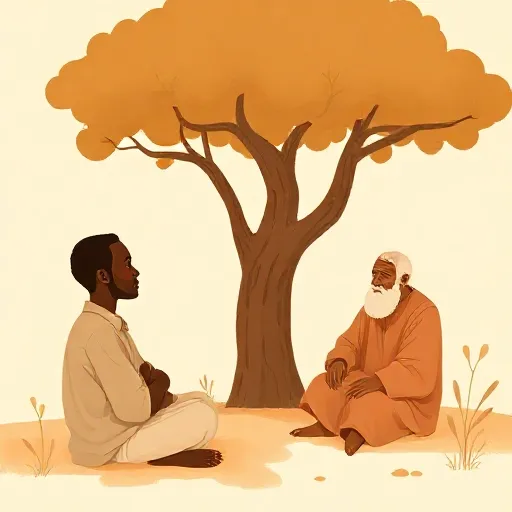
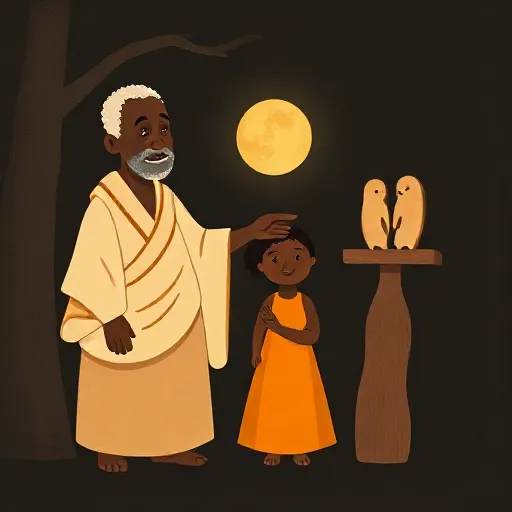
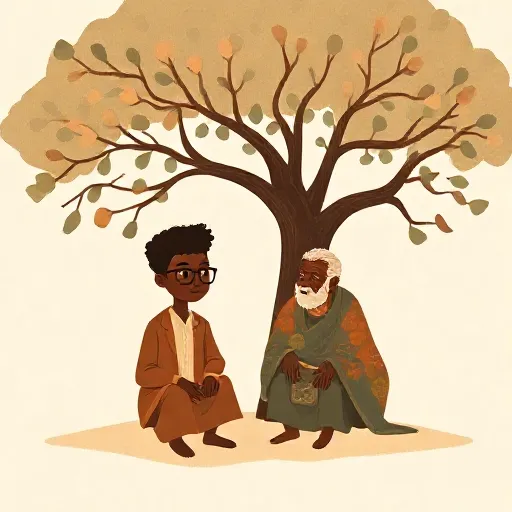
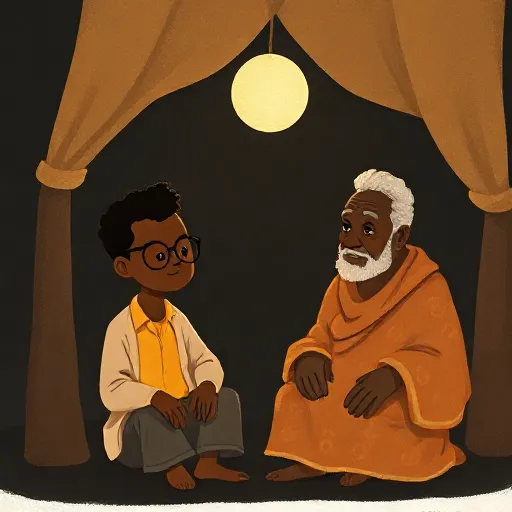
In the 1970s, Henry Odera Oruka (1944–1995), a young philosophy professor in Kenya, did something that surprised his colleagues. He packed a tape recorder and traveled to remote villages. He wasn’t looking for folk tales. He wanted to know: could an elder under a tree who had never been to a university be called a philosopher? So he sat with these sages and asked the kind of big questions you might hear in a classroom — What is truth? What makes a life good? Why is there something rather than nothing? Their answers were careful, critical, and deep. Oruka’s recordings started a global conversation that hasn’t stopped. It belongs to a field called Africana philosophy — the study of philosophizing by people of African descent, both on the African continent and anywhere they have lived. But why was it so controversial to suggest that an elder with no formal schooling might be a real thinker?
What Does It Mean to Call Something “Africana” Philosophy?
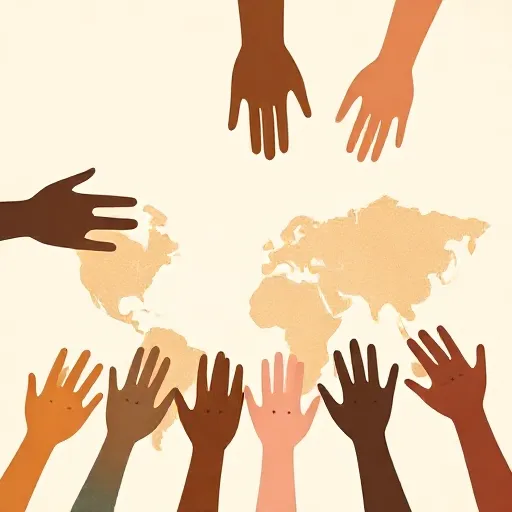
Africana philosophy is not one set of beliefs. It’s more like a library that gathers books written and spoken by people who share a certain history — the experience of being seen by others as African or of African descent, and of coming to see themselves that way too. That label wasn’t chosen freely. Beginning in the 1400s, Europeans began inventing a racial system that lumped hundreds of distinct cultures into a single “race of Africans” they called inferior. Over centuries of colonization and enslavement, this forced identity created real, lived similarities — common struggles, common wounds, common questions.
Still, the thinkers collected under the Africana umbrella could not be more different from one another. A Wolof griot who memorizes centuries of oral history, a Haitian revolutionary writing in a prison cell, and a Black feminist lecturing at a university today. What they share is contingent — meaning it is caused by history, not by blood, and it could have been otherwise. There is no single “African mind” or “Black soul.” The field simply says: because these people’s lives were shaped in related ways by this history, it is worth studying their philosophizing side by side. And those doing the studying don’t need to be African or Black themselves; the work is open to anyone who does it well. That, itself, is a powerful philosophical claim — it says that curiosity, not skin, decides who belongs to philosophy.
Thinking to Survive: Philosophy Born of Struggle
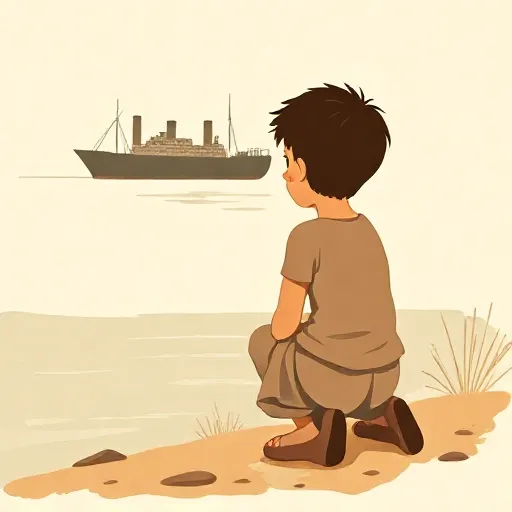
Why does so much Africana philosophy feel like it was wrestled out of pain? Because it was. For hundreds of years, millions of African people were captured, shipped across the Atlantic, and forced into a condition that the historian Orlando Patterson has called social death — being treated as if you had no family, no history, no right to a self. Under that kind of pressure, thinking about big questions wasn’t a luxury; it was a matter of survival.
Take Olaudah Equiano (c. 1745–1797). Stolen as a child from what is now Nigeria, he was renamed “Gustavus Vassa” by one of his enslavers. In his famous autobiography, he describes the moment of losing his name — and his long struggle to reclaim his identity. That is not just memoir. It is existential philosophy: grappling with who you are when others try to erase you. Enslaved people, colonized peoples, and their descendants had to ask, over and over, What does it mean to be free? What is justice? How do you remain human when you are told you aren’t? Those questions had to be answered not just in libraries but in daily life, in songs, in secret gatherings, in decisions to resist or endure. This is what the philosopher Leonard Harris means when he calls this tradition philosophy born of struggle.
The Big Fight: Is “Bantu Philosophy” Real Philosophy?
The question Oruka faced — Does Africa have philosophy? — had been boiling for years. In 1945, a Belgian missionary named Placide Tempels published a book called Bantu Philosophy. Tempels worked in the Belgian Congo and argued that the Bantu‑speaking peoples there had a deep, shared philosophy about the nature of force and life. But, he added, they didn’t know they had it. They lived it without being consciously aware of it as a system. He, the European priest, had to dig it out for them.
African thinkers were divided. Some said, “Finally! A European admits our cultures contain real thought. This helps prove we are rational human beings, fit for independence from colonial rule.” Others were furious. They called this kind of work ethno‑philosophy — a word used to criticize studies that treat a whole ethnic group as if it has one unconscious philosophy, like an ant colony has a single instinct. Those critics said Tempels was still treating Africans as people who couldn’t think for themselves; he was just polishing the old racist image a little.
Oruka’s interviews were an answer to that problem. He wasn’t looking for a group mind. He was looking for individual sages — men and women who thought critically and questioned their own traditions, just like a good philosopher anywhere. He called this sage philosophy. By recording their voices and writing about their ideas, Oruka showed that philosophy in Africa wasn’t something to be extracted from a tribe; it was something done by particular, thinking people. His work settled the old question for many: of course Africa has philosophy. Now the real work — studying those sages, comparing their ideas, learning from them — could begin.
Double Consciousness and the Long Road to Freedom

On the other side of the Atlantic, people of African descent were creating their own fierce and brilliant traditions of thought. Frederick Douglass (1817–1895), born into slavery in the United States, gave speeches and wrote books that turned the language of freedom, law, and human dignity against the system that held him in chains. He didn’t just demand freedom; he reasoned out what real freedom required — education, self‑respect, and the right to make your own choices. His work was political philosophy lived out loud.
Perhaps the most famous idea to come out of this tradition belongs to W.E.B. Du Bois (1868–1963). In his book The Souls of Black Folk, Du Bois described a feeling he called double consciousness. It is the sensation of always looking at yourself through the eyes of a dominant group that sees you as lesser. Du Bois wrote that one always feels a sense of two-ness, being both an American and a Negro, with two souls in one body struggling to be whole. This isn’t just a description of a social problem. It’s a philosophical analysis of identity, recognition, and the damage that racism does to a person’s very sense of self. Black women thinkers like Anna Julia Cooper (1859?–1964) pushed the analysis further, showing how being Black and female created layers of neglect that philosophy had to address. All of these ideas were forged not in comfortable study rooms but on the front lines of movements for civil rights and human dignity.
Why It Still Matters: Who Gets to Be a Philosopher?
You might think this is all settled — that nobody today would seriously argue there is no philosophy in Africa. But the habits that kept these thinkers invisible for centuries are slow to fade. Open a standard philosophy textbook, and you’ll find long chapters on ancient Greece, Germany, and France, and maybe a sentence or two — if that — about African or African‑American thought. That silence isn’t neutral. It teaches a lesson: real philosophy comes from a certain kind of person in a certain part of the world. Africana philosophy challenges that lesson directly.
It matters because the questions raised are not just about the past. If an elder under a tree can be a philosopher, then the conversations you overhear in your own neighborhood, the stories your grandparents tell, and the lyrics you hum to yourself might contain real thought — not “just feelings” or “just culture,” but philosophy. That shift doesn’t lower standards. It opens them wider, so we can see wisdom wherever it grows. And in a world still wrestling with racism, injustice, and what it means to be free, we need every tool of clear, brave thinking we can get — especially from those who’ve had to fight hardest just to be heard.
Think about it
- If a trusted elder in your community had no school diploma but gave you deep advice about how to live, would you call them a philosopher? What makes someone a “real” philosopher in your mind?
- Du Bois talked about feeling like you have to see yourself through others’ eyes. Have you ever had to act one way at home and a different way at school or with friends? Is that similar — and what does it teach you about identity?
- Should songs, poetry, and conversations count as philosophy, or only written arguments? What might we miss if we limit philosophy to books?