Can a Village Elder Be a Philosopher? Oruka’s Search for Sages
A Village Elder Answers “What Is Truth?”

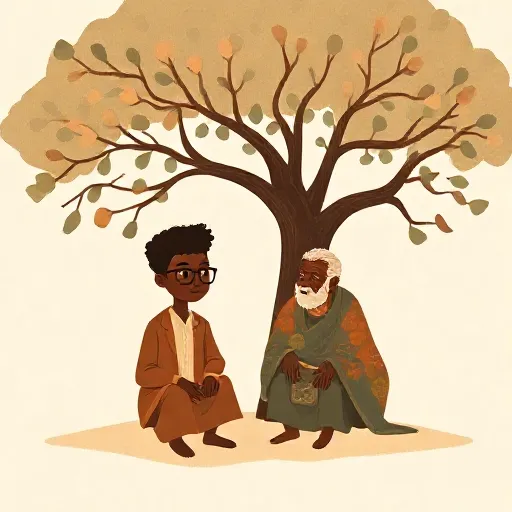
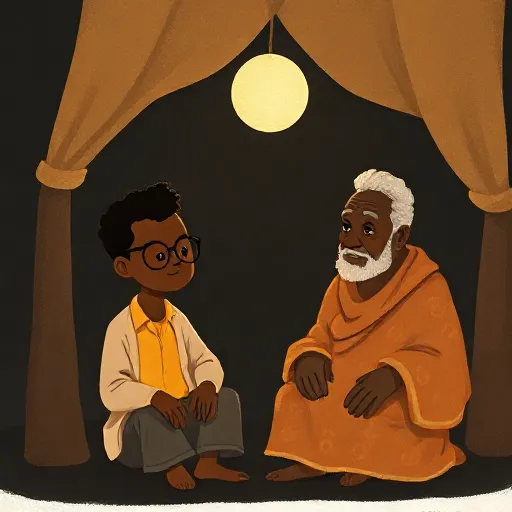
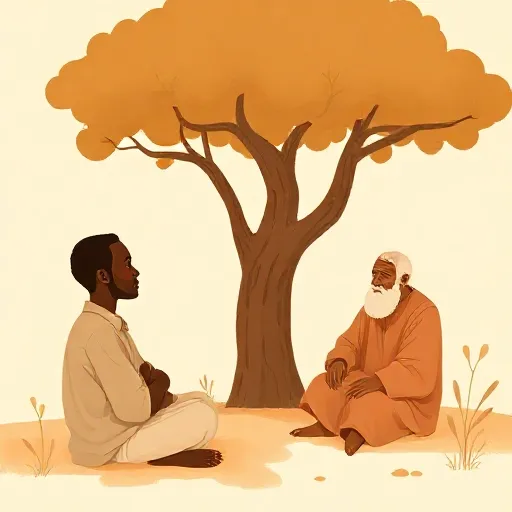
Henry Odera Oruka (1944–1995) sat on a low stool in rural Kenya, facing an old man named Okemba Simiyu Chaungo. Oruka, a philosophy professor, had brought only a tape recorder and a list of big questions. Chaungo held up a glass bottle. Truth, he explained, is when things are exactly as they appear. The bottle is a bottle—so it is true. A lie, he added, is bad. People tell lies to get money or false respect. Truth, on the other hand, is good and accepted by good people.
That answer might sound simple. But what Chaungo described is what philosophers call the correspondence theory of truth: a statement is true if it matches the way the world really is. It’s an idea people have debated for thousands of years—and here was a village elder stating it as plainly as you please. Oruka was thrilled. He believed that wise people in African villages were doing real philosophy, even if they had never attended a university or read a philosophy book. His mission was to prove it.
The Old Lie: No Writing, No Philosophy?
When Oruka started his research, many scholars in Europe and America thought Africa had no philosophy. Their reasoning was simple: philosophy needs writing. Because African traditions were passed down by speaking, not in books, some outsiders claimed that Africans never developed logical, systematic thought. They compared Greek sages like Socrates favorably to African elders, saying the Greeks used reason while Africans only repeated myths.
Oruka found this deeply unfair. He pointed out that the earliest Greek philosophers—Thales, Anaximander, Heraclitus—also lived in an oral culture. Their sayings were later written down by other philosophers, who commented on them and turned them into philosophy. Why couldn’t the same happen in Africa? Oruka saw himself as a kind of Socrates. Socrates called himself a “midwife” of ideas: he helped people bring out the knowledge they already had. Oruka did the same. He asked questions, provoked answers, and recorded them. The elders were the philosophers; he was just helping their ideas reach the world.
Some critics, like the Nigerian philosopher Peter Bodunrin, pushed back. Bodunrin argued that showing that some elders can think philosophically is not the same as showing there is an African tradition of organized, systematic philosophy. Oruka replied that systematic thinking doesn’t require books. The sages’ arguments were consistent and careful, even if they were never written down. He also insisted that preservation of ideas is not the same as their quality. Just as spoken words can be remembered and passed on for generations, so can philosophy live outside of libraries.
The Folk Sage and the Philosophic Sage
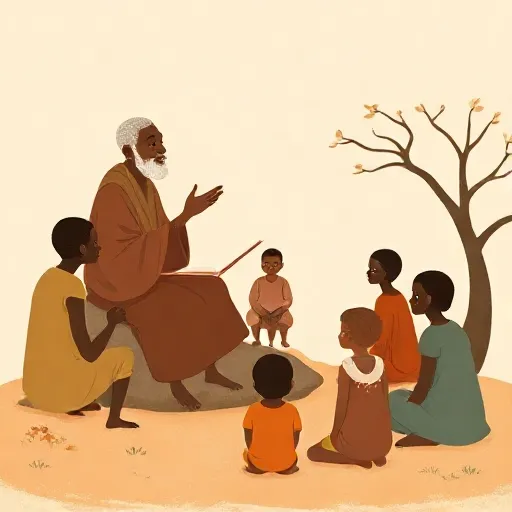
Oruka discovered that not every wise person is a philosopher. He drew a sharp line between a folk sage and a philosophic sage.
A folk sage is someone who knows a community’s shared beliefs, stories, and proverbs inside and out. They can repeat them perfectly and explain what they mean. But they rarely ask whether those beliefs are true or justified. Oruka gave the example of Ogotemmêli, a wise man from the Dogon people in what is now Mali. In the 1940s, a French scholar recorded Ogotemmêli sharing the Dogon’s complex knowledge about the universe, including surprising early ideas about the star Sirius. That knowledge was astonishing. Yet throughout all his conversations, Ogotemmêli never once expressed his own opinion. He only repeated what the community believed. He was a brilliant transmitter of tradition—but not a critical thinker.
A philosophic sage, on the other hand, does not just pass on traditions. They examine them. They ask why a custom should be followed. They will reject a belief if it doesn’t hold up to reason. Paul Mbuya Akoko, a sage Oruka interviewed, was asked about communalism in his Luo community. Many people thought communalism meant sharing property generously. Akoko disagreed. He explained that the Luo idea was more like a cooperative system: a rich cattle owner would lend animals to poorer families who would look after them and drink the milk. Nobody gave away their cattle completely. Akoko was carefully analyzing and justifying his culture’s practice—he was doing philosophy. Chaungo, with his theory of truth, was doing philosophy too. These sages put reason above custom.
This distinction was Oruka’s answer to the third prejudice: that African traditions discourage individual thought.
The Myth of Unanimity: Thinking for Yourself
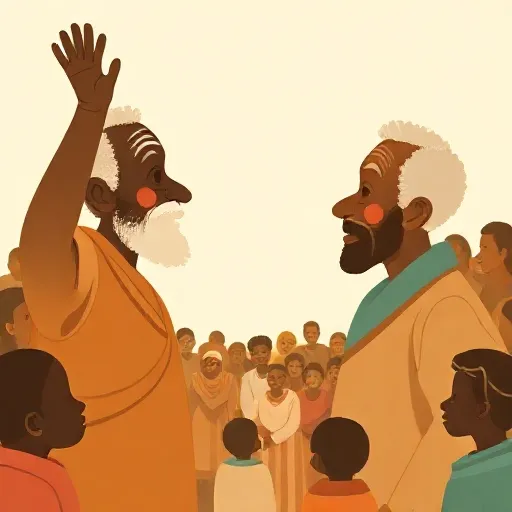
From colonial times onward, many outsiders claimed that Africa was a place of unanimity—that everyone in a traditional community thought the same way, followed the same rules, and never questioned authority. Some even argued that Africans lacked the ability to think critically on their own. This idea became known as ethnophilosophy: the claim that African philosophy is a single, anonymous system without individual thinkers.
Oruka’s interviews demolished that image. He found sages who openly disagreed with their communities. Akoko challenged the common understanding of communalism. Chaungo criticized liars and cheats. Other sages, like the Swahili poet Shabaan bin Robert (1909–1962), wrote works that argued for equal rights and criticized both old and new injustices. That hardly sounds like everyone singing the same tune.
The Ghanaian philosopher Kwasi Wiredu (1931–2022) supported Oruka’s view. He showed that in Akan communities, elders often held long, spirited debates before reaching a decision. Consensus was not imposed; it was won through argument. Critical thinking was on public display. Wiredu argued that any society that survives for generations must have reasoning built into its daily life—otherwise, it couldn’t solve problems.
Oruka was especially worried that the myth of unanimity had political consequences. After independence, some African leaders banned opposition parties, claiming that disagreement was “un-African.” But Oruka pointed out that rulers everywhere love to silence critics. Sage philosophy was proof that thinkers have always asked tough questions, no matter who was in power.
Why It Still Matters: Philosophy Lives Everywhere

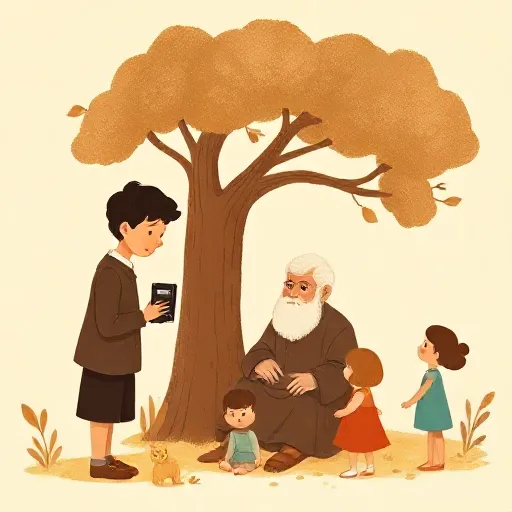
Oruka’s work left a lasting mark. He showed that philosophy isn’t locked inside universities or Western countries. It can grow in a village square, under a tree, in a language that has never been written down. When you ask big questions—What is truth? What is a fair way to share resources?—you are walking the same path as Chaungo and Akoko.
His project also raises hard questions for us today. How many wise voices do we miss because they don’t speak in the “right” language or have the right credentials? Oruka worried that African professional philosophers might smother indigenous thinkers by forcing Western concepts onto them. He wanted the two to stay separate but equal, so that each could flourish. Other philosophers, like Wiredu, believed that trained philosophers could collaborate with sages, using local languages and careful analysis to bring out their ideas without destroying them.
This debate—how to respect and learn from oral traditions without turning them into academic trophies—is not just an African issue. Every culture has people who think deeply but don’t write books. Maybe there’s one in your own family: a grandparent, a neighbor, or a friend who sees the world differently and isn’t afraid to say so. Oruka would tell you: listen to them. That’s philosophy.
Think about it
- If someone has never been to school but can explain why honesty matters, could they be a philosopher? Why or why not?
- Is a deep idea less valuable if it’s never been written down? What might we lose if we only value written knowledge?
- Oruka believed real thinkers question their own traditions. Can you think of a time you questioned a family or community rule? Did that make you think more like a philosopher?