Philosophy for Kids

African Ethics: What Makes a Good Person?

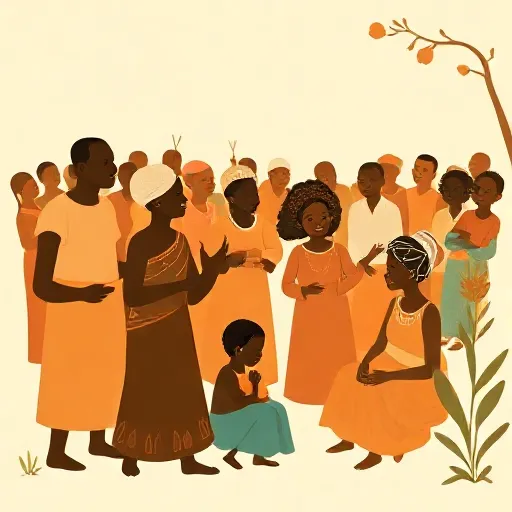
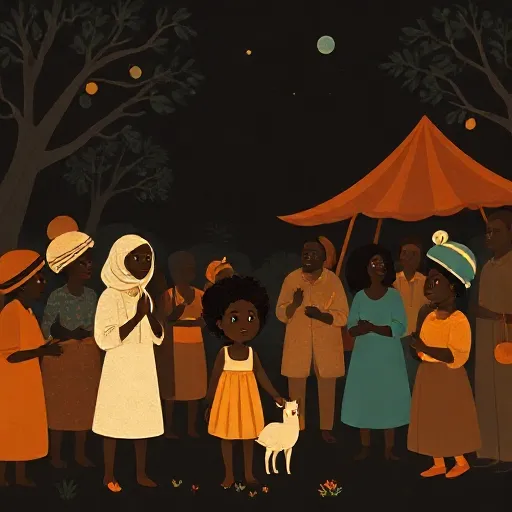
Imagine you’re walking through a village in Ghana. Someone you’ve never met invites you into their home, offers you their best chair, and insists you stay for dinner. Later, you find out they’ve given you their own bedroom for the night. When you try to thank them, they look confused. To them, this isn’t extraordinary. It’s just what people do.

Now imagine a different scene. A person in the same village has been acting cruelly—lying, cheating, refusing to help neighbors when they’re sick. Someone says about them: “He is not a person.”

Wait. He’s obviously a human being. So what do they mean?

Philosophers who study traditional African societies have noticed something strange and interesting here. In many African languages, the word for “ethics” or “morality” is the same as the word for “character.” When someone says a person has no morals, they literally say “he has no character.” When they say someone is a good person, they mean “she has good character.” And when someone behaves badly enough, persistently enough, people say that person has failed to become a full person at all.

This isn’t just a different way of talking. It points to a completely different way of thinking about what it means to be human, what makes an action right or wrong, and what we owe each other.


What Is Good Character, Anyway?

In African ethical thought, character isn’t something you’re born with. You acquire it. An Akan proverb says: “One is not born with a bad head, but one takes it on from the earth.” This means bad habits aren’t inborn—they’re learned. And if they’re learned, they can be unlearned.

So how do you get a good character? The answer is surprisingly simple and surprisingly hard: you do good things, over and over, until they become part of you. An Akan thinker put it this way: “Character comes from your actions.” If you keep telling the truth, eventually truthfulness becomes a habit. If you keep helping others, generosity becomes automatic. Over time, these habits stick to you. The Akan say of someone with a strong virtue: “It has remained with him.” It has become part of who he is.

This means that at birth, every human being is morally neutral—neither good nor bad. You have the capacity for either path. What matters is what you actually do. Your choices build your character, day by day, action by action.

This also explains why African societies put so much effort into moral education through proverbs and folktales. You can’t just tell children “be good.” You have to help them form the right habits. The stories teach values like generosity, honesty, and compassion. The hope is that hearing these stories again and again will help young people internalize those values and make them their own.


What Does It Mean to Be a Person?

Here’s where things get really interesting. In several African languages—Akan in Ghana, Yoruba in Nigeria—the word for “person” is the same as the word for “human being.” But people use it in two very different ways.

The first way is just descriptive. If you’re in a forest and your friend is about to shoot something that looks like a beast, you might shout: “It’s a person!” meaning “That’s a human, don’t shoot.”

The second way is moral. If someone has been cruel, selfish, and dishonest for years, people might say: “She is not a person.” They don’t mean she’s a ghost or an animal. They mean she has failed to become what a human being ought to be.

Think about that for a moment. Some philosophers in Africa argue that personhood isn’t something you automatically have just because you’re born human. It’s something you attain. You earn it through your moral choices. A child is a potential person, not yet a full one, because she hasn’t yet developed the moral maturity to make real choices. But an adult who acts badly hasn’t just made mistakes—she’s failing to become a person at all.

The opposite judgment—“he is a person”—is one of the highest compliments you can give. It means: he has good character. He’s generous, peaceful, humble, respectful. To say “he is truly a person” means you’ve seen extraordinary moral goodness.

This idea raises a strange question: Can a human being who does terrible things still be considered a person? And if not, what does that mean for how we should treat them? African philosophers still argue about this. The consensus seems to be that even someone judged “not a person” still deserves basic human concern. They just aren’t considered morally worthy.


Where Does Morality Come From?

Many people assume that morality comes from religion—that God or the gods tell us what’s right and wrong. But traditional African societies have a surprising answer: morality doesn’t come from religion at all.

Here’s why this matters. Unlike Christianity or Islam, traditional African religions are not “revealed” religions. No one ever claimed to receive a complete set of moral rules directly from God. There’s no sacred text that says “thou shalt not steal” because God said so. Instead, African traditional religion grew out of people’s own reflections on the world and their experiences in it.

So where do moral rules come from? According to African thinkers, they come from human needs and human society itself. When traditional sages in Akan communities were asked “How do we know that this action is good and that action is evil?” nobody answered “because God said so.” Instead, they talked about human welfare.

Actions that promote human well-being—generosity, honesty, hospitality, compassion—are good. Actions that harm human well-being—cruelty, lying, selfishness—are bad. The standard is not divine command but human flourishing.

This makes African ethics deeply humanistic. It’s focused on the needs and interests of actual people living together in communities. As one scholar put it: “The basis of morality was fulfillment of obligation to kinsmen and neighbors, and living in amity with them.”

Monica Wilson, who studied African societies, observed that right and wrong are judged by whether they build up or tear down society. Conduct that promotes smooth relationships is good. Conduct that disrupts social harmony is bad.

This doesn’t mean religion plays no role. People still pray to gods and ancestors for help, and they believe these spiritual beings care about moral behavior. But the moral rules themselves don’t come from the gods. They come from human life.


All Humans Are One Family

This leads to a beautiful idea expressed in an Akan proverb: “Humanity has no boundary.”

The proverb uses a farming image. When you cultivate a field, you stop at the edge—the boundary—so you don’t trespass on your neighbor’s land. But cultivating fellowship with other human beings has no such limit. All humans are of one kind. We share basic values, feelings, hopes, and desires.

Another Akan proverb puts it even more directly: “A human being’s brother is a human being.” This means that every human being can relate to every other human being as a brother or sister, not because of blood ties, but because we share the same humanity.

This is why traditional African languages often have no word for “race.” They have words for “person,” “human being,” and “people.” Someone might say “black people” or “white people,” but they wouldn’t say “the black race” as if different groups of humans were fundamentally different kinds of beings.

The practical result of this belief is the famous African hospitality that visitors often remark on. A European traveler in Central Africa wrote in the early 1900s that “a native will give his best house and his evening meal to a guest, without the slightest thought that he is doing anything extraordinary.” This isn’t seen as going above and beyond. It’s just what people do for each other.

An Akan proverb says: “The human being is more beautiful than gold.” Gold is valuable only for what you can get with it. A human being is valuable for their own sake. You should enjoy people—appreciate them, care for them, open yourself to their interests and needs. That’s what it means to recognize someone’s worth.


The Common Good

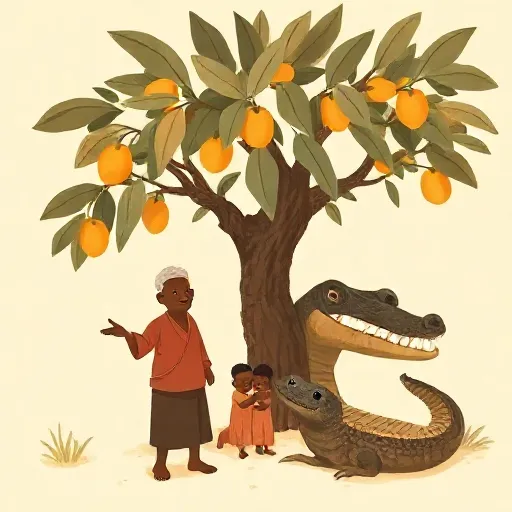
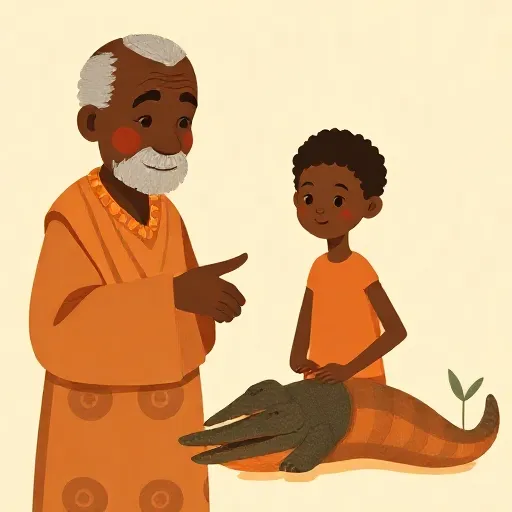
African societies emphasize the common good—what’s good for everyone together. This is captured in a traditional symbol: two crocodiles sharing a single stomach. Each crocodile has its own head and its own desires, but they share one digestive system. What benefits one benefits both. What harms one harms both.

The point isn’t that individual goods don’t matter. It’s that basic human goods—peace, security, dignity, justice, freedom—are things everyone needs. These aren’t just my goods or your goods. They’re our goods. If the community is doing well, individuals within it are more likely to do well too.

This is different from the individualistic thinking common in Western societies, where the focus is on individual rights and personal freedom. In African thought, the community isn’t a threat to individual liberty. Liberty itself is one of the basic goods that everyone should have access to. But it’s understood within a framework of mutual responsibility.


You Are Not a Palm Tree

An Akan proverb says: “Man is not a palm tree that he should be complete.” A palm tree stands alone, self-sufficient. A human being can’t do that. We need each other.

This is the foundation of what philosophers call “social ethics”—the idea that morality is fundamentally about how we relate to others. In African thought, this social ethic is expressed through values like mutual help, cooperation, interdependence, and reciprocity.

Another proverb says: “Life is mutual aid.” The word used comes from farming communities, where neighbors would help each other work the fields. If a farmer had too much work, others would pitch in expecting that the favor would be returned when they needed help.

A particularly striking proverb says: “When it sticks into your neighbor’s flesh, it is as if it stuck into a piece of wood.” This is a criticism of people who feel nothing when others suffer. You might not feel their pain directly, but you should act as if you do. Their body is not a piece of wood. It can feel pain. And so can you, for them.

The deepest reason for helping others is captured in this proverb: “Your neighbor’s situation is potentially your situation.” You might not be suffering now, but someday you could be. And when you are, you’ll need help. This isn’t just practical advice. It’s a recognition that every other person is basically you—sharing the same vulnerabilities, the same needs, the same humanity.


Duties, Not Rights

This brings us to one of the most distinctive features of African ethics. Western moral philosophy tends to focus on rights. You have a right to life, liberty, property. Other people’s duties toward you are derived from your rights.

African ethics reverses this. The focus is on duties, not rights. The question isn’t “What am I owed?” but “What do I owe others?” People should help each other not because others have a right to that help, but because they need it. Need itself creates obligation.

An African philosopher named Ifeanyi Menkiti put it this way: personhood is attained “in direct proportion as one participates in communal life through the discharge of the various obligations defined by one’s stations.” In other words, you become a person by fulfilling your responsibilities to others.

This also means that in African ethics, there’s no such thing as “going above and beyond the call of duty.” Western philosophy sometimes distinguishes between ordinary duties (you must keep your promises) and “supererogatory” acts—good deeds that are optional, like giving your last dollar to a stranger. In African thought, if an act is genuinely good and will help someone, it’s not optional. It’s something you ought to do.

When that villager gave a stranger her best room and her evening meal, she wasn’t doing something extraordinary. She was just being a person.


Still Alive, Still Debated

You might wonder: Do real African societies actually live up to these ideals? The honest answer is: not always, and philosophers still argue about this. Some critics point out that the focus on community can pressure people to conform. Others note that these ideals sometimes apply more strongly to members of one’s own group than to outsiders. And the idea that personhood must be earned raises difficult questions about how we should treat people who seem unable to earn it—people with severe disabilities, for example.

But these debates are exactly what make African ethics a living tradition, not just a historical curiosity. It offers a different way of thinking about some of the most basic questions: What makes a good person? What do we owe each other? What does it mean to be human?

And those questions are still very much alive.


Key Terms

TermWhat It Does in the Debate
CharacterThe central concept in African ethics; your character is built through your habitual actions and determines whether you are morally good or bad
PersonhoodA status you must earn through moral behavior, not something you automatically have just by being born human
HumanismThe idea that moral values come from human welfare and needs, not from religious commands
Common goodThe basic goods (peace, justice, dignity, etc.) that all humans need and that communities should pursue together
Social ethicsA morality focused on relationships, mutual help, and the well-being of the community rather than on individual rights
SupererogationThe Western idea that some good deeds are optional (in African ethics, this concept doesn’t exist—if it’s good, you should do it)

Key People

Ifeanyi Menkiti – A Nigerian philosopher who argued that in African thought, personhood is something you attain through fulfilling your obligations to your community.

Kwasi Wiredu – A Ghanaian philosopher who argued that Akan morality is “logically independent of religion”—moral rules don’t come from God but from human reflection on human needs.

Monica Wilson – A South African anthropologist who studied several African societies and concluded that the basis of morality was “fulfillment of obligation to kinsmen and neighbors, and living in amity with them.”


Things to Think About

  1. If personhood is something you earn through moral behavior, what does that mean for how we should treat people who commit terrible crimes? Are they still fully human? What would it mean to say they’re not?

  2. The article says African ethics focuses on duties rather than rights. But can you have duties without rights? If someone has a duty to help you, doesn’t that mean you have a right to that help? Or are these two different ways of talking about the same thing?

  3. Western societies often emphasize individual freedom and personal choice. African societies emphasize community and mutual responsibility. Can these two approaches be combined, or are they fundamentally in conflict?

  4. The idea that morality doesn’t come from religion might surprise people who think you need God to be good. If moral rules come from human needs and human society, what happens when different societies have different ideas about what human beings need?


Where This Shows Up

In everyday life: When someone says “character matters” or talks about “being a good person,” they’re using ideas that are central to African ethics, even if they don’t know it.

In public debates: Conversations about whether communities have responsibilities to their members, or whether individuals have duties beyond what the law requires, echo these ideas.

In other cultures: Many non-Western cultures—including Confucian thought in East Asia and ubuntu philosophy in Southern Africa—similarly emphasize community, character, and duty over individual rights.

In politics: The idea of the “common good” appears in arguments about healthcare, education, and social welfare. Should society ensure that everyone’s basic needs are met? African ethics would say yes, because human welfare is what morality is all about.