Can Poetry Solve the Riddles That Science Cannot?
A revolution hidden in a book of poems
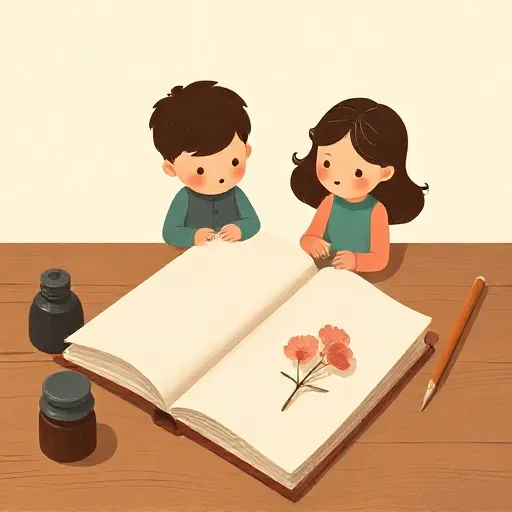
On a chill evening in 1798, a young English poet named William Wordsworth (1770–1850) opened a plain-looking book of short poems. The verses were about shepherds, daffodils, and an old sailor. But inside, Wordsworth and his friend Samuel Taylor Coleridge (1772–1834) had planted a revolution. They claimed that poetry—and the feelings it stirred—was not just entertainment. It was the first and last of all knowledge.
Around the same time, in the German university town of Jena, a circle of writers and thinkers were saying something very similar. One of them, Friedrich Schlegel (1772–1829), demanded that all of life and society should become poetic. Another, the poet Friedrich Hölderlin (1770–1843), wrote that truth and goodness are siblings only in beauty. These people called themselves Romantics.
They were not just playing with words. They believed that the way we respond to art and beauty—a special kind of human experience—should be the model for everything: science, philosophy, how we treat each other, even how we organize our countries. This big idea is what scholars call the primacy of the aesthetic. Aesthetic comes from a Greek word for perception and feeling, but in philosophy it usually means the study of beauty and art. The Romantics insisted that the aesthetic is not one small corner of life; it is the pattern that makes all other parts of life more whole and more human.
But that doesn’t mean they wanted to tear down science and replace it with pretty poems. They wanted science, thinking, and everyday living to become poetry-like—not to become poetry itself. So what exactly did they mean?
Reason and emotion were never enemies
For a long time, people have described the Romantics as enemies of reason. The story goes that the 1700s Enlightenment put all its trust in logic and science, and the Romantics rebelled by worshiping emotion and imagination instead. That picture is much too simple—and mostly wrong.
It’s true that the Romantics felt modern life had become too dry and mechanical. But they admired the Enlightenment’s commitment to rational criticism, the habit of questioning every belief and refusing to accept authority just because it’s old. Schlegel even called critique the pillar on which all knowledge rests. That is hardly the voice of someone who threw reason out the window.
What the Romantics really wanted was a marriage between reason and feeling. They believed that reason without feeling is empty. A mind that only calculates, they argued, loses touch with what makes us human. But they also insisted that feeling without reason is blind; pure emotion with no thought is just animal impulse. Coleridge praised Wordsworth not for wild inspiration alone, but for the union of deep feeling with profound thought.
So the Romantics did not attack reason itself. They attacked certain bad habits of reasoning—like building enormous, airtight systems that pretend to explain everything, or treating the world as if it were a dead machine. And they did something unusual: they used art itself to point out the limits of reason.
Two of their favorite tools were Romantic Poetry and irony. Romantic Poetry, as Schlegel described it in 1798, is poetry that reflects on itself. It doesn’t just show a scene; it hovers between the scene and the mind that imagines it, always asking how we can know what we know. It is a kind of philosophy done in verse. Irony, meanwhile, is the habit of holding your own view lightly—of admitting that any one perspective is limited. Irony, Schlegel wrote, is both self-creation and self-destruction. It builds a way of seeing the world, then gently reminds you that it’s only one among many possible ways. For the Romantics, this was not just a writing technique; it was a way of life that taught humility.
Chasing the infinite with art and feeling
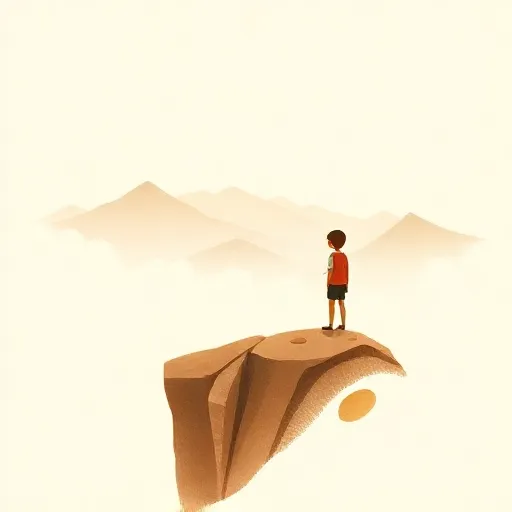
If reason and feeling can work together, the Romantics needed a puzzle big enough to need both. They found it in the idea of the Absolute. The Absolute is the unconditioned totality of all conditions—not just a pile of things, but the whole universe as one seamless reality.
The German philosopher Immanuel Kant (1724–1804) had already argued that human knowledge is always discursive: we know things by applying concepts, and concepts always carve the world into pieces. Since the Absolute is the whole without any seams, concepts can never fully capture it. The Romantics agreed. Novalis (1772–1801) put it bluntly: we search for the unconditioned and always find only conditioned things.
But that didn’t make them give up. They believed the drive to reach the Absolute is precious, even if the goal can never be reached. And here is where art and beauty enter the story. When you stand before a great painting or listen to music that moves you, you are not analyzing with concepts. You are feeling something that seems to point beyond anything you could put into words. Aesthetic feeling, the Romantics argued after Kant, is non‑cognitive—it doesn’t pin an object down under a label—but it is still rational because it responds to demands the beautiful object makes on you.
That makes aesthetic experience perfectly suited for approaching the ungraspable. Poetry, Schlegel said, elevates each single thing by letting the individual live in the whole and the whole in the individual. The French poet Charles Baudelaire (1821–1867) later summed it up: romanticism is modern art—an aspiration toward the infinite expressed by all the resources of art.
Art also works because each beautiful thing is a unique individual. You can’t just plug it into a formula. A good critic, the Romantics taught, must be faithful to the work on its own terms, letting it set its own standards. That open, patient way of paying attention is the very attitude they wanted people to bring to the Absolute.
A blueprint for freedom and a shared life
The Romantics didn’t stop at knowledge. They believed the aesthetic could reshape politics and ethics, too. Two ideals were especially important: autonomy (the right to think and act for yourself, not just follow external laws) and Bildung (the lifelong process of shaping yourself into a harmonious, mature human being).
A work of art, the Romantics noticed, is a model of both. A painter or a composer doesn’t simply obey a rulebook; each genuine work invents the standards by which it should be judged. It is, in Schlegel’s words, its own law. At the same time, a great artwork is like a living organism: every part matters, and the whole is held together not by force but by a quality of inner rightness. If every person is to be free and fully developed, the Romantics said, then everyone should treat their own life the way an artist treats a poem—with creativity, self‑discipline, and openness to what is outside them. That’s why Schlegel issued what he called the categorical imperative of genius: demand genius from everyone.
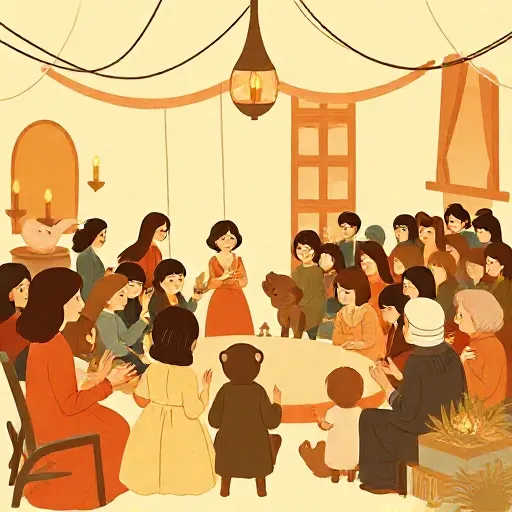
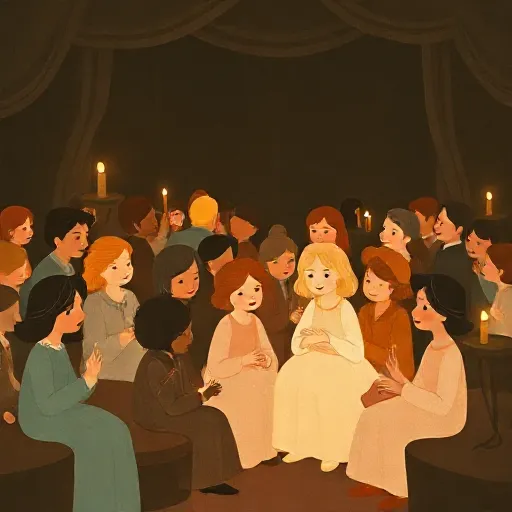
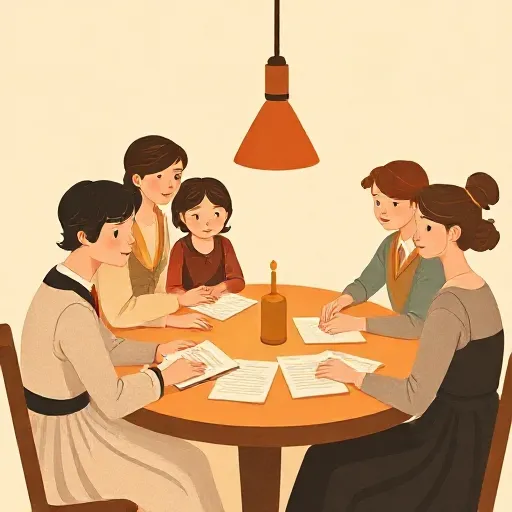
This wasn’t selfishness in disguise. The Romantics insisted that no one can become a full individual in isolation. People need genuine community—the kind built on affection, shared conversation, and mutual respect, not just on contracts and rules. They practiced this in their own lives through symphilosophy and sympoetry, creating journals and works together as equals.
The state, they thought, should be like a beautiful poem: a whole where every part is respected and free citizens have the right to vote, as Schlegel wrote. In their ideal republic, artists wouldn’t be a special class; everyone would relate to each other with the creative, attentive spirit that artists bring to their work. Later, after seeing the violence of the French Revolution, many Romantics grew more conservative. But they never dropped the conviction that art shows the shape of a truly human society.
Nature reborn: how poetry re-enchants the world
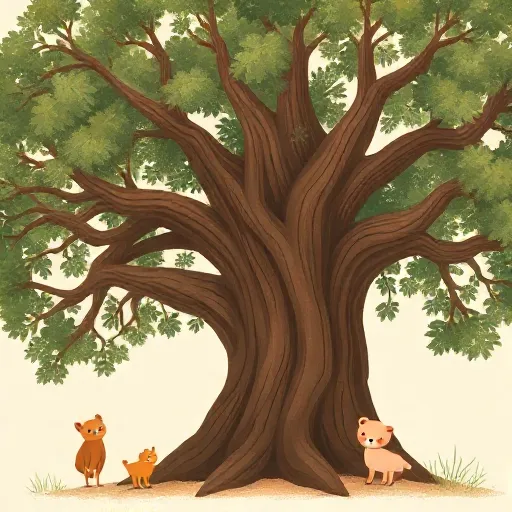
Modern science had done something strange, the Romantics felt. It had turned nature into a clockwork of dead parts, a realm of blind cause and effect. Human beings, with their reason and feelings, seemed to stand completely outside it. The world had become a place where we no longer felt at home.
The Romantics wanted to put the life back into nature. They drew on an idea that Kant had suggested but, in their view, hadn’t taken far enough: that living things are organic wholes, not mere machines. In an organism, the whole and its parts depend on each other; the creature organizes itself from within. The Romantics dared to see the entire universe this way—as one vast, self‑organizing, living force. Nature, they said, is visible spirit; spirit is invisible nature.
Poetry, again, was the key. A beautiful poem has the same structure as an organism: change one word and the whole effect may collapse, yet every part only makes sense in light of the whole. Looking at nature through that poetic lens, they believed, could teach us to see the same wholeness and life in forests, mountains, and oceans.
They also believed poetry could romanticize the ordinary—make the familiar seem mysterious again. Wordsworth described the “sense sublime of something far more deeply interfused” that he felt in sunsets, the ocean, and the living air. Novalis called this process “giving a higher meaning to the ordinary.” By training our attention this way, the Romantics argued, we recover a sense of wonder and even reverence for the natural world, without needing to go back to old myths.
Why the Romantics still matter
The Romantics have been gone for two centuries, but their questions are stubbornly alive. Is there a kind of understanding that art provides that science cannot? Does a good life need more than clear thinking—does it need poetry, in the broadest sense? Can we be fully human without treating nature as something more than a storehouse of raw materials?
You can hear echoes of their debates whenever someone argues that schools should defend art and music against budget cuts, or that big data alone cannot tell us what is worth caring about. Scientists themselves sometimes speak of an “aesthetic sense” that guides them toward elegant theories. And the modern environmental movement, in many of its forms, shares the romantic intuition that nature deserves something closer to love than to cold measurement.
The Romantics didn’t claim to have the final answers. They believed that the search itself—open‑ended, passionate, and always alert to limits—is what matters. As Novalis wrote, philosophy is really homesickness, the urge to be everywhere at home. Perhaps that’s what a twelve‑year‑old feels when a story or a sunset catches at the heart. Not a problem to be solved, but a direction to walk.
Think about it
- Can you think of a moment when a song, a painting, or a view made you feel you understood something that you couldn’t put into words? What makes that different from learning a fact?
- If you could design a school where “the aesthetic came first,” what would be different about the way you learned science and math?
- Do you think it’s possible to respect science completely and still believe that nature is alive in some sense? Where would you draw the line, and why?