Do We Have a Secret Sixth Sense for Beauty?
Shaftesbury’s Inner Eye
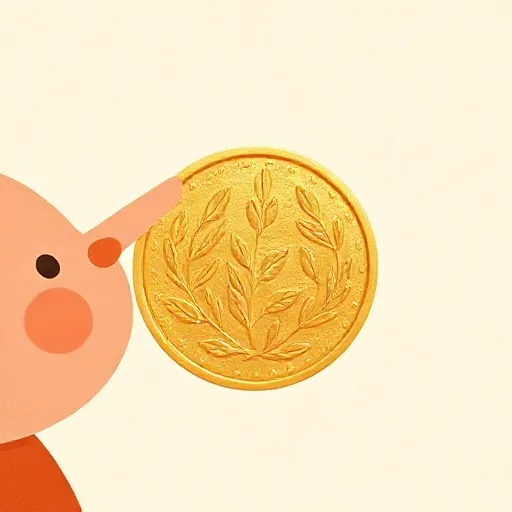
It’s 1711. The Earl of Shaftesbury (1671–1713) is strolling through his garden with a friend. He bends down, picks up a coin, and asks why it is beautiful. His friend might say the gold shines nicely. But Shaftesbury thinks that’s missing the point.
Shaftesbury believed we have an inward sense — a mental power that detects beauty as directly as our eyes detect color. He called it an “inward eye.” When you see a beautiful coin, he said, you feel pleasure not from the metal, but from the design stamped on it. And that design came from a mind. So the coin’s beauty is only borrowed; it reflects the beauty of the mind that made it. Shaftesbury argued that all beauty ultimately goes back to a perfect divine mind.
He noticed that we don’t decide to find a sunset beautiful — it just strikes us. The pleasure arrives immediately and without choice, as if it were a sensation. This is why he called it a sense. And because it operates on what the mind already knows, he called it an internal sense. It’s like having a tiny art critic inside your head, one that you can’t turn off.
But there was a catch. If all beauty comes from minds, then a mountain or a flower can only be beautiful if it somehow shows a mind’s work. Shaftesbury handled this by seeing nature itself as the design of a divine intelligence. His theory gave beauty a real, absolute existence — it wasn’t just a matter of human opinion.
Hutcheson’s Internal Sense Machine
Francis Hutcheson (1694–1746) admired Shaftesbury’s idea but gave it a major tune-up. He agreed that beauty is detected by an internal sense. But he didn’t think only minds are beautiful. A sunset is beautiful in its own right, not just as a sign of a mind.
Hutcheson boiled beauty down to one recipe: uniformity amidst variety. When we see a pattern that has both order and difference — like a checkerboard, a honeycomb, or a melody with repeating rhythms — our internal sense lights up with pleasure. This pleasure, he said, is immediate, necessary, and disinterested. That is, it shows up instantly, we can’t resist it, and it doesn’t depend on whether the object is useful to us. A beautiful chair pleases us whether we plan to sit in it or not.
But what makes this sense internal? Hutcheson argued it’s because the beauty-sense depends on other senses first. You have to see a shape or hear a tune before the inner sense can pronounce it beautiful. External senses like sight work on raw input; the internal sense works on the patterns your mind has already gathered. So it’s a reflex sense — a sense that needs other ideas to start up.
This led Hutcheson to a surprising conclusion. He said beauty is like a secondary quality — a sensation that exists only in the perceiver. Sweetness isn’t in sugar; it’s how your tongue reacts to sugar. In the same way, beauty isn’t in a painting; it’s how your internal sense reacts to certain patterns. If no one with a sense of beauty ever looked at the moon, the moon wouldn’t be beautiful. So beauty, for Hutcheson, was subjective. But why would a benevolent God wire us this way? Hutcheson’s answer: uniformity amidst variety appears in the best kind of knowledge — theorems. A theorem unites many facts under one simple rule. Finding it beautiful gives us a natural reward for learning.
Hume’s Rulebook for Taste
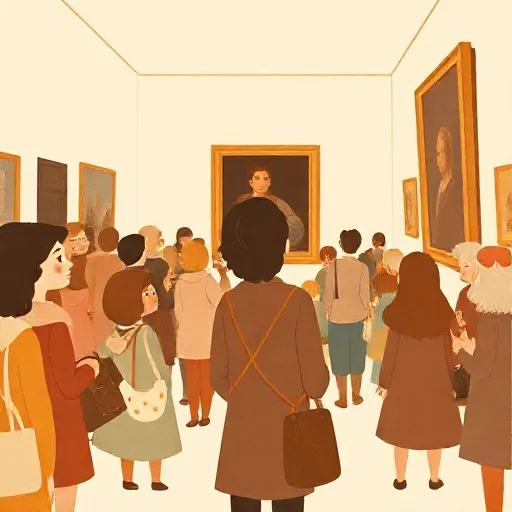
David Hume (1711–1776) took Hutcheson’s subjectivism and ran with it. If beauty is just a feeling in the mind, how can we say one person’s taste is better than another’s? Hume noticed that we do this all the time — we trust some critics and dismiss others. So he set out to explain how taste can be both personal and still have standards.
Hume said that beauty is like color. An object looks red only under the right conditions: daylight, a healthy eye. Similarly, beauty appears reliably only when a person meets certain conditions. The ideal judge of beauty must have (1) a delicate taste, able to notice tiny differences; (2) lots of practice with the kind of thing being judged; (3) experience comparing many examples; (4) no prejudice; and (5) a sound understanding, so they grasp all the relevant details.
So if your friend has seen hundreds of paintings and you’ve only seen three, Hume would say your friend is probably the better judge. But even the best judge can’t prove that a painting is beautiful the way you can prove two plus two is four. The feeling still lives inside the observer. Hume just gave us a way to sort the fragile verdicts from the well-trained ones.
Imagination Takes Over: Addison

Not everyone believed in a special inner sense for beauty. Joseph Addison (1672–1719), a famous essayist, thought the whole idea was backwards. He argued that the pleasures of taste are just the pleasures of the imagination — the mind’s power to picture things.
Addison sorted imagination-pleasures into three kinds. Great things (like a vast mountain) fill the mind with a thrilling astonishment. Novel things (like a strange animal you’ve never seen) wake up curiosity and surprise. Beautiful things (like a flower or a pleasing face) bring a calm satisfaction. All these pleasures, he said, come from visual representation, either from objects right in front of you or from images your mind creates when you read or remember.
Because imagination works with the look of things, Addison thought beauty is first and foremost about material objects — not about hidden minds. And he was blunt about what that means: beauty does not exist in the world. A cat, a spider, and a human all probably find different things beautiful. So there’s no “real” beauty in one block of stone more than another. Beauty exists only in the eye of the beholder.
Addison also wondered why we enjoy stories that show sad or scary events. His answer: the imagination plays a game of contrast. When you read about a shipwreck from the safety of your chair, you feel a secret pleasure in knowing the danger isn’t real. That same reflex makes a tragic play gripping instead of just awful.
Why This Old Argument Still Matters

Shaftesbury, Hutcheson, Hume, and Addison were wrestling with a question that hasn’t gone away: is beauty something we discover, or something we invent? When you and a friend argue about which song is better, you’re replaying their debates. One side claims there must be real standards for beauty that we can get right or wrong. The other side insists it’s all personal feeling — no right answer, just what the brain happens to enjoy.
Today, scientists study the brain’s reward circuits when people see art or hear music. Some researchers talk about an “aesthetic sense” that might be built into our biology. Other findings show how much our tastes are shaped by culture and memory. It’s almost as if Hutcheson and Addison are still whispering in our ears.
The next time you look at a coin, a sunset, or a wonderful mess of colorful stickers on a notebook, you’re doing exactly what those 18th-century thinkers were doing: asking why it feels the way it does. There’s no single answer yet — and that’s part of what makes beauty such a powerful puzzle.
Think about it
- If two honest, careful people disagree about whether a drawing is beautiful, could one of them be wrong? Or is it just a matter of personal taste?
- Suppose you grew up in a world of only gray boxes — no flowers, no music, no stories. If you then saw a rainbow for the first time, would you find it beautiful? Why or why not?
- Imagine a computer that can instantly analyze every pattern in a painting and calculate a “beauty score.” Would that score tell you how beautiful the painting really is, or would it be measuring something else entirely?