Can You Really Know if a Painting Is Beautiful Without Looking at It?
Imagine a Friend Says a Movie Is Brilliant

Your friend races up to you. You trust her taste. She says, “That new movie is the best one of the year—a total masterpiece.” She doesn’t give any reasons, just the verdict. You haven’t seen a single trailer. Would it be okay for you to go around saying “It’s a masterpiece” too, just because she said so?
Most of us feel a little uneasy. Even if we trust her, we might want to see it for ourselves before forming a strong aesthetic judgment—a judgment about how good or beautiful something is. This hesitation is the spark behind a long-running debate in philosophy. At its heart is a question about pure testimony: being told something is beautiful, without any reasons or evidence beyond the speaker’s word. Can such testimony ever be a good enough basis for deciding what’s beautiful?
Philosophers who say “no” are called pessimists about aesthetic testimony. They think you can’t legitimately form aesthetic judgments just by taking someone else’s word. Their opponents, the optimists, argue that under the right conditions it’s perfectly fine. The tug-of-war between these two camps stretches back over two hundred years, and it’s still not settled.
Kant Dropped a Bombshell: You Have to See It for Yourself
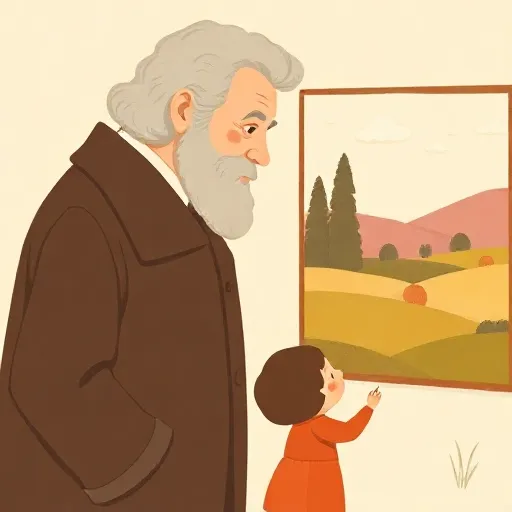
The earliest clear statement against relying on aesthetic testimony comes from the German philosopher Immanuel Kant (1724–1804). In his book Critique of Judgment (1790), he wrote something that still startles readers. If you don’t find a building, a view, or a poem beautiful, he said, a hundred voices all highly praising it will not force your innermost agreement. Their agreement gives no valid proof. For Kant, beauty isn’t the kind of thing you can prove with a vote. You have to encounter it yourself.
Kant’s remark was incredibly short—barely more than a paragraph—but it planted a powerful idea. He moved on quickly to argue that there are no fixed rules or principles of taste that would let you logically deduce that something is beautiful, the way you might deduce that a triangle has three sides. Because there’s no recipe for beauty, you can’t just apply a rule someone gives you. You have to look, listen, or read, and let your own mind respond.
Kant wasn’t the first to think about testimony in general—philosophers like John Locke and Thomas Reid had talked about when we should believe what we’re told. But he appears to be the first person to single out aesthetic judgments as a special case. The puzzle he started lay mostly dormant until the late twentieth century, when a handful of philosophers picked it up and gave it new life.
The Acquaintance Principle: Beauty Isn’t Like News

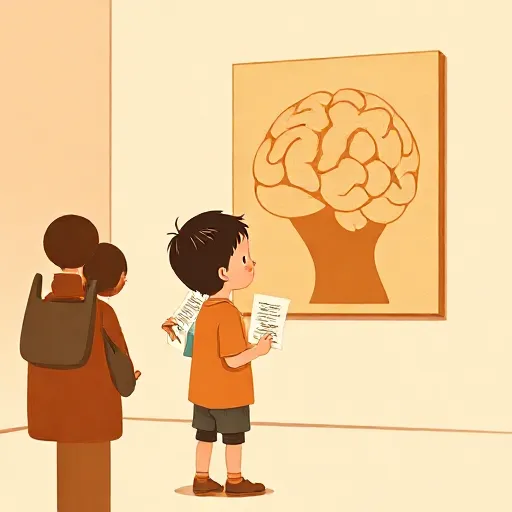
In 1980, the British philosopher Richard Wollheim (1923–2003) sharpened Kant’s thought into a rule known as the Acquaintance Principle. He wrote that judgments of aesthetic value must be based on first-hand experience of their objects, and are not, except within very narrow limits, transmissible from one person to another. In other words, you can tell someone that Guernica is harrowing, but you can’t hand them your judgment like a note. They have to stand in front of the painting themselves.
Wollheim didn’t see this as a bold new claim. He thought he was simply stating what most people already believed: that you can’t really know a work is beautiful unless you’ve met it in person. This idea has become one of the most frequently discussed principles in the whole debate. It seems to give a clear reason for pessimism—if knowledge of beauty requires direct contact, pure testimony can’t help.
Yet the Acquaintance Principle is trickier than it looks. Must you always see the original artwork? What about a high-quality photograph of a sculpture, or a detailed description of a lost painting? Many philosophers think the principle needs to be softened, otherwise it becomes too strict. Some, like the contemporary philosopher Errol Lord, suggest that you only need acquaintance with a specific aesthetic property, not necessarily the whole object. That still rules out testimony, but it leaves room for reproductions. Others worry that if we stretch the principle too far, it might become trivially true or false—either saying nothing useful, or making an impossible demand.
Two Kinds of Pessimism: Can’t or Shouldn’t?

Even if we set aside the Acquaintance Principle, pessimists have other weapons. In the last few decades, philosophers have sorted their objections into two main camps.
The first group holds that aesthetic testimony simply cannot give you knowledge. This is called unavailability pessimism. The idea is that to really grasp an aesthetic claim—like “this jazz solo is hauntingly beautiful”—you need to hear the solo yourself. Without that direct encounter, you don’t understand how the beauty shows up in the particular notes and rhythms. You might be able to repeat the words, but you’re missing the crucial understanding that makes a judgment count as knowledge. Some thinkers tie this to the fact that aesthetic qualities like “delicate” or “clumsy” don’t follow fixed rules; each beautiful thing is beautiful in its own way.
The second group goes a different route. They accept that you might be able to gain real knowledge from testimony—someone could tell you a film is great, and that could be true and well-justified. But they argue there’s a separate, non-epistemic rule that says you shouldn’t form your judgments that way. This is unusability pessimism. The worry isn’t about truth, but about what’s valuable in an aesthetic life.
What might that missing value be? One answer is autonomy. When you lean entirely on someone else’s say-so, you give up the chance to exercise your own powers of attention and feeling. The philosopher C. Thi Nguyen compares this to a marathon runner hopping into a taxi to reach the finish line: you get to the same conclusion, but you’ve skipped the entire activity that made the race meaningful. Related ideas focus on authenticity—the fear that borrowing others’ judgments erodes your own aesthetic personality, the pattern of tastes that makes you you. Another version, championed by writers like Madeleine Ransom, points to aesthetic development: if you keep deferring to others, you miss the practice you need to grow sharper sensibilities of your own. It’s like using a calculator for every simple math problem—you never develop the number sense to solve anything on your own.
But Wait—We Lean on Critics All the Time

Optimists aren’t giving up. They point out that our everyday behavior suggests we already trust aesthetic testimony more than pessimists admit. When you pick a film because a trusted critic gave it four stars, or when a friend’s recommendation decides your weekend reading, you are allowing testimony to guide your aesthetic life. It seems odd to say that all of this is somehow illegitimate.
Moreover, there are whole categories of aesthetic judgment where pessimist intuitions seem to fade. Judgments about lost works of art—paintings destroyed in a fire, performances never recorded—often have to be based on written descriptions and the testimony of those who saw them. Nobody expects you to have experienced the lost work firsthand, yet we still treat some assessments as reasonable. Similarly, statements about the beauty of natural landscapes you’ve never visited, or the elegance of a mathematical proof you can’t follow, seem more acceptable to form through testimony.
Pessimists have replies. They might say these aren’t genuinely aesthetic judgments in the strict sense—maybe they are just reports of reputation. Or they might allow that their norms have exceptions when first-hand access is impossible. A moderate pessimist like Robert Hopkins admits that under certain circumstances the normal bar can be lowered. Still, optimists think these cases put pressure on the pessimist’s starting point.
Another strong optimistic move is to argue that testimony doesn’t have to be the end of the story. Hearing that a poem is devastating might be just the nudge you need to go read it yourself, especially if you’re a beginner who doesn’t know where to start. In that way, testimony can act as a springboard for deeper engagement, rather than a replacement for it.
Why It Still Matters: Your Taste, Your Voice

So is there a final verdict? Not even close. What’s striking is how live this question remains. Behind the technical arguments sits a personal dilemma you face every week: How much should I trust what others praise, and when do I need to listen to my own response?
There’s something at stake here that goes beyond who is right. If the pessimists are onto something, then building your own aesthetic identity—your distinctive palette of what thrills, moves, or bores you—is a quiet project that demands you show up for the work yourself. You protect something personal when you refuse to let a hundred voices decide for you. On the other hand, if the optimists are right, shutting out all testimony might leave you needlessly isolated, cut off from the very communities and conversations that help you discover beauty you would otherwise miss. Some philosophers even suggest that trusting another person’s aesthetic testimony can be a tiny act of friendship—a way of saying, “I value your eye enough to let it shape my world.”
The next time a friend declares a song life-changing, or a review gushes about a gallery show, you don’t have to silently agree or dismiss it. You get to ask yourself: Do I want to know what someone else found, or do I want to go find it for myself? The answer, perhaps, is that you need both. And that’s a question worth keeping open.
Think about it
- If a friend tells you a song is incredible, but you’ve never heard it, should you say it’s incredible too? Why or why not?
- Is it more important to form your own opinions about art, or to be right about what’s actually good?
- Can you really appreciate a painting if you’ve only ever read about it? What would be missing?